


Why Your Sprinkler System Needs Immediate Attention
Yard sprinkler repair is essential for maintaining a healthy lawn and avoiding water waste. A malfunctioning system leads to overwatering or underwatering, causing dry patches, unhealthy grass, and high water bills.
Most Common Yard Sprinkler Problems:
- Clogged or broken sprinkler heads causing uneven water distribution
- Leaky valves wasting water and creating soggy spots
- Damaged irrigation lines reducing water pressure
- Faulty controllers disrupting watering schedules
- Low water pressure preventing proper coverage
Massachusetts homeowners face unique challenges from seasonal temperature changes. Frozen pipes in winter and root intrusion are common culprits behind system failures.
Many sprinkler repairs are straightforward DIY projects that can save you hundreds in service calls. With basic tools and knowledge, you can tackle most common issues.
Benefits of timely sprinkler repair include:
- Lower utility costs
- Healthier grass from consistent watering
- Higher property value
- Prevention of water damage
This guide walks you through diagnosing problems, gathering tools, and completing repairs safely. We’ll also cover when to call a professional for complex issues.
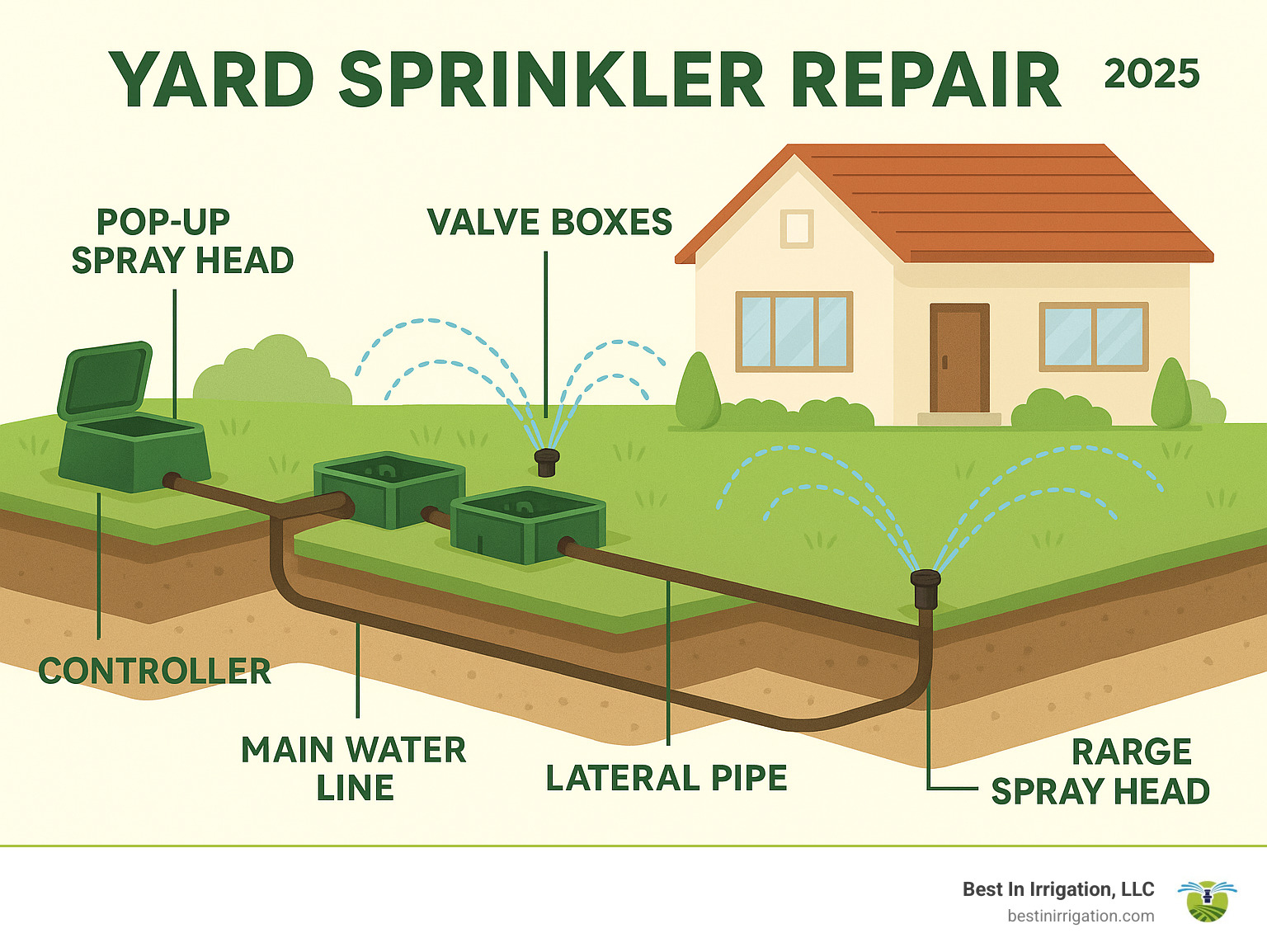
Yard sprinkler repair terms made easy:
Diagnosing Common Sprinkler System Problems
Before starting any yard sprinkler repair, you must diagnose the problem. Your system will give you clues.
Begin with a system inspection while the sprinklers are running. Run each zone individually and take notes. Look for visual cues like dry patches or soggy spots, and listen for auditory cues like geysers or sputtering heads. This zone-by-zone testing is crucial for pinpointing issues. Also, pay attention to water pressure issues and controller errors, as the problem may not be with the heads themselves.
Signs of a Malfunctioning System
Your lawn communicates its health. Learn to read the signs:
- Dry patches: Indicate coverage problems, likely from clogged or broken sprinkler heads.
- Soggy spots/pooling water: Suggest a leak from a faulty valve or a broken underground pipe.
- Geysers: A dramatic fountain of water usually means a completely broken head or a major pipe break.
- Sputtering heads: Often indicates a clogged nozzle or worn internal parts.
- Heads not popping up/retracting: Usually a mechanical issue caused by debris or a weak internal spring.
- Unusually high water bill: This can be the first clue of a hidden underground leak.
For more details, see our guide on Common Irrigation System Problems. For solutions, visit our Irrigation System Troubleshooting page.
Identifying the Cause of Low Water Pressure
Low water pressure prevents proper sprinkler coverage. Here are common causes:
- Leaks: Walk your property looking for unusually green patches, damp soil, or puddles.
- Main shut-off valve: Ensure this valve is completely open. It can sometimes be partially closed by accident.
- Clogged system filter: A dirty filter, often near the backflow preventer, restricts water flow.
- Backflow preventer issues: These safety devices can fail or get partially closed, creating a bottleneck.
- Multiple zones running: A controller error or stuck valve might cause two zones to run at once, dropping pressure everywhere.
- Worn-out components: Old valves and sprinkler heads can develop internal leaks, reducing pressure.
Patience during diagnosis is key to successful yard sprinkler repair. Observe carefully before you start digging.
Your Guide to DIY Yard Sprinkler Repair
Before starting any yard sprinkler repair, safety first. Always turn off the water at the main irrigation shut-off valve. If working with electrical parts like controllers or solenoids, turn off the power. Before any serious digging, call 811 to avoid hitting utility lines.
For more guidance, see our guide on how to Fix Lawn Sprinkler System issues.
Essential Tools and Parts for Yard Sprinkler Repair
Having the right equipment makes any repair project smoother.
- Tools: Shovel, trowel, PVC cutter or hacksaw, pliers, screwdrivers, wire strippers, plumber’s tape, and waterproof wire nuts.
- Replacement Parts: Keep common items on hand. Match the type and brand of sprinkler heads (or just nozzles) for consistent coverage. Have spare valve components like diaphragms and solenoids. For line repairs, you’ll need PVC pipe, fittings, primer, and cement.
For quality parts, Hunter Industries and Rain Bird offer reliable components.
How to Repair or Replace a Broken Sprinkler Head
Fixing a broken head is a common and manageable yard sprinkler repair task.
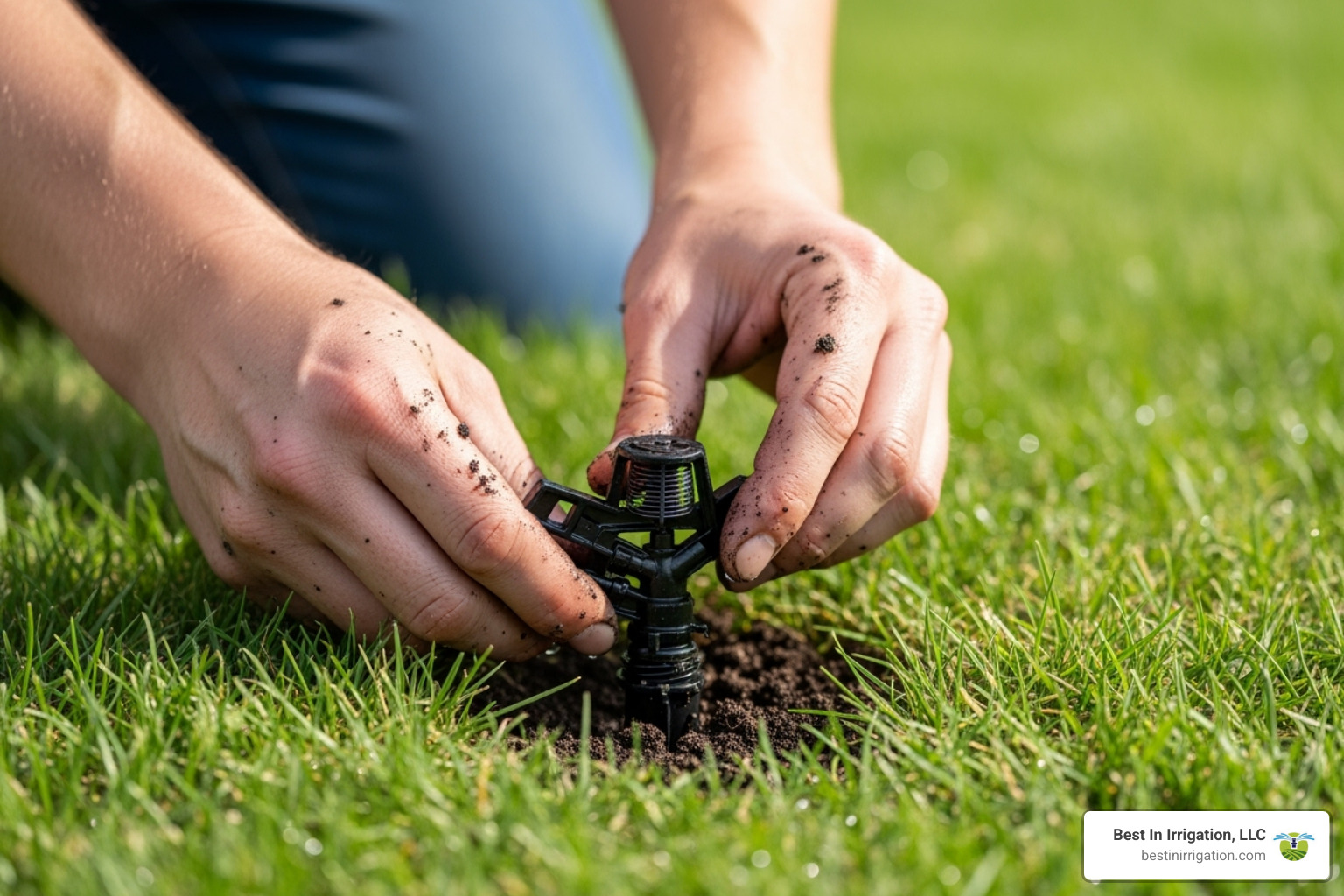
- Turn off the water and dig a 6-inch perimeter around the head.
- Unscrew the old head counterclockwise.
- Flush the line by turning the water on for a moment to clear debris, then turn it off.
- Install the new head. Wrap the threads with plumber’s tape and screw it in clockwise until snug.
- Turn the water on and adjust the spray pattern and distance.
This process works for both pop-up heads and rotor heads. Sometimes, you only need to clean a clogged nozzle. For more details, see our guide to Repair Broken Sprinkler Head.
How to Replace a Faulty Sprinkler Valve and Solenoid
If a zone won’t turn on or off, the valve or solenoid is likely the issue.
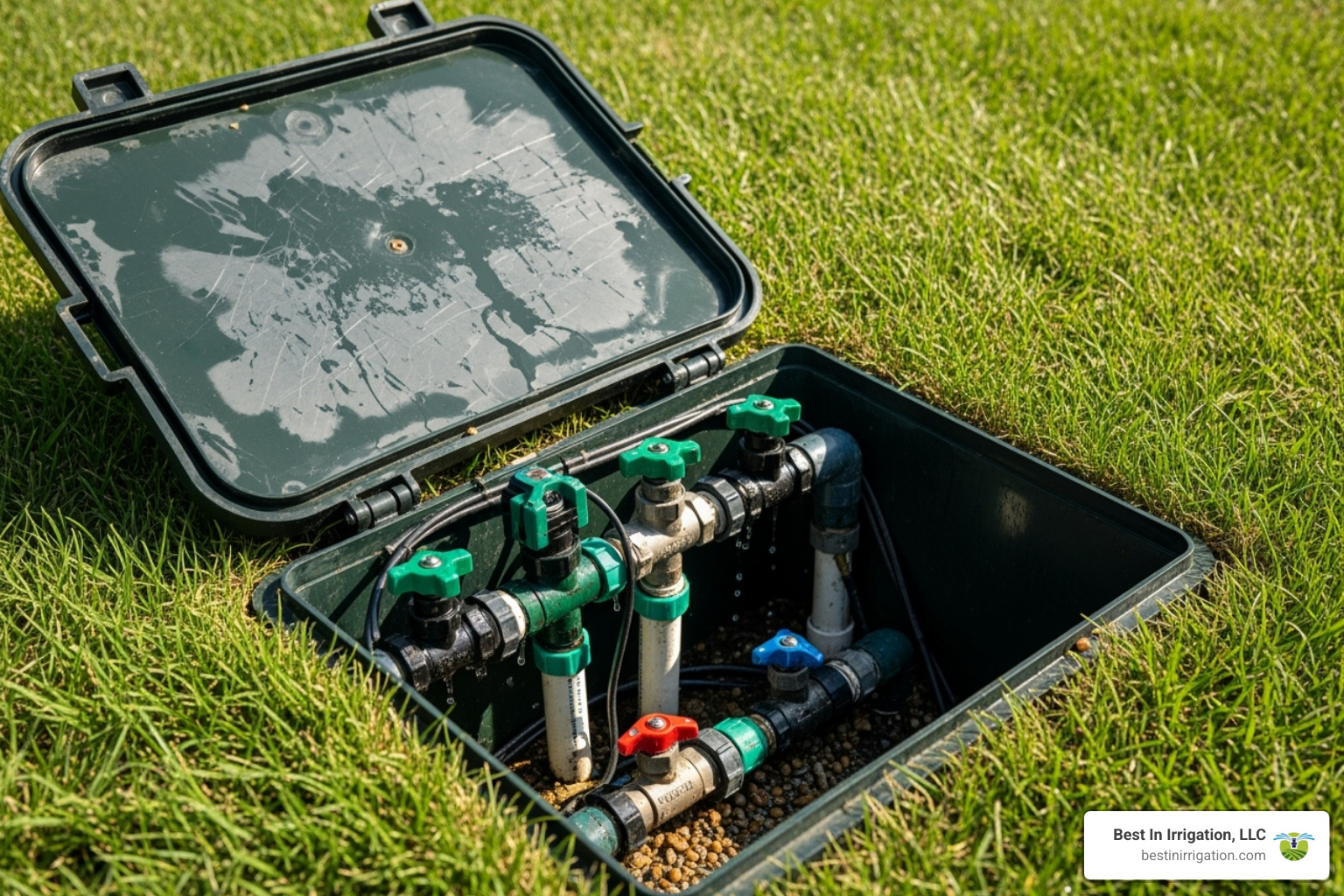
Safety first: turn off both water and power to the controller.
- Locate the valve box and identify the faulty valve.
- Try replacing the solenoid first. Disconnect the wires, unscrew the old solenoid, screw in the new one, and reconnect the wires with waterproof nuts. This may solve the problem.
- To replace the entire valve, disconnect the wires and cut the pipe on both sides of the old valve.
- Install the new valve, ensuring the flow arrow points in the correct direction. Use PVC primer and cement to connect it.
- Reconnect the wires with waterproof nuts.
- Allow the cement to cure as directed before turning the water back on.
Our Irrigation Valve Replacement guide has more details.
How to Fix a Leaking or Broken Sprinkler Pipe
Underground pipe breaks cause soggy spots and require prompt repair.
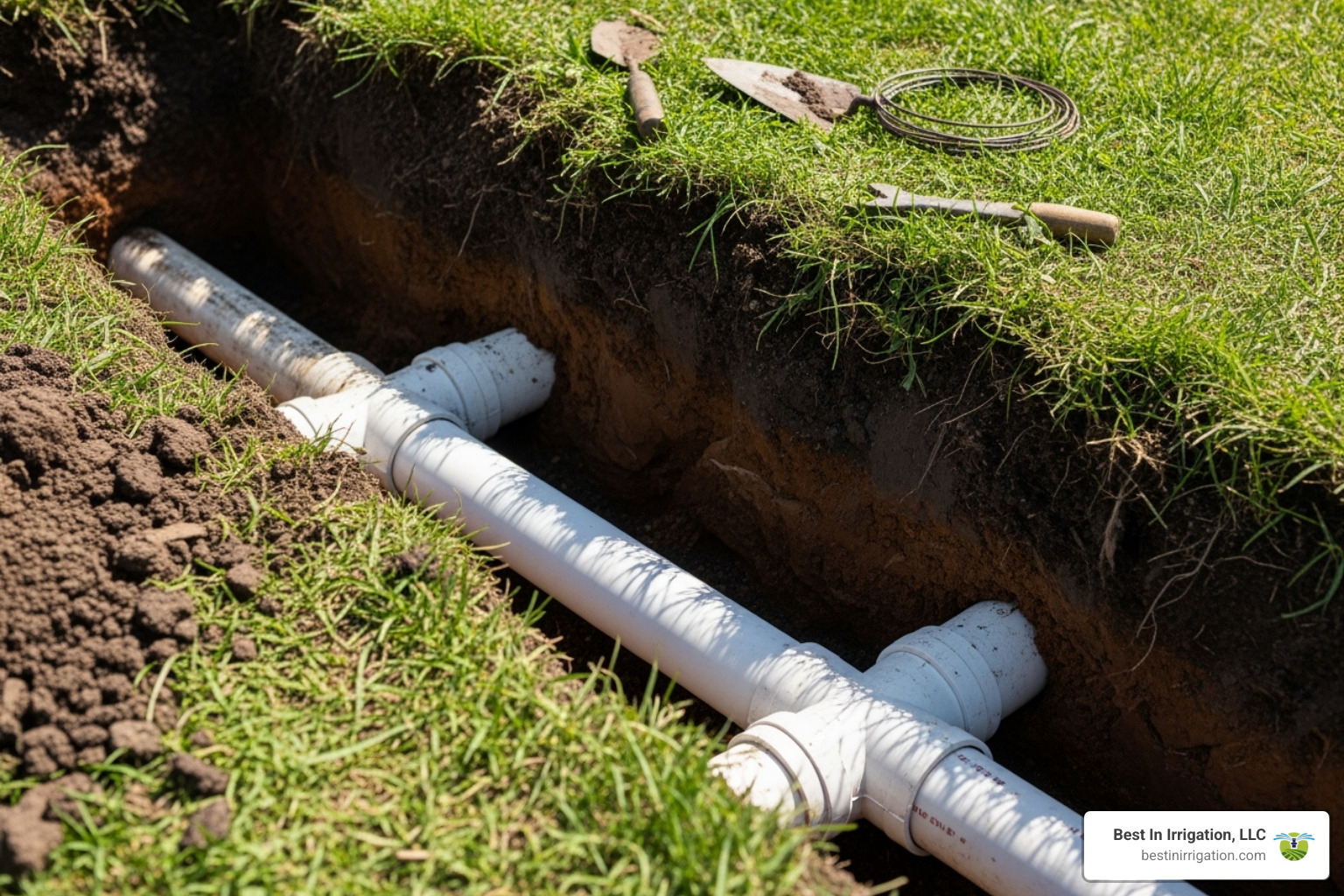
- Find the leak by looking for wet spots or bubbling water when the system is on.
- Turn off the water and carefully dig out the damaged pipe section.
- Cut out the broken piece with clean, straight cuts.
- Measure and cut a new piece of pipe.
- Use slip couplings to connect the new pipe. Apply PVC primer and cement to all surfaces, insert the new pipe, and slide the couplings over the joints.
- Let the cement cure completely before testing the repair.
For more tips, see our Repair Broken Sprinkler Line resource.
Proactive Sprinkler Maintenance and Water Conservation
Regular maintenance prevents expensive yard sprinkler repair, lowers utility costs, and promotes a healthier lawn. Proactive care catches small issues before they become major problems, saving you money and ensuring your system runs efficiently. For professional help, consider our Residential Irrigation System Repair services.
Seasonal Sprinkler System Maintenance
Your sprinkler system needs different care as Massachusetts seasons change.
| Task Category | Spring Start-Up (May in MA) | Fall Winterization (Oct/Nov in MA) |
|---|---|---|
| Water Supply | Slowly open main shut-off valve. | Completely shut off main water supply. |
| Inspection | Check for winter damage (cracked pipes, broken heads). | Visual inspection for last-minute repairs. |
| Heads | Clean, adjust spray patterns, and align. | Ensure all water is removed to prevent freezing. |
| Valves | Check for leaks and proper function. | N/A (focus on water removal). |
| Controller | Program for spring/summer schedule. | Set to “off” or “rain delay.” |
| Blowing Out | N/A | Use air compressor to blow out lines (pro recommended). |
| Drainage | N/A | Open drain valves to let water escape. |
| Backflow | Test and ensure proper function. | Protect from freezing (insulate or drain). |
Spring start-up involves slowly turning the water back on, checking for damage, cleaning heads, and adjusting spray patterns. Fall winterization is critical in New England. You must blow out all water from the lines with an air compressor to prevent pipes from bursting when they freeze. We highly recommend professional service for winterization to avoid costly damage.
How to Conserve Water with Your Irrigation System
An efficient system saves money and helps the environment. Most water-saving upgrades pay for themselves over time.
- Smart Controllers & Weather Sensors: These devices automatically adjust watering based on local weather, preventing unnecessary watering.
- Drip Irrigation: For garden beds, drip systems deliver water directly to the roots, minimizing evaporation. We can help with Drip Sprinkler Repair.
- Proper Scheduling: Water in the early morning (4-8 AM) when evaporation is low. Avoid midday watering.
- Cycle and Soak Method: For slopes or clay soil, use shorter, multiple watering cycles to prevent runoff.
- Regular Inspections: A monthly walkthrough can catch small leaks that waste thousands of gallons per season.
When to Call a Pro for Your Yard Sprinkler Repair
While many yard sprinkler repair tasks are DIY-friendly, some situations require professional expertise. Knowing when to call a pro is key to avoiding bigger, more expensive problems.
Call a professional for:
- Complex Electrical Problems: If you suspect a wiring short or your controller is malfunctioning, it’s safer to call an expert. Diagnosing these issues requires specialized tools and knowledge.
- Major Leaks or Mainline Breaks: A break that causes significant flooding requires professional equipment and techniques for a lasting fix.
- System Redesign or Expansion: A pro can design an efficient layout custom to your landscape, accounting for local soil and water pressure conditions in Massachusetts.
- Persistent Low Water Pressure: If basic troubleshooting doesn’t work, the cause could be a complex blockage or main supply issue that requires professional diagnostics.
- Lack of Time or Tools: Sometimes, the most cost-effective solution is letting an expert handle the repair correctly from the start.
Consider replacing your system instead of repairing it if you face:
- Old Age: Systems over 15-20 years old use outdated, inefficient technology.
- Frequent Breakdowns: If you’re constantly fixing new leaks, heads, and valves, the costs can add up quickly.
- Poor Performance: An old system may provide uneven coverage no matter how much you adjust it.
- Desire for Upgrades: Installing a new system is often more practical than retrofitting an old one with smart technology like weather sensors or drip irrigation.
A new, efficient system can pay for itself over time through water savings.
Frequently Asked Questions about Sprinkler Repair
Here are answers to common questions about yard sprinkler repair.
How often should I inspect my sprinkler system?
Inspect your system at least twice a year. A check in early spring helps you find any winter damage. A mid-summer walkthrough lets you spot issues like clogged heads or uneven spray patterns that have developed. Also, keep an eye on the system during regular watering cycles and investigate any problems immediately.
Can I mix and match different brands of sprinkler heads?
No, you should not mix brands within the same watering zone. Different brands have different matched precipitation rates, meaning they apply water at different speeds. Mixing them leads to uneven watering—some spots get soaked while others stay dry. For best results, stick with the same brand and model within each zone.
What should I do if my sprinkler system won’t turn off?
A system that won’t shut off requires immediate action to prevent flooding and a high water bill.
- Turn off the water immediately using the main irrigation shut-off valve, usually located near your backflow preventer. If you can’t find it, you may need to shut off your home’s main water supply temporarily.
- Check the controller. Make sure it isn’t stuck in a manual or test mode. Try resetting it.
- Investigate the valve. The problem is often a faulty solenoid or a stuck valve jammed with debris. It could also be an electrical short in the wiring.
Once the water is off, you can diagnose the specific cause without pressure. If you suspect an electrical issue, it’s best to call a professional.
Conclusion
You now have the knowledge to tackle most yard sprinkler repair challenges, saving money and keeping your lawn healthy. The real key to success is proactive maintenance. Regular inspections and tune-ups prevent costly surprises and save money through water conservation.
Smart watering practices and modern technology can make your system highly efficient. However, everyone has limits. For complex electrical issues, major system redesigns, or problems you can’t solve, calling a professional is the smartest move.
Our team at Best In Irrigation, LLC has 9 years of experience with irrigation solutions across Massachusetts. We’ve seen every challenge, from simple DIY fixes to complex issues requiring our specialized expertise. Whether you need help with a tricky repair or want to upgrade to water-saving technology, we’re here for you.
Don’t let sprinkler problems ruin your lawn. You can handle the basics, and we’ve got your back when you need professional help. Ready for that expert touch? Schedule professional irrigation system maintenance with Best In Irrigation, LLC today.
