


Why Your Yard’s Sprinkler System Needs Attention
Yard irrigation repair is essential for any homeowner. When you notice issues like soggy spots, dry patches, broken heads, or controller malfunctions, it’s crucial to act quickly. Prompt repairs save water and prevent more extensive damage.
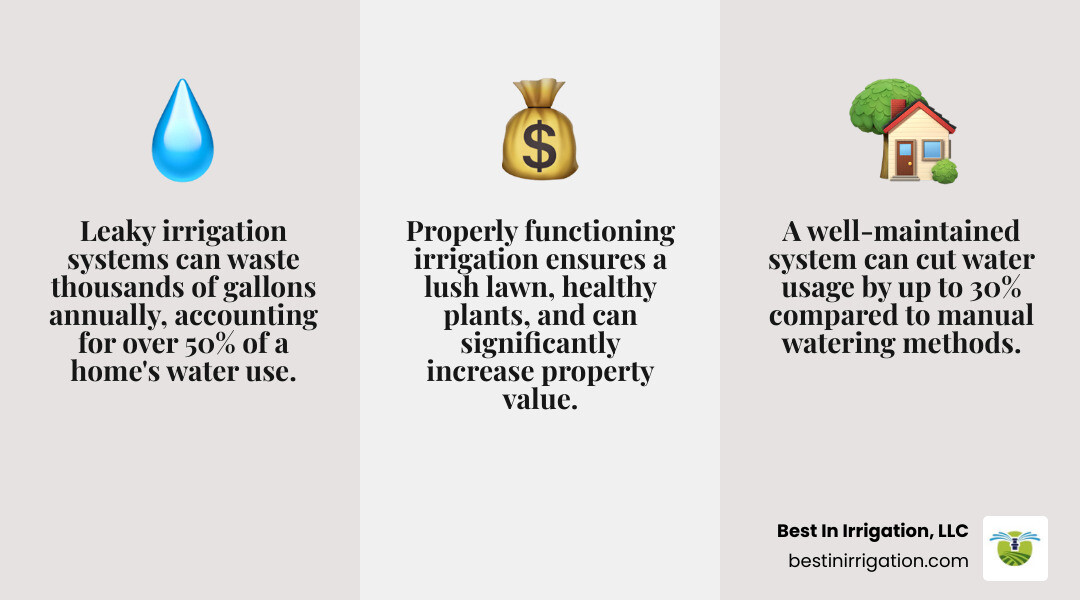
Your home’s irrigation system can account for over 50% of its total water consumption, and even small leaks can waste thousands of gallons annually. This waste leads to higher water bills and strains local water resources.
A well-maintained system, however, can reduce water usage by up to 30% compared to hand watering. It ensures your lawn stays lush and your plants thrive, which boosts your property’s appearance and value. Ignoring small issues can lead to bigger, more expensive problems, so regular care and timely repairs are key.
Key terms for yard irrigation repair:
Diagnosing the Damage: Signs Your System Needs Repair
Your irrigation system will often show warning signs before a complete breakdown. Knowing what to look for helps you tackle yard irrigation repair issues before they become expensive disasters.
A sudden jump in your water bill is a major red flag, often indicating a hidden leak wasting thousands of gallons per year. Your yard also tells a story. Soggy patches or overly green spots suggest a leak or a faulty sprinkler head. Conversely, dry, brown spots mean parts of your lawn aren’t getting enough water due to clogged nozzles, misaligned heads, or low water pressure.
Pressure problems are also evident in sputtering sprinkler heads that don’t pop up fully or spray as far as they should. For more details, see our guide on Common Irrigation System Problems.
What causes this damage? In New England, frost heave can crack or shift underground pipes. Other common culprits include accidental digging, mower damage to sprinkler heads, and simple wear and tear over time.
How to Diagnose Leaks and Low Water Pressure
Finding leaks and pressure issues requires a methodical approach. Start by isolating zones one at a time. Turn on a single zone and walk the area, looking for puddles or squishy ground. A faint hissing sound can also pinpoint a leak.
Don’t forget to inspect valve boxes. Standing water inside these underground chambers is a common sign of a leak. Pressure loss can be trickier. If the entire system is weak, the issue might be the main water supply or a main line leak. If only one zone is struggling, you’re likely dealing with clogged filters in that zone’s valve or a broken pipe in that specific area.
For step-by-step troubleshooting, our Irrigation System Troubleshooting guide can help.
How to Find Sprinkler Lines Without Digging
You can often locate sprinkler lines without major excavation. If you have an irrigation plan from the installation, use it as your map. If not, follow sprinkler head patterns, as lines typically run in straight paths between them.
A useful trick is to turn on zones to see wet lines. Activate one zone and watch for subtle wet spots or depressions in the soil that reveal the pipe’s path. To find valves, using a metal detector can be effective, as most have metal components. Once you suspect a leak’s location, gentle probing with a screwdriver can confirm the pipe’s position. Be careful not to puncture the pipe.
The DIY Toolkit: Your Guide to Residential Yard Irrigation Repair
Understanding your system’s basic components makes yard irrigation repair much clearer. A residential system includes:
- Controller/Timer: The “brain” that automates your watering schedule.
- Valves: Gates that control water flow to specific zones.
- Pipes/Water Lines: The underground network carrying water to the heads.
- Sprinkler Heads: The nozzles that distribute water onto your lawn and garden.
- Backflow Preventer: A crucial safety device that stops irrigation water from contaminating your home’s drinking water.
Learn more about how these parts work together in our article on How Do Sprinkler Systems Work Lawn.
For basic repairs, gather these essential tools: a shovel, a pipe cutter (or hacksaw), PVC primer and cement (for PVC pipes), a small length of replacement pipe, and various fittings like couplings and adapters. For flexible poly pipe, you’ll need hose clamps. A roll of Teflon tape for threaded connections, clean rags, and a utility knife are also handy.
Step-by-Step Guide to a Common Yard Irrigation Repair: Fixing a Broken Pipe
Fixing a broken pipe is a frequent yard irrigation repair task. Here’s a straightforward guide:
- Shut Off the Water Supply: This is the most important first step. Turn off your irrigation system’s main shut-off valve, usually located near the backflow preventer or water meter.
- Excavate the Area: Carefully dig around the damaged pipe, exposing about a foot on either side of the break to give yourself room to work.
- Cut Out the Damaged Section: Use a pipe cutter or hacksaw to make clean, square cuts to remove the broken portion of the pipe.
- Measure and Cut Replacement Pipe: Measure the section you removed and cut a new piece of pipe to the exact same length and diameter.
- Install New Fittings: Use slip couplings for PVC pipe or compression couplings for poly pipe. For PVC, apply primer and then cement before quickly pushing the pieces together. For poly pipe, use barbed fittings secured with hose clamps.
- Test the Repair: Slowly turn the water back on and check for any leaks. It’s much easier to fix a drip now than after the hole is filled.
- Backfill the Hole: Once you’re sure the repair is leak-free, gently backfill the hole with soil, packing it lightly around the pipe.
For more details, see our guide on how to Repair Broken Sprinkler Line.
Troubleshooting Common Sprinkler Head and Controller Issues
When sprinkler heads or controllers act up, your watering schedule can be disrupted. Here are some common problems and fixes.
Sprinkler Head Problems:
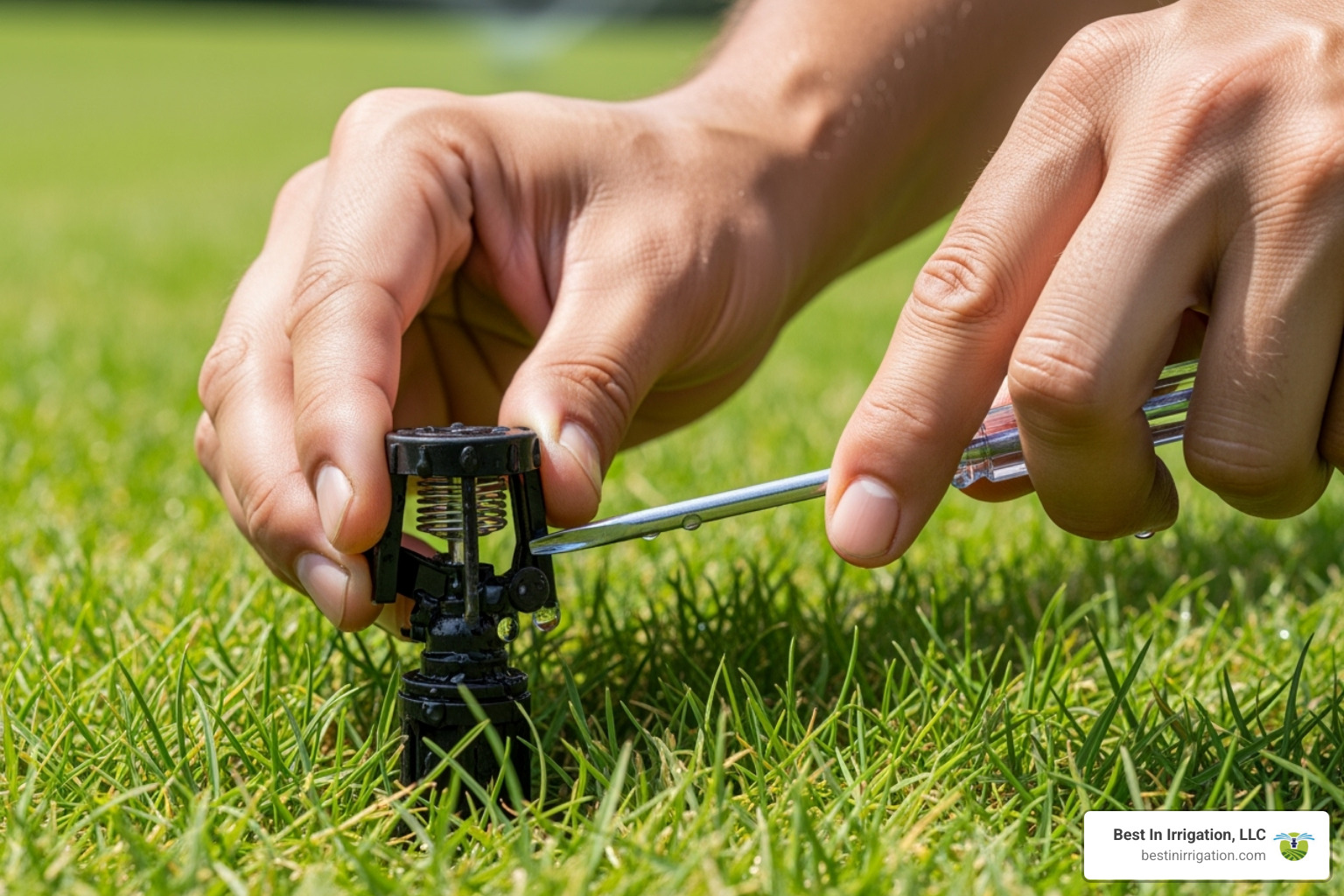
- Clogged Nozzles: If spray is erratic or non-existent, the nozzle is likely clogged. Unscrew it and clean out any debris. Check for a small filter inside that may also need rinsing.
- Broken or Damaged Heads: Damage from lawnmowers or age requires replacement. Ensure the new head is compatible with your system.
- Misaligned Spray Patterns: If a head is watering the sidewalk, it likely needs adjustment. Most pop-up heads can be rotated to aim the spray correctly.
Find more tips in our guide on how to Repair Broken Sprinkler Head.
Controller Issues:
- Controller Not Turning On: Check if it’s plugged in and the circuit breaker hasn’t tripped. If it’s still off, the transformer may be faulty.
- Programs Not Running: Double-check your programming (start times, run times). An active rain sensor or a loose wire to a valve can also prevent a zone from running.
- System Won’t Shut Off: This often points to a valve stuck open or a wiring short. Try turning the zone off at the controller; if that fails, you may need to shut the water off at the valve itself.
- Replacing Backup Battery: If your controller loses its settings after a power outage, the backup battery likely needs to be replaced.
Enhancing Efficiency with Upgrades and Maintenance
An efficient irrigation system works smarter, not harder, saving you money and conserving water. The EPA estimates that up to 50% of water used for outdoor irrigation is wasted by inefficient systems. Regular maintenance is the key to preventing this waste.
Proactive maintenance can extend your system’s life by up to 50%, preventing small issues from becoming costly repairs. It ensures your landscape receives consistent hydration, promoting a lush lawn and thriving plants. Find more tips in our Water Saving Irrigation Systems and Irrigation System Maintenance guides.
The Advantages of Upgrading to Smart Technology
Smart technology has revolutionized irrigation efficiency. Upgrading your system offers significant advantages.

- Smart Irrigation Controllers: These devices connect to local weather data to adjust watering schedules automatically, skipping cycles when it rains and adding water during heatwaves. This can drastically reduce water waste and lower utility bills.
- High-Efficiency Sprinkler Heads: Modern sprinkler heads improve water distribution and reduce runoff. They produce larger, wind-resistant droplets, ensuring more water reaches your plants.
- Drip Irrigation Systems: For garden beds and shrubs, drip irrigation is a game-changer. It delivers water slowly and directly to plant roots, minimizing evaporation and runoff for maximum efficiency.
The EPA’s Watering tips from the EPA align with the benefits of these smart upgrades.
Prevention and Professional Help: When to Call the Experts
The best repair is the one you never have to make. Proactive prevention is key, but it’s also important to know when a yard irrigation repair job is best left to the pros.
Preventative Measures:
A little care goes a long way. First, map your system with a rough sketch showing lines, valves, and heads. This is invaluable for future troubleshooting or landscaping. Before any project, mark your lines before digging to avoid costly damage. A call to 811 can mark utility lines, and you can add your irrigation lines to the plan.
Finally, make seasonal adjustments to your controller’s schedule to match your lawn’s changing water needs. In colder climates, proper winterization is non-negotiable to prevent pipes from freezing and bursting. Learn more in our guide on Irrigation System Winterization.
Knowing Your Limits: When to Call the Experts:
While many fixes are DIY-friendly, some challenges require professional help. It’s a smart decision that can save you time, money, and headaches.
Call an expert for:
- Complex electrical problems with controllers or wiring.
- A main line break, which involves high water pressure and requires specialized tools.
- A major system redesign or addition of new zones.
- Recurring issues that point to a deeper, underlying problem.
- Any job where you lack the right tools, expertise, or comfort level to proceed safely.
For these situations, our team at Best In Irrigation, LLC is ready to help. With 9 years of expertise in New England, we handle even the trickiest residential yard irrigation repair challenges. Learn more at Irrigation System Repair Companies.
Frequently Asked Questions about Yard Irrigation Repair
Here are answers to some of the most common questions we hear about yard irrigation repair.
Should I repair or replace my sprinkler system?
This decision depends on a few factors. Consider the age of your system; systems over 15-20 years old are often less efficient and more prone to failure. Compare the cost of frequent repairs to the cost of a new, water-efficient system. If your goal is to lower water bills and conserve water, a modern system with smart technology is often a wise long-term investment. A professional assessment can help you weigh the pros and cons for your specific situation.
How do I find a crack or leak in my sprinkler line?
Finding a hidden leak requires a methodical approach. First, isolate zones by running them one at a time to narrow down the area. As each zone runs, look for visual cues like unusually green or soggy spots, or even water bubbling from the ground. Sometimes you can listen for a hissing sound near the leak. Once you’ve identified a suspected area, dig carefully to expose the pipe and visually confirm the leak by briefly turning the water back on.
What are the benefits of repairing a broken irrigation system?
Repairing your irrigation system offers numerous benefits. The most immediate is lower water bills from eliminating waste. A properly functioning system also promotes a healthier, more vibrant landscape by ensuring even water distribution. This boosts your home’s curb appeal and can increase property value. Timely yard irrigation repair also helps prevent soil erosion and potential water damage to your property’s foundation from uncontrolled leaks. Finally, by ensuring your system runs efficiently, you are helping to conserve water, a vital resource for our communities.
Conclusion
We hope this guide has empowered you to tackle many common yard irrigation repair challenges. From spotting leaks to fixing sprinkler heads, you’re now equipped with valuable knowledge.
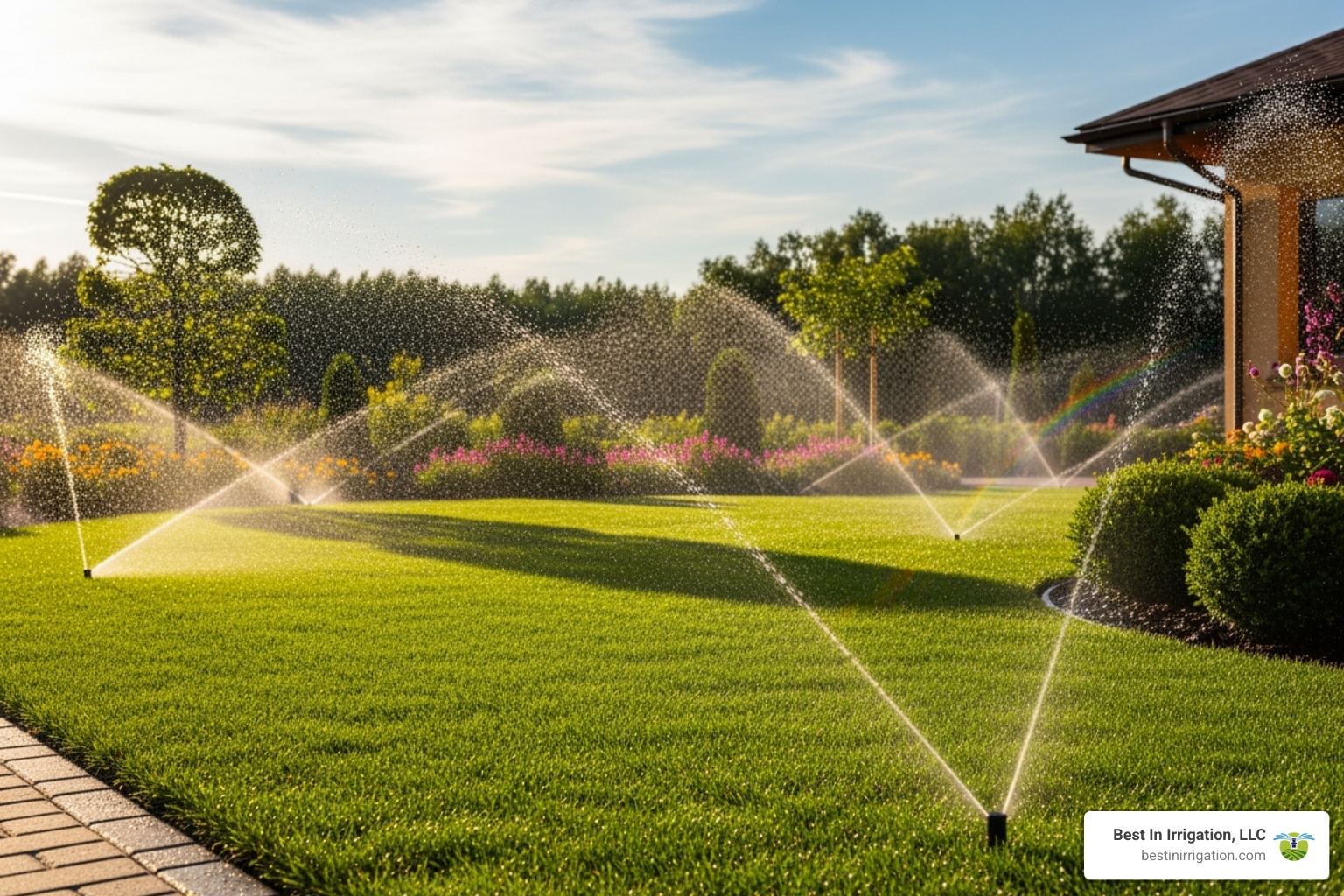
A healthy, efficient irrigation system is a smart investment in your home’s beauty and value, and it plays a key role in water conservation. Regular maintenance and timely repairs ensure it performs beautifully for years to come.
Of course, some jobs require an expert. For complex issues, system upgrades, or routine maintenance, Best In Irrigation, LLC is ready to help. With 9 years of trusted expertise in New England, we focus on smart water conservation and cutting-edge technology to keep your system running perfectly.
Ready to let the pros handle it?
Learn more about our professional Irrigation System Repairs.
