


Why Winterizing Your Sprinkler System Prevents Costly Spring Disasters
Winterizing Sprinkler Systems is essential to protect your investment from freeze damage. Here’s what you need to know:
Quick Answer:
- When: Before the first hard frost (typically October-November in Massachusetts)
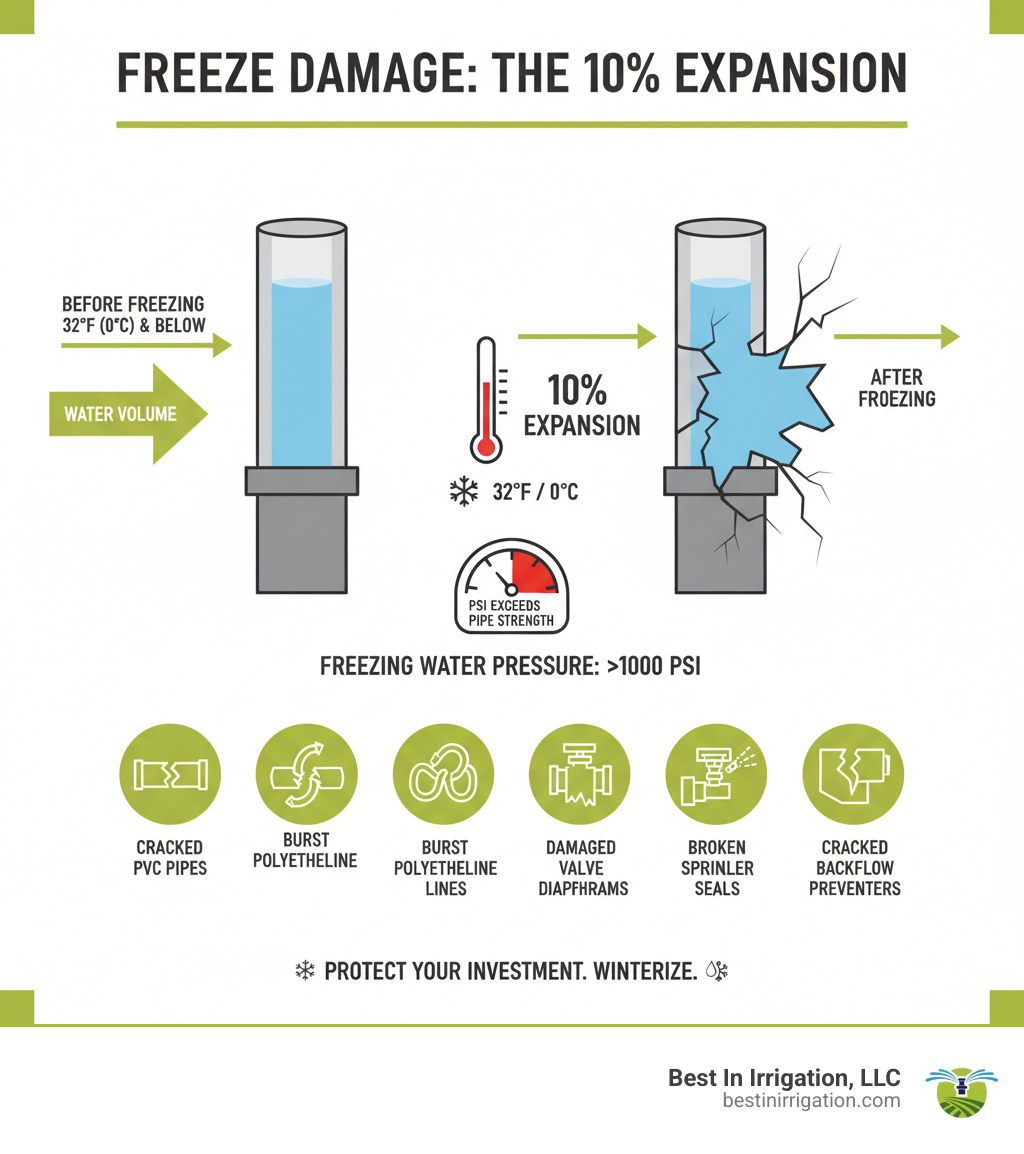
- Why: Water expands by about 10% when it freezes, causing pipes, valves, and sprinkler heads to crack or burst
- Three Main Methods: Manual drain, automatic drain, or compressed air blow-out
- Key Steps: Shut off water supply, drain all water from lines, insulate above-ground components
- Professional Cost: Typically ranges from affordable to moderate depending on system size
- DIY Requirements: Safety goggles, air compressor (30-50 CFM, 40-80 PSI), basic tools
When temperatures drop below freezing, water trapped in your irrigation system expands with enough force to crack pipes, burst valves, and destroy sprinkler heads. The result is expensive spring repairs that could have been prevented with a few simple steps in the fall.
This guide will walk you through each winterization method step-by-step. Whether you choose to do it yourself or hire a professional, understanding the process helps you make the right decision for your Massachusetts home. The good news is that winterizing doesn’t require special skills—just the right knowledge and a bit of time before that first hard frost hits.
Winterizing Sprinkler Systems terms to know:
Step 1: Prepare Your System for Shutdown
Properly winterizing sprinkler systems means knowing when to start, having the right tools, and methodically shutting down the water supply and controller. This preparation is the foundation for protecting your system from winter damage.
When to Winterize Your Sprinkler System
You must winterize before the first hard frost, which occurs when temperatures drop below 32°F for several hours. In Massachusetts, this is usually in October or early November. Don’t wait until the last minute. While underground pipes have some insulation from the soil during light freezes, above-ground components like the backflow preventer are immediately vulnerable once temperatures approach freezing.
Essential Tools and Supplies
Gather your supplies before you begin:
- Safety goggles (mandatory for the blow-out method)
- Flathead screwdriver
- Bucket
- Air compressor and hose adapter (for the blow-out method)
- Pipe insulation (foam tape and covers)
Shutting Off the Water Supply: The First Crucial Step
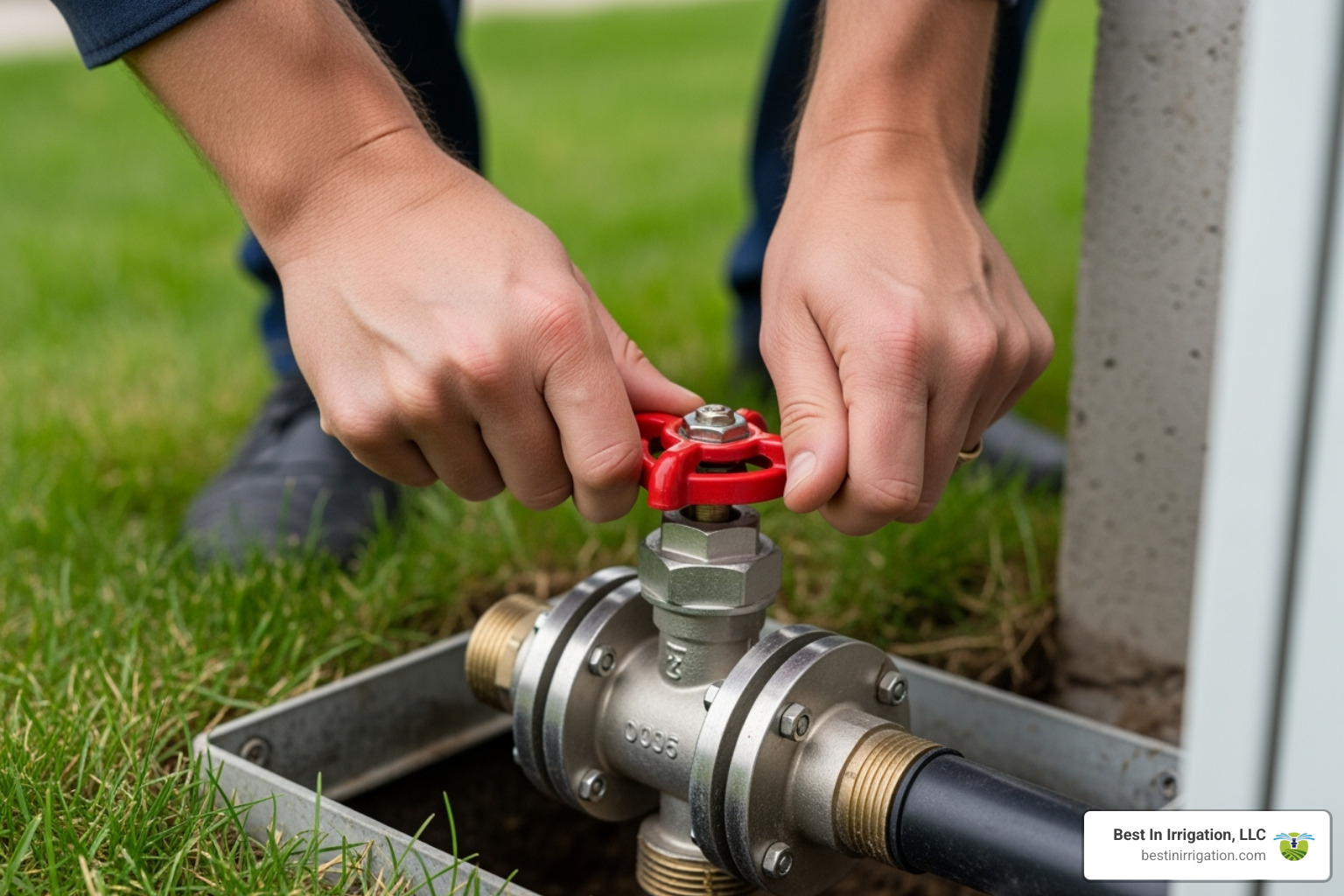
Your first task is to stop all water from entering the irrigation system. Locate your system’s main shut-off valve, which is often near your main water meter in a basement, utility room, or outdoor access panel. Turn it completely off. If your system has a backflow preventer, shut off the ball valves on either side of it as well.
Turning Off the Controller: Preserving Your Programming
Your controller, the system’s brain, also needs winter prep. Most modern controllers have a “rain mode” setting that stops watering signals while saving your programmed schedules, which saves you from reprogramming everything in the spring.
Alternatively, you can disconnect the power by unplugging indoor units or flipping the breaker for outdoor ones. If your system uses a pump, disconnect its common wire from the timer’s terminal strip to prevent the pump from running dry and overheating.
Protect Above-Ground Components
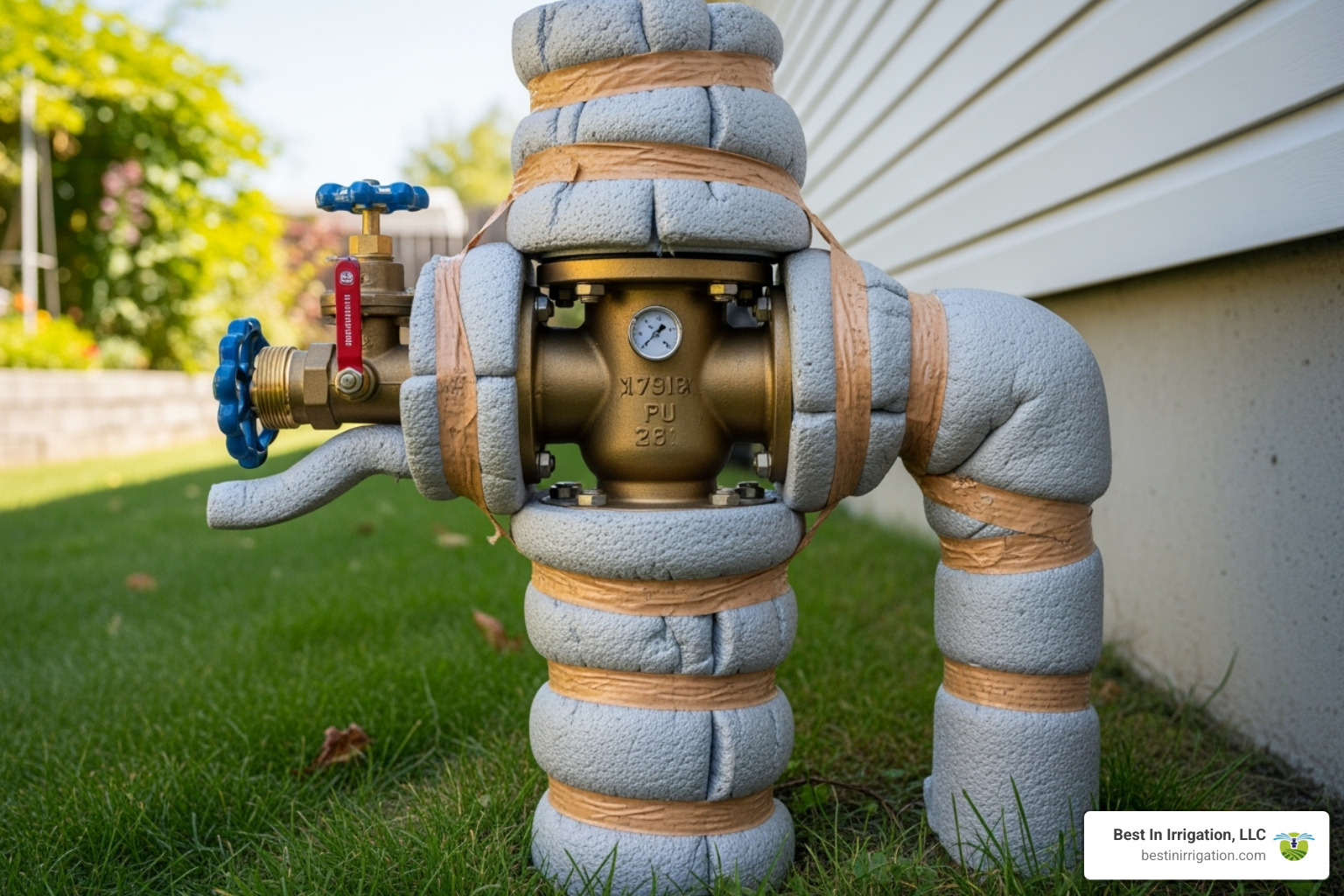
Any components exposed to the air are at high risk. Your backflow preventer is especially vulnerable. After shutting its valves, wrap it thoroughly with insulation covers and foam tape. Do not block any air vents or drain outlets. Apply the same protection to any other exposed pipes.
For ball-type shutoff valves on backflow preventers, leave them at a 45-degree angle after draining to prevent water from getting trapped in the seal. Any removable components like faucet timers or filters should be brought inside for the winter. Seal open faucet ends to keep out debris and pests.
More info about Irrigation System Maintenance
Step 2: A Detailed Guide to Winterizing Sprinkler Systems
With the system prepped, the next step is removing all water from the pipes. There are three primary methods for winterizing sprinkler systems; the best choice depends on your system’s design and your comfort with DIY projects. Hunter Industries – Winterizing Your Irrigation System offers excellent insights, emphasizing that improper winterization can lead to significant damage.
The Manual Drain Method
This straightforward approach uses gravity to drain the system. It works well if your irrigation lines were installed with a proper slope leading to manual drain valves at the lowest points of each zone. These valves are typically threaded caps or small ball valves.
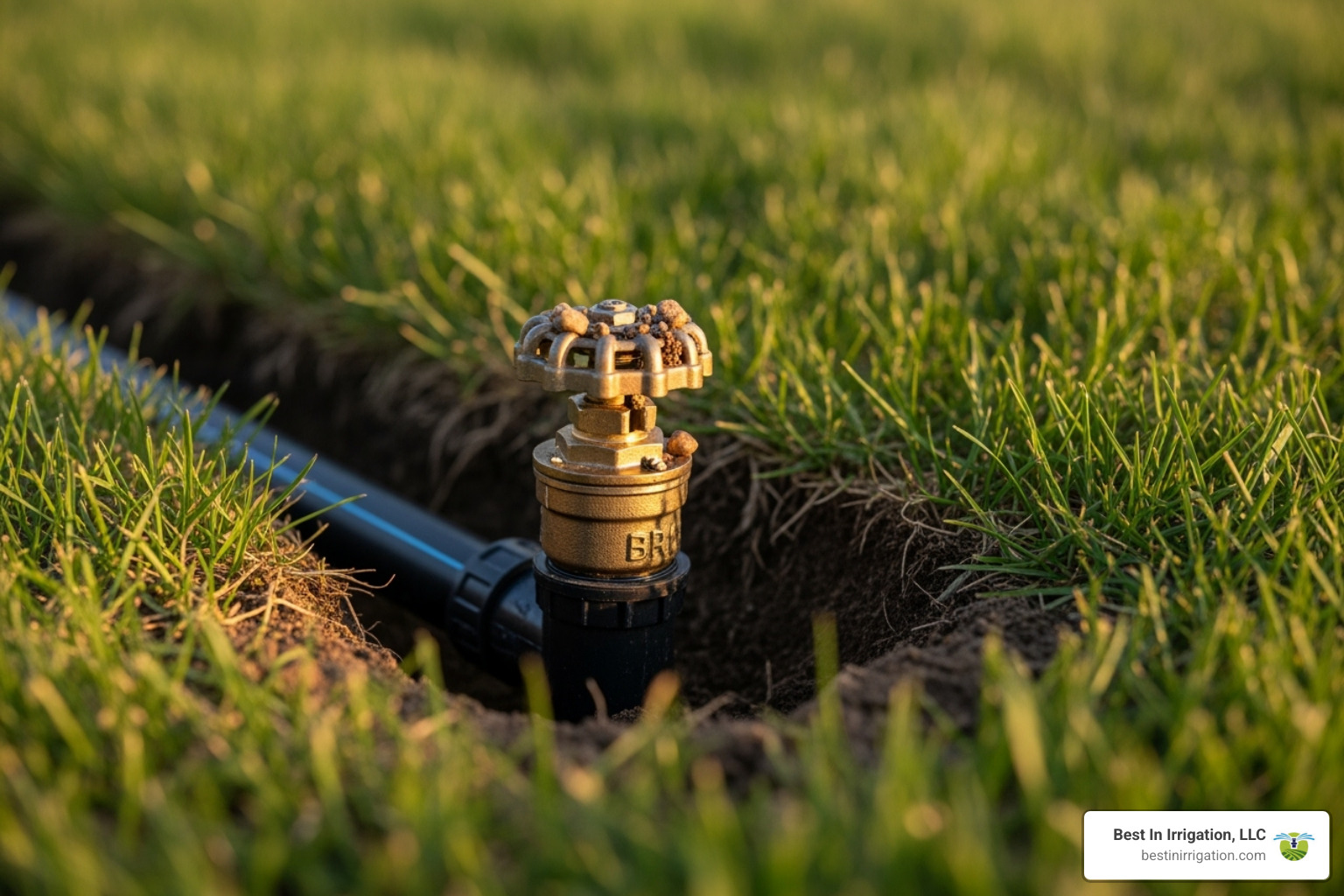
To drain, locate and open each drain valve, starting with the one closest to the main shut-off. Open any drain ports on your backflow preventer as well. If your sprinkler heads have check valves, you may need to gently pull up on each head to let trapped water escape. Once the water stops flowing, securely close all drain valves to keep out debris during winter. The main limitation is that this method may not remove all water if lines aren’t perfectly sloped.
More info about Draining Sprinkler System for Winter
The Automatic Drain Method
Many modern residential systems feature automatic drain valves, which make winterizing sprinkler systems easier. These spring-loaded valves are installed at low points and open automatically when water pressure drops, releasing water from the lines.
To activate them, simply turn on one sprinkler zone at the controller after shutting off the main water supply. The pressure drop signals the valves to open. For some systems, loosening the solenoid caps on the control valves can help air enter and push out more water. Remember to tighten them when finished.
While convenient, this method may still leave residual water in valve bodies or low spots. For this reason, many professionals in Massachusetts recommend the blow-out method for the most complete water removal, especially given our harsh winters.
The Blow-Out Method: The Most Thorough Approach
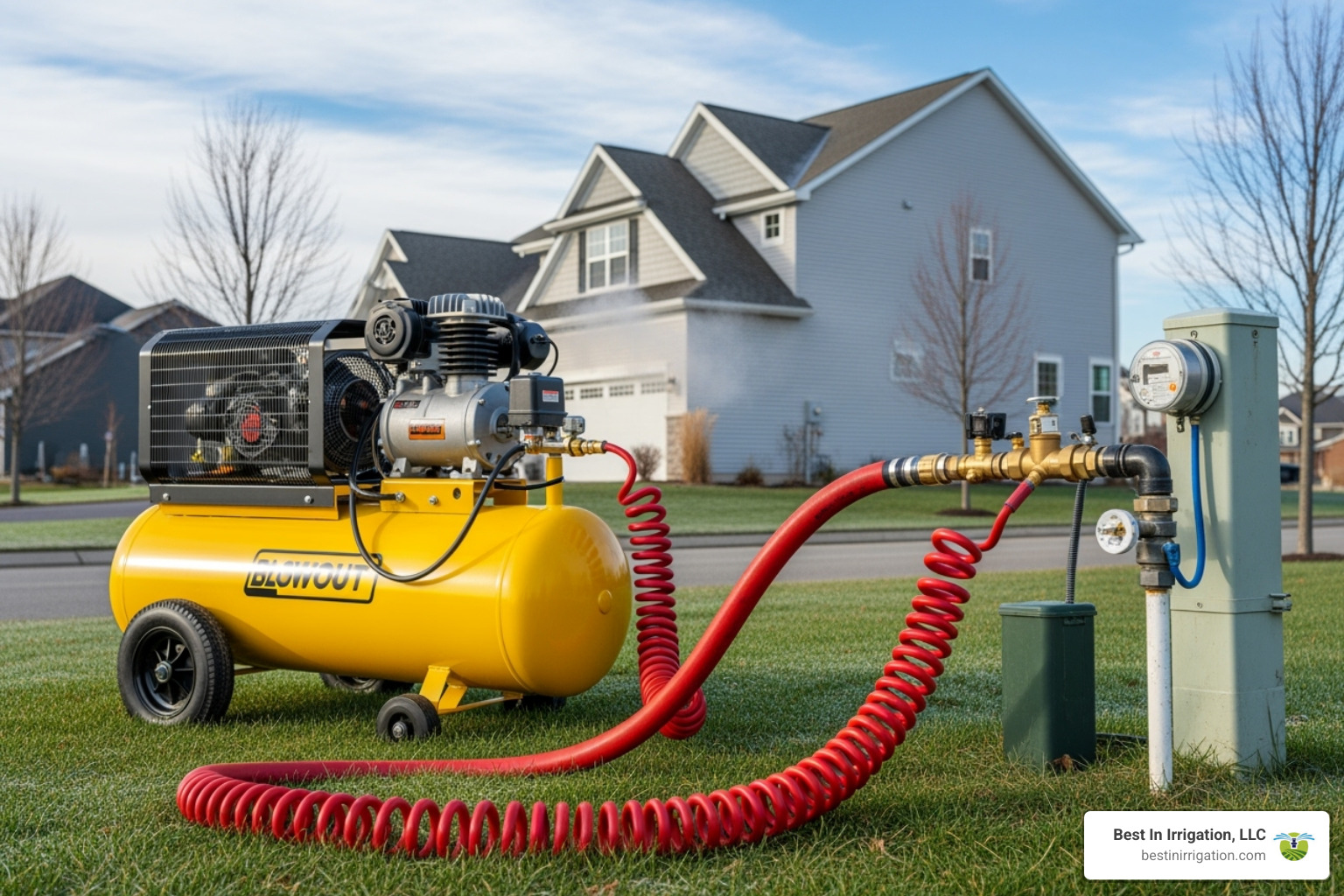
For complete water removal and peace of mind, the blow-out method is the gold standard for winterizing sprinkler systems. It uses compressed air to force every drop of water out of pipes, valves, and sprinkler heads. While it’s the most effective method, it requires specific equipment and strict safety protocols.
You’ll need an air compressor capable of delivering 30 to 50 CFM (cubic feet per minute) at 40 to 80 PSI (pounds per square inch). A typical garage compressor is usually not powerful enough. You need both sufficient volume (CFM) and pressure (PSI) to do the job correctly.
Safety is paramount. The risk of injury from compressed air and flying debris is serious. ANSI-approved safety eye protection is non-negotiable. Never stand over any irrigation components while the system is pressurized. Rainbird – How Do I Winterize My Irrigation System provides excellent guidance on the critical safety measures for this method.
More info about How to Blow Out Lawn Sprinkler System
Step 3: Executing the Blow-Out Method Safely and Effectively
The blow-out method is the most thorough way to winterize, but it demands respect for safety. When done correctly, it provides maximum protection against freeze damage by ensuring nearly all water is removed from the system.
Safety First: Essential Precautions
Compressed air is powerful. Follow these precautions when winterizing sprinkler systems:
- Wear ANSI-approved safety goggles. Flying dirt, rocks, or component fragments can cause serious eye injury.
- Never stand directly over sprinkler heads, valves, or pipes while the system is under air pressure.
- Keep children and pets away from the work area.
- Never blow compressed air through your backflow preventer. Connect the compressor to a port located after this device to avoid damaging its internal components.
- Consider hearing protection, as air compressors can be loud.
Setting the Correct Air Pressure
Using the correct air pressure is critical to avoid damaging your pipes. The pressure limit depends on your pipe material:
- PVC (rigid white pipe): Never exceed 80 PSI.
- Polyethylene (flexible black pipe): Keep pressure below 50 PSI.
Always aim for the lower end of the safe range. It is better to use lower pressure and take more time than to risk cracking pipes. A pressure regulator on your compressor is highly recommended to maintain a safe, consistent level. The goal is to use high air volume (CFM) at a controlled, lower pressure to gently push water out.
More info about Best Pressure to Blow Out Sprinklers
Step-by-Step Blow-Out Process for Winterizing Sprinkler Systems
Follow these steps carefully:
- Connect the compressor. With the main water supply off, securely attach the air hose to the system’s blow-out port (after the backflow preventer).
- Activate the first zone. At the controller, turn on the zone furthest from the compressor or at the highest elevation. Never run the compressor without at least one zone open.
- Introduce air slowly. Go to the compressor and gradually open the valve. You will see water spray from the sprinkler heads in the active zone.
- Monitor the heads. The water flow will turn to sputtering and then a fine mist. This usually takes 2-3 minutes per zone. Once you see only mist, shut off the air supply to that zone. Do not blow air through dry lines, as the friction can create heat and damage plastic components.
- Use short cycles. For larger zones, use two or three short cycles of about two minutes each instead of one long blast to prevent heat damage.
- Repeat for all zones. Work systematically through all zones, turning off the completed one and activating the next before repeating the process.
- Disconnect safely. After clearing all zones, turn off the compressor, close its valve, and disconnect the hose from your system.
- Release trapped air. Go back to your backflow preventer and open/close its valves or test cocks a few times to release any residual pressure.
DIY vs. Hiring a Pro: What’s Right for You?
After learning about winterizing sprinkler systems, you must decide: do it yourself or hire a professional? The right choice depends on several factors.
- Cost: DIY can be nearly free if you own the right equipment. However, renting a suitable air compressor (30-50 CFM) adds expense. Professional service has a fee but includes expertise, specialized equipment, and insurance.
- Time: A DIY job can take 30 minutes to 3 hours, depending on system size and your experience. A professional can typically complete the work much more quickly.
- Required Tools: The blow-out method requires a high-volume air compressor. A small home or pancake compressor lacks the necessary air volume (CFM) to clear the lines completely, leaving your system at risk of freeze damage. Professionals use equipment designed for this specific task.
- Risk Level: With DIY, there’s a risk of system damage from incorrect pressure or incomplete water removal, leading to expensive repairs. There is also a risk of personal injury if safety protocols are not followed. Professionals are trained, insured, and often guarantee their work, protecting you from liability and costly mistakes.
- Peace of Mind: For many homeowners in Massachusetts, the assurance that an expert has correctly prepared their system for a harsh winter is worth the cost. It prevents the headache of finding burst pipes in the spring, a repair that often costs far more than the price of professional winterization.
More info about Cost of Sprinkler Winterization
For homeowners in Massachusetts who prefer a guaranteed, professional service, the experts at Best In Irrigation, LLC have 9 years of experience ensuring residential irrigation systems are protected all winter long. Sometimes the smartest investment is knowing when to call in the pros.
Frequently Asked Questions about Winterizing Sprinkler Systems
Here are answers to some of the most common questions we hear about winterizing sprinkler systems.
Can I use my small home air compressor to blow out my sprinklers?
No, this is not recommended. While a small home compressor might reach the required pressure (PSI), it almost certainly lacks the necessary air volume (CFM). To effectively clear long irrigation lines, you need a sustained push of air (30-50 CFM). An underpowered compressor will leave water trapped in the pipes, leading to freeze damage and defeating the purpose of winterization.
More info about Blowing Out Sprinklers With Small Compressor
When is the absolute best time to winterize my system?
The ideal time is before the first hard frost—when temperatures are predicted to drop below 32°F (0°C) for several hours. In Massachusetts, this window is typically in October or early November. It is always better to be too early than too late. Above-ground components like backflow preventers are at immediate risk from the first freeze, so don’t wait.
What should I do with my garden hoses and other watering tools?
Your other watering equipment also needs protection. Follow this checklist:
- Disconnect: Remove all hoses, wands, nozzles, and splitters from outdoor spigots.
- Drain: Unwind hoses completely on a sloped surface to drain all water.
- Inspect: Check for leaks or damage and make any necessary repairs now.
- Store: Keep all items in a garage, shed, or basement where they won’t freeze.
- Protect Spigots: Shut off the interior water supply to your exterior faucets, open the spigots to drain them, and then cover them with insulated faucet covers.
Ensure a Trouble-Free Spring with Proper Winterization
Winterizing sprinkler systems is a smart investment in your home’s landscape. Properly protecting your residential irrigation system now prevents the costly surprise of burst pipes and a flooded yard in the spring. Every pipe and valve you safeguard is one less repair bill when the snow melts.
While the DIY route offers the satisfaction of mastering a new skill, it comes with risks. Using the wrong equipment or pressure can cause expensive damage. For homeowners who want guaranteed protection without the learning curve or equipment investment, professional service is the answer.
For homeowners across Massachusetts, the experts at Best In Irrigation, LLC bring 9 years of experience to every winterization job. We understand what New England winters can do to an unprepared system. We’ve seen the results of using an underpowered compressor or waiting too long to winterize. Our team knows how to clear every last drop from your lines efficiently and safely, using specialized equipment and proven techniques.
When spring arrives, you’ll be able to simply turn on your controller and watch your lawn come back to life, while others may be facing unexpected repair calls. That is the real value of proper winterization—a smooth, worry-free start to a new growing season.
Learn more about our Irrigation System Winterization services
