


Winterizing a Rainbird Sprinkler System: Top 4 Easy Steps
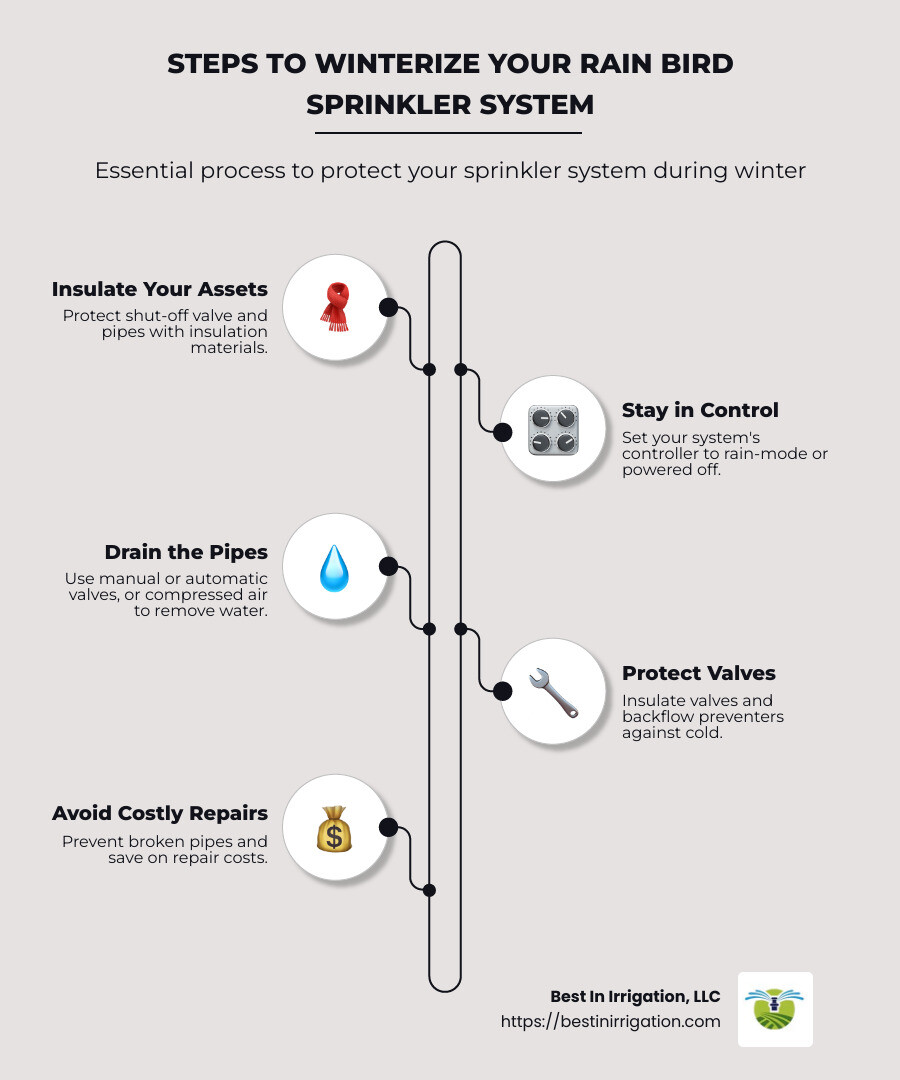
Winterizing a rainbird sprinkler system is crucial to safeguard your investment from harsh winter conditions. Without these crucial steps, your irrigation system may be at risk of significant damage from freezing temperatures. Here’s what you need to know:
- Insulate your assets: Protect your main shut-off valve and pipes with insulation materials to prevent freezing.
- Stay in control: Ensure your system’s controller is in rain-mode or powered off to prevent accidental activation.
- Drain the pipes: Remove all water from the system using a manual or automatic drain valve, or the compressed air blow-out method.
- Protect valves and backflow preventers: Insulate these components to ensure they withstand cold weather without damage.
Failing to winterize can lead to broken pipes, costly repairs, and unnecessary water waste. For Massachusetts homeowners in particular, this process is not just a smart maintenance step—it’s essential protection against the severe New England winters. By following these simple precautionary measures, you ensure that your system will be ready to go come spring.
Similar topics to winterizing a rainbird sprinkler system:
– blow out sprinkler system near me
– commercial sprinkler blowout
– install sprinkler blowout
Why Winterize Your Rain Bird Sprinkler System?
Winterizing your Rain Bird sprinkler system is a smart move for several reasons. Let’s break it down:
Prevent Damage
The main goal of winterizing is to prevent damage. When water left in your sprinkler system freezes, it expands. This expansion can cause pipes to crack or burst, leading to expensive repairs. By winterizing, you remove water from the system, reducing the risk of damage.
Freezing Pipes
Freezing pipes are a common problem during cold weather. The pipes in your sprinkler system are no exception. In places like North Texas, freezing temperatures might not be as frequent, but they can still occur. Protecting your system from freezing means you won’t have to deal with the hassle of repairing or replacing pipes.
Cost Savings
By taking the time to winterize, you’re not just protecting your system—you’re also saving money. Repairs for burst pipes or damaged valves can be costly. And if your system is out of commission, you might face higher water bills from inefficient watering methods. Winterizing helps you avoid these costs and keeps your system running smoothly.
A Simple Step for Peace of Mind
Winterizing your Rain Bird sprinkler system is an easy way to ensure your irrigation system is ready for spring. By doing this, you’re taking a proactive step to maintain your investment and keep your lawn healthy. Plus, you’ll have peace of mind knowing your system is protected against winter’s worst.
In summary, winterizing your Rain Bird sprinkler system is essential for preventing damage, avoiding freezing pipes, and saving money. It’s a straightforward process that offers significant benefits, ensuring your system is ready to go when warmer weather returns.
When to Winterize Your Sprinkler System
Timing is everything when it comes to winterizing a Rain Bird sprinkler system. Knowing when to start the process can save you from unexpected damage and costly repairs.
First Hard Freeze
The key moment to watch for is the first hard freeze. This is when the temperature drops below 32 degrees Fahrenheit (0 degrees Celsius) for an extended period. Freezing temperatures can cause residual water in your sprinkler system to freeze, leading to potential damage. Ideally, you should winterize your system well before this freeze hits.
Local Weather Forecasts
To determine the right time to winterize, keep an eye on your local weather forecasts. Meteorologists often predict the first hard freeze, giving you a heads-up to prepare your system. By staying informed, you can plan and act at the right moment.
October
For many regions, October is the best month to winterize your sprinkler system. During this time, temperatures typically start to drop, signaling the approach of colder weather. By winterizing in October, you ensure your system is ready before any unexpected freezes occur.
By following these guidelines, you can effectively protect your Rain Bird sprinkler system from the harsh effects of winter weather.
Step-by-Step Guide to Winterizing Your Rain Bird Sprinkler System
Step 1: Insulate Your Assets
Start by shutting off the water supply to your irrigation system. Locate the main shut-off valve—this is crucial for preventing water from entering the system during the cold months. If your system doesn’t have one, consider installing it as a future safeguard.
Next, focus on insulation. Wrap the main shut-off valve with foam insulation tape and cover it with a plastic bag. This step protects it from freezing temperatures. Don’t forget to insulate any above-ground piping with self-sticking foam-insulating tape or tubes, which are easily found at home supply stores. Proper insulation is your first line of defense against freeze damage.
Step 2: Stay in Control
If you have an automatic system, it’s time to manage the controller (timer). Switch it to “rain-mode.” This setting stops the system from activating the valves without erasing your programmed settings. If your controller operates a pump, remove the wires from the Master Valve (MV) and common terminals to prevent accidental activation.
Alternatively, you can turn off the controller’s power, but be prepared to reprogram it in the spring. Using rain-mode is a simple way to keep your settings intact while ensuring no accidental watering occurs.
Step 3: Drain the Pipes
Draining the pipes is essential to prevent any water from freezing inside them. There are three main methods:
- Manual Drain Valve: Open the drain valve to let the water escape.
- Automatic Drain Valve: These valves automatically open and drain water when the system is shut off.
- Compressed Air Blow-Out Method: This method involves using an air compressor to blow out any remaining water. However, due to potential safety risks, it’s often best to consult an irrigation specialist.
Each method has its pros and cons, so choose the one that fits your system best. The goal is to ensure no water remains in the pipes.
Step 4: Protect Valves and Backflow Preventers
Finally, focus on protecting valves and backflow preventers. Use insulation tape to wrap these components, especially if they are above ground. Be careful not to block air vents and drain outlets on backflow preventers, as these need to remain unobstructed for proper function.
By taking these steps, you ensure that your system is well-protected against winter’s harsh conditions. Proper winterization not only prevents damage but also saves you the hassle and cost of repairs come spring.
Methods for Draining Your Sprinkler System
Draining your sprinkler system is a crucial step in winterizing a Rain Bird system. This ensures that no water remains in the pipes, which can freeze and cause damage. Let’s explore the three main methods: manual drain, automatic drain, and the blow-out method.
Manual Drain
Manual drain valves are straightforward but require some hands-on work. Here’s how you do it:
- Turn off the water supply to the system.
- Locate the manual drain valves. These are usually at low points or ends of the irrigation piping.
- Open the valves slowly to allow water to escape from the pipes. Make sure you wear eye protection, as water can be under pressure.
- Once the water has drained completely, close the valves.
This method is effective but can be time-consuming if you have a large system with many valves.
Automatic Drain
Automatic drain valves simplify the process. These are designed to open and release water automatically when the system is shut off:
- Check for puddling: After shutting off the system, walk around and check for any excessive puddling. This could indicate a stuck valve.
- Minimal intervention: As these valves work automatically, they save you time and effort.
Automatic drains are convenient but require regular checks to ensure they function correctly.
Blow-Out Method
The blow-out method involves using an air compressor to clear water from the system. This is the most thorough way but requires caution:
- Set up an air compressor: You’ll need one with a capacity of at least 50-70 gallons and a flow rate of 185 cfm or greater.
- Regulate pressure: Keep the pressure between 50-85 psi to avoid damaging the system.
- Open one valve before starting the compressor: This balances pressure and prevents damage.
- Proceed to blow out each zone individually, ensuring not to overheat the lines.
Safety first: Wear eye protection and avoid standing over irrigation components during the blow-out. If unsure about this method, consult an irrigation specialist.
Using the blow-out method requires the right equipment and a careful approach to avoid damaging the system.
By choosing the right method for draining your sprinkler system, you can effectively protect it from winter damage. Each method has its advantages, so consider your system’s setup and your comfort level with each approach.
Frequently Asked Questions about Winterizing a Rain Bird Sprinkler System
How do I winterize my Rain Bird sprinkler system?
Winterizing a Rain Bird sprinkler system involves several key steps to ensure it is protected from freezing temperatures. One of the most effective ways to clear water from your system is the blow-out method. This method uses an air compressor to remove water from the pipes, preventing freeze damage.
Here’s a quick rundown of the blow-out method:
- Use an air compressor: Choose one with a capacity of 50-70 gallons and a flow rate of 185 cfm.
- Regulate the pressure: Keep it between 50-85 psi.
- Open valves one at a time: This helps in managing the pressure and ensures thorough drainage.
Safety is crucial during this process. Always wear eye protection and avoid standing over irrigation parts when the compressor is running. If you’re not comfortable with this method, it’s wise to consult an irrigation specialist. They can ensure the process is done safely and effectively.
Can I winterize my sprinkler system myself?
Yes, you can winterize your sprinkler system yourself, especially if you’re comfortable with the process. There are three main methods to drain the system: manual drain, automatic drain, and the blow-out method.
- Manual Drain: Open each manual drain valve to let the water out. This method is straightforward but may require more time.
- Automatic Drain: These valves open automatically when the system is shut off, making it less labor-intensive.
- Blow-Out Method: Most thorough, but requires an air compressor and should be done with caution.
If you’re unsure about any of these methods, hiring a professional can save you from potential mishaps.
How do you winterize a hydro rain sprinkler system?
Winterizing a hydro rain sprinkler system is similar but involves specific components like the threaded riser, top cap, and internal assembly.
Here’s a simplified process:
- Shut off the water supply to prevent additional water from entering the system.
- Remove the top cap from the riser to access the internal assembly.
- Drain the system using the manual or automatic drain method.
- Ensure all parts, including the internal assembly, are free from water.
It’s essential to handle these components carefully to avoid damage. If you’re not familiar with these parts, consulting an irrigation specialist can provide peace of mind and ensure your system is properly winterized.
Conclusion
Winterizing a Rain Bird sprinkler system is a crucial step in protecting your investment and ensuring your landscape stays healthy year after year. At Best In Irrigation, LLC, we understand the unique challenges that come with maintaining irrigation systems in the New England region, especially during harsh winters.
With over nine years of experience, we offer professional services custom to meet the specific needs of both residential and commercial landscapes. Our team is dedicated to using cutting-edge technology and innovative solutions to maximize water conservation, which not only helps protect our environment but also saves you money on water bills.
By choosing Best In Irrigation, LLC, you’re not just getting a service—you’re getting a partner committed to the longevity and efficiency of your irrigation system. Our expertise in the New England climate ensures that your system is prepared for the winter months, minimizing the risk of costly repairs and extending the life of your equipment.
If you’re ready to ensure your irrigation system is properly winterized, consider our professional services for a hassle-free experience. Learn more about our lawn irrigation system blowouts and let us help you protect your landscape investment. Your lawn deserves the best care, and with our expert team, you can rest assured it’s in good hands.
