


What gauge wire is best for landscape lighting 2024 Guide
When planning your outdoor landscape lighting, understanding what gauge wire is best for landscape lighting is crucial for a successful and efficient setup. The wire gauge you choose affects your lighting system’s overall performance and safety. Here’s a quick guide:
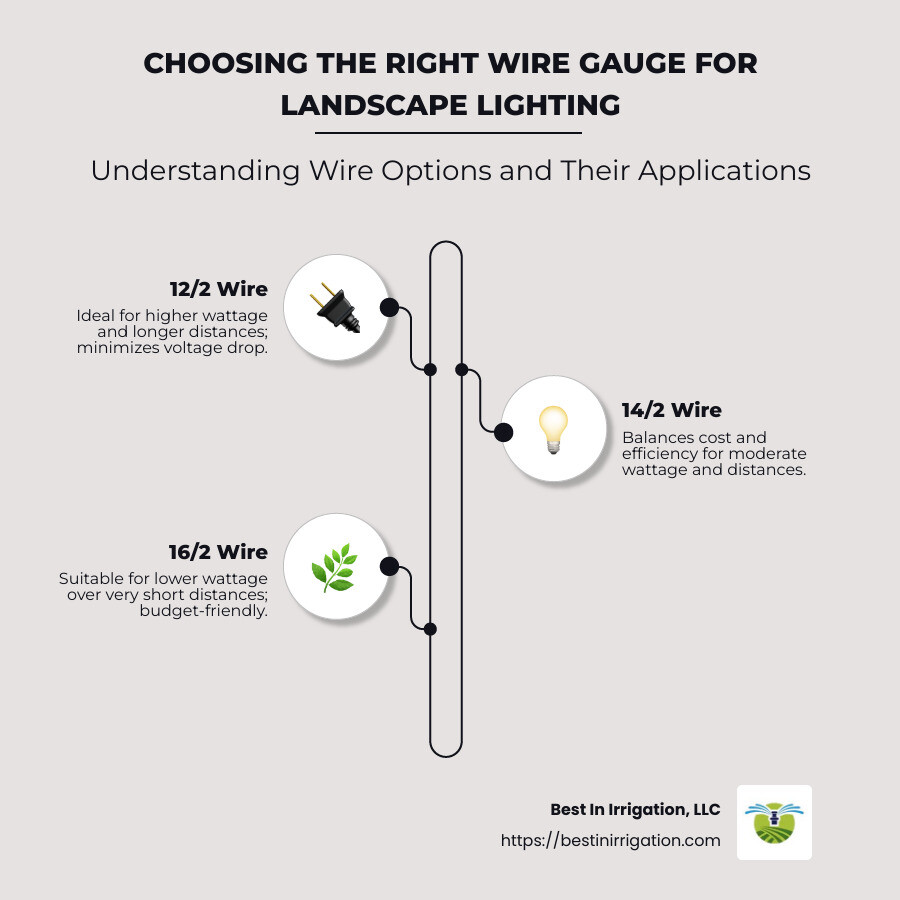
- 12/2 Wire: Ideal for higher wattage and longer distances; provides less voltage drop.
- 14/2 Wire: Suited for moderate wattage and distances; balances cost and efficiency.
- 16/2 Wire: Best for lower wattage over short distances; budget-friendly but limited.
Landscape lighting not only improves the beauty of your yard but also promotes safety by illuminating pathways and highlighting architectural features. Choosing the right wire gauge ensures your lights perform efficiently and safely, avoiding issues like dim lighting or power loss.
Whether illuminating a lush Massachusetts garden or navigating the complexities of a larger landscape project, selecting the proper wire gauge is the first step in creating an efficient and neat outdoor space.
Simple what gauge wire is best for landscape lighting glossary:
– best low voltage landscaping lights
– best landscape lighting transformer
– landscape lighting
Understanding Wire Gauge
When it comes to landscape lighting, understanding wire gauge is essential. It determines how well your lighting system will perform and how safe it will be. Let’s break down the basics of wire gauge, including wire diameter, voltage drop, and resistance.
What is Wire Gauge?
Wire gauge refers to the thickness or diameter of a wire. In the U.S., the American Wire Gauge (AWG) system is commonly used to measure this. The lower the AWG number, the thicker the wire. For example, a 12-gauge wire is thicker than a 14-gauge wire.
Thicker wires can carry more current with less resistance. This is crucial for landscape lighting because it affects how far you can run the wire and how much power it can handle.
Why Wire Gauge Matters for Landscape Lighting
Voltage Drop: One of the most important reasons to choose the right wire gauge is to minimize voltage drop. Voltage drop occurs when electricity loses some of its power as it travels through the wire. If the drop is too high, your lights may appear dim or not work at all.
Power Efficiency: Using the correct wire gauge helps ensure that your landscape lighting system is power efficient. Thicker wires mean less resistance and less wasted electricity. This not only saves energy but also extends the lifespan of your lighting fixtures.
Light Performance: Proper wire gauge ensures your lights operate at their full potential. This means they’ll shine brightly and consistently, enhancing the beauty and security of your outdoor spaces.
In summary, choosing the right wire gauge is crucial for optimal performance and efficiency in your landscape lighting system. The next section will explore the different types of landscape lighting wires available, helping you make an informed choice for your project.
Types of Landscape Lighting Wires
When it comes to landscape lighting, choosing the right type of wire is as important as selecting the correct gauge. Let’s explore the three main types of wires you might consider: copper wire, direct burial cable, and underground burial cable. Each has unique features that make it suitable for different installations.
Copper Wire
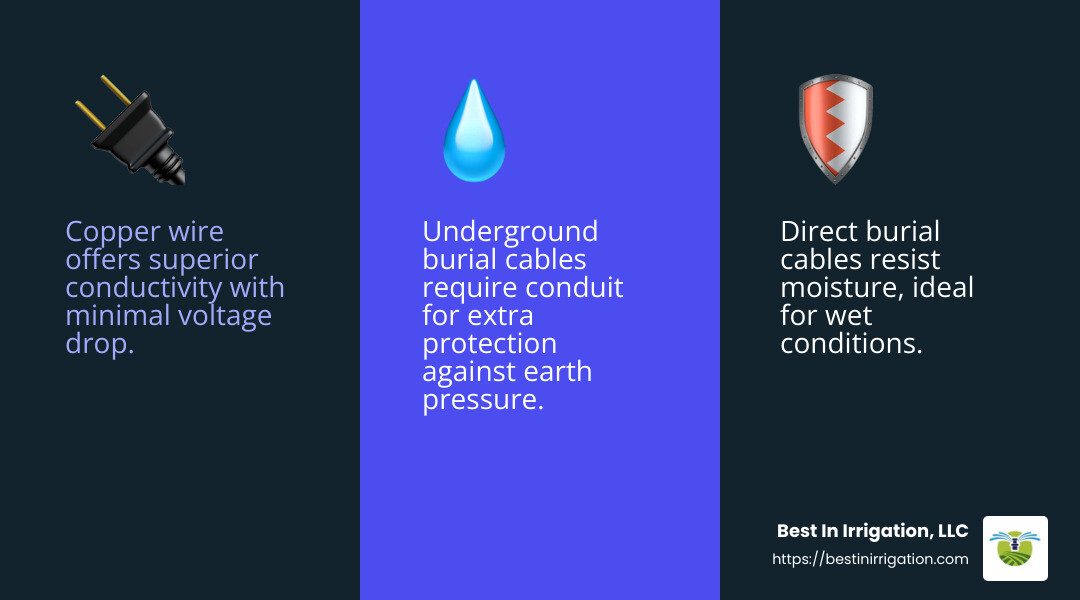
Copper wire is a popular choice for landscape lighting due to its excellent conductivity and durability. It offers low resistance, which means less energy is lost as electricity travels through the wire. This ensures that your lights stay bright and efficient.
- Cost: Copper wire is generally more expensive than other materials, but its long-lasting performance can make it a worthwhile investment.
- Performance: Known for its superior conductivity, copper wire ensures optimal light performance with minimal voltage drop.
- Durability: Copper is resistant to corrosion, making it an ideal choice for outdoor use where it may be exposed to moisture and varying temperatures.
Direct Burial Cable
Direct burial cables are designed specifically for outdoor use. They are built to withstand harsh conditions without the need for additional protection like conduit.
- No Conduit Needed: These cables can be buried directly in the ground, simplifying installation and reducing costs.
- Moisture Resistance: The insulation of direct burial cables is designed to resist moisture, ensuring long-term reliability even in wet conditions.
Underground Burial Cable
While similar to direct burial cables, underground burial cables often require additional protection, such as conduit, to handle greater earth pressure.
- Requires Conduit: These cables are typically used in areas with high foot or vehicle traffic, where extra protection is needed to prevent damage.
- Earth Pressure Resistance: The added conduit helps shield the cable from earth pressure, ensuring it remains intact and functional.
Each type of wire has its own strengths and is suited for specific applications. Understanding these differences will help you choose the best option for your landscape lighting project.
What Gauge Wire is Best for Landscape Lighting?
When planning your landscape lighting, choosing the right wire gauge is crucial. It affects how far you can run the wire, how many lights you can connect, and how efficiently they will perform. Let’s explore the three common wire gauges used in landscape lighting: 12/2 wire, 14/2 wire, and 16/2 wire.
12/2 Wire
12/2 wire is the thickest of the three options. It’s ideal for installations that require higher wattage and longer distances.
- Thicker Wire: The larger diameter of 12/2 wire reduces resistance, minimizing voltage drop. This keeps your lights bright and efficient even over long distances.
- Higher Wattage: It can handle more power, making it suitable for setups with multiple high-wattage lights.
- Longer Distances: If your lighting system spans a large area, 12/2 wire is your best bet. It ensures consistent performance across the entire run.
14/2 Wire
14/2 wire is a middle-ground option, offering a balance between performance and cost.
- Medium Thickness: This wire is slightly thinner than 12/2, which makes it more affordable while still providing decent performance for moderate installations.
- Moderate Wattage: Suitable for setups with a moderate number of lights or lower wattage bulbs.
- Shorter Distances: Ideal for medium-length runs, typically up to 100 feet while maintaining optimal brightness.
16/2 Wire
16/2 wire is the thinnest and most affordable option but comes with limitations.
- Thinner Wire: Its smaller diameter means higher resistance, which can lead to significant voltage drops.
- Lower Wattage: Best for setups with fewer, low-wattage lights.
- Very Short Distances: Ideal for short runs, where the total length doesn’t exceed 50 feet to avoid dimming.
Choosing the right wire gauge depends on your specific needs, including the number of lights, total wattage, and distance of the run. 12/2 wire is great for larger, more demanding installations, while 14/2 wire and 16/2 wire are suitable for smaller, less intensive projects.
Factors to Consider When Choosing Wire Gauge
When selecting the right wire gauge for your landscape lighting, three key factors come into play: the number of lights, total wattage, and the distance of the run. Each of these factors affects the wire gauge needed to ensure optimal performance and efficiency.
Number of Lights
The number of lights you plan to install significantly impacts the wire gauge choice. More lights mean a higher circuit load, which requires a wire gauge that can handle the increased demand. If you’re using many lights, especially high-wattage ones, consider using 12/2 wire. This thicker wire can manage the load without causing a voltage drop, ensuring your lights stay bright.
Total Wattage
Total wattage is another critical factor. Each wire gauge has a maximum wattage it can support. For instance, 12/2 wire can handle higher wattage, making it suitable for large installations with powerful lights. Conversely, 16/2 wire is limited to lower wattage, ideal for smaller setups. Always ensure your total wattage doesn’t exceed 80% of your transformer’s capacity to avoid overloading.
Distance of Run
The distance the wire needs to run from the transformer to the last light affects the voltage drop. Longer distances increase resistance, leading to potential dimming. For longer runs, thicker wires like 12/2 are recommended as they have lower resistance and minimize voltage drop. If your distance is short, 14/2 wire or even 16/2 wire might suffice, but always calculate the total length (including the return path) to ensure you’re within safe limits.
In summary, when deciding what gauge wire is best for landscape lighting, consider the number of lights, total wattage, and the distance of the run. Balancing these factors will help you choose the right wire gauge for a reliable and efficient lighting setup.
Installation Tips for Landscape Lighting Wires
When installing landscape lighting, proper wiring is crucial for both safety and performance. Here are some essential tips for installation, focusing on burying depth, conduit use, and connectors.
Burying Depth
To ensure safety and durability, it’s important to bury landscape wires at the correct depth. According to NEC 300.5, the minimum cover requirement for most residential areas is 6 inches. This means you should dig a trench deep enough to provide this cover over the wires. For more labor-intensive areas like under driveways or parking lots, the depth should be increased to 18-24 inches. The trench depth must be deeper than the cover requirement to account for the overall depth of the cable.
Conduit Use
While low voltage landscape wires are rated for direct burial and do not require a conduit, using one can provide extra protection. Conduits shield wires from physical damage and make it easier to re-run wires in the future if needed. If your installation area is prone to heavy traffic or potential disturbances, consider using a conduit to extend the lifespan of your wiring.
Connectors
In outdoor settings, moisture is a common concern. Use grease-filled connectors or silicone-filled wire nuts to protect your connections from water and corrosion. These specialized connectors are designed for wet conditions and ensure a secure, long-lasting connection. Properly sealed connectors prevent short circuits and maintain the integrity of your lighting system.
By following these installation tips, you can ensure that your landscape lighting is both safe and effective. Proper burying, conduit use, and connectors will help your system withstand the elements and provide reliable illumination for years to come.
Frequently Asked Questions about Wire Gauge for Landscape Lighting
How Far Can You Run 14 Gauge Landscape Wire?
When planning your landscape lighting setup, it’s important to know the limits of your wire gauge. 14-gauge wire is a popular choice for many outdoor lighting projects, but it has its limits. You can safely run 14-gauge landscape wire up to 100 feet with a total load of 90 watts. Beyond this distance, you might experience a voltage drop, which can dim your lights and reduce their performance. Always check the total wattage of your lighting system and ensure it doesn’t exceed the recommended limits for 14-gauge wire.
Do You Have to Bury Landscape Wire?
Burying landscape wire is a common practice, but it’s not always required. Most landscape wires are rated for direct burial, meaning they can be installed underground without additional protection. However, burying your wires can protect them from physical damage and keep your yard looking tidy. If you do choose to bury your wires, make sure to follow the recommended burying depth guidelines to ensure safety and compliance with local codes.
Does Landscape Wire Need To Be in Conduit?
While landscape wire is rated for direct burial and doesn’t require a conduit, using one can offer additional protection. Conduits shield the wire from potential damage caused by digging, pests, or heavy foot traffic. They also make future maintenance easier, as wires can be replaced or upgraded without disturbing the surrounding soil. If your landscape lighting installation is in an area prone to disturbances, consider using a conduit for added peace of mind.
Conclusion
Choosing the right wire gauge is crucial for ensuring the optimal performance of your landscape lighting system. At Best In Irrigation, LLC, we understand that the right wire can make all the difference in changing your outdoor space into a well-lit, inviting environment.
Selecting the Right Wire Gauge
When deciding what gauge wire is best for landscape lighting, consider the number of fixtures, total wattage, and the length of the wire run. For longer distances and higher wattages, a thicker wire like 12/2 may be necessary to prevent voltage drop and maintain brightness. For shorter runs or fewer lights, 14/2 or 16/2 wire can be sufficient.
Ensuring Optimal Performance
Proper installation is key to maximizing the lifespan and efficiency of your lighting system. Follow guidelines for burying depth and consider using conduit for added protection in high-traffic areas. Also, ensure your connectors are suitable for wet conditions to prevent moisture-related issues.
Why Choose Best In Irrigation, LLC?
With our expertise in the New England region, Best In Irrigation, LLC offers custom solutions that focus on quality, sustainability, and customer satisfaction. Our team is ready to help you choose the right wire gauge and install a lighting system that improves both the beauty and safety of your landscape.
Illuminate your outdoors with confidence by exploring our landscape lighting solutions. Let us help you create a stunning, well-lit landscape that you can enjoy day and night.
