


Conserving Every Drop: Why Water-Saving Irrigation Matters
Water-saving irrigation techniques are essential for maintaining a beautiful garden while minimizing water usage and reducing utility bills. For Massachusetts homeowners looking to maintain lush landscapes without wasteful water practices, here are the most effective methods:
- Drip irrigation systems – Deliver water directly to plant roots with 90% efficiency
- Smart controllers – Adjust watering schedules based on weather conditions
- Rainwater harvesting – Collect and reuse natural precipitation
- Proper scheduling – Water during early morning hours to reduce evaporation
- Mulching – Helps soil retain moisture and reduces watering frequency
In the Northeast, where we can experience both drought conditions and heavy rainfall, implementing efficient irrigation practices isn’t just environmentally responsible—it’s financially smart too. The EPA estimates that homeowners can save up to 8,800 gallons of water annually by switching to water-efficient irrigation methods.
At Best In Irrigation, LLC, we’ve seen Massachusetts homeowners reduce their water bills by up to 30% after installing properly designed irrigation systems. The key is selecting techniques that work with your specific landscape needs and local climate conditions.
Water conservation doesn’t mean sacrificing your garden’s beauty. In fact, many plants actually thrive with more targeted, efficient watering methods that prevent the problems associated with overwatering, such as root rot and fungal diseases.
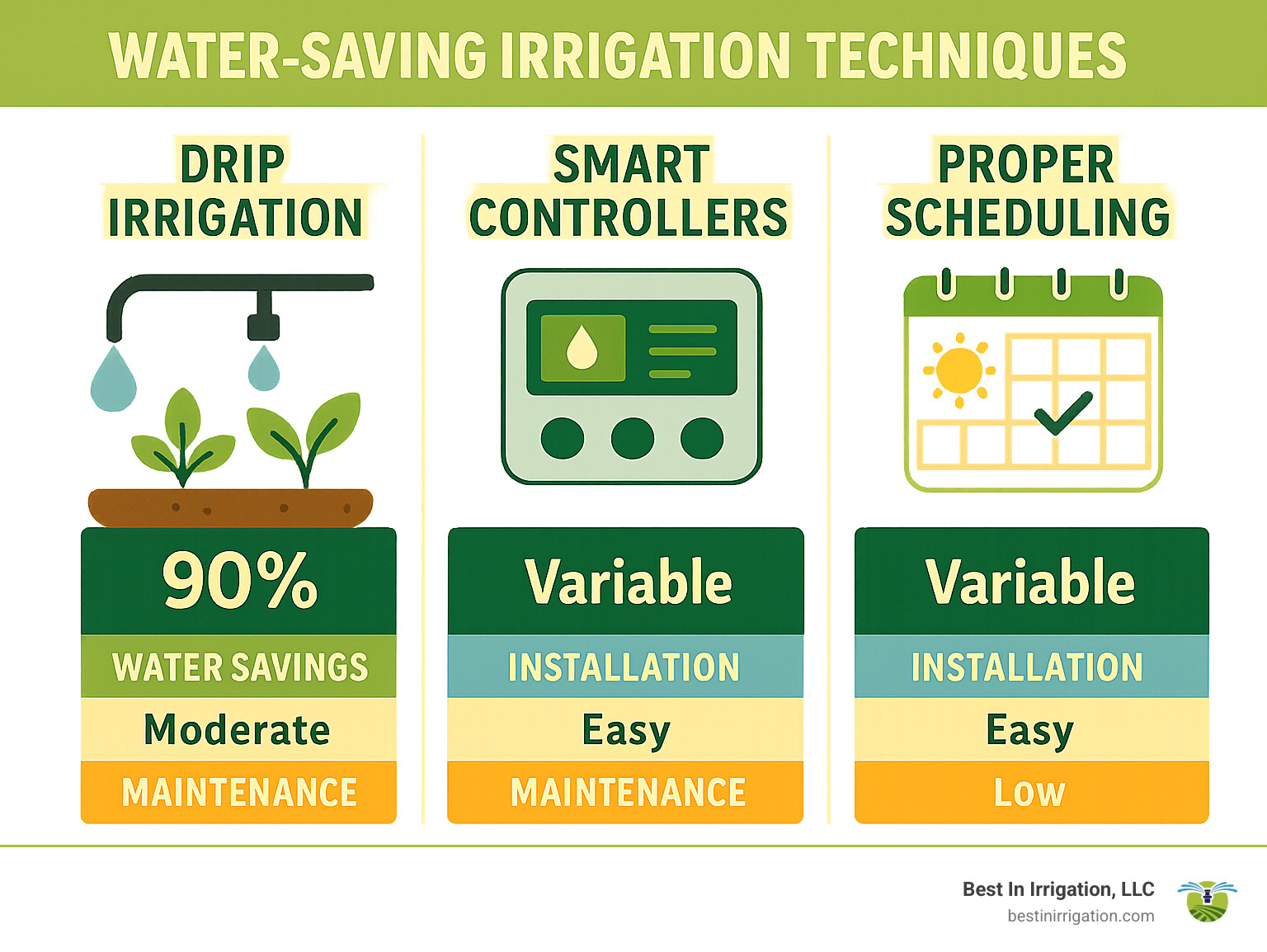
Learn more about Water-saving irrigation techniques:
– Drip irrigation installation
– irrigation system
– irrigation contractors
Understanding Water-Saving Irrigation Techniques
Let’s talk about keeping your garden lush while being mindful of every drop. Here in Massachusetts, where weather patterns swing from bone-dry summers to drenching spring rains, choosing the right water-saving irrigation techniques can transform both your landscape and your water bill.
Think of your irrigation options as a toolbox—each tool has its perfect use depending on what you’re growing and where.
Drip irrigation is the quiet champion of water conservation. These systems deliver moisture directly to your plants’ root zones through a network of tubes and emitters. It’s like giving each plant its own personal water bottle! This targeted approach reduces water waste by up to 60% compared to traditional methods. Your roses, tomatoes, and perennial beds will thank you as they thrive with consistent, direct hydration without the soggy leaves that can lead to disease.
Sprinkler systems still have their place in a water-conscious yard. Today’s modern rotary nozzles are nothing like the wasteful sprinklers of yesteryear. They distribute water more slowly and evenly, allowing it to soak in rather than run off. This simple upgrade can cut water usage by about 30%—perfect for lawns and larger planted areas where drip irrigation might be impractical.
Micro-irrigation sits somewhere in between, offering flexibility for those tricky garden spots. Using small sprays, bubblers, and misters, these systems are ideal for container gardens, hanging baskets, or mixed planting areas. They deliver precise amounts of water exactly where needed, minimizing waste while maximizing plant health.
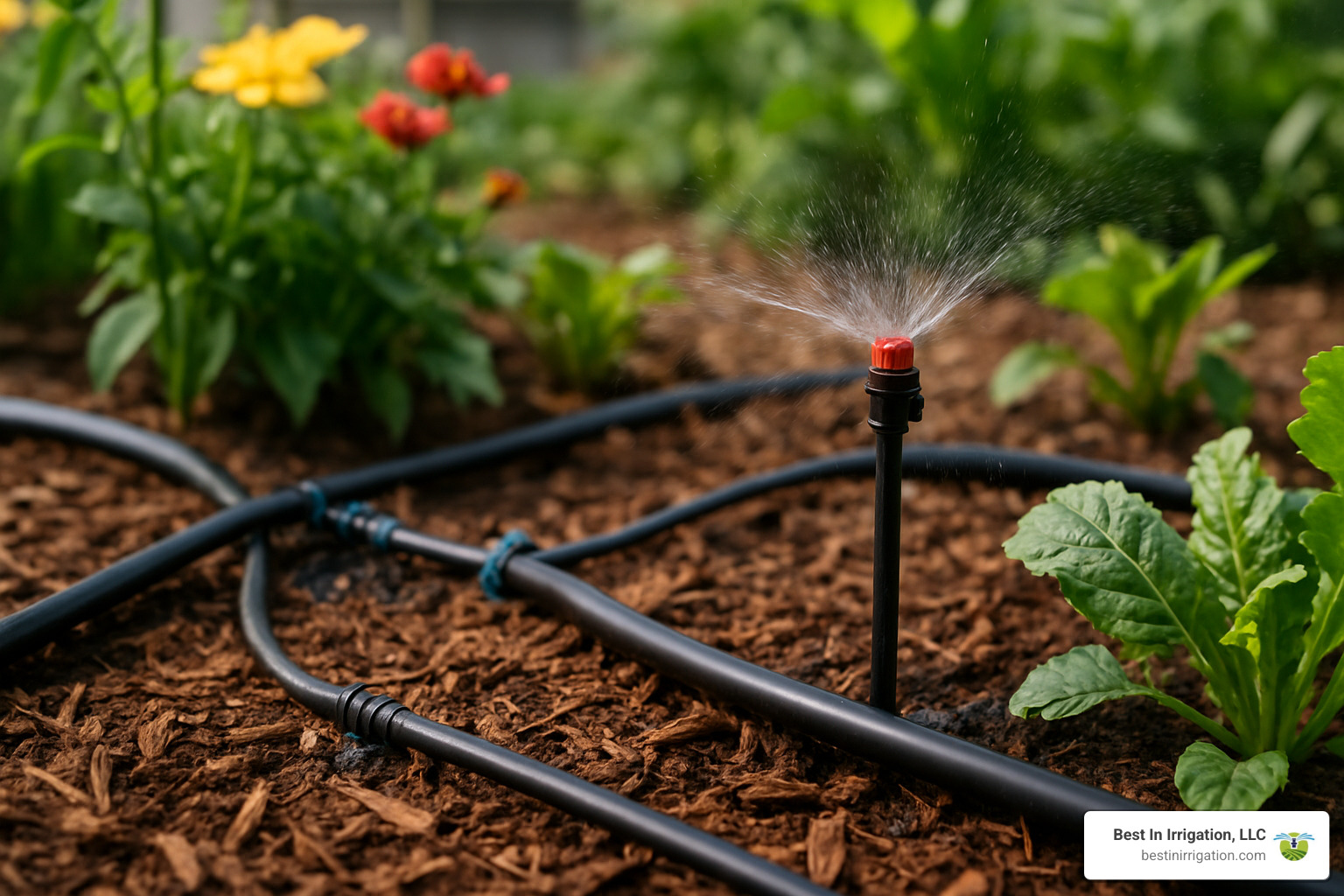
Over our 9 years helping New England homeowners, we’ve learned that most gardens benefit from a thoughtful combination of these techniques. At Best In Irrigation, we consider your specific landscape needs, plant types, and even the slope of your yard when designing a system that works with our unique regional climate challenges.
The beauty of modern irrigation isn’t just in water savings—it’s in creating healthier plants that receive consistent moisture without the stress of drought or drowning. And that means less work for you and more time to actually enjoy that beautiful garden you’ve created.
Top Water-Saving Techniques for Your Garden
Implementing water-saving irrigation techniques isn’t just about having fancy equipment—it’s about working with nature to make every drop count. Here are the methods we’ve seen work wonders in Massachusetts gardens over our years of experience:
Mulching: Nature’s Water Saver
Think of mulch as your garden’s cozy blanket. A simple 2-3 inch layer of organic mulch around your plants creates magic by reducing evaporation by up to 70%. Your soil stays moist longer, and those thirsty roots get exactly what they need. Plus, you’ll deal with fewer weeds competing for precious water and nutrients—a win-win for busy gardeners!
“I’ve watched customers transform their gardens with just a good layer of bark mulch,” shares one of our technicians. “The difference in moisture retention is something you can actually feel when you dig your fingers into the soil.”
Deep Watering: Less Frequent, More Effective
Many folks make the mistake of giving their gardens a light sprinkle every day. It’s like taking tiny sips of water when you’re really thirsty—not very satisfying! Instead, try watering deeply but less often. This encourages your plants to send roots deeper into the soil, making them more drought-resistant and healthier overall.
For most established plants in our Massachusetts climate, a good soaking once or twice a week works far better than daily shallow watering. Your plants will thank you with stronger growth and better resilience during dry spells.
Runoff Reduction Strategies
When water runs off before soaking in, it’s like pouring money down the drain. Here in New England, with our clay-heavy soils in many areas, runoff can be a real challenge.
Creating gentle berms or swales in your landscape helps capture water where plants need it most. For irrigation systems, we often recommend cycle-and-soak programming—essentially giving the soil small drinks with breaks in between to allow absorption.
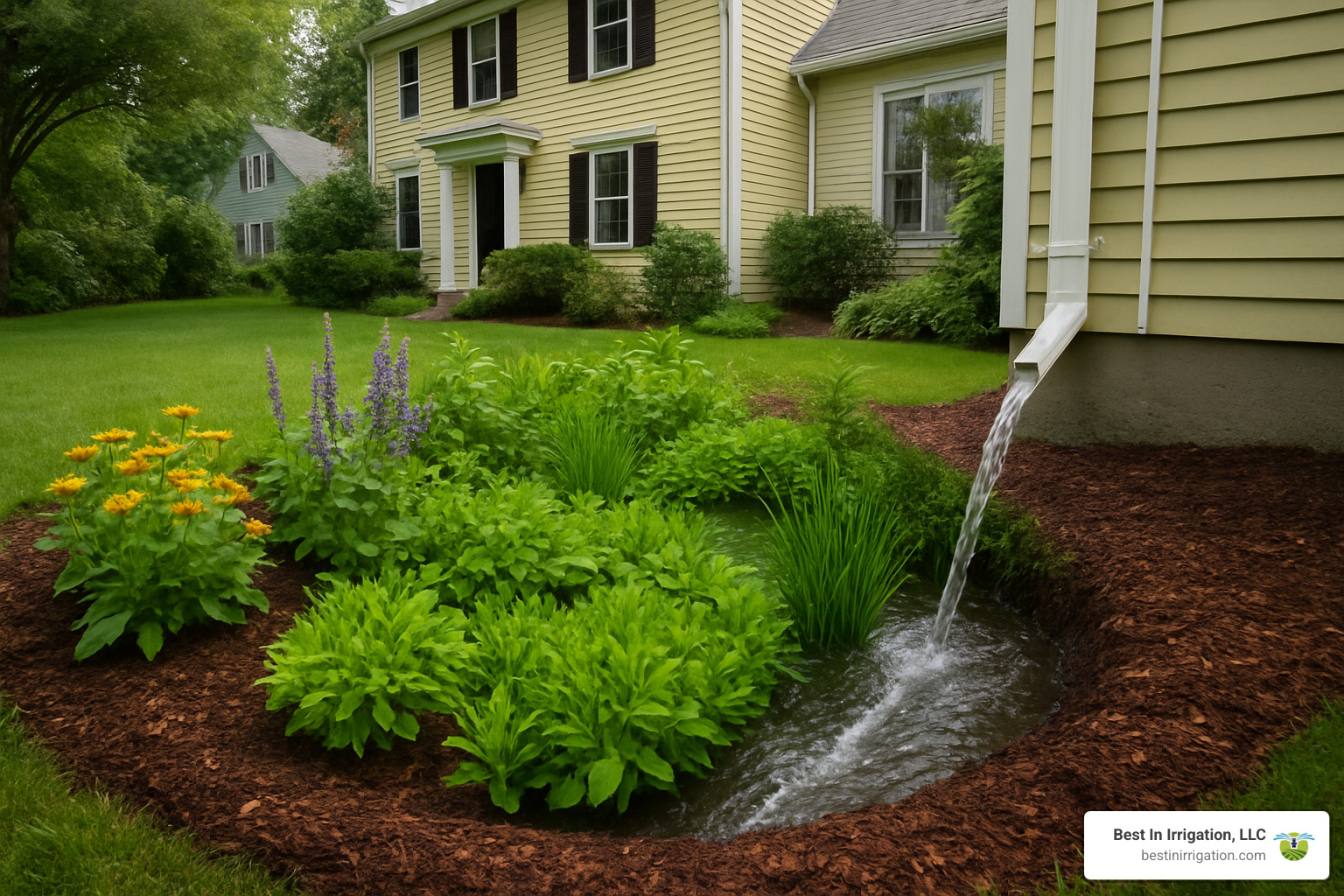
Rain gardens are another wonderful solution, especially for capturing roof runoff. These beautiful planted depressions collect water that would otherwise rush away, allowing it to slowly percolate into the ground while supporting native plants. Learn more about rain gardens from the EPA’s Soak Up the Rain program.
When combined with properly designed irrigation, these simple techniques typically reduce outdoor water usage by 40-50% for our Massachusetts customers—even during those hot July and August stretches when your garden needs it most.
Drip Irrigation: The Most Efficient Method
When it comes to water-saving irrigation techniques, nothing beats the efficiency of drip irrigation. If you’re serious about conserving water while keeping your garden lush, this method deserves your attention. It’s like giving your plants a personalized drinking system!
Precision Root Zone Watering
Imagine delivering water exactly where your plants need it most—right at their roots. That’s the beauty of drip irrigation. Instead of spraying water everywhere and hoping some of it reaches your plants, drip systems place water precisely where it matters.
“Many of our Massachusetts clients are amazed when they see how little water is needed when it’s applied directly to the root zone,” says our lead installer. “Plants actually thrive with this targeted approach, and you’re not wasting a drop on driveways or empty spaces.”
This precision approach can reduce water usage by up to 90% compared to traditional sprinklers. For your perennial beds, vegetable gardens, and those gorgeous hydrangeas Massachusetts is famous for, drip irrigation is simply unbeatable.
Minimal Evaporation Loss
New England summers can be surprisingly hot, and traditional sprinklers lose a significant amount of water to evaporation. With drip irrigation, water goes straight into the soil before the sun can steal it away.
Even during those July heat waves or drought restrictions, your plants receive nearly all the moisture you’re providing. Your garden stays healthy while your water bill stays manageable—a win-win for everyone!
Flexibility and Adaptability
Your garden isn’t one-size-fits-all, and neither should your irrigation system be. Modern drip systems can be custom to your unique landscape:
- Pressure-compensating emitters work perfectly even if your yard has slopes or elevation changes
- Different plants can receive different amounts of water through adjustable flow rates
- As your garden grows, your system can easily expand to accommodate new plantings
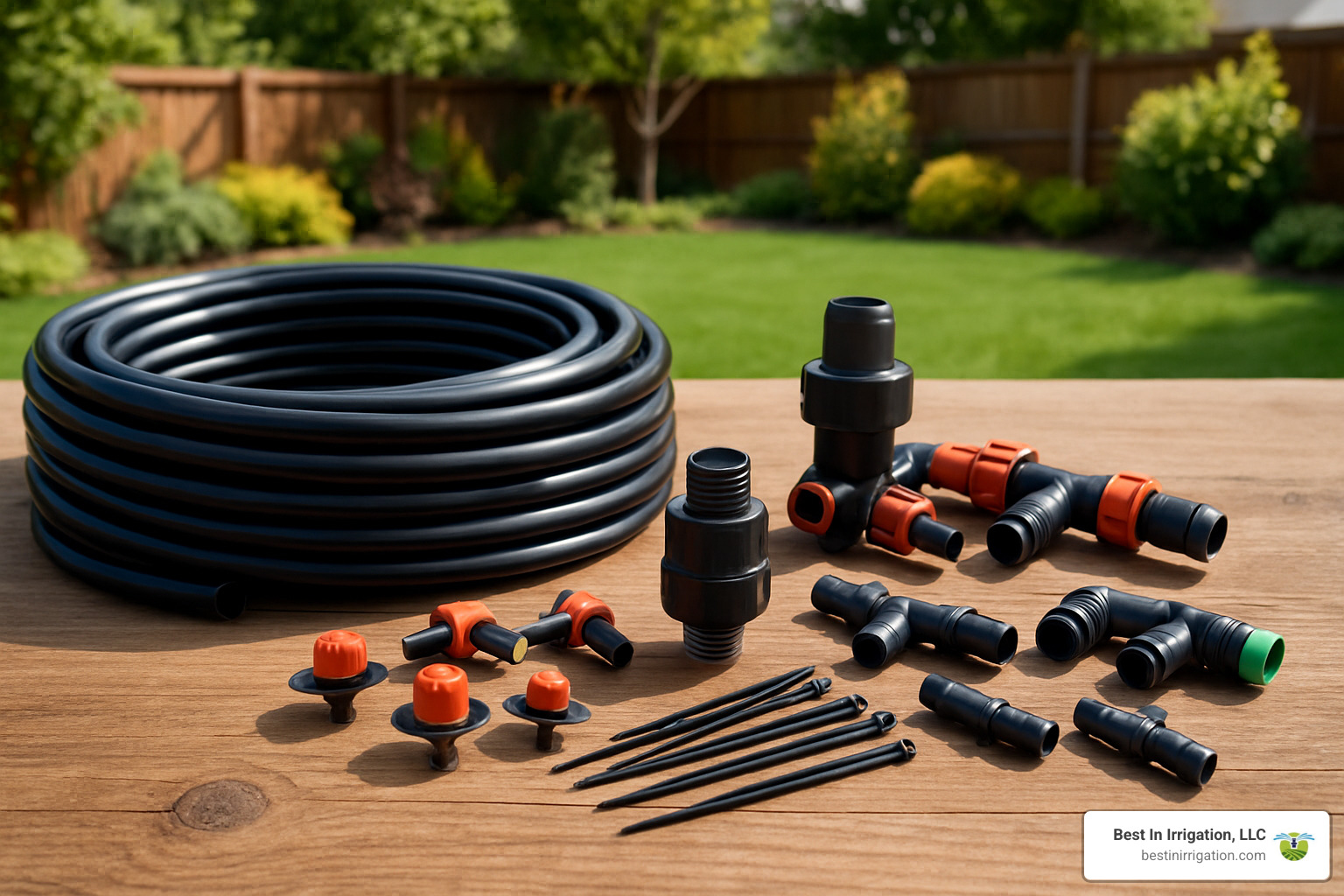
In our nine years of installing irrigation systems throughout Massachusetts, we’ve seen drip irrigation consistently deliver remarkable results. Our clients typically report water savings between 30-50% after switching to drip systems—that’s thousands of gallons saved every growing season.
At Best In Irrigation, we design drip systems that work with New England’s unique climate challenges, ensuring your garden thrives while respecting our precious water resources. The initial investment quickly pays for itself in water savings and healthier plants that require less maintenance and replacement.
Smart Technology for Water Efficiency
The marriage of smart technology with water-saving irrigation techniques has transformed garden watering across Massachusetts. These clever innovations take the guesswork out of when and how much to water, making conservation both easier and more effective.
Smart Controllers: The Brain of Efficient Irrigation
Smart controllers are like having a personal gardening assistant who always knows exactly when your plants need water. Unlike old-fashioned timers that blindly follow a schedule, these intelligent systems adapt to what’s actually happening in your garden.
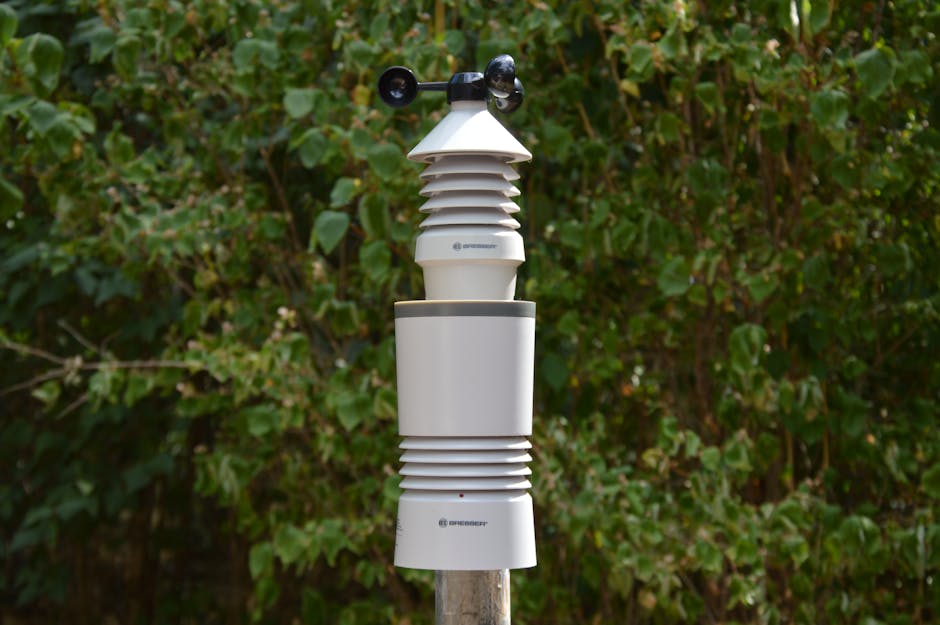
These controllers connect to local weather stations or use on-site sensors to make real-time decisions about your watering schedule. When it rains, they automatically skip scheduled waterings. During hot spells, they adjust run times to give your plants exactly what they need – no more, no less.
What I love about these systems is how they put you in control, even when you’re away from home. With smartphone apps, you can check on your irrigation system from anywhere, making adjustments with just a few taps. For busy Massachusetts homeowners, this convenience is just as valuable as the water savings.
Rain Sensors: Simple Yet Effective
Rain sensors might be the unsung heroes of water-saving irrigation techniques. These simple devices perform one crucial job: they prevent your sprinklers from running when it’s raining or when the ground is already saturated from recent rainfall.
Here in New England, where summer thunderstorms can drop significant rainfall even during otherwise dry periods, rain sensors are particularly valuable. They can reduce your water usage by up to 35% simply by avoiding those wasteful scenarios where sprinklers run during or right after a downpour. The best part? They’re one of the most affordable upgrades you can make to an existing system.
Soil Moisture Sensors: Watering Based on Need
Soil moisture sensors take smart watering to the next level by measuring what’s happening beneath the surface. Rather than watering based on time or even weather conditions alone, these sensors detect the actual moisture content in your soil.
By monitoring the root zone directly, these sensors ensure your plants receive water only when they truly need it. This prevents both overwatering (which can lead to root diseases and wasted water) and underwatering (which stresses plants and can lead to landscape failures). Your garden essentially tells you when it’s thirsty, rather than you guessing.
Over our 9 years serving Massachusetts gardens, we at Best In Irrigation, LLC have seen these smart technologies make a dramatic difference. Our customers typically reduce their water consumption by around 40% compared to traditional timer-based systems, while enjoying healthier, more vibrant landscapes.
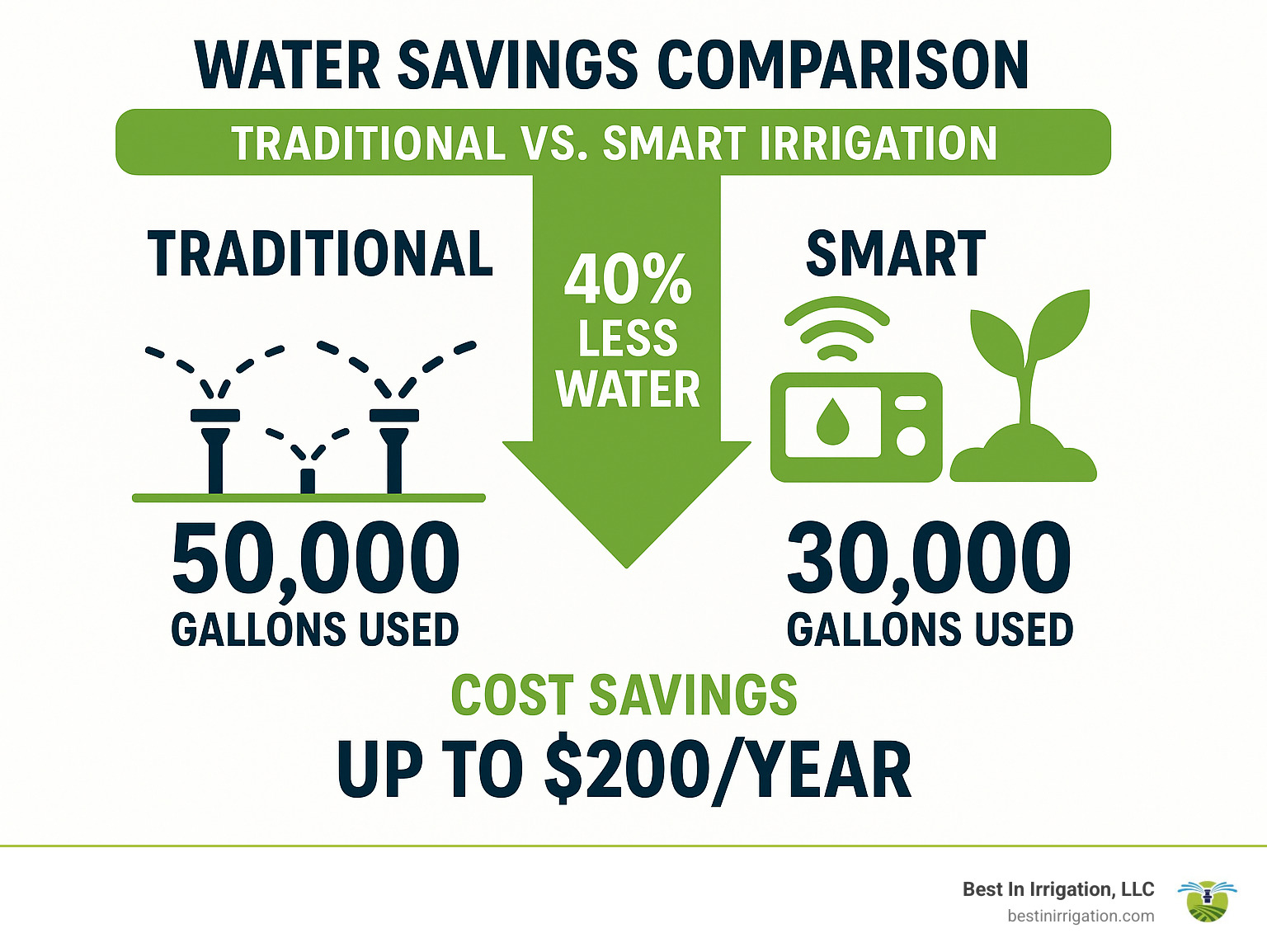
The combination of water savings, improved plant health, and the satisfaction of knowing you’re being environmentally responsible makes smart irrigation technology a worthwhile investment for any Massachusetts homeowner serious about conservation.
Frequently Asked Questions about Water-Saving Irrigation Techniques
What is the most water-efficient irrigation method?
When it comes to conserving water in your garden, drip irrigation takes the crown as the most efficient method available. This approach delivers water directly to where plants need it most—right at the root zone—achieving impressive efficiency rates of 90% or higher. Even the best traditional sprinkler systems typically only reach 50-70% efficiency.
We’ve seen remarkable results across Massachusetts gardens over the years. When homeowners switch from conventional sprinklers to drip systems, they typically save between 30-60% on water usage. The exact savings depend on your landscape design and previous watering habits, but the difference is always substantial. For your flower beds, vegetable gardens, and areas with shrubs or trees, drip irrigation simply makes the most sense if water conservation is a priority.
How can I reduce water waste in my garden?
Water waste happens in so many little ways, but thankfully there are plenty of practical solutions. First, make leak repair a priority—even tiny drips can waste hundreds of gallons over a season. We recommend doing a thorough system check each spring when you start up your irrigation for the year.
Irrigation scheduling makes a huge difference too. Watering early in the morning (between 4-7 AM) takes advantage of the lowest evaporation rates and minimal wind, allowing more water to soak in where it’s needed. Many Massachusetts homeowners are surprised to learn that simply changing when they water can save 20% or more.
Proper sprinkler head adjustment prevents water from landing on driveways and sidewalks instead of plants. Installing pressure regulators eliminates wasteful misting and overspray that can account for up to a quarter of your water usage. And don’t forget about grouping plants with similar water needs together—this practice, called hydrozoning, ensures no plant gets more water than necessary.
Consider adding a rain barrel to harvest rainwater from your roof. A simple setup can collect thousands of gallons annually that would otherwise just run off, giving you free water for your garden during dry spells.
What are the benefits of using smart irrigation technology?
Smart irrigation technology has transformed how Massachusetts homeowners approach watering their landscapes. The weather-based controls are particularly valuable in our unpredictable New England climate. These systems connect to local weather data and automatically adjust your watering schedule when rain is coming or temperatures drop, typically reducing water usage by 20-50% compared to old-school timers.
The beauty of automated scheduling is that it takes the guesswork out of watering. Your system learns what your plants need and delivers precisely that amount—no more, no less. This means healthier plants that aren’t stressed by either too much or too little moisture.
One feature our customers particularly appreciate is leak detection. Being alerted to a problem before it wastes significant water or damages your landscape can save both resources and headaches. The convenience factor is substantial too—being able to check on or adjust your irrigation system from your smartphone means you can respond to changing conditions even when you’re away.
Many of our clients also enjoy tracking their water usage through the detailed reporting these systems provide. It’s satisfying to see exactly how much you’re conserving and where you might save even more.
In our experience serving Massachusetts homes over the past 9 years, smart controllers typically pay for themselves within 1-3 seasons through water savings alone. When you factor in healthier plants and reduced maintenance time, they’re one of the smartest investments you can make in your landscape.
Conclusion
Implementing effective water-saving irrigation techniques is truly one of the smartest investments you can make for both your landscape and the environment. Throughout this article, we’ve explored how methods from simple mulching to sophisticated smart controllers can transform your watering routine while keeping your garden lush and vibrant.
At Best In Irrigation, LLC, we’ve spent the last 9 years helping our Massachusetts neighbors find that conservation and beautiful landscaping aren’t opposing goals—they’re perfect partners. The unique New England climate presents specific challenges, from summer dry spells to sudden downpours, and we’ve developed expertise in navigating these regional quirks.
You don’t have to sacrifice your garden’s beauty to be water-conscious. In fact, most plants actually prefer the consistent, targeted moisture that efficient irrigation provides. Your perennials will develop stronger root systems, your vegetables will produce better yields, and your lawn will grow deeper, more drought-resistant roots when watered properly.
We take pride in creating custom solutions that respect each property’s unique characteristics. Your soil conditions, plant selections, sun exposure, and even subtle slope variations all influence how water moves through your landscape. Our team considers all these factors when designing or upgrading irrigation systems.
The benefits extend beyond environmental responsibility (though that’s certainly important!). Many of our clients are pleasantly surprised when they see their water bills drop significantly after implementing water-saving irrigation techniques. These savings often offset the initial investment faster than expected.
We invite you to reach out to Best In Irrigation, LLC to explore how we can help transform your approach to landscape watering. Whether you’re interested in a simple upgrade like adding rain sensors or you’re ready for a comprehensive system with all the latest water-saving technology, we’re here to guide you.
Together, we can create beautiful, sustainable gardens that thrive with less water—making every drop count in your little corner of Massachusetts.
