


Why Water-Efficient Sprinkler Systems Matter
A water-efficient sprinkler system is designed to deliver the right amount of water exactly where it’s needed, reducing waste through precision application, smart scheduling, and improved distribution. These systems can save homeowners up to 50% on outdoor water usage compared to traditional sprinklers.
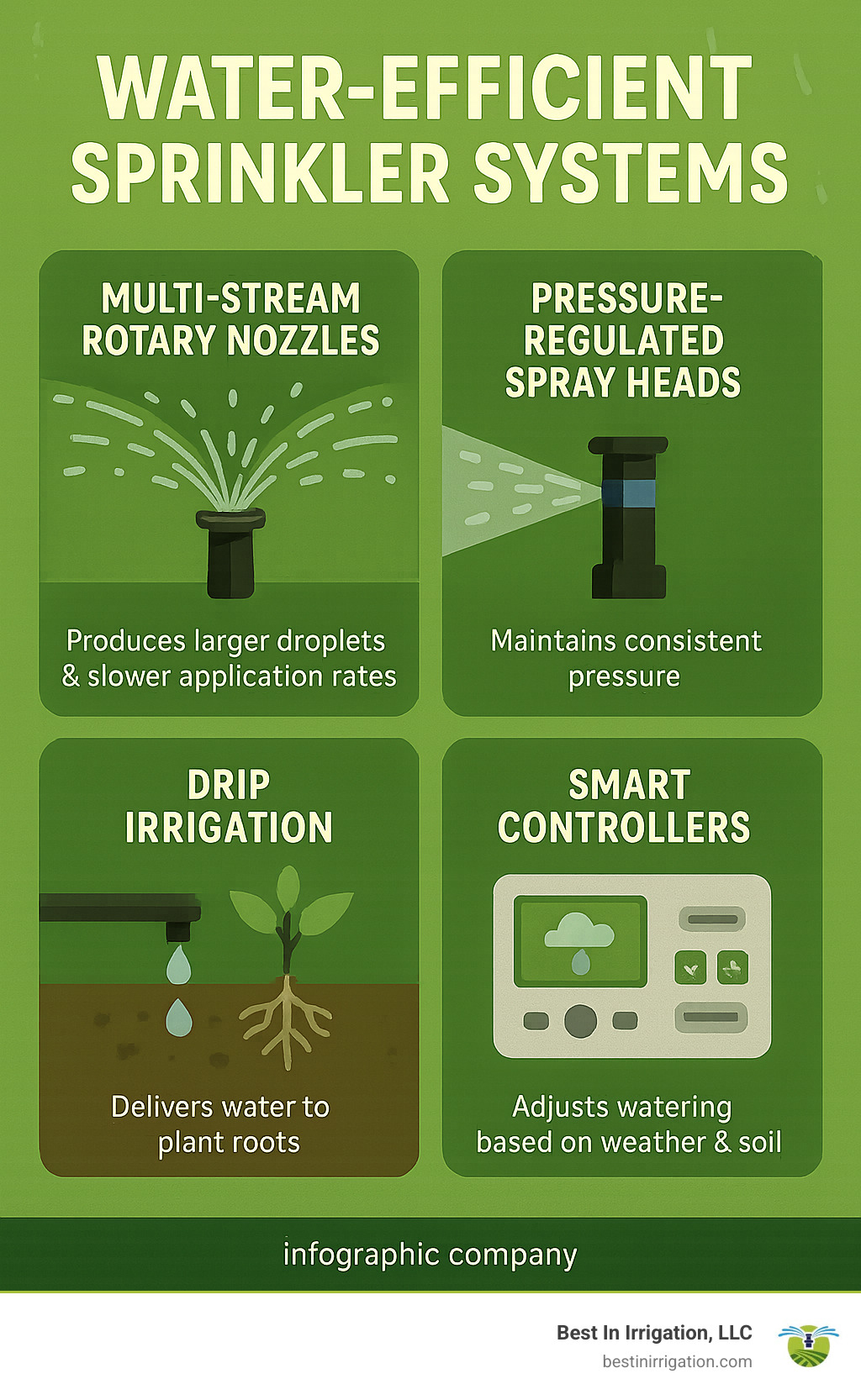
For quick reference, here are the main types of water-efficient sprinkler systems:
| System Type | Water Savings | Best For |
|---|---|---|
| Multi-stream rotary nozzles | Up to 30% | Slopes, windy areas, clay soils |
| Pressure-regulated spray heads | Up to 50% | Areas with fluctuating water pressure |
| Drip irrigation | Up to 65% | Flower beds, shrubs, vegetable gardens |
| Smart controller systems | 20-40% | All landscapes, especially varied terrain |
Did you know that outdoor irrigation can account for up to 50% of a household’s total water consumption? In Massachusetts and across the country, homeowners are increasingly looking for ways to maintain beautiful lawns while reducing their environmental footprint and water bills.
Traditional sprinkler systems often waste water through runoff, evaporation, and uneven distribution. They apply water faster than the soil can absorb it, especially on slopes or clay soils, and create fine mists that blow away in the wind before reaching plant roots.
Modern water-efficient systems solve these problems through smart technology, better design, and precise application methods. As one homeowner noted in our research: “It saved me a whole lot of work. And it saves me a lot on my water bill.”
Whether you’re installing a new system or upgrading an existing one, understanding the options available can help you make an informed choice that benefits both your landscape and your wallet.
Water-efficient sprinkler system helpful reading:
– efficient irrigation practices
– irrigation system troubleshooting
– landscape irrigation design
Understanding the Water-Efficient Sprinkler System Landscape
Think of a water-efficient sprinkler system as a smart water delivery network that doesn’t just use less water—it uses water more thoughtfully. When I visit homeowners in Massachusetts, I often explain that efficiency isn’t about depriving your lawn of moisture; it’s about making every drop count.
Distribution uniformity (DU) is the unsung hero of irrigation efficiency. It measures how evenly water spreads across your landscape—like butter on warm toast. Traditional systems often create a patchwork of soggy and dry spots (imagine pouring all your water in one corner of a sponge). Modern water-efficient sprinkler systems achieve much higher DU ratings, ensuring your entire lawn gets just what it needs—no more, no less.
Pressure regulation might sound technical, but it’s actually quite simple. Many homes receive water at pressures too high for sprinklers to handle effectively—like trying to fill a teacup with a firehose. This creates that fine mist you might see floating away on a breezy day. Good water-efficient sprinkler systems include built-in pressure regulation that keeps everything in that sweet spot of 30-50 PSI.
Runoff control comes from understanding that your soil can only drink so fast. Just as you wouldn’t pour a gallon of water on a plant all at once, efficient systems deliver water at a pace your soil can absorb, often using clever cycle-and-soak programming that gives water time to soak in between gentle applications.
| Feature | Traditional Systems | Water-Efficient Systems |
|---|---|---|
| Water Droplet Size | Small, fine mist | Large droplets that resist wind |
| Application Rate | Fast (>1.5″ per hour) | Slow (0.5-1″ per hour) |
| Distribution | Uneven, often 60-70% DU | Even, 70-85%+ DU |
| Pressure Control | Minimal or none | Built-in regulation |
| Smart Features | Manual timers only | Weather/soil sensors, app control |
| Water Loss | High evaporation & runoff | Minimal waste |
| Annual Water Use | Up to 106,000 gallons wasted | Savings of 30-50% |
Industry experts have found that “Distribution uniformity shortfalls can lead to gross overirrigation of up to 20–30% of the landscape.” That’s not just water down the drain—it’s money out of your pocket.
How a water-efficient sprinkler system beats legacy setups
The magic happens in the details, like precipitation rates. Traditional spray heads often blast water at over 2 inches per hour, while most soils can only drink in about half that amount. It’s like pouring a pitcher of water into a small glass—most ends up on the floor!
Water-efficient sprinkler systems match their output to what your soil can actually absorb. Multi-stream rotational nozzles, for instance, can cut the precipitation rate in half, giving your soil time to soak up every drop.
Another game-changer is droplet size. Efficient systems create larger, heavier water droplets that aren’t easily pushed around by wind. These droplets:
- Stand their ground against breezy conditions
- Push through thatch to reach the soil
- Stay put instead of evaporating
- Are gentler on your soil
As one of our customers recently told me: “I used to see water running down my driveway during sprinkler time. Now the water actually stays on my lawn where it belongs!”
Why pressure & uniformity drive a water-efficient sprinkler system
Water pressure is the hidden culprit behind wasteful irrigation. Most sprinkler systems perform best between 30-50 PSI, but municipal water often arrives at your home at a forceful 60-80 PSI or higher.
When pressure runs too high, your sprinklers create that fine mist that looks pretty in the sunshine but does little for your plants. Your water literally evaporates into thin air before reaching the roots. Components wear out faster too—like running a car engine at full throttle all the time.
A water-efficient sprinkler system tames this pressure with built-in regulators that maintain that perfect sweet spot regardless of what’s happening at the municipal level.
Distribution uniformity might be the most important factor of all. With poor uniformity, you’re forced to overwater most areas just to properly hydrate the driest spots—like buying everyone at the table a meal because one person is hungry.
At Best In Irrigation, we carefully design each system with head-to-head coverage and appropriate components to achieve DU ratings of 70-85% or better. Research shows that a 45% improvement in distribution uniformity translates directly to significant water savings over a season while keeping your landscape healthier and more vibrant.
Scientific research on smart outdoor practices confirms what we’ve seen in hundreds of Massachusetts yards: when your water-efficient sprinkler system delivers the right amount of water exactly where it’s needed, everyone wins—your lawn, your wallet, and our shared water resources.
Multi-Stream Rotary Nozzles: Slow, Even, Wind-Resistant
If traditional sprinklers are like your garden hose on “shower” mode, multi-stream rotary nozzles are the sophisticated cousin that graduated with honors. These innovative nozzles represent one of the most exciting advances in irrigation efficiency in recent years, delivering water in mesmerizing spiral patterns that are as effective as they are beautiful to watch.
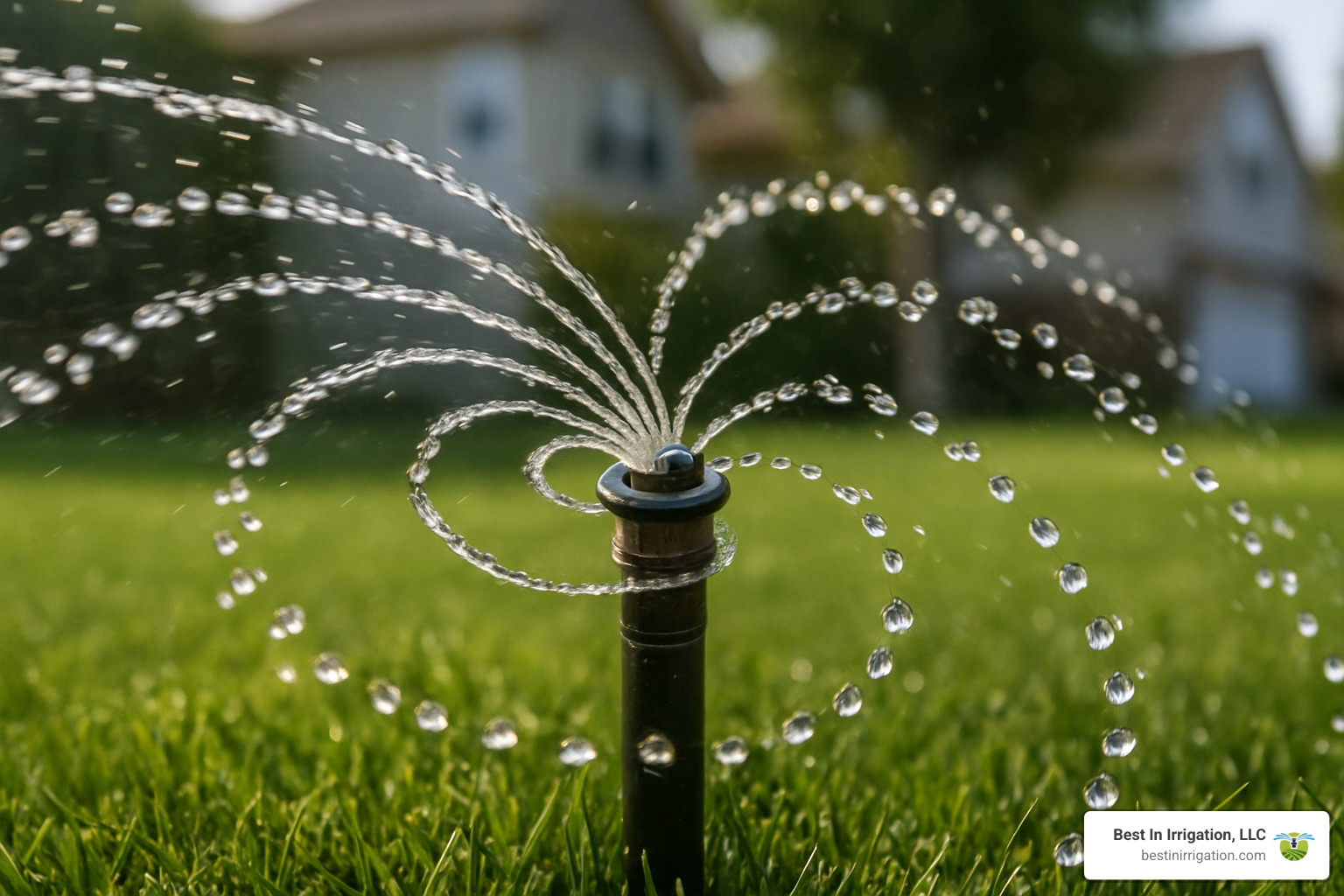
Unlike traditional spray heads that create a misty fan of water (much of which never reaches your plants), rotary nozzles produce multiple streams that rotate in a choreographed dance across your lawn. This clever design creates larger water droplets that stand up to wind and actually reach your soil where they’re needed. The result? Water savings of up to 30% compared to traditional spray heads while actually improving your lawn’s health.
The magic happens in both the design and operation. These nozzles apply water at a gentler pace—about 0.5-1″ per hour compared to the firehose-like 1.5-2″ from traditional sprays. This slower rate matches how quickly your soil can actually absorb water, meaning more moisture reaches the roots and less runs down the street.
“Multi-stream rotational sprinkler heads can reduce overall precipitation rates from more than 2 inches of water per hour to 1 inch per hour,” according to water conservation experts. This isn’t just good for your water bill—it’s better for your plants too.
One of my favorite features to share with Massachusetts homeowners is the retrofit capability. In most cases, you can simply unscrew your old spray heads and twist these on—no trenching or major system overhaul required. It’s one of the easiest ways to make a water-efficient sprinkler system upgrade without breaking the bank.
I remember one client in Framingham who told me after switching: “I installed them, replacing six sprinklers with just one, and it saved me a whole lot of work. And it saves me a lot on my water bill.” Those are the stories we love to hear!
At Best In Irrigation, we’ve seen remarkable improvements in both water efficiency and landscape health when upgrading clients to multi-stream rotary technology. The initial investment typically pays for itself through water savings within 1-2 seasons, especially with Massachusetts water rates continuing their upward climb.
More info about Efficient Irrigation Solutions
Best yards for a water-efficient sprinkler system using rotary nozzles
While rotary nozzles bring benefits to almost any landscape, they truly shine in certain conditions that would challenge traditional sprinklers.
If you’re dealing with clay soils, you’ve probably noticed water pooling on the surface instead of soaking in. That’s because clay absorbs water more slowly than sandy or loamy soils. The reduced precipitation rate of rotary nozzles (often 0.5-0.8 inches per hour) perfectly matches clay’s stubborn absorption rate, giving water time to penetrate deeply rather than creating puddles.
Got slopes in your yard? Traditional spray heads often create mini-waterfalls as water runs downhill before it can soak in. The patient, slower approach of rotary nozzles allows water to infiltrate the soil rather than racing to the bottom of your hill.
For those in windy locations (and we get our share of breezy days in New England), the substantial water droplets produced by rotary nozzles stand their ground against gusts that would scatter traditional misty spray halfway down the block.
Small or irregularly shaped lawns benefit tremendously from the precise targeting capabilities of rotary nozzles. Their adjustable arc and radius mean you can water your grass without soaking your walkway, house, or prize rosebushes.
One of our clients in Lexington shared, “After switching to rotary nozzles, I noticed fewer brown patches in my lawn, even during last summer’s hot spell. The water seems to soak in better instead of just running off.”
The versatility of these nozzles makes them perfect for both fresh installations and system upgrades. For existing systems, we often recommend a thoughtful hybrid approach—using rotary nozzles in problem areas while keeping traditional spray heads in zones where they’re performing well enough. It’s about making smart, targeted improvements to create a truly water-efficient sprinkler system custom to your unique landscape.
Pressure-Regulated Spray Heads: Consistency Without Misting
Pressure regulation might not sound exciting, but trust me—it’s a true game-changer for irrigation efficiency. Pressure-regulated spray (PRS) heads have clever built-in regulators that maintain the perfect operating pressure no matter what your municipal water supply decides to do that day.
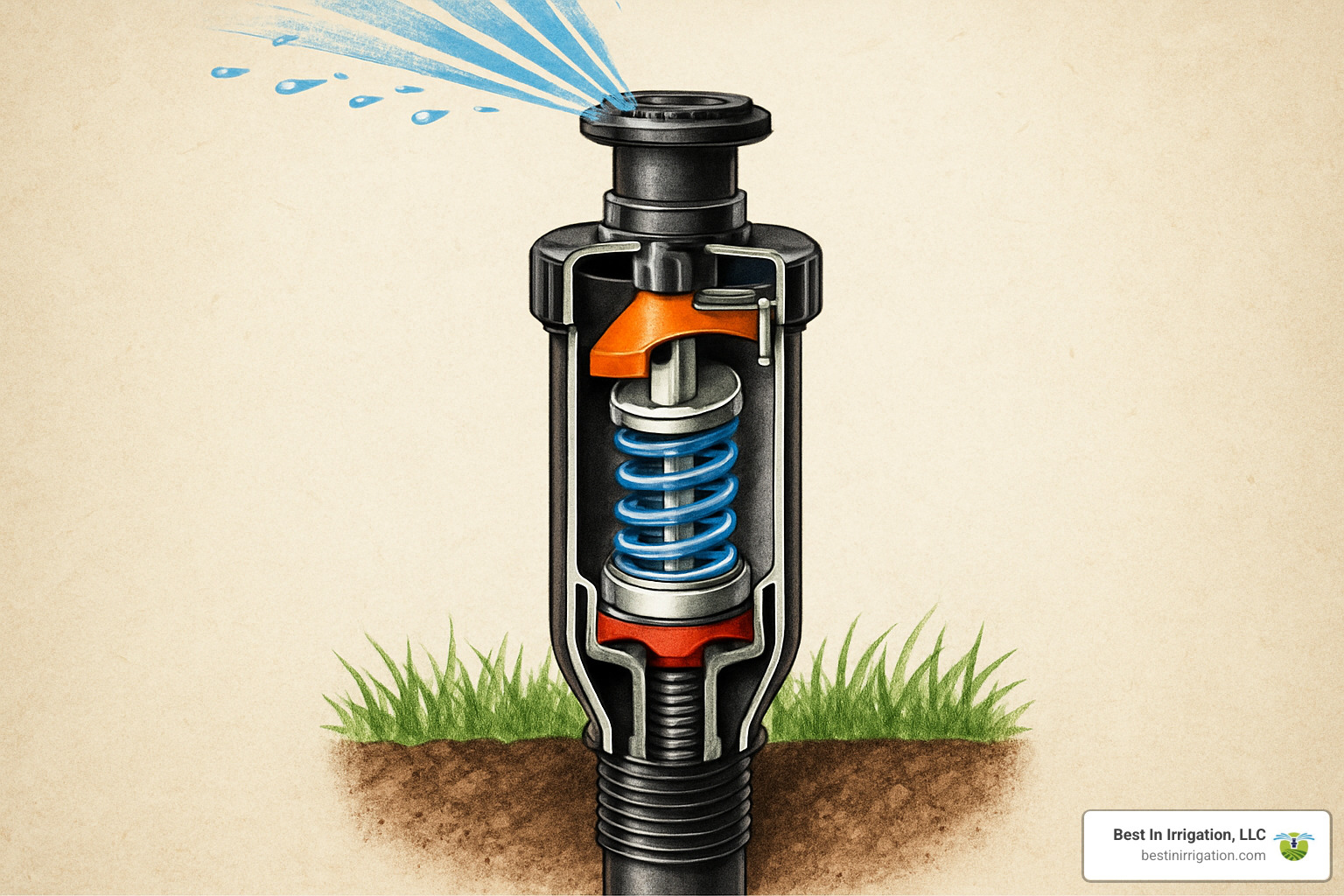
These smart little heads deliver some pretty remarkable benefits to your lawn and wallet. Would you believe they can save up to 50% of water compared to standard heads? That’s not a typo—we’re talking potential savings of up to 106,000 gallons per year for the average system. The magic happens by eliminating that frustrating misting and fogging effect that occurs when your water pressure runs too high.
With a water-efficient sprinkler system using PRS heads, you’ll enjoy consistent spray patterns and throw distance regardless of pressure changes. No more adjusting for those mysterious pressure drops that leave parts of your lawn thirsty! Plus, these regulated heads reduce wear and tear on your entire system, meaning fewer repairs and a longer system life.
Here in Massachusetts, we’ve seen many homeowners qualify for municipal rebates after installing these efficient components. It’s worth checking with your local water authority—they might literally pay you to save water!
I love showing clients the difference in a real-world test: a standard rotor will lose about 3 feet of coverage when pressure drops from 100 psi to 50 psi, while a pressure-regulated model maintains consistent coverage throughout that same range. Seeing is believing!
The benefits are so clear that several states now mandate PRS technology for new installations, including our own Massachusetts, along with California, Washington, Colorado, and others. The regulatory trend reflects what water conservation experts have known for years—this technology really works.
At Best In Irrigation, we’ve witnessed dramatic improvements for homes with fluctuating water pressure. One client in Lexington used to joke that their system created its own weather system on windy days, with mist blowing everywhere but on their plants. After upgrading to PRS heads, they saw immediate improvement in coverage and a noticeable drop in their water bill the very next month.
Scientific research on pressure-regulated heads
DIY retrofits for a pressure-smart water-efficient sprinkler system
One thing I love about pressure-regulated spray heads is how easily they can be retrofitted into existing systems. Many of our more hands-on clients have successfully done this themselves with a little guidance.
First, check your current pressure using a simple pressure gauge attached to an outdoor faucet. If readings consistently show above 50 PSI, you’re almost certainly wasting water and would benefit from regulation.
Focus your initial upgrades on areas showing signs of misting or poor coverage. These spots are likely suffering most from pressure-related issues. When purchasing new PRS heads, just make sure they match the threading and pattern of your existing system—most use standard threading, but it’s worth double-checking before you buy.
The actual swap is straightforward: turn off water to the zone, remove dirt around the head, unscrew the old one, clean the threads, apply a bit of plumber’s tape, and screw on the new PRS head. While you’re at it, consider upgrading to high-efficiency nozzles too for maximum water savings.
“I was intimidated at first,” a Newton homeowner told me recently, “but replacing my sprinkler heads turned out to be easier than assembling IKEA furniture! The difference was obvious the first time I ran the system—no more water wasted as mist, and my petunias finally get even coverage.”
While DIY installation is certainly doable, we find many homeowners appreciate our comprehensive system audit to identify all pressure issues and recommend the most cost-effective upgrades for their specific landscape. Sometimes just a few strategic replacements can make a world of difference in both water conservation and lawn health.
At Best In Irrigation, we love helping Massachusetts homeowners transform wasteful systems into models of efficiency. Whether you tackle the project yourself or bring in our team, upgrading to pressure-regulated components is one of the smartest investments you can make in your water-efficient sprinkler system.
Drip & Inline Micro-Irrigation Kits: Root-Zone Precision
When it comes to getting the most bang for your water buck in flower beds, gardens, and container plantings, nothing beats drip irrigation. These clever systems deliver water directly to the root zone where plants need it most, through a network of tubing and emitters. The result? Virtually no runoff, minimal evaporation, and zero water wasted on sidewalks or driveways.
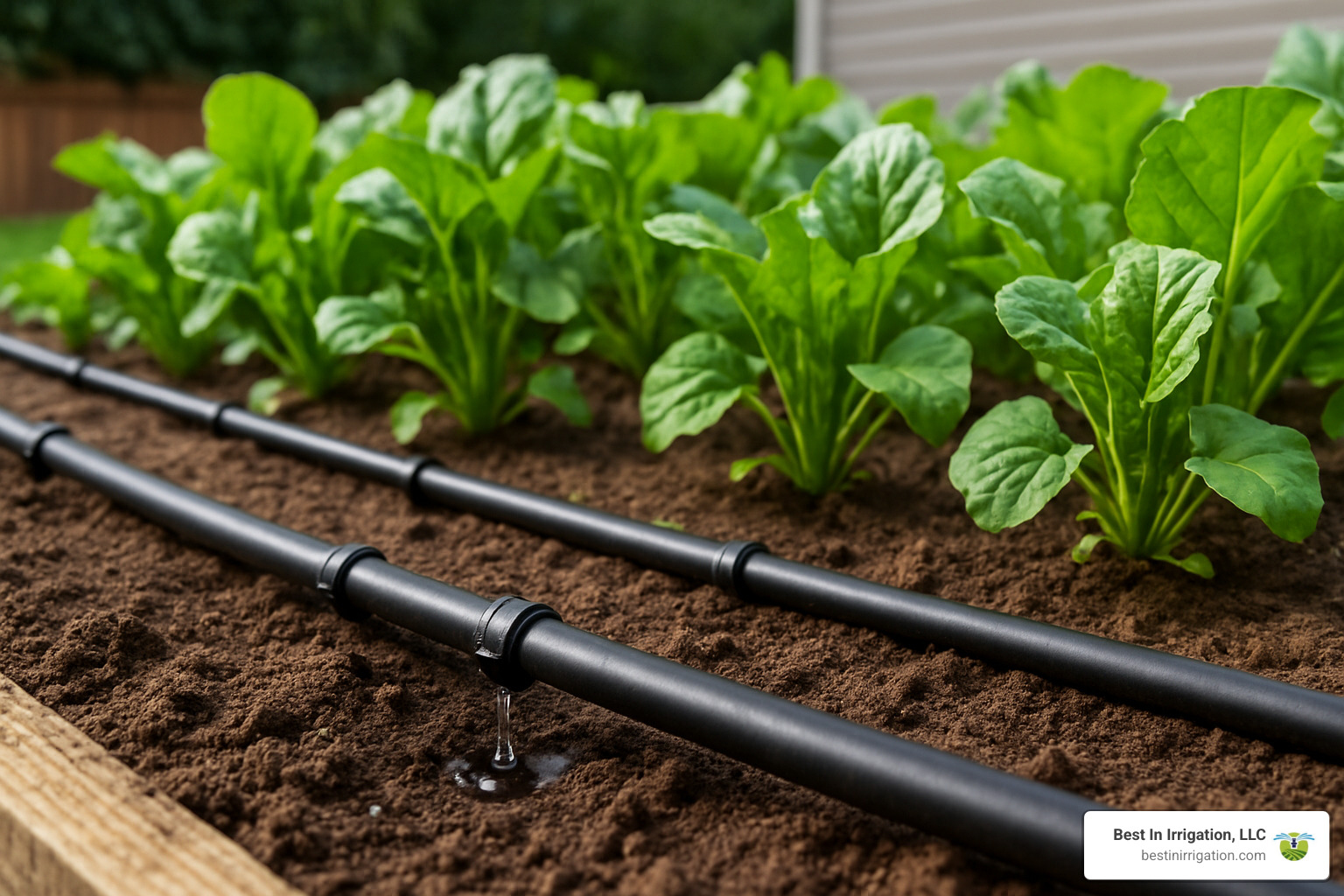
Think of drip irrigation as giving your plants a slow, steady drink rather than a quick shower. The system uses emitters (small devices that release water at a controlled rate of 0.5-2 gallons per hour) to deliver moisture precisely where needed. Inline dripline takes this concept further with built-in emitters at regular intervals, perfect for row plantings. For slightly wider coverage, micro-sprayers provide a gentle spray that still uses dramatically less water than traditional sprinklers.
Every drip system needs two critical components to function properly: pressure regulators to bring your home’s water pressure down to the gentle 20-30 PSI range that drip systems require, and filters to prevent those tiny emitter openings from clogging with sediment.
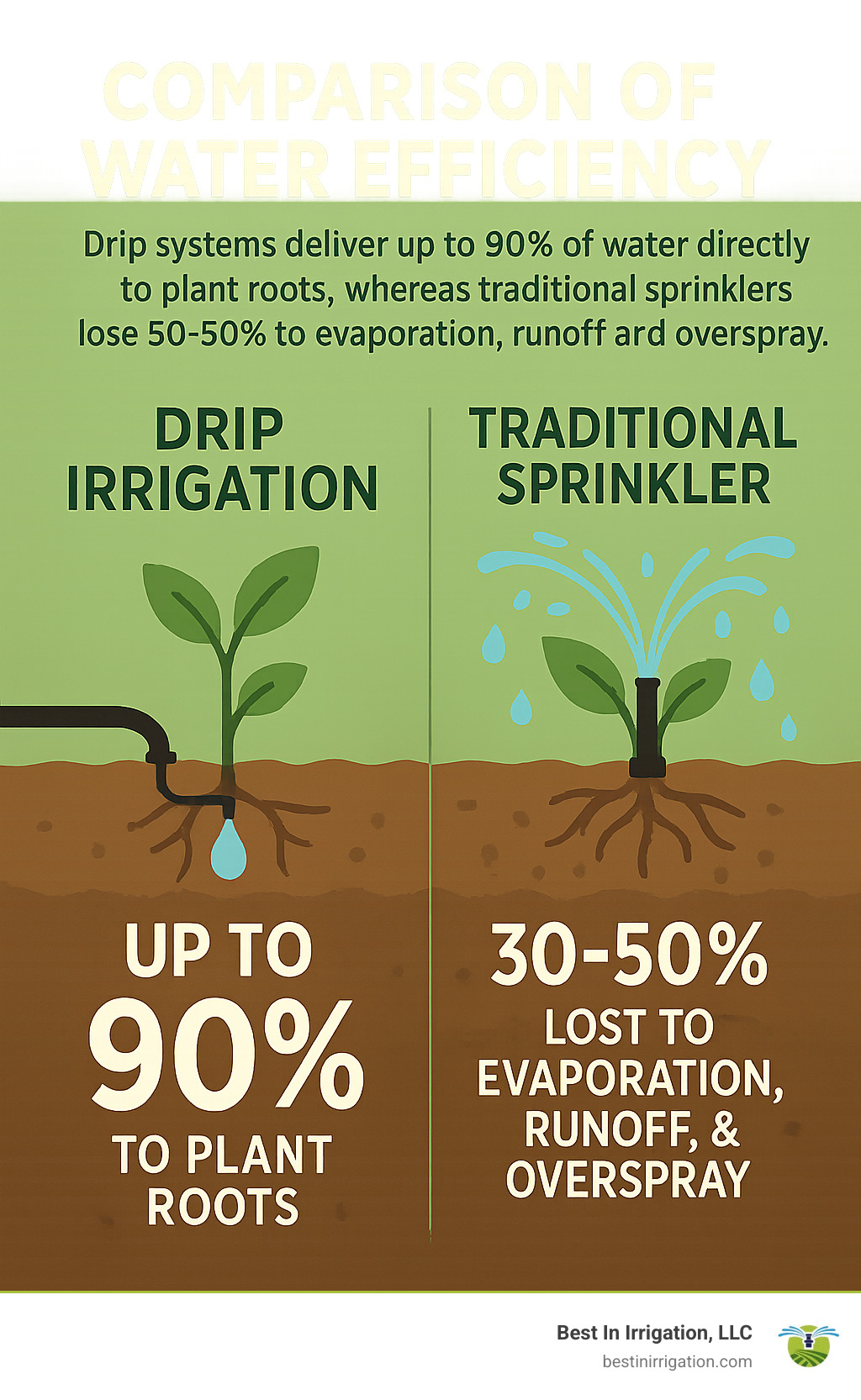
The water savings with drip systems are nothing short of remarkable. You’ll use up to 65% less water compared to traditional sprinklers, with 90% or higher efficiency in getting that water directly to plant roots. Even micro-sprayers, which use up to 15 gallons per hour, still consume significantly less than traditional overhead sprinklers.
“Drip irrigation is the most water-efficient way to irrigate diverse plantings,” according to irrigation experts. This efficiency comes from eliminating the typical losses associated with overhead watering: evaporation, wind drift, and runoff.
Mulched beds love drip irrigation because the tubing can hide discreetly under mulch while delivering water directly to root zones. For vegetable gardens, inline dripline provides consistent moisture along entire rows, helping tomatoes, cucumbers, and other thirsty veggies thrive with less water. Container plantings benefit from individual emitters that ensure each pot receives precisely the right amount of moisture, while shrubs and trees develop stronger, deeper roots with drip rings or multiple emitters positioned around their base.
Here at Best In Irrigation, we’ve installed drip systems for countless Massachusetts homeowners who previously struggled with consistent moisture in their gardens. One client with a challenging hillside perennial garden saw dramatic improvements in both plant health and bloom production after switching from overhead watering to a zoned drip system. Her water bill dropped too!
More info about Drip Irrigation System Benefits
Scheduling a water-efficient sprinkler system with drip zones
Drip irrigation requires a different mindset when it comes to scheduling. Think of it as a slow, steady sip rather than a quick gulp of water.
First, you’ll need longer run times. Because drip emitters deliver water measured in gallons per hour rather than gallons per minute, they typically need to run longer—often 30-60 minutes per session compared to 10-15 minutes for spray zones. Don’t let this alarm you; they’re still using far less water overall.
Many plants prefer more frequent watering with drip systems, especially in sandy soils that drain quickly. Instead of one deep soak weekly, you might run your drip zones for shorter periods several times a week.
For sloped areas or clay soils, cycle-soak programming works wonders. Breaking watering into multiple shorter cycles with soak time in between helps prevent runoff and ensures deep penetration. Your smart controller can handle this automatically once programmed.
Calculating proper run times means understanding your emitter output rates. Most emitters deliver 0.5, 1, or 2 gallons per hour. A general rule of thumb is “at least one drip emitter per 2.5 feet of plant canopy,” ensuring adequate coverage of the root zone. From there, you can program based on plant needs, adjusting as you observe how your garden responds.
A properly scheduled water-efficient sprinkler system with drip zones provides remarkable benefits beyond water savings. Your plants enjoy consistent soil moisture without wasteful saturation. Weeds have a harder time sprouting since water goes only to desired plants. Plant diseases decrease because foliage stays dry. Even your soil structure improves with minimal compaction.
“I used to water my vegetable garden with a hose twice a day in summer,” one Massachusetts client told us. “Now my drip system runs automatically in the early morning, and my plants are thriving with less water and less of my time.”
That’s the beauty of drip irrigation—it’s not just about saving water, but also about growing healthier plants with less effort. It’s truly a win-win for your landscape and your lifestyle.
Smart Controllers & Weather/Soil Sensors: The Brain of Savings
Think of smart controllers as the brains behind a truly water-efficient sprinkler system. Even the most advanced sprinkler hardware can waste water without intelligent control. These smart devices automatically adjust watering schedules based on real-world conditions – not just blindly following a timer regardless of whether it’s raining or sunny.
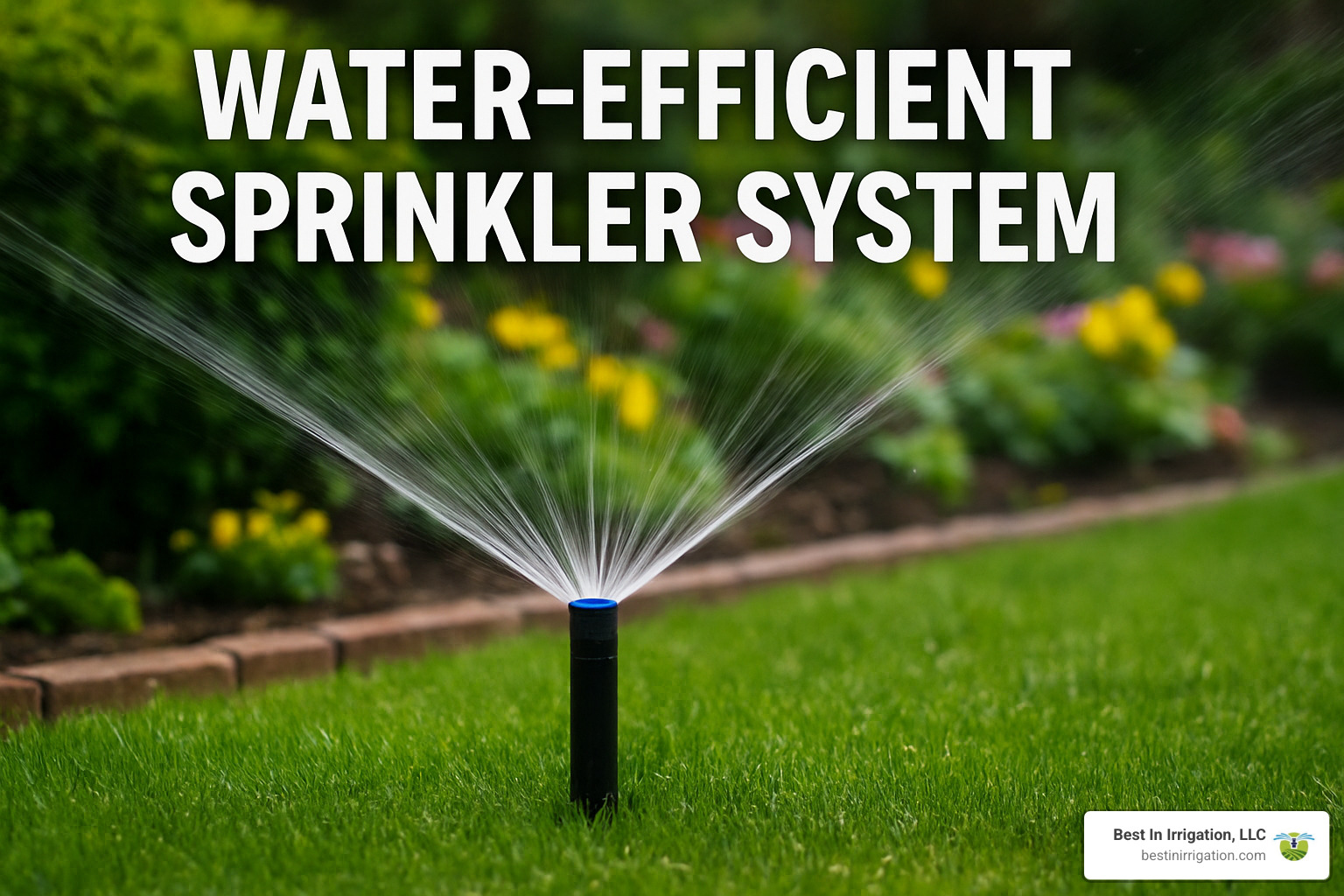
Today’s smart controllers are remarkably sophisticated. They can tap into local weather data to track rainfall and temperature, automatically suspending irrigation when Mother Nature is already doing the work. Many use evapotranspiration (ET) data – a fancy term for how quickly moisture evaporates from soil and plants – to determine exactly how much water your landscape actually needs.
“I installed a smart controller, and it automatically waters based on weather data for consistent summer green,” one of our Massachusetts homeowners told us recently. She’s not alone in seeing the benefits – smart controllers typically reduce water usage by 20-40% compared to conventional timers.
The real magic happens when these controllers work with sensors placed strategically around your property. Rain sensors prevent your system from watering during or after a downpour (something we’ve all witnessed and shaken our heads at). Soil moisture sensors are even more precise, measuring actual moisture at the root zone and only triggering irrigation when plants truly need it.
Weather-based adjustments keep your lawn healthy through Massachusetts’ unpredictable weather patterns. Your system can automatically adapt to spring rains, summer heat waves, and fall temperature drops without you lifting a finger.
Zone-specific programming recognizes that not all areas of your yard have the same needs. Your sunny front lawn, shady side yard, and vegetable garden can each receive precisely the right amount of water.
Mobile app control means you can check on your system or make adjustments from anywhere – whether you’re on vacation or just comfortably sitting on your couch.
“Smart controllers factor in plant type, soil conditions, and exposure to optimize watering,” according to irrigation professionals we work with. This intelligent approach eliminates the wasteful “set it and forget it” habit many homeowners fall into with traditional timers.
Another benefit that often goes overlooked is flow monitoring. These systems can detect leaks or breaks by measuring unexpected water flow, potentially saving you from water damage and shocking water bills. One client finded an underground leak thanks to their smart controller’s alert – before it became visible on the surface or showed up on their water bill.
More info about How Often Should I Water My Lawn With Sprinkler System?
Matching smart tech to any water-efficient sprinkler system hardware
The good news is you don’t need a brand-new irrigation system to benefit from smart technology. These controllers can work with virtually any existing setup, making them a perfect upgrade for older systems.
Most smart controllers can replace standard timers using the same wiring connections – it’s often as simple as disconnecting the old controller and connecting the same wires to your new smart device. Just make sure to choose a controller that supports the number of zones in your existing system.
Wi-Fi connectivity is essential for these controllers to access weather data and enable remote control. Before installation, check the signal strength at your controller’s location – typically in a garage or basement. If needed, a Wi-Fi extender can solve connectivity issues.
Compatibility considerations matter when selecting your smart controller. While most residential valves work with any controller (they typically use standard 24V AC power), it’s worth verifying before purchase. Similarly, check that your chosen controller supports any sensors you want to add – whether rain, soil moisture, or flow sensors.
Many of our Massachusetts clients are pleasantly surprised to learn about rebate eligibility for smart irrigation equipment. Many water districts offer rebates for EPA WaterSense labeled controllers, which can significantly offset your investment. We always recommend checking local programs before purchasing to ensure your selected model qualifies.
“We’re encouraging homeowners to replace their old, fixed-timing controllers with smart weather-based systems,” notes one water conservation specialist we work with. The return on investment comes quickly through reduced water bills and potential rebates.
At Best In Irrigation, we help homeowners steer these options to find the perfect smart controller for their specific needs. Whether you’re integrating with existing hardware or planning a comprehensive system upgrade, we ensure your irrigation system works intelligently to maintain a beautiful landscape while conserving water.
Conclusion
A water-efficient sprinkler system isn’t just a smart upgrade—it’s becoming essential for today’s homeowners. By combining innovative hardware with intelligent controls, you can slash your outdoor water use by 30-50% while keeping your landscape lush and vibrant.
Think about what we’ve explored: multi-stream rotary nozzles that fight wind drift with their larger droplets, pressure-regulated spray heads that eliminate wasteful misting, precise drip irrigation that delivers water right to plant roots, and smart controllers that adjust to weather conditions automatically. Together, these components create an irrigation system that works smarter, not harder.
The benefits go well beyond just saving water. Your utility bills will shrink significantly over time as you stop paying for water that never reaches your plants. Your landscape will actually become healthier, as proper watering encourages deeper root systems that make plants more resilient during dry spells. You’ll deal with fewer maintenance headaches too—less runoff means less erosion and damage to walkways and driveways.
“After upgrading to a water-efficient system, my lawn has never looked better, and my water bill has never been lower,” one of our satisfied Massachusetts clients told us recently.
As water becomes increasingly precious across New England, efficient irrigation represents both environmental stewardship and financial sense. Many local water districts recognize this by offering substantial rebates for efficiency upgrades, making the initial investment even more attractive.
At Best In Irrigation, LLC, we bring 9 years of trusted expertise to homeowners throughout Massachusetts. We don’t just install irrigation—we create custom water-saving solutions custom to your specific landscape needs. Our approach combines cutting-edge technology with proven design principles to help you maintain a beautiful yard while conserving a precious natural resource.
Whether you’re starting fresh with a new installation or looking to upgrade an existing system, we can help you steer the options and select the perfect water-saving technologies for your property and budget. Our team understands the unique challenges of New England landscapes and can recommend solutions that perform beautifully in our specific climate.
Ready to find how a water-efficient sprinkler system can transform your property? Contact Best In Irrigation today to schedule a consultation. Your wallet—and your lawn—will thank you.
More info about our irrigation system installation services
