


Spring Opening Irrigation Systems: Top Guide for 2025
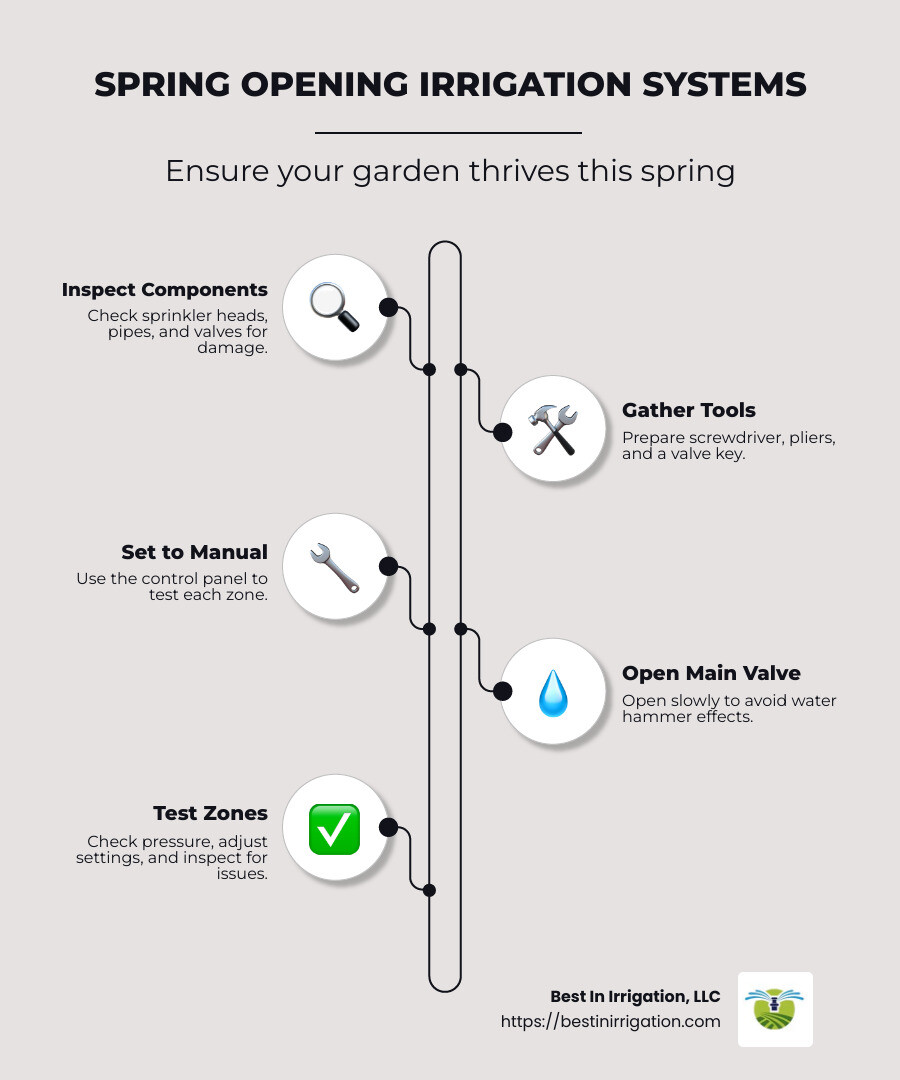
When spring arrives, it’s time to kickstart your garden with a Spring Opening Irrigation Systems process to ensure your water delivery is as efficient as it should be. Here’s a quick overview of the essential steps:
- Inspect all components, including sprinkler heads, pipes, and valves.
- Gather necessary tools like a screwdriver, pliers, and valve key.
- Set your irrigation system to manual mode at the control panel.
- Slowly open the main valve to fill the pipes gradually.
- Test each zone for proper functioning and make adjustments as needed.
Reviving your irrigation system after a long winter is both crucial and rewarding. Setting it up correctly not only helps your lawn flourish but also conserves water, ensuring you’re not wasting resources.
Changing your landscape into a lush sanctuary begins with a well-executed irrigation strategy. Done right, it prevents overwatering or underwatering, saving you time and reducing water bills. As the seasons shift in Massachusetts, understanding how to open your system efficiently can make all the difference in nurturing your garden’s full potential. Follow these basic steps for seamless operation and optimal water conservation.
Preparing for Spring Opening
Inspecting Components
Before you dive into turning on your irrigation system, it’s crucial to inspect all components. Start by checking the sprinkler heads. Look for any damage or blockages that might have occurred over the winter. Clear any grass or debris that may have grown over them using a small hand shovel.
Next, examine the pipes for any visible cracks or leaks. Winter can be harsh, and freezing temperatures might have caused damage. If you spot any issues, it’s better to address them now before the system is fully operational.
Finally, take a close look at the valves. Make sure they are in good condition and not leaking. If you find any stiff or malfunctioning valves, they may need replacing or adjusting to ensure smooth water flow.
Gathering Tools and Supplies
Having the right tools and supplies on hand will make the process smoother and more efficient. Here’s a quick checklist:
- Screwdriver: Essential for adjusting sprinkler heads and tightening any loose screws.
- Pliers: Useful for gripping and turning stiff valves or other components.
- Valve Key: Handy for turning the main water valve on or off.
- Teflon Tape: Use this to seal any plugs or caps before you energize the system with water.
- Batteries: Make sure to have fresh batteries for battery-operated controllers or as a backup for older models.
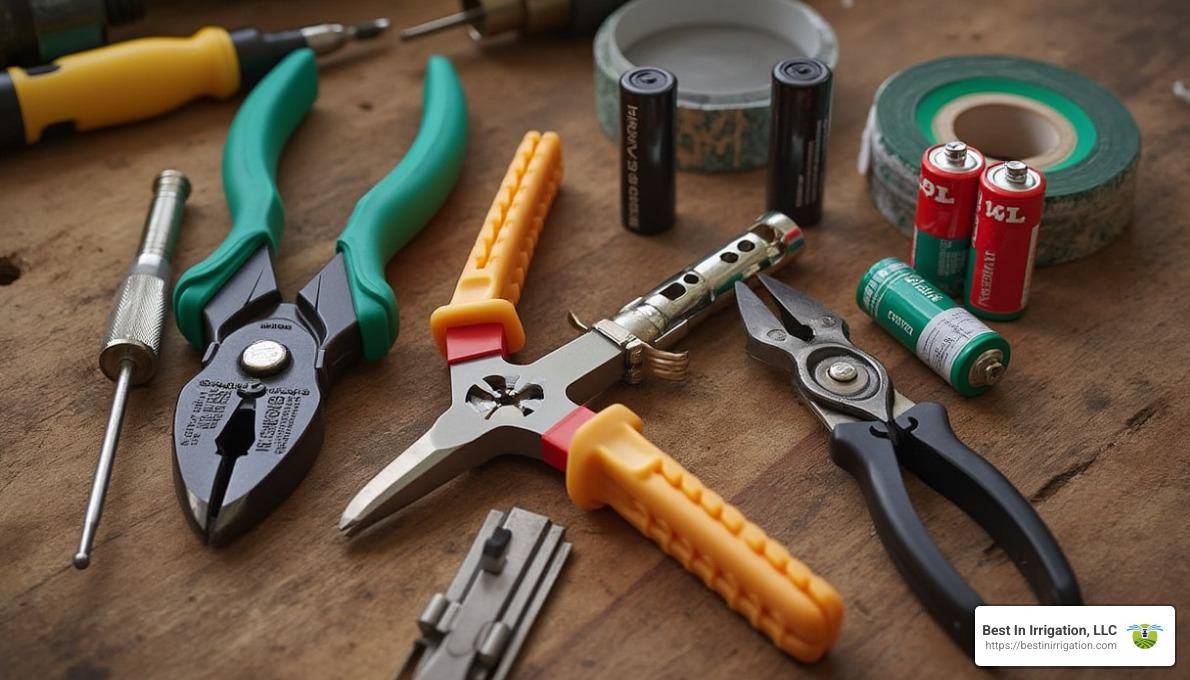
Equipped with these tools, you’re ready to tackle the Spring Opening Irrigation Systems process with confidence. Preparation is key to ensuring a trouble-free startup and a vibrant, well-watered landscape.
Step-by-Step Guide to Spring Opening Irrigation Systems
Setting the System to Manual
Before you begin, set your irrigation system to manual mode. This allows you to control each zone individually, ensuring everything operates smoothly before switching to automatic watering. Head to the control panel and steer to the manual settings. This setup is crucial for testing each zone and making necessary adjustments without disturbing the programmed schedule.
Opening the Main Valve
The heart of your irrigation system is the main valve. To avoid damaging your system, it’s important to slowly fill the pipes. Begin by turning the main valve a quarter of the way open and listen for water flow. This gradual approach prevents “water hammer,” a sudden pressure surge that can break valves and fittings. After a few minutes, increase the opening to halfway. Once the water stops flowing, open the valve fully.
Testing Each Zone
Now that the water is flowing, it’s time to test each zone. Activate one zone at a time using the control panel. As each zone powers up, inspect the sprinkler heads. Look for steady streams of water and check for any sputtering or uneven coverage. If you notice any issues, such as clogged heads or low pressure, address them immediately.
Check the pressure in each zone to ensure optimal performance. Use a pressure gauge if necessary to verify that the system operates within the recommended range. Adjust the settings on the control panel as needed to ensure each zone receives the correct amount of water.
By following these steps, you can confidently kick off your Spring Opening Irrigation Systems process. Ensuring each component functions correctly will help maintain a healthy and vibrant landscape throughout the season.
Common Issues and Solutions
When spring rolls around, your irrigation system might not wake up perfectly. Here are some common issues you might encounter and how to fix them.
Identifying Leaks
Leaks can be sneaky but costly. Look for wet areas in your yard, especially if they weren’t there before. These soggy spots can indicate a leak underground or in a sprinkler head. Another clue is bubbling water around sprinkler heads, which often points to a leak.
To verify a leak, turn on the system and check for areas where water pools or seeps up. If you spot a leak, turn off the water supply and inspect the area closely. You might find a cracked pipe or a damaged sprinkler head.
Addressing Low Pressure
Low pressure in your system can cause poor water distribution, leaving your plants thirsty. A common cause is kinked pipes. Inspect the piping for bends or twists that might restrict water flow. Also, check for possible leaks that can reduce pressure.
If the pressure is still low, inspect the main valve and vacuum breaker for any blockages or malfunctions. Sometimes, cleaning out debris or adjusting the valve settings can restore normal pressure.
Clogged Heads
Clogged sprinkler heads can disrupt the spray pattern and coverage. Dirt, grass, and other debris often block the nozzles. To fix this, remove the head and clean it thoroughly. Use a small brush or a pin to clear any obstructions from the nozzles.
Regularly checking and cleaning the heads will help maintain the system’s efficiency and ensure your landscape gets the water it needs.
By addressing these common issues, your Spring Opening Irrigation Systems process will be smoother, ensuring your garden is ready for the growing season.
Frequently Asked Questions about Spring Opening Irrigation Systems
How to Start Sprinklers After Winter?
Starting your sprinklers after a long winter involves a few essential steps to ensure everything runs smoothly. First, locate the main shut-off valve. This valve is crucial because it controls the water flow into your irrigation system. It’s often found in the basement, crawl space, or near the foundation of your home.
Next, check the vacuum breaker, typically located outside, near the shut-off valve. This component prevents backflow and contamination of your water supply. Make sure all the valves on the vacuum breaker are in the correct position before turning on the water.
How to Turn Water Back On in the Spring?
Turning the water back on requires a bit of patience to avoid damaging your system. Begin by slowly opening the water shutoff valve. This gradual approach helps prevent “water hammer,” which can damage pipes and fittings due to sudden pressure changes.
Once the main valve is open, head to the outdoor spigot to ensure water flows smoothly. This step helps release any trapped air in the system, allowing the water to circulate without causing pressure issues.
How Much Does It Cost to Start a Sprinkler Spring?
The cost of starting your sprinkler system in the spring can vary depending on several factors. The average cost often includes a professional service fee, which typically ranges from $50 to $150. However, this can change based on your system size and the complexity of your setup.
Larger systems with more zones might require additional time and labor, potentially increasing costs. If repairs are needed, such as fixing leaks or replacing damaged heads, this could also add to the overall expense. Regular maintenance and inspections can help keep these costs in check by preventing major issues from developing.
Conclusion
Spring is a time of renewal, and ensuring your irrigation system is ready to support your landscape’s growth is crucial. At Best In Irrigation, LLC, we pride ourselves on providing innovative solutions that cater to the unique needs of Massachusetts residents. With our focus on water conservation and cutting-edge technology, we help you maintain a vibrant and healthy lawn while being environmentally responsible.
Our nine years of expertise in the New England region means you can trust us to handle your Spring Opening Irrigation Systems with precision and professionalism. We understand that each property is unique, and our custom solutions are designed to meet your specific requirements, whether for residential or commercial landscapes.
When it comes to irrigation, it’s not just about getting the job done—it’s about doing it right. Our commitment to sustainability ensures that our systems are not only efficient but also eco-friendly, promoting a greener future for your landscape.
If you’re ready to take the next step in preparing your irrigation system for spring, contact us today. Let us help you keep your green spaces thriving all season long with our expert services and dedication to quality.
