


The DIY Guide to Fixing Your Sprinkler System
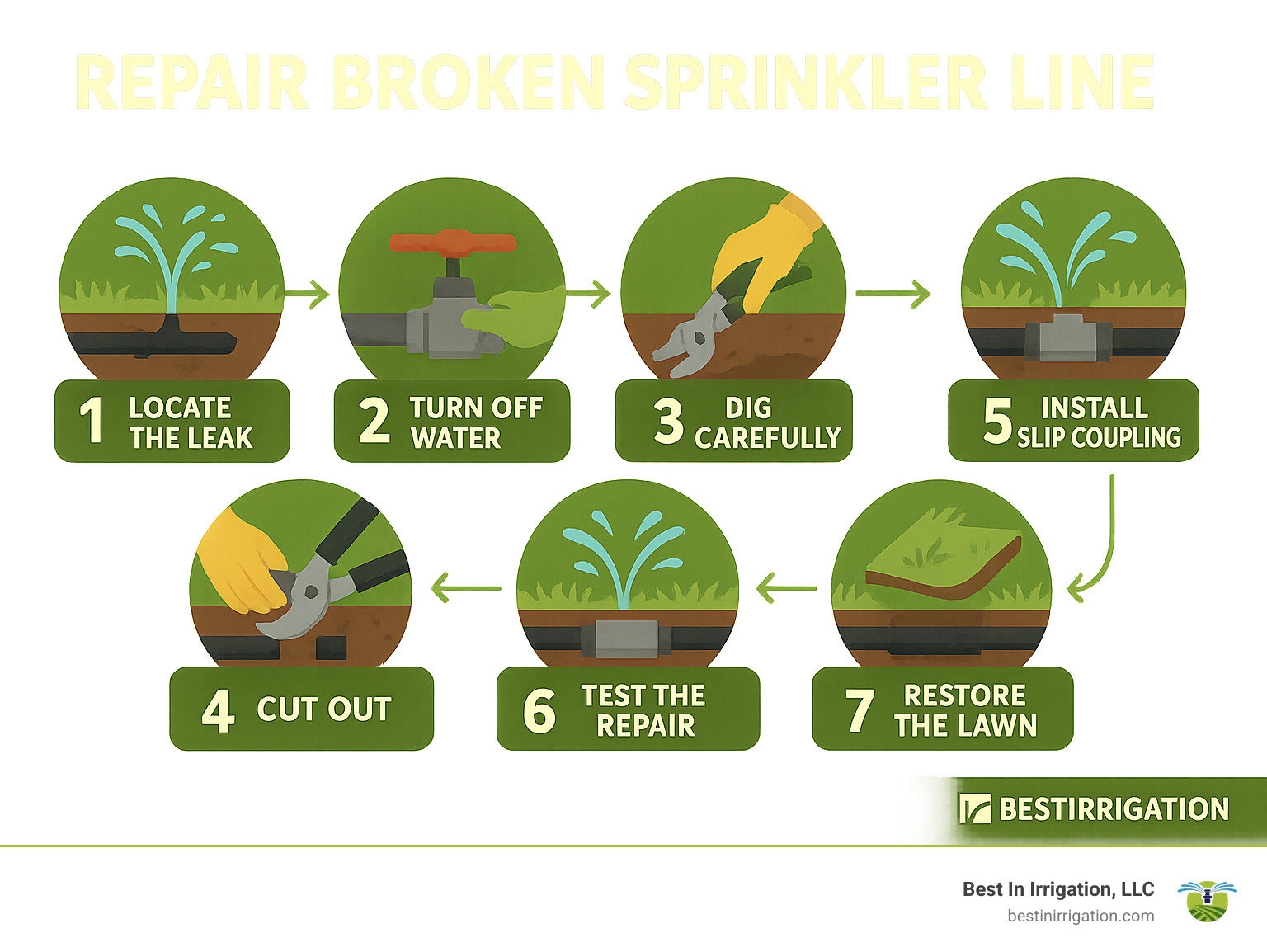
If you need to repair broken sprinkler line quickly, here’s what to do:
- Locate the leak by looking for pooling water, soggy spots, or reduced pressure
- Turn off water to your sprinkler system
- Dig carefully around the damaged area using a hand trowel
- Cut out the damaged section with pipe cutters
- Install a slip coupling or repair fitting
- Test the repair before backfilling
- Restore your lawn by replacing the turf patch
A broken sprinkler line can turn your lush lawn into a soggy mess or create dry patches where water isn’t reaching. What seems like a complicated repair is actually a straightforward DIY project that most homeowners can handle in about 4 hours with basic tools and materials.
When water starts pooling in your yard or your sprinkler heads lose pressure, that’s your irrigation system sending an SOS. The good news? You don’t need to call in expensive professionals or replace your entire system. With a few simple tools and a little elbow grease, you can fix that broken line yourself and save both water and money.
“A broken sprinkler line can seem like a difficult and expensive repair, but it’s actually pretty simple to do,” according to DIY experts who have helped thousands of homeowners tackle this common problem.
Whether you’ve accidentally hit a line with your shovel, finded a crack from winter freezing, or noticed a leak from general wear and tear, this guide will walk you through the repair process step by step.
Repair broken sprinkler line vocab explained:
– drip irrigation maintenance
– in ground sprinkler system maintenance
– sprinkler system service companies
Prep & Safety Before You Dig
That urge to grab a shovel and start digging the moment you spot a soggy patch in your lawn? Fight it! Taking a few crucial safety steps before your sprinkler repair project can save you from turning a simple fix into a much bigger headache.
Call 811 & Gather Your Gear
Remember the golden rule of any digging project: call 811 before you dig. This free service marks underground utilities on your property, helping you avoid what could be dangerous—and expensive—mistakes. Here in Massachusetts, utility companies typically respond within 72 hours, so a little patience goes a long way.
“Even for a seemingly simple sprinkler repair, knowing what’s beneath the surface is crucial,” our team at Best In Irrigation often reminds homeowners. “We’ve seen folks accidentally slice through electrical lines or communication cables while trying to repair broken sprinkler lines. Trust us—that’s a bad day for everyone involved!”
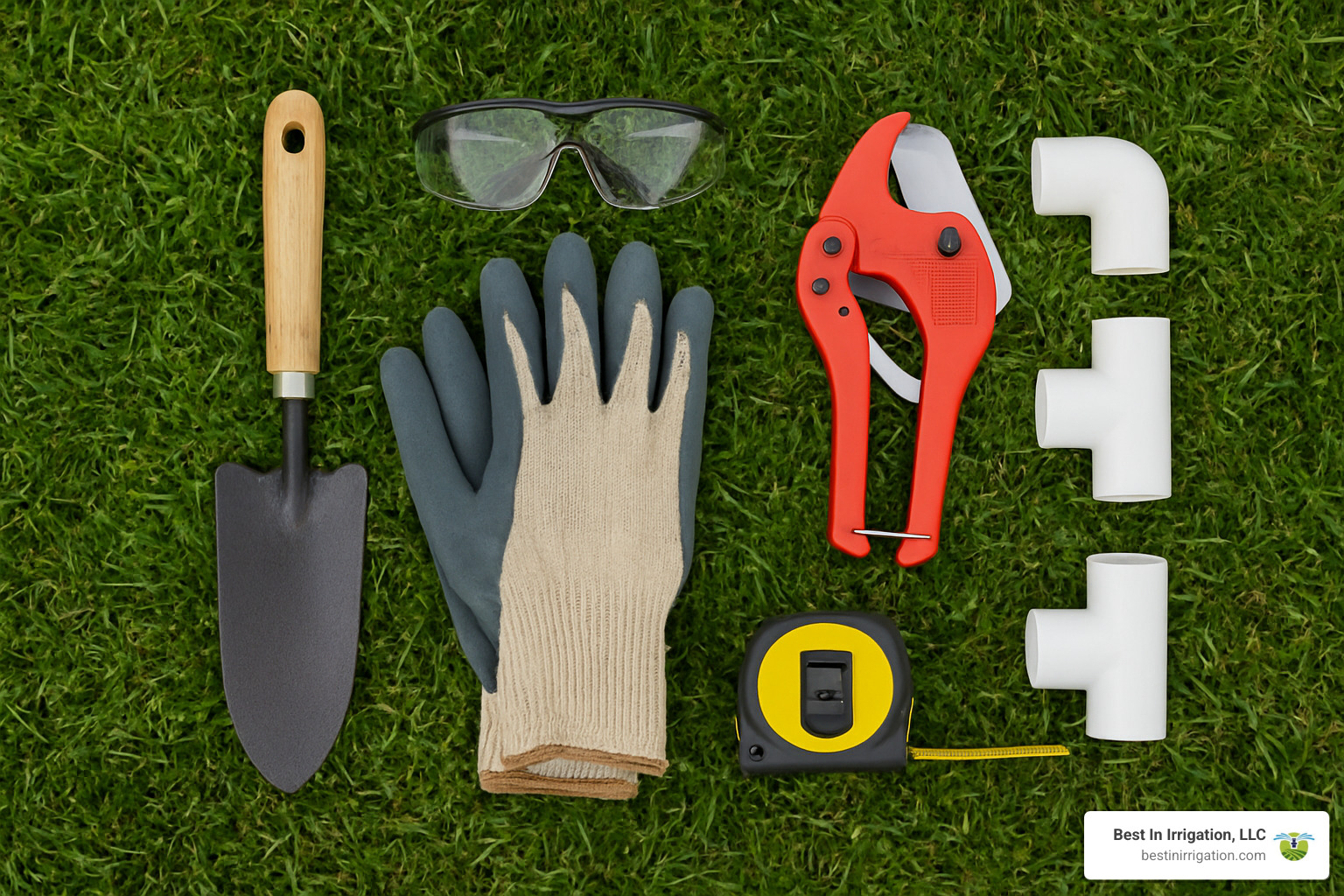
While you’re waiting for those utility flags to appear, take time to gather everything you’ll need:
Your hand trowel is actually your best friend for this job—it gives you much more control than a shovel and reduces the risk of causing additional damage to your irrigation system or other buried utilities. Plus, it makes it easier to carefully remove a neat square of turf that you can replace later, keeping your lawn looking tidy after the repair.
Safety gear is non-negotiable—gloves protect your hands from sharp edges and chemicals, while safety glasses shield your eyes from soil and debris. For your repair toolkit, you’ll want a pipe cutter or hacksaw, clean rag, measuring tape, and the right replacement pipe to match your existing system. Don’t forget slip couplings or repair fittings, band clamps for poly pipe, or PVC primer and cement if you’re working with PVC. A bucket for soil and some small stake flags to mark the leak location will round out your supplies.
Before making that first cut, make sure you know where your system’s shut-off valve is located. You’ll need to turn off the water supply completely before starting your repair. Taking time to learn about safe digging practices can prevent accidents, and reviewing specific techniques to repair broken irrigation pipe will help you approach the job with confidence.
Soil preservation matters too—keeping your excavated soil in a separate pile makes backfilling easier and helps maintain your lawn’s health. With proper preparation, you’ll be ready to tackle that sprinkler line repair like a pro, saving water and keeping your landscape looking its best.
Step-by-Step: How to Repair a Broken Sprinkler Line
Now that you’re prepared, let’s roll up our sleeves and tackle that leaky pipe. Fixing your irrigation system might sound intimidating, but I promise you’re about to become your neighborhood’s sprinkler repair hero!
Before diving in, it helps to know exactly what type of pipe you’re dealing with in your yard:
| Pipe Type | Characteristics | Common Uses | Repair Method |
|---|---|---|---|
| PVC | Rigid white plastic, glued joints | Main lines, lateral lines | PVC primer & cement with slip couplings |
| Poly Pipe | Flexible black plastic | Cold climate installations | Barbed fittings with clamps |
| Drip Tubing | Small flexible tubing | Drip irrigation, micro-sprays | Barbed connectors |
Locate & Diagnose: First Step to Repair Broken Sprinkler Line
Finding the exact spot of your leak is like being a lawn detective. Those puddles and extra-green patches are your first clues!
Turn on your system and watch for the obvious signs – soggy areas where water bubbles up from the ground or unusually lush grass patches (your lawn literally revealing where it’s getting extra water). If certain sprinkler heads seem lazy and aren’t popping up properly, the break is likely somewhere upstream from them.
Sometimes, you can even hear the problem – that telltale hissing of water escaping from your pressurized line. For those sneakier leaks playing hard-to-find, try the compressed air method: with water turned off and the system drained, connect an air compressor and listen for escaping air.
Once you’ve narrowed down the location, mark it with a small flag or stake. Then turn off the water supply to your irrigation system at the main valve – typically located near your water meter or where your irrigation system connects to your home’s water supply.
Dig & Expose Without Extra Damage
Think of yourself as a careful archaeologist, not a bulldozer operator! If your leak is in the lawn, start by cutting a neat 12-inch turf square around the leak site, going about 2-3 inches deep to keep the roots intact. Gently lift this patch and set it aside on a tarp – keeping it in one piece will make your lawn look much better after the repair.
Now grab your hand trowel (not that big shovel!) and carefully remove soil around the pipe. You’ll want to expose at least 6 inches of good pipe on either side of the damaged section. Dig about 3 inches beneath the pipe too, creating a little workspace for your hands.
“When I’m digging around irrigation pipes,” says one of our Best In Irrigation technicians, “I always tell homeowners to channel their inner surgeon, not their inner excavator. Gentle, patient digging prevents turning one problem into three problems!”
Cut, Clean & Couple
With your patient excavation complete, it’s time for the actual repair:
Take a good look at the damage first. For a small crack or hole, you’ll need to cut out a section about 1-2 inches on either side of the damage to ensure you’re working with completely sound pipe.
Make your cuts clean and straight using pipe cutters (preferred) or a hacksaw. Think of it like cutting carrots for a fancy dinner – those straight edges matter! Then wipe the cut ends with a clean rag to remove any dirt or debris. For PVC especially, clean ends are crucial for proper glue adhesion.
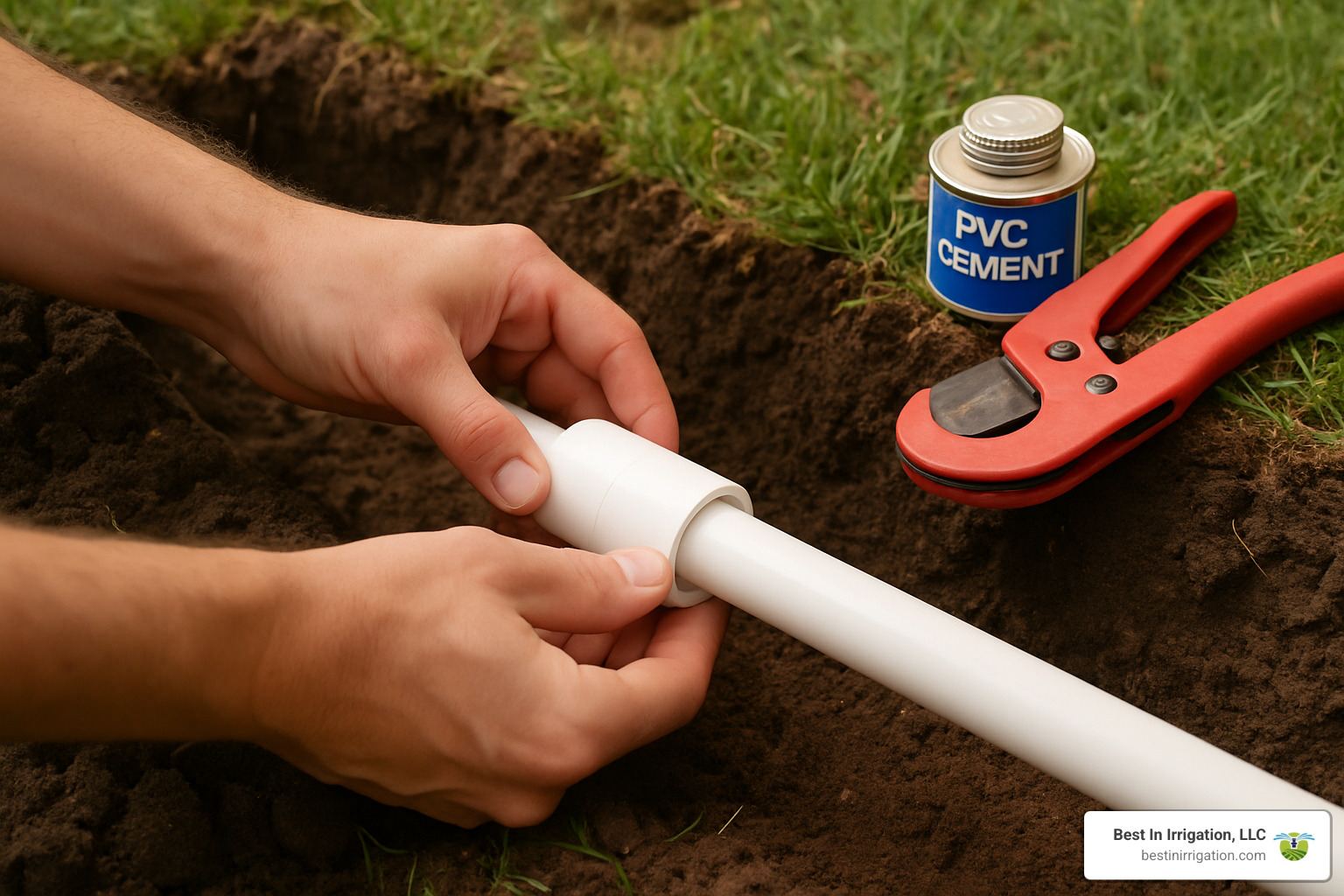
For PVC pipes, grab your slip coupling (also called a slip fix or expansion coupling). Apply PVC primer to both the inside of the coupling and the outside of the pipe ends – that purple color means you’re doing it right! Follow quickly with PVC cement over the primer. Insert one pipe end into the coupling with a quarter turn to spread the cement evenly, then extend the coupling and connect it to the other pipe end with another quarter turn.
For poly pipes, slide band clamps onto each pipe end first, then insert the barbed ends of your repair coupling into each pipe end. Position the clamps over where the pipe covers the barbs, and you’re almost done!
Seal & Secure: Final Steps to Repair Broken Sprinkler Line
We’re in the home stretch! For poly pipe repairs, use a screwdriver to tighten those band clamps until they’re snug – but not so tight that they squish and deform the pipe.
If you’re working with PVC, patience is key. Allow the cement to cure according to the manufacturer’s instructions – typically about 2 hours before handling and 24 hours for a complete cure. I know it’s tempting to rush, but this waiting time prevents future headaches!
Before you start shoveling that dirt back, let’s make sure your repair broken sprinkler line project was successful. Turn on the water at low pressure first and check for any leaks. If everything looks dry, run the system at normal pressure for a few minutes. While it’s running, check any nearby sprinkler heads too – sometimes repairs can dislodge debris that might clog nozzles.
Once you’re confident in your repair, you can start planning your victory dance – you’ve just mastered one of the most common irrigation fixes that keeps our phones ringing at Best In Irrigation!
Sprinkler Head & Valve Fixes Made Easy
While you’ve got your tools out and your sleeves rolled up, why not tackle those finicky sprinkler heads and valves? These components are often the first to give up the ghost, but fortunately, they’re also among the easiest to fix yourself.
Replace or Cap a Broken Sprinkler Head
That cracked sprinkler head might look sad, but replacing it is a breeze. Lawn mowers, enthusiastic dogs, and winter freezes are usually the culprits behind broken heads.
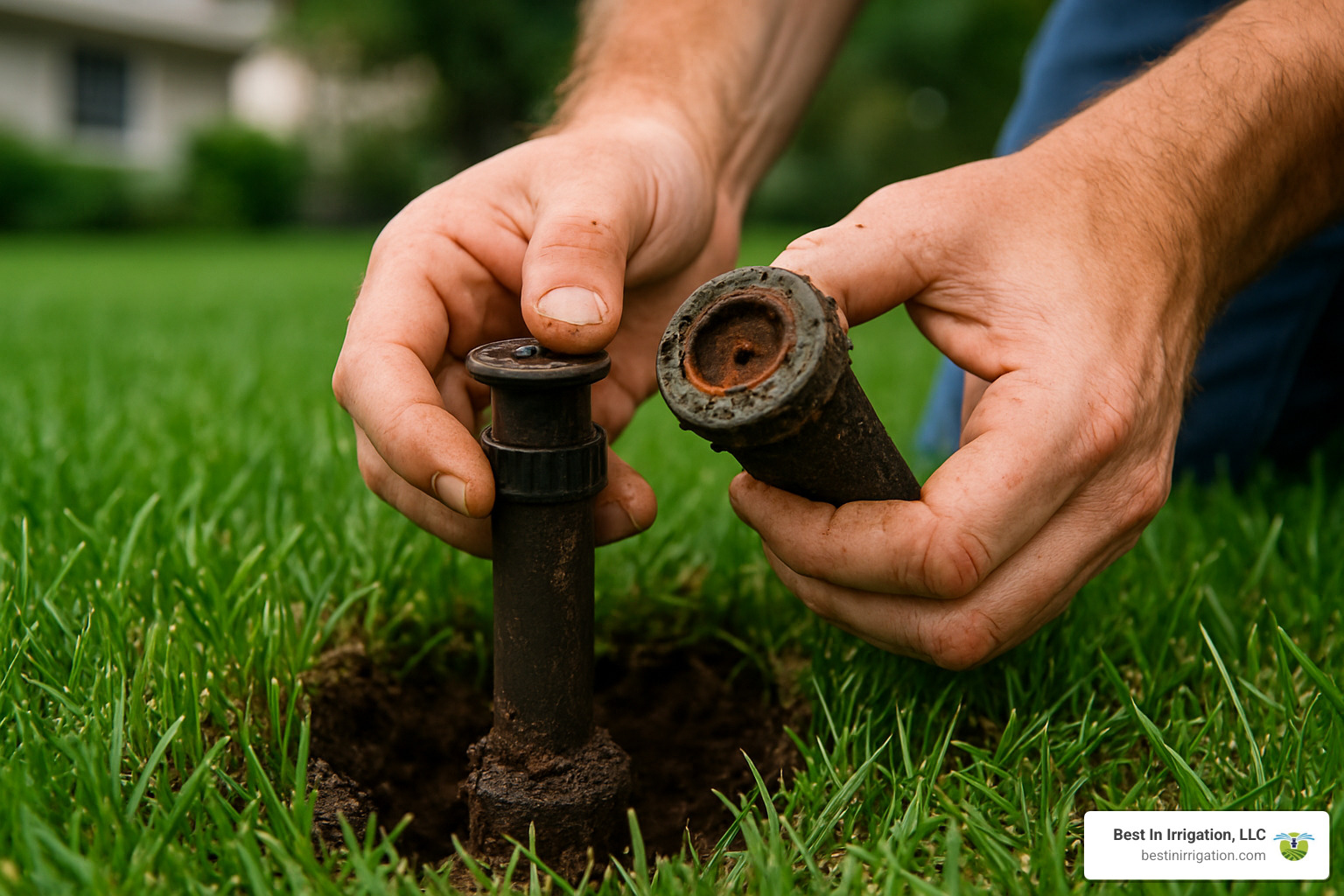
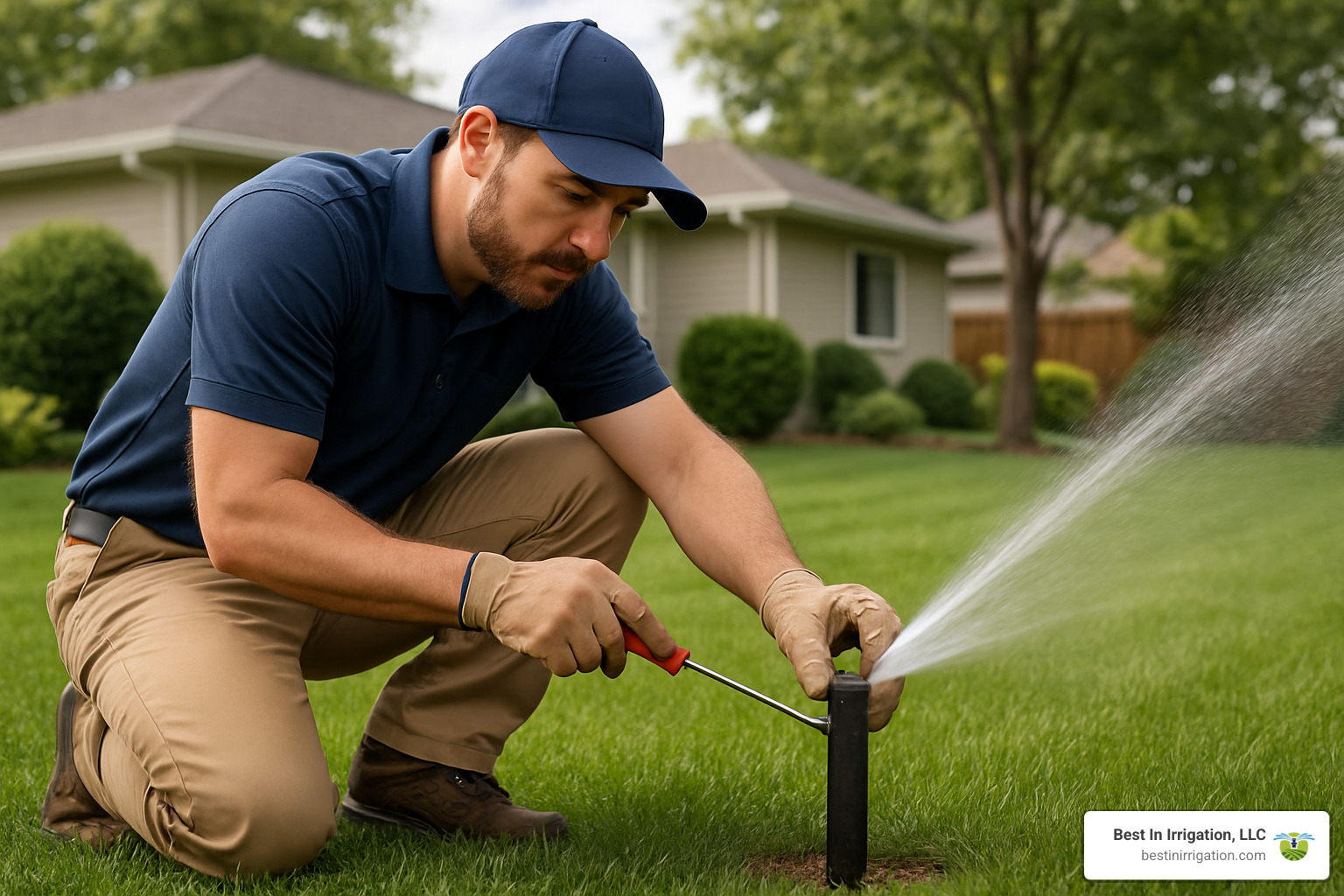
Start by carefully digging around the sprinkler head to expose it and a few inches of the riser beneath. Once you’ve got a clear view, simply grasp the body firmly and twist counterclockwise – like unscrewing a light bulb.
Before installing the new head, take a moment to inspect that riser. Is it cracked or damaged? If so, you’ll want to replace that too while you’re at it.
Apply thread seal tape clockwise around the threads (this prevents future leaks) and then screw on your new head with a gentle hand-tightening. No need for wrenches or superhuman strength – over-tightening can cause more problems than it solves!
If you’re rethinking your sprinkler layout and don’t need a head in that spot anymore, capping it is just as simple. Remove the head, wrap that thread seal tape, and install a threaded cap instead. Your water pressure in the rest of the system will thank you.
Quick Valve & Solenoid Checks
When a zone stays stubbornly on or refuses to activate at all, the valve is usually the troublemaker. Let’s get it sorted:
Is your valve not turning on? The solenoid (that little cylindrical part with wires attached) might be the issue. Unscrew it gently, give it a quick cleaning to remove any debris, and reinstall. If your zone still won’t cooperate, replacing the solenoid altogether might be your answer – the good news is they’re fairly universal across brands.
For valves that won’t shut off, the internal diaphragm is likely dirty or damaged. Turn off your water supply, carefully disassemble the valve (taking photos as you go to remember the order), and inspect the diaphragm for tears or buildup. A gentle cleaning or a fresh replacement will often solve the problem.
Wiring issues can mimic other problems, making diagnosis tricky. A simple multimeter can check for continuity in your wires, helping you pinpoint breaks in the line. When making repairs, always use waterproof wire connectors for splices – regular electrical tape won’t stand up to the damp conditions.
“Valve issues are often misdiagnosed as broken lines,” our repair team regularly reminds customers. “Before you start digging up your yard, check if the problem might be at the valve box first. You might save yourself hours of unnecessary work.”
For trickier problems with drip systems, our Drip Sprinkler Repair guide offers specialized solutions, while those dealing with recurring issues might benefit from our troubleshooting resources at Common Irrigation System Problems.
Restore the Lawn & Prevent Future Breaks
After you’ve successfully repaired your broken sprinkler line and tested that everything works properly, it’s time to put your yard back together and take steps to prevent future headaches.
Turf Patch & Cleanup
Restoring your lawn isn’t just about aesthetics—it’s about protecting your newly repaired irrigation system too. Start by carefully backfilling the hole with soil, adding it first beneath the repaired pipe for support. This creates a cushion that prevents stress on your fresh repair when the ground settles.
“Think of the soil as a protective blanket for your pipes,” our technicians at Best In Irrigation often tell homeowners. “Take your time with this step—it’s just as important as the repair itself.”
Gently tamp down the soil as you go, but don’t compact it too firmly. You want it solid enough to prevent settling but not so dense that it puts pressure on the pipe. Once you’ve filled to just below ground level, it’s time to replace that turf square you carefully removed earlier.
Position your turf patch precisely where it came from, making sure it sits level with the surrounding lawn. Press it down firmly but gently to establish good contact with the soil below. Then give the entire area a thorough soaking—this helps the grass roots reconnect with the soil and encourages quick recovery.
Keep an eye on this area for the next few days. You’re watching for two things: any sign of water seeping up (indicating your repair might have a slow leak) and how well your grass is recovering. A little extra water during the first week can make a big difference in how quickly your lawn bounces back.
Maintenance Tips to Dodge the Next Leak
The best repair broken sprinkler line strategy is preventing breaks in the first place. Here in Massachusetts, our irrigation systems face unique challenges that require special attention.
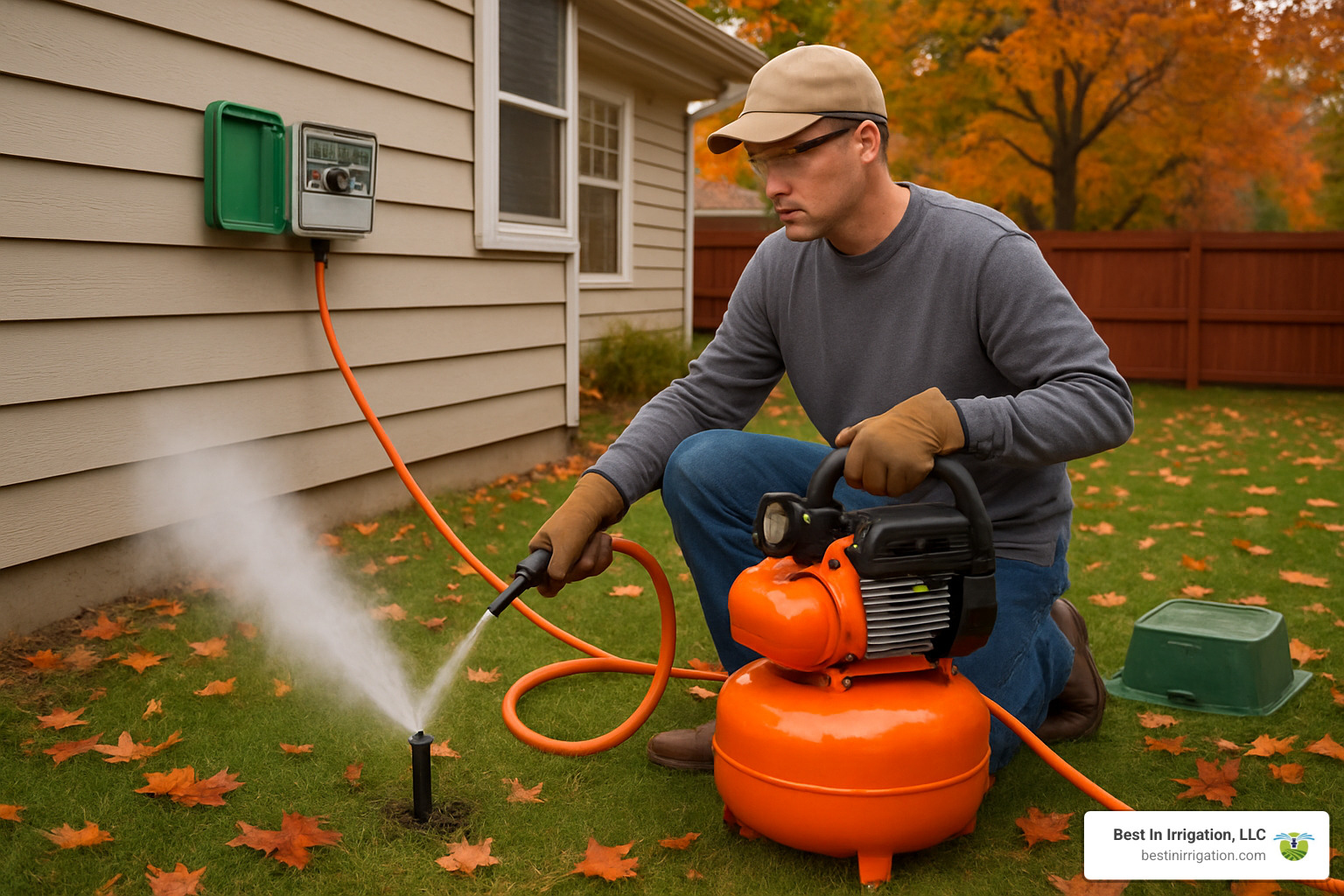
Winterize properly before the first freeze hits. Our New England winters can be brutal on irrigation systems, and many of the repairs we perform in spring result from improper winterization. Having your system blown out with compressed air removes all water that could otherwise freeze and expand, cracking pipes and fittings.
Know where your system runs by creating a simple map or using small markers near sprinkler heads. This visual reminder helps prevent accidental damage when you’re planting new shrubs or driving in garden stakes. Many homeowners accidentally damage their own systems during weekend landscaping projects!
When mowing, adjust your patterns to be extra careful around sprinkler heads. Consider using a string trimmer around heads rather than running your mower directly over them. Those few extra minutes of care can save hours of repair work later.
High water pressure might seem like a good thing, but it can actually stress your irrigation components over time. If your household water pressure consistently exceeds 80 PSI, consider installing a pressure regulator specifically for your irrigation system.
Be cautious when aerating your lawn—those tines can puncture shallow irrigation lines. Know where your lines run or consider having a professional handle aeration if you’re unsure.
At Best In Irrigation, we strongly recommend scheduling an annual professional inspection of your entire system. Our technicians can spot potential issues before they become emergencies, adjust heads for optimal coverage, and ensure your system is operating at peak efficiency to save water and money.
A well-maintained irrigation system not only prevents frustrating breaks but also conserves water and keeps your landscape looking its best. With these simple preventative measures, you can avoid many common irrigation headaches and enjoy a lush, healthy lawn for years to come.
Frequently Asked Questions about Sprinkler Line Repairs
What if I can’t find matching pipe or fittings?
It happens to the best of us – you’re ready to repair broken sprinkler line but the hardware store doesn’t have the exact match for your system. Don’t worry, you’re not stuck!
If you’re working with PVC pipe, reducer couplings are your new best friend. These handy fittings allow you to connect pipes of different diameters, so you can work with what’s available. For poly pipe systems, look for universal compression fittings – they’re designed specifically to bridge gaps between different pipe types and sizes.
“I once had a customer bring in a piece of 30-year-old pipe that hadn’t been manufactured in decades,” shares our repair specialist. “We found a universal fitting that worked perfectly, and their system was back up and running that same day.”
Your best bet? Bring a small sample of your existing pipe to a specialty irrigation supplier. At Best In Irrigation, we pride ourselves on stocking those hard-to-find parts for older systems that big box stores just don’t carry.
How long should I wait before backfilling after a PVC glue repair?
Patience is a virtue when it comes to PVC repairs, but we understand you want your yard back to normal quickly!
PVC cement needs about 2 hours to reach handling strength – that’s when it’s okay to gently test the system at low pressure. If possible, waiting 4-6 hours before backfilling gives you a much safer margin. For maximum strength, the full cure actually takes 24 hours.
That said, we live in the real world. If you need to backfill sooner, you can carefully add soil after the 2-hour mark. Just be gentle and avoid putting direct pressure on the freshly repaired joint. Add soil underneath the pipe first for support, then carefully around the sides.
When should I call a professional instead of DIY?
While we love empowering homeowners to repair broken sprinkler line issues themselves, sometimes calling in the pros makes more sense – both for your sanity and your wallet!
Consider reaching out to professionals like our team when:
Your break is hiding under concrete or pavers – breaking up hardscaping requires specialized tools and expertise to avoid costly mistakes.
You’re dealing with a main line break where water pressure is high and damage potential is significant.
You’ve already attempted repairs multiple times but the problem persists (we call this the “three-strike rule”).
You start finding multiple breaks, which might indicate system-wide issues like excessive pressure or freeze damage.
The repair needs equipment you don’t have, like specialized pipe-pulling tools or electronic leak detection.
“What often happens is a homeowner starts with what looks like a simple repair,” our lead technician explains, “but three hours and four trips to the hardware store later, they’re standing in a muddy hole wondering where it all went wrong. That’s when it’s time to call us!”
At Best In Irrigation, we specialize in those tricky repairs that go beyond typical DIY capabilities. This is especially true for our Massachusetts customers dealing with complex systems or the unique challenges of frost damage in our New England climate.
Conclusion
Fixing a broken sprinkler line is actually one of those satisfying DIY projects that can save you hundreds of dollars while giving you that “I did it myself” pride. With the steps we’ve walked through, you’re now equipped to tackle most common irrigation repairs without calling in the pros.
Think of what we’ve covered as your sprinkler repair roadmap:
First, you located the trouble spot by following those telltale signs of dampness or pressure problems. Then you prepared properly with the right tools and safety precautions (including that all-important 811 call!). You carefully excavated without causing additional damage, made clean cuts, and installed the appropriate repair fittings for your pipe type. After thorough testing, you restored your landscape to its former glory.
Repair broken sprinkler line projects might seem intimidating at first, but they’re actually quite manageable for most homeowners with basic DIY skills. The key is patience and attention to detail – rushing through any step usually leads to a repeat performance in a few weeks.
For those of us in Massachusetts, our irrigation systems face unique challenges with freezing winters and variable New England weather. At Best In Irrigation, we’ve spent the past 9 years developing expertise specifically for these conditions. Our team understands not just how to fix problems, but how to prevent them in the first place.
We’re passionate about water conservation too. A properly functioning irrigation system isn’t just about keeping your landscape looking beautiful – it’s about using water efficiently and responsibly. When you repair leaks promptly, you’re not just saving money on your water bill; you’re also being a good steward of our precious natural resources.
If you ever encounter an irrigation challenge that feels beyond your DIY comfort zone, remember we’re just a phone call away. Our specialists can handle everything from complex main line repairs to system-wide efficiency upgrades, all with our signature attention to detail and customer care.
Whether you tackle the job yourself or bring in our team, the most important thing is addressing irrigation problems quickly before they lead to water waste or landscape damage.
Want to learn more about keeping your system running smoothly year-round? Check out our comprehensive guide to irrigation system maintenance for seasonal tips and expert advice.
Here’s to greener lawns, efficient watering, and the satisfaction of a repair job well done!
