


Why Learning to Repair Broken Sprinkler Head Issues Saves Money and Water
Repair broken sprinkler head problems quickly, and you’ll avoid wasting up to 25,000 gallons of water in a single season while keeping your Massachusetts lawn healthy and green.
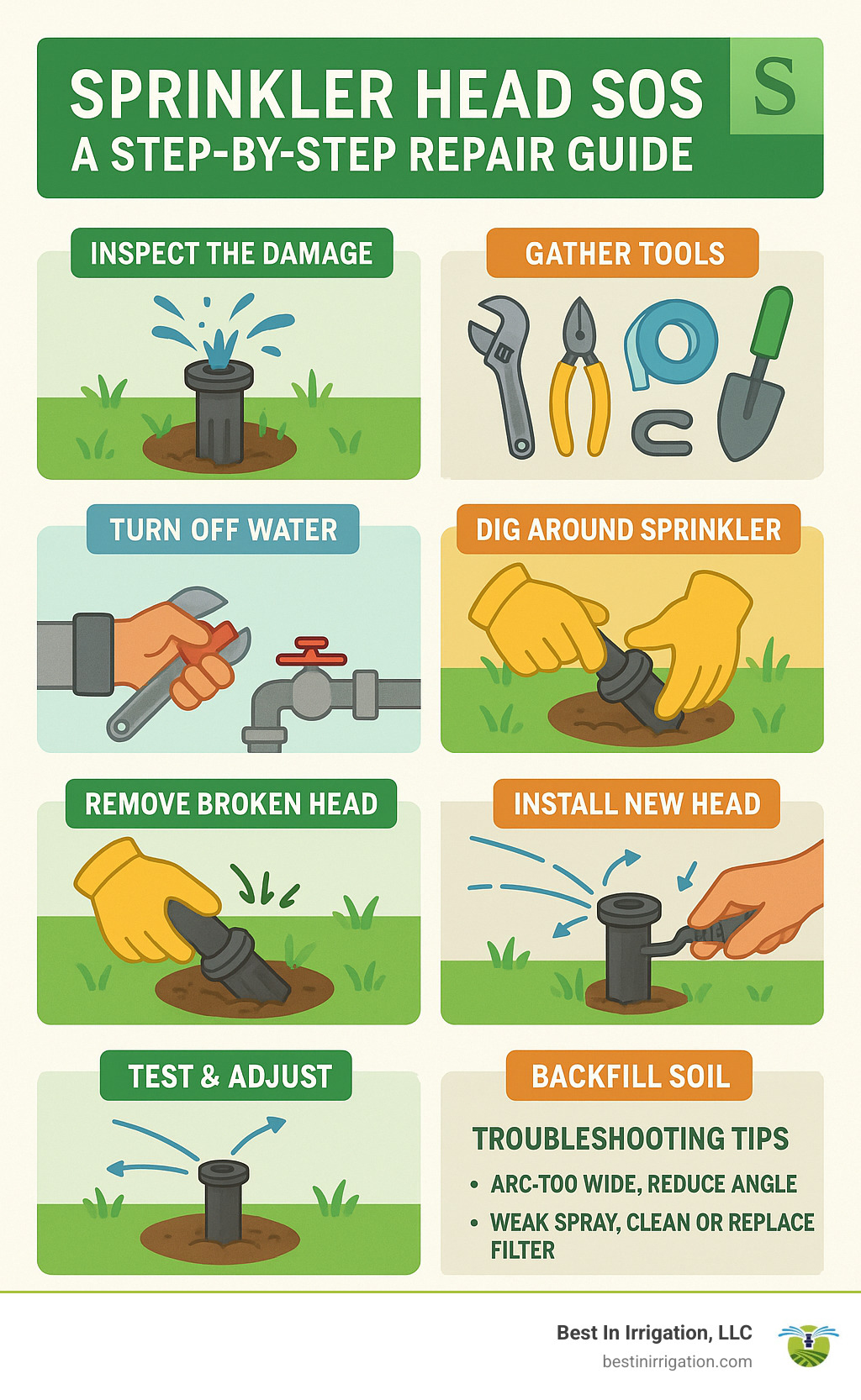
Quick Fix Steps:
1. Turn off water at the main valve or controller
2. Dig carefully around the broken head (6-inch circle)
3. Unscrew and remove the damaged sprinkler head
4. Clean threads and apply plumber’s tape
5. Install new head hand-tight, then quarter-turn with pliers
6. Test spray pattern and adjust arc as needed
7. Backfill hole and restore lawn surface
If you’re like most homeowners, you probably take your sprinkler system for granted until something goes wrong. You step outside and see a geyser in your front yard instead of a steady stream of controlled spray – a scenario that’s all too common for Massachusetts residents dealing with freeze-thaw cycles and lawn maintenance challenges.
A single broken sprinkler head doesn’t just create unsightly brown patches or soggy areas in your lawn. It can waste thousands of gallons of water and drive up your utility bills significantly. The good news? Most sprinkler head repairs are straightforward DIY projects that take about 20 minutes to complete.
Clogged, damaged, or worn-out heads cause uneven watering patterns that stress your grass and waste precious water resources. Whether it’s a cracked housing from winter freeze damage, a clogged nozzle from debris, or a head that’s been damaged by your mower, learning to spot and fix these issues early prevents bigger problems down the road.
This guide walks you through everything you need to know – from identifying the warning signs to completing a professional-quality repair that restores your system’s efficiency.
Terms related to repair broken sprinkler head:
– drip irrigation maintenance
– in ground sprinkler system maintenance
– irrigation system repair companies
How to Spot a Broken Sprinkler Head Early
The secret to avoiding expensive water bills and patchy lawns? Catching broken sprinkler head problems before they turn into disasters. We’ve walked countless Massachusetts homeowners through their yards, pointing out warning signs they’d been stepping over for months without realizing.
Picture this: you’re enjoying your morning coffee when you notice soggy patches in your lawn that look like mini swamps, even though it hasn’t rained in days. Or maybe you step outside to find geysers shooting water skyward instead of the gentle spray patterns your sprinkler heads should produce. These aren’t just minor annoyances – they’re your irrigation system crying for help.
The flip side is equally telling. Dry brown spots scattered across otherwise healthy grass often mean a sprinkler head has given up entirely or is barely limping along. You might also spot uneven spray patterns where water shoots sideways, creates a fine mist that evaporates before hitting the ground, or leaves obvious gaps in coverage.
Listen carefully during your next watering cycle. That persistent hissing noise isn’t normal – it usually means water is escaping through cracks in the housing or loose fittings. And if you’ve noticed your water bill climbing without any change in usage, a single broken head could be the culprit behind hundreds of dollars in waste.
Don’t overlook puddling water around sprinkler heads either. Beyond creating muddy messes, these standing water areas become perfect mosquito breeding grounds that turn your peaceful backyard into a buzzing nightmare.
Visual Red Flags
When you’re doing your detective work, start with the obvious stuff. Cracked housing around sprinkler heads is incredibly common here in Massachusetts – our brutal freeze-thaw cycles love to split plastic components wide open. You’ll often see water seeping from these cracks even when the system is supposed to be off.
Sunken heads that disappear below your lawn surface won’t pop up properly, leaving you with poor coverage and a prime target for your mower blades. On the other hand, heads that stick up too high become sitting ducks for lawn equipment damage.
Clogged nozzles might be the most frequent problem we encounter. Grass clippings, dirt, and debris have a talent for finding their way into the smallest openings, completely blocking water flow or turning your nice spray pattern into something that looks like modern art.
Performance Clues
Sometimes the problems aren’t immediately visible, but your sprinkler system’s performance tells the whole story. Low pressure from one head while its neighbors work perfectly usually points to internal damage or partial blockages that need attention.
Misting spray instead of proper droplets is a water-wasting nightmare. Not only does most of it evaporate before reaching your grass, but it also signals worn internal components or the wrong nozzle for your system’s pressure.
Zone imbalance is another dead giveaway – when one irrigation zone struggles to provide adequate coverage while others finish quickly, you’re likely dealing with multiple head problems that will only get worse if ignored. The good news? Most of these issues connect to common irrigation system problems that have straightforward solutions once you know what to look for.
Preparing for Safe DIY Repairs
Before you grab your tools and start digging, let’s talk safety – because nobody wants to turn a simple repair broken sprinkler head project into a muddy disaster or, worse, a trip to the emergency room.
Water shut-off is your first and most important step. Turn off the main water supply to your irrigation system at the controller or master valve. Trust me, you don’t want to be wrestling with a geyser while trying to unscrew a broken head. It’s messy, frustrating, and makes the job ten times harder than it needs to be.
Next, isolate the specific zone at your irrigation controller if you can. This neat trick lets you test other zones while you work, helping you confirm that your repair actually fixed the problem. Many Massachusetts homeowners skip this step and end up working in muddy conditions – learn from their soggy mistakes.
Here’s something that might surprise you: call 811 before you start digging, even for sprinkler repairs. While most residential head replacements only need shallow excavation, it’s always better to know where your utilities are buried. Gas lines, electrical cables, and phone lines don’t mix well with digging tools.
Protective gear matters more than you think. Safety gloves protect your hands from sharp plastic edges and keep dirt out of cuts, while safety glasses are essential if you’re working with pressurized lines or cleaning debris from clogged nozzles. Nobody wants to explain to their spouse how they got a grass clipping in their eye.
Your essential tools include a digging trowel for precise excavation around heads, a pull-up tool for removing stubborn sprinkler stems (the Rain Bird tool to pull up the sprinkler stem works great), and plumber’s tape for creating watertight seals on threaded connections.
Consider upgrading to swing pipe fittings if you’re replacing heads in high-traffic areas. These flexible connections are much more forgiving when your teenager drives over them with the lawn mower – and they’ll save you from repeating this repair next season.
If you run into issues beyond basic head replacement, check out our guide on common irrigation system problems to understand when it’s time to call in professional help.
Gather Your Toolkit
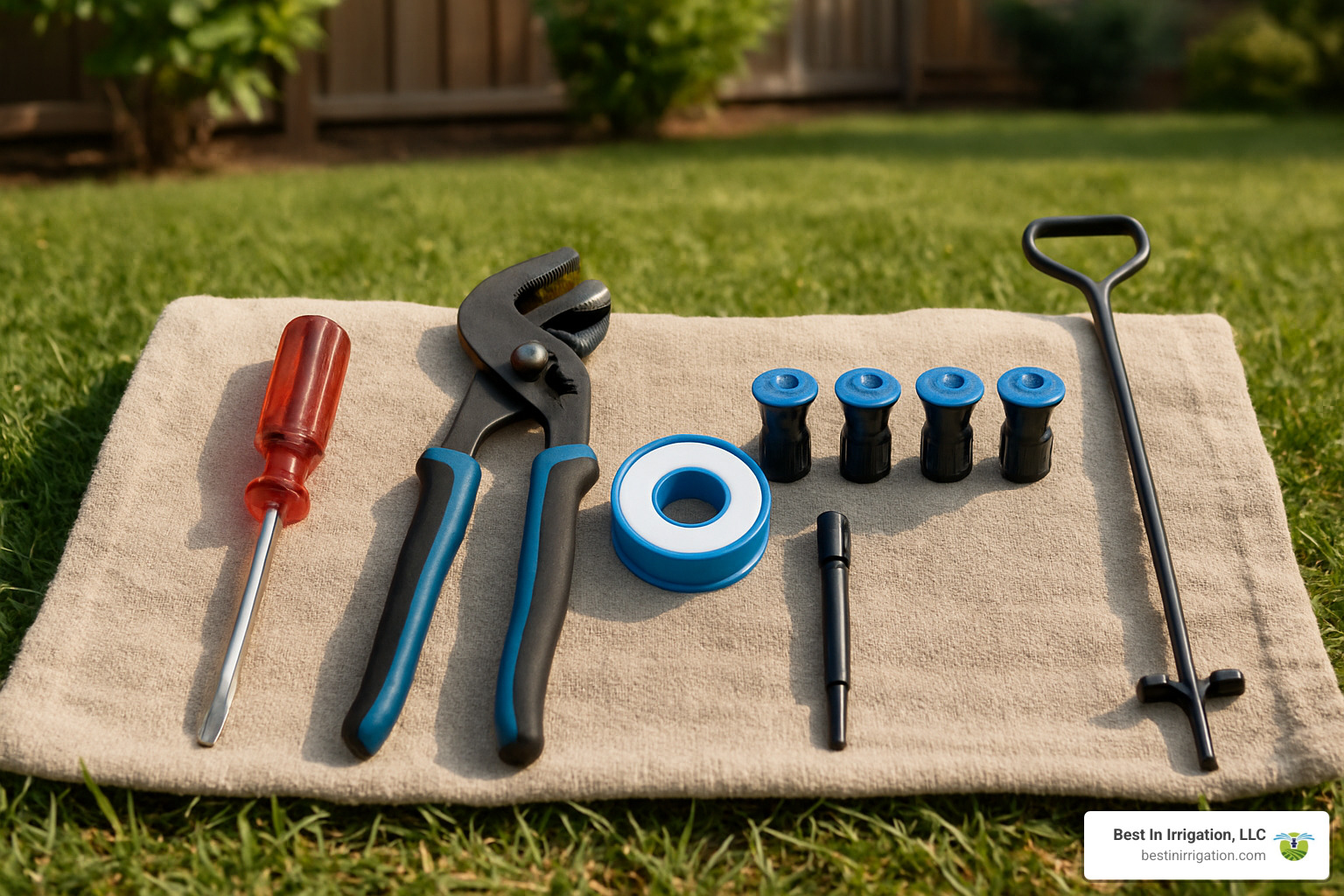
Your basic toolkit doesn’t need to break the bank or fill a whole garage. An adjustment screwdriver handles most fine-tuning work, while adjustable pliers give you the grip you need for turning stubborn components without overtightening them.
Keep a bucket handy for collecting dirty water and debris during the repair – you’ll be surprised how much gunk comes out of a clogged head. A tarp or drop cloth spread next to your work site keeps things organized and makes your spouse much happier when cleanup time comes around.
Stock up on replacement nozzles in common sizes while you’re at the hardware store. They’re inexpensive insurance policies that often solve flow problems without requiring full head replacement. A basic nozzle variety pack covers most residential situations you’ll encounter.
System Shutdown Checklist
Locate your valve box and main water shutoff before you need them in a hurry. In Massachusetts, these are often buried deeper due to our frost line requirements, so take a few minutes to find them when you’re not under pressure to fix a broken head.
Disconnect electrical power to your irrigation controller if you’re working on multiple zones or suspect electrical valve issues. The last thing you want is for a zone to kick on automatically while you’re elbow-deep in mud and sprinkler parts.
Let the system pressure bleed off by manually activating the zone after shutting off the water supply. This eliminates residual pressure that could surprise you with an unwanted shower when you remove components. A few seconds of patience here saves you from getting soaked and muddy.
Repair Broken Sprinkler Head: Step-by-Step Replacement Guide
Here’s where the rubber meets the road – let’s repair broken sprinkler head issues with confidence. This straightforward process works for virtually all residential pop-up spray heads and rotors, and you’ll be amazed how simple it really is once you know the steps.
Turn off your water supply first – this isn’t optional! Whether you shut off the main valve or just isolate the zone at your controller, you’ll thank yourself for this step when you’re not wrestling with a muddy geyser. If you can wait 24-48 hours after the last watering cycle, Massachusetts clay soils will be much more cooperative during excavation.
Dig a careful 6-inch circle around the broken head using a narrow trenching shovel or small spade. The secret here is patience – work slowly to avoid accidentally slicing through the flexible supply pipe. We’ve seen too many simple repairs turn into major pipe replacements because someone got a little too enthusiastic with the shovel.
Save that sod by cutting it in a neat circle and placing it on your tarp. Your future self will appreciate this extra step when it’s time to restore your lawn. A clean repair looks professional and maintains your home’s curb appeal.
Unscrew the damaged head by hand first, then grab your pliers if it’s being stubborn. Clear away any soil from around the fitting before you start – you don’t want debris falling into your supply line. For particularly stuck heads, a Rain Bird pull-up tool can be a real lifesaver.
Inspect that riser carefully for cracks or damage. This step catches problems before they become expensive headaches. Massachusetts freeze-thaw cycles are notorious for creating hairline cracks right at the thread connection point, so look closely.
Flush your water line by briefly turning the water back on. This simple step clears debris that could clog your shiny new head. Just direct the water away from your work area – nobody wants a surprise shower during a repair project.
Apply Teflon tape to the riser threads, wrapping clockwise when you’re looking at the end. This creates the watertight seal that prevents future leaks and keeps your repair lasting for years.
Install your new head by threading it on hand-tight first, then adding just a quarter-turn with pliers. Resist the urge to crank it down tight – overtightening cracks housings and strips threads faster than you’d think.
Align the spray arc to match your landscape needs, then test everything before you backfill. Making adjustments now saves you from digging everything up again later.
For more complex issues involving underground pipe damage, our guide on irrigation system repair near me covers when professional help makes sense.
Remove & Inspect the Damage — repair broken sprinkler head
Hand unscrewing should always be your starting point. Most heads come off easily once you’ve cleaned the soil away from the fitting. Turn counterclockwise while supporting the riser – this prevents stress on your underground connections that could create new problems.
Check for riser cracks with the thoroughness of a detective. These sneaky hairline fractures often cause slow leaks that gradually worsen over time. New England’s freeze-thaw cycles are particularly brutal on plastic components, especially right where the threads meet.
Debris inspection might seem like overkill, but it’s crucial for a lasting repair. Remove every bit of grass clippings, dirt, or small stones from those fitting threads. Even tiny particles can prevent proper sealing and turn your successful repair into a future headache.
Install & Align the New Head — repair broken sprinkler head
Hand-tighten your new head onto those cleaned and taped threads. It should thread on smoothly without any forcing – if you feel resistance, back off and check for cross-threading before you damage something.
A quarter-turn with pliers provides that final seal without going overboard. Use the pliers on the hexagonal base of the head, not on plastic components that might crack under pressure. Think “snug, not tight.”
Set the throw distance using the adjustment screw on the nozzle. Most residential heads let you reduce spray distance by up to 25% by partially blocking the nozzle opening. This fine-tuning ensures efficient water coverage without overspray onto sidewalks or driveways.
Choosing the Right Replacement & Avoiding Costly Mistakes
Walking into a hardware store and grabbing the first sprinkler head you see is like buying shoes without checking the size – it might work, but probably won’t. When you repair broken sprinkler head issues, selecting the right replacement makes the difference between a fix that lasts years and one that fails within months.
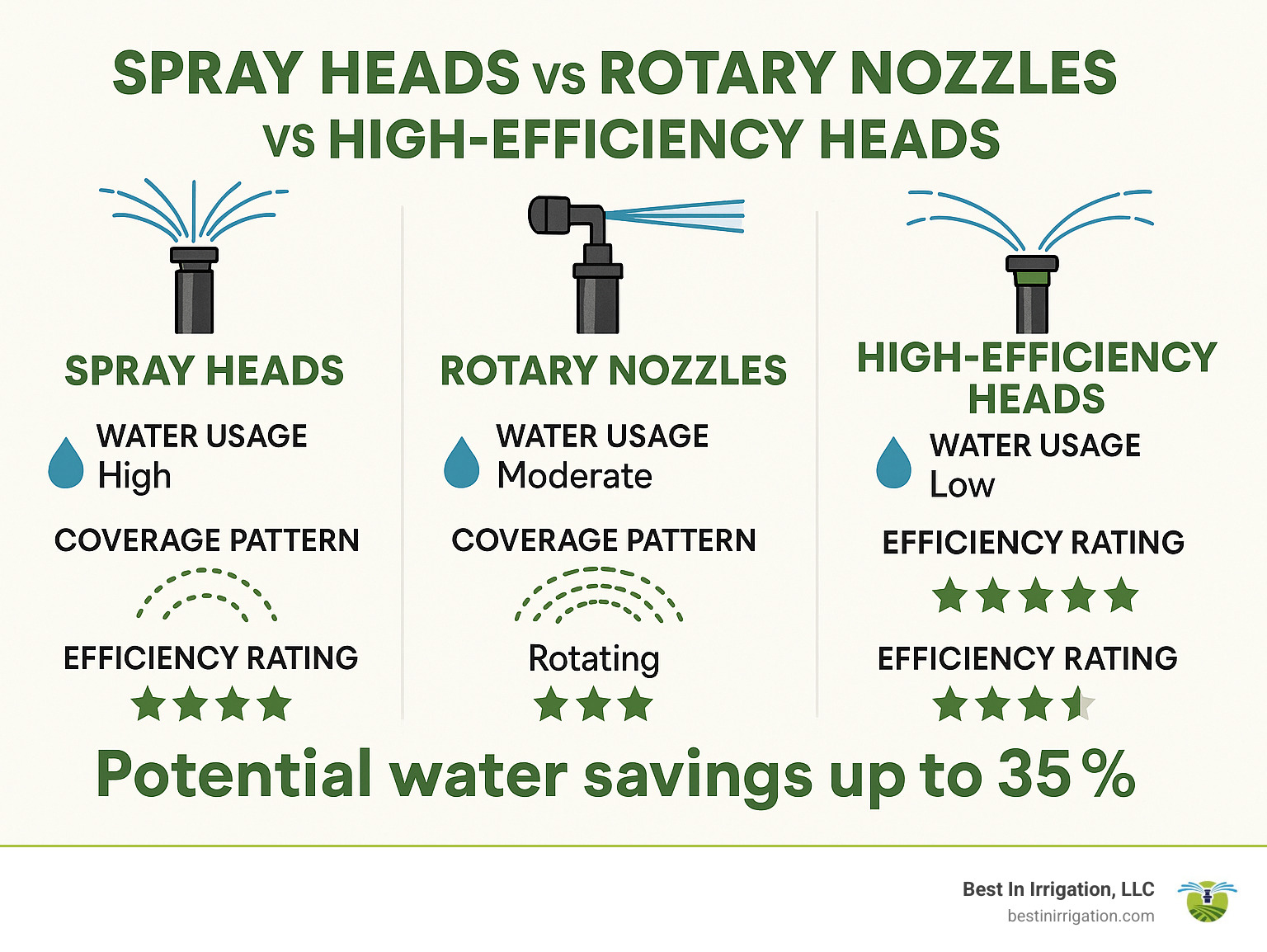
Pop-up spray heads are your go-to choice for smaller residential areas, flower beds, and anywhere you need precise water placement. They’re perfect for those tight spots around your Massachusetts colonial’s foundation plantings or between walkways where every drop counts.
Rotary heads cover much larger areas and work beautifully for open lawn spaces. Think of them as the workhorses of residential irrigation – they throw water farther and more efficiently than spray heads, making them ideal for those expansive front yards common in suburban Massachusetts neighborhoods.
You might encounter impact sprinklers in older homes, especially those classic brass ones that make the distinctive clicking sound. While they’re durable and effective for large areas, most modern residential systems have moved away from them in favor of quieter, more efficient options.
Here’s where many DIY repairs go sideways: nozzle GPM (gallons per minute) must match your system’s design. If your old head had a 2.0 GPM nozzle, your replacement needs the same flow rate. Installing a 4.0 GPM nozzle where you need 2.0 GPM creates pressure problems throughout the entire zone and can leave other heads barely trickling.
Pressure-regulated options are worth considering, especially if you’ve noticed inconsistent spray patterns during different times of day. Municipal water pressure fluctuates, and these heads maintain steady performance whether you’re watering at 6 AM or 6 PM.
The real game-changer for water conservation is upgrading to high-efficiency options that can save up to 35% on water usage compared to standard spray nozzles. Rain Bird rotary nozzles apply water more slowly and evenly, giving your soil time to absorb every drop instead of creating runoff that ends up in your driveway.
Head-to-head coverage ensures your lawn gets even watering without dry spots. Each sprinkler should reach the next one in the zone, creating overlapping coverage that accounts for wind and natural pressure variations. It’s like having a good umbrella overlap in a rainstorm.
Cross-brand compatibility works for most standard residential fittings, but matching specifications matters more than matching brand names. A quality replacement head with the right flow rate and spray pattern will work perfectly, regardless of whether it matches your existing heads’ manufacturer.
If your repair work uncovers damaged underground pipes, you’ll want to check our guide on how to repair broken irrigation pipe before completing your head replacement.
Match Specs Like a Pro
Brand and model matching makes shopping easier when possible, but don’t stress if you can’t find an exact match. Take the old head with you to the store, or snap clear photos of any model numbers or markings before you start digging.
Spray radius needs to fit your actual landscape, not just what’s available on the shelf. Installing a head that throws water 15 feet when you only have 8 feet to the property line wastes water and might give your neighbor’s lawn better coverage than your own.
Flow rate compatibility keeps your entire zone working properly. Think of your irrigation zone like a chain – one mismatched head affects everything else connected to it. Mix a high-flow head with low-flow heads, and you’ll end up with uneven coverage and potential pump problems.
Top DIY Errors to Skip
Over-tightening destroys more replacement heads than any other mistake. Plastic threads strip easily, and heads that are cranked down too tight often crack during Massachusetts freeze-thaw cycles. Hand-tight plus a quarter-turn with pliers gives you a perfect seal without the headaches.
Mismatched heads in the same zone create pressure chaos that affects everything downstream. Don’t mix spray heads with rotors, or combine high-flow and low-flow heads in the same zone, no matter how convenient it seems at the moment.
Skipping the flush step is like changing your car’s oil filter without draining the old oil first. Even if the water looks clean, debris from your repair work can clog your new head within days. Take the extra two minutes to flush the line – your future self will thank you.
Testing, Troubleshooting & Long-Term Maintenance
Once you’ve completed your repair broken sprinkler head work, testing becomes your moment of truth. Run each zone individually for 2-3 minutes and walk around to observe the spray patterns, water pressure, and overall coverage. This zone-by-zone approach helps you spot any issues before you pack up your tools and call the job complete.
Arc fine-tuning makes all the difference between a repair that works and one that truly optimizes your system. Most residential heads allow you to adjust the spray arc anywhere from 40 degrees up to a full 360-degree circle. Take time to ensure water lands on your lawn, not on sidewalks, driveways, or your neighbor’s prized flower beds.
Check carefully for leaks at the head connection and any underground fittings you may have disturbed during the repair. Even tiny leaks can waste hundreds of gallons over a season – and in Massachusetts, that translates to real money on your water bill.
The secret to avoiding future emergency repairs lies in seasonal inspections twice each year. Schedule these for spring after our harsh New England winters and again in fall before winterization. During these quick walk-throughs, you’ll catch small problems before they become expensive headaches.
Winterization isn’t optional in Massachusetts – it’s essential for system survival. Even if you’ve had your system professionally winterized, water can remain trapped in individual heads and cause freeze damage. Make sure all water is blown out of lines and components before temperatures drop.
Consider installing concrete donuts around each sprinkler head for long-term protection. These simple barriers prevent most mower damage and protect heads from foot traffic. We’ve seen these inexpensive additions prevent countless repeat repairs for Massachusetts homeowners.
Swing joints under replacement heads offer flexibility that reduces damage from ground movement, freeze-thaw cycles, and accidental impacts. If you’re replacing a head that’s been damaged multiple times, adding a swing joint connection often solves the recurring problem permanently.
Smart controller upgrades represent one of the best investments you can make in your irrigation system. These advanced controllers adjust watering schedules based on local weather conditions, soil moisture levels, and seasonal plant needs. Many Massachusetts homeowners find these systems pay for themselves through water savings within just two seasons.
For homeowners who prefer professional maintenance support, landscape sprinkler repair near me services can provide comprehensive system check-ups and preventive care.
When to Repair vs Replace Again
Sometimes a simple nozzle cleaning solves flow problems without requiring full head replacement. Remove the nozzle carefully, clean the tiny filter screen with an old toothbrush, and flush any debris from inside the head body. This five-minute fix often restores perfect operation.
Replacing worn rubber seals can eliminate small leaks around the head cap or pop-up stem. These seals cost just pennies but can restore full function to heads that are otherwise in excellent condition. Look for O-rings and gaskets that have become hard or cracked.
However, heads over 10 years old often need complete replacement rather than repeated repairs. Internal components wear out over time, and you’ll find yourself fixing the same head multiple times if you don’t address the underlying age-related deterioration.
When to Call a Professional
Hidden pipe leaks present challenges that go beyond typical DIY repairs. These underground breaks require specialized leak detection equipment to locate precisely without destroying your carefully maintained landscape. Professional technicians can pinpoint leaks and make surgical repairs that preserve your lawn.
Electrical problems with irrigation valves need professional diagnosis and repair. When multiple zones malfunction simultaneously, or when zones won’t turn on or off properly, the issue usually lies in the control system rather than individual heads.
Multiple head failures within the same zone often signal deeper problems with water pressure, valve operation, or controller programming. These system-wide issues require professional troubleshooting to identify and correct the root cause rather than just treating symptoms.

Frequently Asked Questions about Broken Sprinkler Heads
What tools do I really need for a basic head swap?
You don’t need a fancy toolkit to repair broken sprinkler head problems successfully. Most homeowners already have the essential tools sitting in their garage or basement.
A small shovel or trowel handles the digging around the head – nothing fancy required. Adjustable pliers give you the grip you need for stubborn fittings, while a basic screwdriver lets you make spray adjustments once everything’s installed.
The one specialized item you’ll want is plumber’s tape (also called Teflon tape) for creating watertight seals on the threaded connections. This costs less than $2 and prevents most leak problems.
For cleanup and organization, grab a bucket for dirty water and debris, plus a tarp or old sheet to hold your excavated soil. These simple additions make the job much cleaner and help you restore your lawn properly afterward.
How do I choose the correct replacement nozzle pattern and distance?
Getting the spray radius and pattern right prevents dry spots and water waste – two problems we see constantly with mismatched replacements.
Fixed spray heads typically cover 8-15 feet and work perfectly for smaller lawn areas, flower beds, and precise watering zones. Rotary heads throw water 20-35 feet and suit larger open spaces where you need broader coverage.
Check your old nozzle for markings that show GPM (gallons per minute) and spray angle before heading to the store. These numbers ensure your new head delivers the same water volume and coverage pattern as the original design.
When you’re unsure about specifications, bring the old head with you to your local irrigation supplier. They can match it exactly and often suggest efficiency upgrades that save water without changing your coverage pattern.
Why does my new head still leak at the base after installation?
Base leaks after installation frustrate homeowners because everything seems like it should work perfectly with a brand-new head.
The most common culprit is insufficient thread sealing. Remove the head completely, clean both the riser threads and the head threads with a wire brush or rag, then apply fresh plumber’s tape. Wrap the tape clockwise when looking at the thread end – this prevents the tape from unwrapping as you install the head.
Over-tightening causes just as many leaks as under-tightening. Install the head hand-tight plus just a quarter-turn with pliers. Plastic threads strip easily, and stripped threads create permanent leak paths.
If leaking continues after proper sealing and tightening, inspect the riser itself for hairline cracks or worn threads. Massachusetts freeze-thaw cycles often damage risers in ways that aren’t immediately obvious, and a cracked riser will leak no matter how perfectly you install the head.
Conclusion
Congratulations! You’ve just learned how to repair broken sprinkler head problems like a pro, and your wallet (and water bill) will thank you for it. Most Massachusetts homeowners are amazed at how straightforward these repairs actually are once they dive in – what seemed like a mysterious underground puzzle turns out to be a simple 20-minute weekend project.
Efficient watering transforms your entire landscape experience. When every sprinkler head delivers precisely the right amount of water exactly where your grass needs it, you’ll notice the difference within days. No more embarrassing brown patches when the neighbors walk by, and no more soggy areas that squelch under your feet.
The water conservation impact goes far beyond your monthly utility bill, though those savings certainly add up quickly. We’ve seen single broken heads waste enough water in one season to fill a small swimming pool – water that could have kept your entire lawn thriving instead of creating muddy craters.
Think of your irrigation system as an investment that grows in value with proper care. The skills you’ve mastered today apply to virtually every sprinkler repair you’ll encounter, giving you the confidence to tackle problems before they become expensive emergencies.
Regular maintenance becomes almost enjoyable once you know what to look for. A quick walk around your property during watering cycles, watching for those telltale signs of trouble, prevents most major headaches. Your future self will appreciate the time you spend on these simple preventive checks.
When you do encounter complex issues beyond basic head replacement – like multiple zone failures or mysterious underground leaks – that’s where Best In Irrigation, LLC steps in. Our 9 years of experience helping Massachusetts homeowners means we’ve seen every possible sprinkler challenge New England weather can dish out.
Your irrigation system should work as reliably as any other part of your home. With the foundation you’ve built today, plus a smart maintenance routine, you’re well-equipped to keep your landscape healthy and beautiful through every season.
Ready to take your system maintenance to the next level? Our comprehensive irrigation system maintenance services help you stay ahead of problems while maximizing your system’s efficiency and lifespan.
