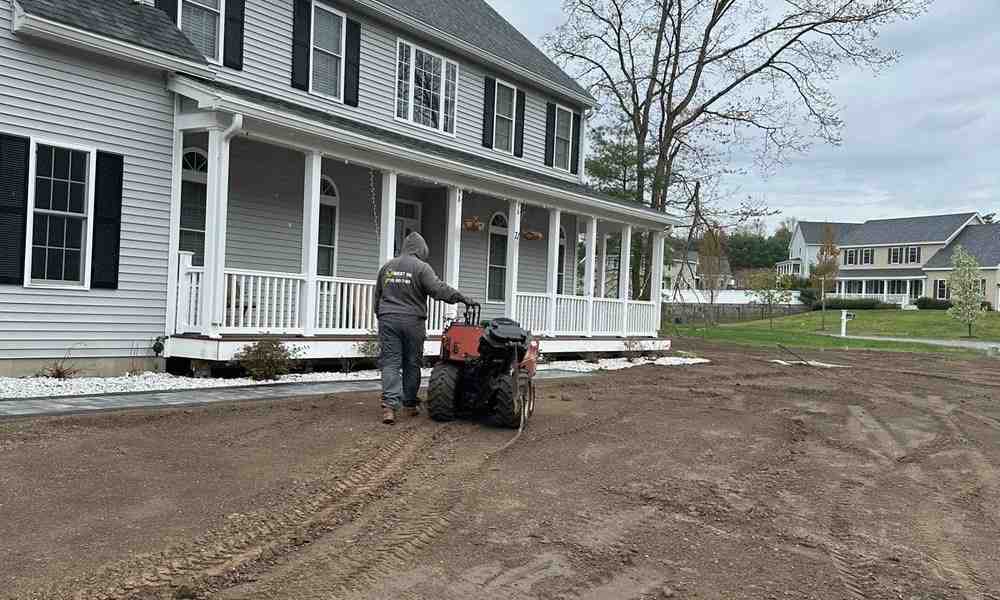

Why Install a Lawn Sprinkler System?
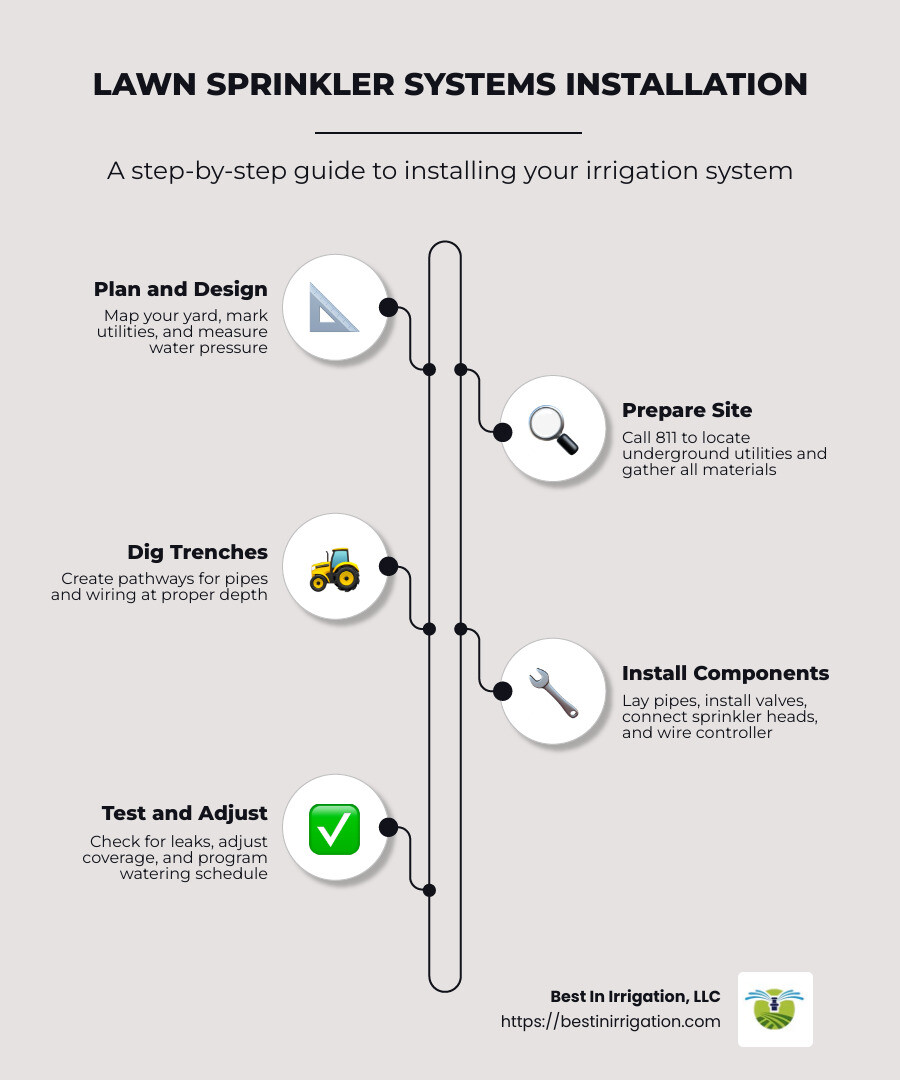
Lawn sprinkler systems installation can transform your yard by automating watering, saving water, and boosting property value. Want a quick outline of how it’s done? Here’s a simple overview:
- Plan and Design: Map out your yard, mark utilities, and measure water pressure.
- Prepare Site: Call 811 to avoid underground utilities and gather necessary materials.
- Install System: Dig trenches, lay pipes, install valves and sprinkler heads, and connect everything to a timer.
- Test and Adjust: Check for leaks, test coverage, and fine-tune system settings.
A professionally installed sprinkler system doesn’t just keep your lawn lush and green—it also cuts your water bills, eliminates the chore of manual watering, and increases your home’s appeal.
Keep reading to find the ins and outs of installing your lawn’s perfect irrigation solution.
Find more about lawn sprinkler systems installation:
– how to install a lawn sprinkler system
– how much does a lawn sprinkler system cost
– how do sprinkler systems work lawn
When it comes to maintaining a beautiful landscape in Massachusetts, consistent and proper watering is essential. At Best In Irrigation, LLC, we’ve seen how lawn sprinkler systems installation can revolutionize property care for our New England clients.
Water Conservation
One of the most significant benefits of installing a modern sprinkler system is water conservation. According to recent data, nearly 10,000,000 gallons of water have been saved through the use of smart sprinkler technology. These systems deliver precisely the right amount of water exactly where it’s needed.
“Installing an underground sprinkler is a great way to conserve water and save money on irrigation,” notes irrigation expert Valerie Albarda. “This type of lawn irrigation system can be a complicated installation project, but with the right preparation and materials, it can be within your reach.”
Unlike manual watering with a garden hose, which often leads to overwatering some areas while neglecting others, automated systems ensure even distribution. This efficiency translates directly to lower water bills and less environmental impact.
Improved Lawn Aesthetics
The most obvious benefit of owning an automatic sprinkler system is a lush, beautiful lawn. Consistent watering at optimal times (typically early morning) promotes deeper root growth and healthier grass. Many of our Massachusetts clients report that within just weeks of lawn sprinkler systems installation, they notice:
- More vibrant color throughout their lawn
- More uniform grass growth
- Fewer dry patches or problem areas
- Healthier plants and landscaping features
Increased Property Value
Installing a quality irrigation system is also an investment in your property’s value. Real estate professionals consistently rank automatic sprinkler systems among the outdoor improvements that offer the best return on investment.
A properly installed underground sprinkler system can increase your home’s marketability and appeal to potential buyers. In the competitive Massachusetts real estate market, this edge can make a significant difference when it comes time to sell.
Time-Saving Benefits
Let’s be honest – dragging hoses around and standing in the yard with a sprinkler is nobody’s idea of a good time. Automatic sprinkler systems eliminate this tedious chore entirely.
One of our residential clients in Boston recently told us: “Before installing my sprinkler system, I spent at least 5 hours each week moving hoses and sprinklers around. Now that time is mine again, and my lawn actually looks better than when I was doing it manually.”
With programmable timers and smart controllers, your lawn gets watered on schedule without any effort on your part. This convenience factor alone makes lawn sprinkler systems installation worth considering for busy homeowners.
Scientific study on water savings with smart sprinklers
External link: How sprinkler systems increase property value
Understanding Different Types of Lawn Sprinkler Systems
Before diving into the installation process, it’s important to understand the various types of sprinkler systems available. At Best In Irrigation, LLC, we help our Massachusetts clients select the right system based on their specific landscape needs.
Spray Sprinklers
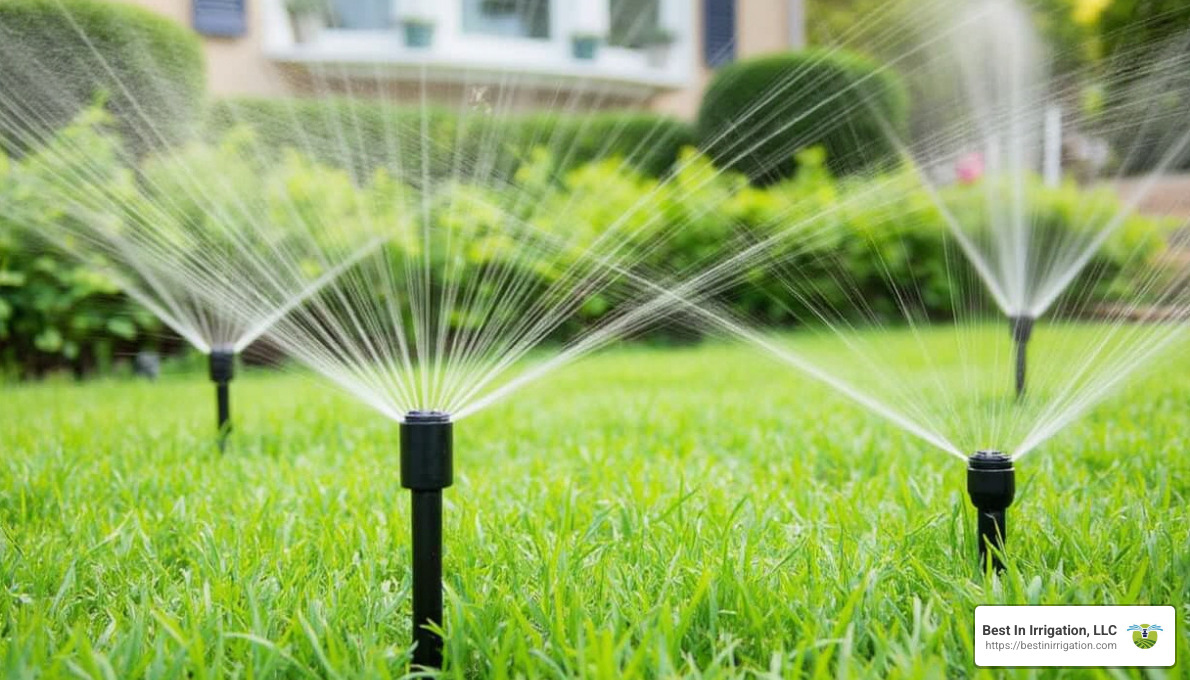
When you picture a typical home sprinkler, you’re probably thinking of spray sprinklers. These workhorses of lawn sprinkler systems installation create those familiar fan-shaped patterns of water that gently shower your grass.
I like to think of spray sprinklers as the reliable neighborhood friends of irrigation—they’re straightforward, dependable, and get the job done without much fuss. They typically spray water 5-15 feet and work best in smaller, flatter areas where you need consistent coverage.
Most of our Massachusetts homeowners find these perfect for standard residential lawns. They operate at lower water pressures (around 30 PSI) and we usually install them about 18 feet apart to ensure proper coverage without wasting water.
Rotor Sprinklers
Have you ever watched those large sprinklers that shoot streams of water in rotating patterns across sports fields? Those are rotor sprinklers, and they’re the marathoners of the irrigation world—covering more ground with less water over time.
Rotor sprinklers can reach an impressive 15-50 feet, making them ideal for medium to large lawns. What I love about rotors is their adaptability—we can adjust both the arc of coverage and the distance of the spray to perfectly match your lawn’s dimensions.
These sprinklers operate at higher pressures (45-50 PSI) and they’re remarkably wind-resistant compared to their spray head cousins. When we install impact rotors, we typically space them 2-3 feet apart, while gear-driven rotors work best at about 14 feet apart. Many of our clients with larger properties in Massachusetts find rotors to be the perfect solution for their expansive lawns.
Drip Irrigation Systems
If sprinkler systems are like showering your lawn, drip irrigation is like giving your plants a personal water bottle. This method delivers water directly to the soil through a network of tubes and emitters, right where your plants need it most.
I can’t overstate how efficient drip irrigation is—it can save up to 60% of water compared to traditional sprinklers. For gardens, flower beds, and areas with shrubs and trees, there’s simply no better option.
During a lawn sprinkler systems installation that includes drip irrigation, we typically place the tubing about 12 inches apart, securing it with stakes every 18-24 inches. This ensures the water goes exactly where it’s needed without waste.
One of our clients in Brookline recently told me, “I was amazed at how my water bill dropped after you installed the drip system for my perennial garden, and my plants have never looked better!”
Smart Irrigation Technology
Smart irrigation is where technology and water conservation meet—and it’s revolutionizing how we think about lawn sprinkler systems installation. These systems are like having a personal meteorologist and gardener working together to water your lawn perfectly every time.
With WiFi-enabled controllers that connect to your smartphone, you can manage your irrigation system from anywhere. But the real magic happens automatically—these systems use real-time weather data and soil moisture sensors to adjust watering schedules on their own.
During a hot, dry spell, they’ll provide more water. When rain is in the forecast, they’ll skip watering altogether. This intelligence can reduce water usage by 30-50% compared to traditional timers.
At Best In Irrigation, we’ve become specialists in these cutting-edge systems. We’ve helped countless Massachusetts homeowners upgrade to smart controllers, and the feedback has been incredible. Not only do they save water and money, but they also take the guesswork out of lawn care.
“Since installing our smart irrigation system last year,” shares a Newton homeowner, “I’ve stopped worrying about whether my lawn is getting too much or too little water. The system handles everything, and my lawn has never looked better.”
More info about irrigation system installation
How to Determine the Best Sprinkler System for Your Lawn
Choosing the right irrigation system isn’t just about keeping your grass green—it’s about finding the perfect match for your unique property. At Best In Irrigation, LLC, we’ve spent years helping Massachusetts homeowners steer this important decision through careful assessment and personalized recommendations.
Assessing Lawn Size and Shape
Your yard’s dimensions tell an important story about what type of sprinklers will work best. When we visit a property, we’re looking at much more than just square footage.
Small, regularly shaped lawns under 2,000 square feet typically thrive with standard spray sprinklers. These systems provide consistent coverage that works beautifully in compact spaces. For medium to large properties exceeding 3,000 square feet, we often recommend rotor systems that can cast water further with greater efficiency.
“I remember a client in Brookline with a uniquely curved property line,” shares one of our installation specialists. “We ended up designing a custom combination system that used rotors for the open areas and specialty spray heads for the curved sections. The result was perfect coverage without a drop of wasted water.”
For those tricky narrow strips along driveways or between houses (anything less than 8 feet wide), we use special spray nozzles specifically engineered for these challenging spaces. During our assessment, we create a detailed property map that divides your landscape into hydrozones—areas with similar watering needs—ensuring every corner of your yard receives exactly what it needs.
Soil Type Considerations
The ground beneath your feet plays a surprisingly important role in your lawn sprinkler systems installation decisions. Different soil types interact with water in unique ways:
Sandy soils drain quickly, often requiring more frequent watering sessions with less water each time. Clay soils, on the other hand, absorb water slowly but hold onto moisture longer, benefiting from less frequent but deeper watering. Loam soils represent the ideal middle ground, absorbing water at a moderate rate.
During our consultations, we actually test your soil composition right on site. This hands-on approach helps us determine the optimal precipitation rate for your system, preventing wasteful runoff and ensuring water reaches the root zone where it matters most.
Climate Factors
New England’s distinct seasons create unique challenges for irrigation planning. Massachusetts properties experience everything from summer heat waves to deep winter freezes, requiring systems that can adapt throughout the year.
“What works in July won’t necessarily work in September,” notes our operations manager. “That’s why we design flexibility into every system we install.”
Our 9 years of experience in the Massachusetts climate has given us deep insights into local rainfall patterns and seasonal shifts. We’re experts at designing systems that can be easily adjusted or programmed to account for these changes, ensuring your lawn stays healthy year-round while conserving water during naturally rainy periods.
Winter freezing requires special attention too. Every lawn sprinkler systems installation we complete includes proper winterization protocols to prevent costly damage during the cold months.
Water Pressure Evaluation
Even the most beautifully designed system will fail without proper water pressure. That’s why our assessment always includes a thorough evaluation of your property’s water dynamics.
We start by measuring your baseline PSI using a pressure gauge attached to an outdoor faucet. This simple test reveals crucial information about your home’s water delivery capacity. We also calculate your flow rate in gallons per minute (GPM) to ensure adequate water volume for your system’s needs.
Different sprinkler types have specific pressure requirements: spray heads typically need 25-30 PSI, rotors function best at 45-50 PSI, and drip systems operate optimally at 20-30 PSI. Most homes have water pressure between 40 PSI and 70 PSI, but knowing your exact numbers helps us determine appropriate sprinkler heads and zoning requirements.
“We had a client in Newton with unusually high water pressure,” recalls our technical director. “Without proper regulation, their system would have created mist instead of proper water droplets, leading to evaporation and waste. We installed pressure regulators that solved the problem completely.”

This thorough evaluation process is what sets Best In Irrigation apart. We don’t believe in one-size-fits-all solutions—instead, we take the time to understand your property’s unique characteristics before recommending the perfect irrigation system for your needs. It’s this attention to detail that has made us a trusted name throughout Massachusetts.
More info about how to install a lawn sprinkler system
Step-by-Step Guide to Lawn Sprinkler Systems Installation
Ready to transform your lawn with an automatic watering system? Let’s walk through the process together. At Best In Irrigation, LLC, we’ve refined our lawn sprinkler systems installation approach over our 9 years serving Massachusetts homeowners, and we’re happy to share our expertise with you.
Planning and Design
Before the first shovel hits the dirt, we need a solid plan. Think of this as the blueprint for your green oasis. We start by creating a detailed map of your property, noting everything from your prized rose bushes to that shady spot where nothing seems to grow.
“The planning phase is where great irrigation systems are born,” says our lead designer. “We take the time to understand how water naturally flows across your property, where the sun hits hardest, and which areas might need special attention.”
This initial mapping helps identify your yard’s unique “hydrozones” – areas with similar watering needs that will eventually become separate zones in your system.
Obtaining Permits
Many Massachusetts towns require permits for lawn sprinkler systems installation, and skipping this step can lead to headaches down the road. Our team handles this paperwork maze for you, ensuring all local codes are met, especially those concerning backflow prevention (which protects your drinking water).
We’ve developed relationships with building departments across the state, which helps streamline this process for our clients. While permit requirements vary by location, we’ll make sure your installation is fully compliant and ready for any required inspections.
Marking Utilities
Safety first! Before any digging happens, we always call 811 – the “Call Before You Dig” service. This free service arranges for utility companies to mark the location of underground lines on your property.
Those colorful flags and spray paint markings might look like lawn decorations, but they’re actually protecting you from potentially dangerous and expensive accidents. We document these locations carefully and design our trenching routes to avoid all utility lines.
Gathering Materials and Tools
A professional lawn sprinkler systems installation requires specialized equipment and high-quality materials. We bring everything needed to complete your installation efficiently:
From trenching shovels and pipe cutters to wire strippers and rain gauges, our trucks arrive fully stocked. For materials, we use only commercial-grade components that stand the test of time – proper PVC or polyethylene piping, quality fittings, reliable valves, and appropriate sprinkler heads for each zone.
Step 1: Planning Your Lawn Sprinkler Systems Installation
Now we get into the details of your system design. This is where art meets science in irrigation.
Mapping lawn areas becomes more detailed as we divide your property into specific zones. That sunny south-facing slope needs different watering than the shaded side yard. Your vegetable garden has different needs than your front lawn. We account for all these variables.
When planning zoning, we’re careful not to overload your water pressure. Most residential systems work best with 4-5 sprinkler heads per zone. We also group similar plants together and create separate zones for areas with distinct needs.
Selecting appropriate sprinkler heads is where our experience really shines. We might recommend spray heads for your smaller lawn sections, rotors for larger open spaces, and drip irrigation for your flower beds – all working together in one cohesive system.
Step 2: Preparing for Installation
Safety and system performance both depend on good preparation.
Calling 811 to locate utilities isn’t just a recommendation – it’s essential. As one of our technicians likes to say, “Hitting a gas line or electrical cable can turn your irrigation project into a very bad day, very quickly.” We always wait for official markings before proceeding.
Measuring water pressure and flow rate helps us design a system that works with your home’s specific water supply. Using a simple pressure gauge on your outdoor faucet, we’ll determine both static pressure (when water isn’t flowing) and dynamic pressure (when it is). These measurements ensure your system will operate at peak efficiency.
Step 3: Digging Trenches
Now the physical work begins, and proper trenching makes all the difference in system longevity.
Trench depth recommendations vary by pipe type. We dig main lines 10-12 inches deep, lateral lines 6-8 inches deep, and valve boxes about 18 inches deep. In Massachusetts, where winter freezing is a concern, proper depth is crucial to prevent damage.
Different soil types present unique challenges. Sandy soil is easier to dig but tends to collapse, while clay soil is harder to excavate but holds its shape better. Rocky New England soil often requires specialized equipment or techniques.
Here’s a helpful digging tip from our crew: “When crossing under walkways or driveways, we often use a water jetting technique to create a path for the pipe without disturbing the surface. It’s like creating a tunnel just for your irrigation pipes.”
Step 4: Laying Pipes and Installing Valves
Pipe selection matters tremendously for system durability.
When comparing PVC vs. Polyethylene pipes, we typically recommend Schedule 40 PVC for main lines in Massachusetts installations. Its rigidity and durability stand up better to our freeze-thaw cycles. For lateral lines, either PVC or poly pipe might be appropriate depending on your specific site conditions.
Assembling the valve manifold requires precision and planning. We create a central control point where water distribution is managed, with anti-siphon valves or backflow preventers as required by local code. This manifold connects to your water supply and distributes water to each zone when activated.
Step 5: Connecting Sprinkler Heads
Proper head placement ensures efficient, uniform watering.
Proper spacing varies by sprinkler type. Impact sprinklers typically cover 15-30 feet and should be placed 2-3 feet apart. Pop-up spray heads with a 10-foot range work best about 18 feet apart, while rotary nozzles covering 25-30 feet should be spaced about 14 feet apart.
Before finalizing any sprinkler head installation, we perform system flushing to remove any debris that could clog your new components. By capping all but one pipe end and running water through the system, we ensure clean pipes before attaching the heads.
Once heads are installed, we focus on adjusting spray patterns for optimal coverage. Each head is fine-tuned to provide even watering without wasteful overspray onto driveways or buildings. We aim for head-to-head coverage, where the spray from one sprinkler reaches the next sprinkler head.
Step 6: Wiring and Setting Up the Controller
Now we bring your system into the 21st century with proper controls.
Timer installation involves mounting your controller in an accessible, protected location – typically in your garage or basement. Modern controllers offer incredible flexibility in programming and can even connect to your home’s WiFi for remote control.
Wiring valves requires special attention to waterproofing. We use direct burial wire and waterproof connections to ensure reliability, even in wet conditions. We always document wire paths and leave some slack for future adjustments if needed.
Programming watering schedules is where your system becomes truly automated. We’ll set appropriate run times for each zone based on plant needs, soil type, and sprinkler output. Most systems work best with early morning watering schedules to minimize evaporation and reduce disease risk.
Step 7: Testing and Final Adjustments of Your Lawn Sprinkler Systems Installation
The final phase ensures everything works perfectly before we consider the job complete.
Checking for leaks involves pressurizing each zone individually and carefully inspecting all connections. Even a small leak can waste water and potentially damage your landscape, so we’re meticulous about this step.
Adjusting coverage means running each zone while making fine-tuning adjustments to sprinkler heads. We want to see uniform water distribution with no dry spots or excessive overlap. This might involve adjusting spray patterns, nozzle selection, or head positioning.
After backfilling trenches carefully to protect the pipes, we restore your lawn areas with soil compaction and either seed or sod as needed. We take pride in leaving your property looking as good as or better than when we arrived.
When your installation is complete, we’ll walk you through the entire system, explaining how everything works and how to make basic adjustments. This ensures you’re comfortable managing your new lawn sprinkler systems installation.
External link: Our Sprinkler Installation Process
DIY vs. Professional Lawn Sprinkler Systems Installation
If you’re considering a lawn sprinkler systems installation, you’re probably asking yourself, “Should I tackle this myself or leave it to the pros?” It’s a common dilemma, and the answer depends largely on your comfort level, skills, and the scope of your project. Let’s break down the key points to help you decide.
Complexity and Challenges
On the surface, installing your own sprinkler system might seem straightforward—dig a few trenches, lay some pipes, and connect a few sprinkler heads. But in reality, there’s more to it.
DIY installation can present several challenges. Designing an effective sprinkler system requires technical knowledge about things like water pressure, soil conditions, zoning, pipe sizing, and water flow rates. Mistakes here can mean uneven watering, wasted resources, or even potential damage to your lawn or home. Digging trenches can be physically demanding, not to mention the risk of hitting underground utilities if you aren’t careful. Connecting to your home’s water supply and handling electrical wiring also demand specialized skills to avoid code violations.
On the flip side, hiring irrigation professionals like our team at Best In Irrigation, LLC can remove these headaches. With nearly a decade of experience serving Massachusetts homeowners, we understand how to design a custom system custom to your lawn’s unique needs. We take care of the local permitting process, ensure compliance with Massachusetts building codes, and guarantee our work—so you have peace of mind knowing it’s done right.
Equipment Requirements
Another factor to consider is the gear required for a successful installation. If you’re going the DIY route, you’ll have to gather everything yourself—trenches don’t dig themselves, after all! You may end up renting a trenching machine, purchasing pipe cutters, pressure-testing equipment, sprinkler head adjustment tools, and more. All of this takes time and adds to your expenses.
Choosing professionals, however, means gaining access to specialized commercial-grade equipment. At Best In Irrigation, we bring advanced trenching machines, precise measuring and testing gear, and professional-quality irrigation components. This ensures a quicker, cleaner, and more efficient installation, minimizing disruption to your property.
Licensing and Codes
In Massachusetts, lawn sprinkler systems installations aren’t always as simple as they seem. Sometimes connecting to main water lines and setting up backflow prevention devices require licensed plumbers. Electrical connections for your sprinkler controller may need licensed electricians. Local permits and compliance inspections add another layer of complexity.
By hiring professionals, you’re ensuring the job meets all Massachusetts regulatory standards. At Best In Irrigation, we’re well-versed in these local requirements and have established relationships to expedite permitting processes. We handle all the paperwork, inspections, and code compliance, saving you headaches down the line.
Comparing DIY vs Professional Installation
Here’s a quick glance comparing DIY installation with professional installation from Best In Irrigation, LLC:
| Aspect | DIY Installation | Professional Installation |
|---|---|---|
| Cost | Lower upfront cost, but tools, rentals, and mistakes could add up | Higher initial cost, but better value long-term |
| Time | May take weeks to complete (average 16-20+ hours for a typical yard) | Usually completed in just 1-2 days |
| Design Expertise | Limited, unless you have specialized irrigation knowledge | Professional design ensuring optimal efficiency and coverage |
| Equipment | Personal or rental equipment, usually lower-quality | Access to commercial-grade professional equipment |
| Warranty | Typically manufacturer’s warranty only, limited coverage | Comprehensive warranty covering both parts and labor (Best In Irrigation offers up to 5 years) |
| Support | Limited, mostly DIY troubleshooting | Ongoing support, maintenance, and troubleshooting available |
| Results | Quality and reliability can vary significantly | Consistent, reliable results every time |
| Water Efficiency | May not be optimized, potentially wasting water | Professionally designed for maximum water savings |
| Property Disruption | Often greater disruption due to lack of professional equipment and techniques | Minimal disruption with professional techniques and equipment |
Real-World Experiences
One of our Massachusetts clients recently shared this experience with us: “At first, I thought installing my own sprinkler system would save money. But after digging into it—literally—I realized just how complicated it was. Hiring Best In Irrigation was the best decision. They finished in one day what would have taken me weeks. And now I can relax knowing it’s done perfectly.”
Choosing between DIY and professional installation comes down to balancing your time, comfort, and budget. If you’re handy, have the right equipment, and feel confident tackling a sizable project, DIY might be an option. But if you prefer a hassle-free experience with guaranteed results, going professional is usually the best choice.
For more information, check out our page on Cost Considerations for Professional Installation.
Costs Associated with Installing a Lawn Sprinkler System
When it comes to lawn sprinkler systems installation, homeowners in Massachusetts often wonder about the costs involved. While there’s no one-size-fits-all price—after all, every yard is unique—we can explore average investments, factors influencing the final price, and how your new sprinkler system can save you money over time.
Average Costs
Industry research suggests that the typical residential lawn sprinkler system installation costs around $3,000. Of course, this number can vary quite a bit based on your specific yard, landscaping, and preferences.
Usually, this average investment covers the full package: system design, labor, materials like pipes and sprinkler heads, controller setup, and initial testing and adjustments. While it’s tempting to look for the lowest price, it’s crucial to remember that quality installation is a long-term investment in your property’s beauty, function, and value.
Factors Affecting Cost
Several key factors will influence your final price tag for lawn sprinkler systems installation. One of the primary considerations is your property’s size and layout. Larger or more complicated landscapes—think slopes, curves, rock beds, or existing mature trees—typically require specialized solutions and more labor, adding to the overall cost.
Another important factor is soil conditions. Rocky or densely-packed clay soils in Massachusetts can be more challenging to work with, increasing labor and installation time.
The components you select also impact your budget. Premium sprinkler heads, advanced smart controllers, rain sensors, or soil moisture sensors add cost upfront but help maximize water efficiency. While basic timer controllers may save money initially, investing in smart irrigation technology pays off in lower water bills and healthier landscapes.
Installation complexity matters too. A system with many zones needing extra valves, additional plumbing connections, or challenging property access all contribute to higher costs. In Massachusetts, local permitting and code requirements also factor into pricing, as professional teams like Best In Irrigation, LLC ensure full compliance with municipal regulations.
Even seasonal timing can influence cost—installations during peak months (spring and summer) may be slightly pricier, whereas off-season scheduling might offer savings.
Long-Term Savings
While a professionally installed lawn sprinkler system requires an upfront investment, the good news is you’ll enjoy significant savings down the road. A properly designed irrigation system helps conserve water by delivering just the right amount directly where it’s needed. Smart controllers alone can reduce water usage by up to 30-50%, translating into substantial savings every month on your water bill.
Healthier lawns and plants also mean fewer replacements, treatments, and issues down the road. A well-maintained landscape reduces the need for costly interventions like pest control, weed management, or reseeding bare patches. Plus, let’s not forget the most precious savings of all: your valuable time! Automating your watering eliminates hours spent dragging hoses around your yard each week.
Finally, don’t underestimate the financial benefit of improved property value. Studies consistently show that installing a lawn sprinkler system can recover as much as 85-90% of your investment through increased home value. Not only does your property become more attractive and marketable, but it also stands out in Massachusetts’ competitive real estate market.
One of our recent Best In Irrigation clients from Boston’s MetroWest area shared this insight: “After installing our system, our water bill actually dropped significantly. Our yard looks gorgeous year-round, and the system has paid for itself much faster than expected!”
For more information, check out our detailed guide on new sprinkler system installation.
Maintaining Your Lawn Sprinkler System
Proper maintenance is the secret to getting the most from your lawn sprinkler systems installation. Like any piece of equipment, your irrigation setup needs regular attention to keep it running smoothly. At Best In Irrigation, LLC, we help Massachusetts homeowners understand exactly how to care for their sprinkler systems, ensuring lush lawns and efficient water use year-round.
Regular Inspections
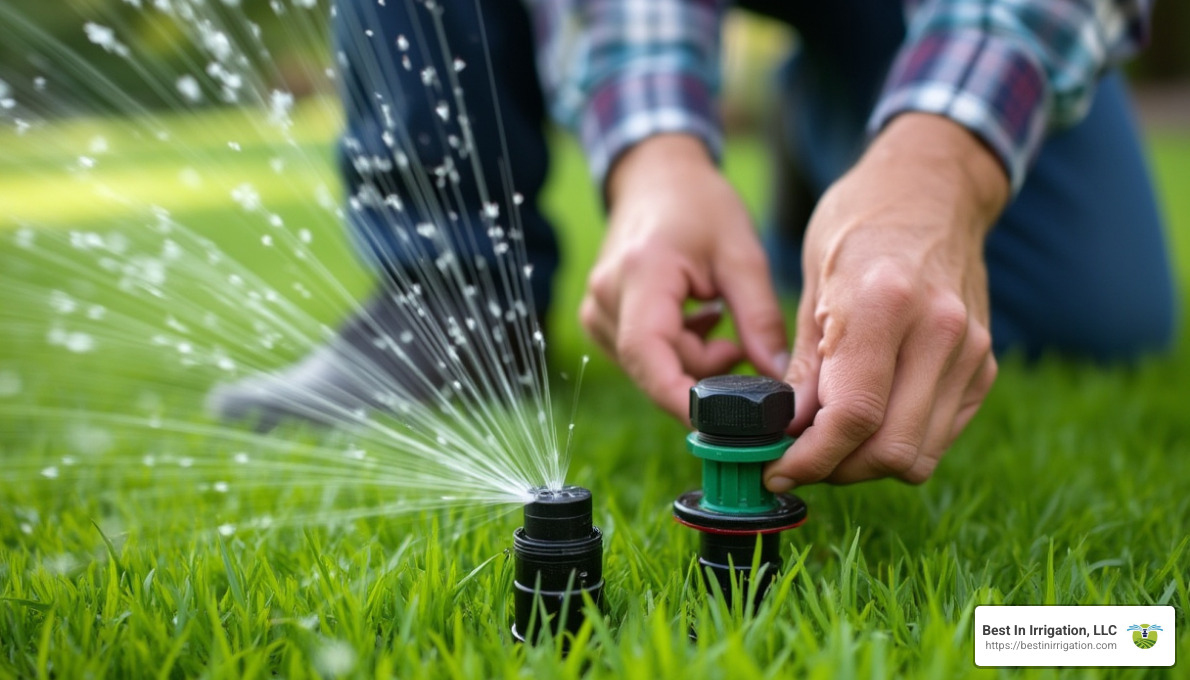
Think of routine inspections as quick health check-ups for your sprinkler system—catching small issues before they become bigger headaches. We suggest taking a walk around your property once a month during watering season. Look carefully for broken or tilted sprinkler heads, leaks at pipe connections, and clogged nozzles (you’ll spot these easily since clogged nozzles spray mist instead of a nice, even pattern).
Adjust any tilted heads so they’re upright, and gently clear clogged nozzles using compressed air or a small wire. While you’re walking around, pay attention to areas with dry patches or soggy spots—these might need slight adjustments in coverage. Finally, double-check your controller to make sure it’s accurately programmed for the current season.
Seasonal Adjustments
In Massachusetts, our weather changes with the seasons (sometimes hourly!), and your sprinkler system needs to keep up. Here’s how to adapt throughout the year:
Spring: Time for a fresh start! Once temperatures warm up, inspect your system for winter damage, clean out any debris, and adjust sprinkler heads as needed. Update your controller with a spring-friendly watering schedule.
Summer: When hot weather moves in, your lawn might get thirsty. Consider increasing your watering frequency, especially during heatwaves. But make sure watering wraps up by sunset to prevent fungus and disease.
Fall: As temperatures cool down, it’s time to ease back on watering. Shorten run times and reduce watering frequency. Start thinking about protecting your system from winter freeze-ups.
Winter: Winterizing your system is a must to protect pipes and heads from freezing. Complete winterization before the first freeze, shut off the water supply, drain the system, and turn off your controller or switch it to winter mode.
Winterization
If there’s one thing we can’t stress enough, it’s the importance of proper winterization for your lawn sprinkler systems installation in Massachusetts. Neglecting this step can lead to costly repairs come spring.
Winterization involves shutting off your sprinkler’s water supply, draining water from pipes and valves, and using compressed air to blow out remaining moisture. Additionally, insulating above-ground parts and protecting your backflow preventer are critical tasks.
While many homeowners handle this themselves, professional winterization services typically cost around $85—a small price to pay compared to replacing burst pipes! (Trust us, your sprinkler system will thank you in the spring.)
Common Issues and Solutions
Even the best sprinkler system can run into occasional hiccups. Luckily, most common issues have easy fixes:
Low Water Pressure: This is often caused by clogs, leaks, or simply too many sprinkler heads running simultaneously. Check for and clean out any filters, inspect for leaks, and rearrange heads if needed.
Uneven Water Coverage: If patches of your lawn aren’t getting enough water, it might be due to incorrect head spacing, obstructed heads, or using the wrong nozzles. Adjust head positions, remove blockages, or swap out nozzles as needed.
Controller Issues: Controllers sometimes act up due to power outages, programming mistakes, or wiring problems. Double-check the power source, reset and reprogram the controller, and inspect wiring connections to get back on track.
Leaky Valves: A valve leak usually indicates dirt or debris inside the valve, a damaged diaphragm, or loose fittings. Clean affected valves, replace the diaphragm if damaged, and tighten fittings accordingly.
At Best In Irrigation, LLC, we offer convenient maintenance packages that tackle these concerns proactively. Our Massachusetts customers often tell us how grateful they were when we spotted and fixed small problems before they grew into bigger problems. As one homeowner put it, “They caught an issue during regular maintenance and fixed it at no extra charge!” That’s exactly the peace of mind we want you to have with your sprinkler system.
For more helpful tips and details about installing and maintaining irrigation systems, check out our page: More info about installing irrigation systems
How Sprinkler Systems Help Conserve Water
Water is precious—both for our environment and our wallets. At Best In Irrigation, LLC, we’re big on water conservation. That’s why every lawn sprinkler systems installation we do in Massachusetts is designed with smart, efficient watering in mind. Let’s talk about how today’s innovative irrigation systems can help you save water (and money) while keeping your landscape lush and healthy.
Smart Controllers
Imagine having an irrigation system that’s so clever, it knows exactly when and how much to water your lawn—without you lifting a finger. That’s exactly what smart irrigation controllers do!
These advanced controllers automatically adjust watering based on current local weather conditions. If rain is coming, they’ll pause watering, saving you from watering during or after rainfall. Some even use soil moisture sensors to measure exactly how wet your soil is, ensuring your lawn and garden beds receive just the right amount of water—not a drop more.
Smart controllers can also sense leaks and breaks in the system, alerting you immediately, so there’s no water wasted. Best of all, you can manage your system from anywhere using your smartphone, meaning water conservation is always within your control (literally in your pocket!).
All these smart features add up. Studies show smart controllers can reduce water usage by 30-50% compared to traditional timers. For homeowners in Massachusetts facing seasonal watering restrictions, this kind of efficiency can be a real lifesaver.
Drip Irrigation Benefits
While lawns need broad coverage, garden beds and shrubs need more targeted watering—and that’s exactly where drip irrigation shines. Unlike traditional sprays, drip irrigation systems deliver water directly to your plant’s roots, slowly and consistently.
This targeted approach drastically reduces evaporation—as much as 90% less water loss compared to standard sprinklers—because the water goes straight where it’s needed most. Plus, drip irrigation virtually eliminates wasteful runoff and overspray. Since water isn’t splashing everywhere, you’ll also notice fewer weeds popping up around your plants—another small but meaningful bonus.
Another great thing about drip irrigation is its flexibility. It’s perfect for flower beds, vegetable gardens, containers, or shrubs, and it can easily integrate into larger irrigation zones. As your landscape evolves, adding more lines or emitters is simple, cost-effective, and efficient. At Best In Irrigation, we often recommend drip irrigation for those high-value garden areas where precise watering really matters.
Efficient Water Usage
When it comes to watering efficiently, the little details make a big difference. Modern lawn sprinkler systems installation brings together several simple yet powerful strategies to maximize every drop:
High-efficiency nozzles produce larger droplets, reducing mist and wind drift. This simple adjustment can cut your water usage by up to 30% compared to standard nozzles.
Pressure regulation ensures your sprinklers run at optimal pressure—not too little (which causes poor coverage), and not too much (which leads to misting). Keeping things just right not only saves water but extends the life of your system too.
Proper zoning groups plants together based on their watering needs. This means sun-loving grass and shade-preferring plants each get just the right amount of water. Proper zoning helps avoid the common pitfall of overwatering certain areas to satisfy others, further increasing efficiency.
Statistics on Water Savings
How much water can a modern, efficient irrigation system really save? Industry reports show nearly 10 million gallons of water have already been conserved through smart sprinkler systems. That’s almost impossible to visualize—but trust us, it’s a lot of swimming pools worth of water!
Homes equipped with efficient, professionally installed irrigation systems typically use up to 50% less water for landscaping than homes without them. Drip irrigation alone can reach 90% efficiency, significantly higher than traditional spray methods (around 65-75%).
Considering that your lawn typically needs only about 1-1.5 inches of water per week (rainfall included), having a smart, efficient irrigation setup makes perfect sense. And here in Massachusetts, where watering restrictions are increasingly common during the hot summer months, making every drop count is more important than ever.
One of our clients in a local water-restricted community recently shared their experience: “Best In Irrigation installed a smart system for us, and even with twice-weekly watering restrictions, our lawn stayed green and healthy all summer. Smart irrigation meant we could do more with less—something our neighbors definitely noticed!”
Interested in learning more about the incredible benefits drip irrigation offers your garden? Check out this helpful external link: Benefits of drip irrigation.
Frequently Asked Questions about Lawn Sprinkler Systems Installation
At Best In Irrigation, LLC, we’ve spent the last 9 years installing irrigation systems throughout Massachusetts. Along the way, we’ve answered plenty of questions from homeowners about lawn sprinkler systems installation. Here are some of the most common ones we’ve heard—and straightforward answers to help you understand your options.
How does a lawn sprinkler system increase property value?
An automatic sprinkler system can boost your home’s value in several important ways. First (and maybe most obvious), it significantly improves curb appeal. Think about it—when potential buyers pull up to your property, a lush, green, beautifully maintained lawn immediately makes a strong first impression.
Beyond looks, there’s the convenience factor. Homebuyers appreciate having an automatic irrigation system because it saves time and effort—no more dragging hoses or setting up manual sprinklers. A professionally installed system is considered an attractive home feature that adds to your property’s marketability.
Another huge benefit is water efficiency. Today’s smart irrigation systems use technology to water only when your lawn actually needs it. They automatically adjust to weather conditions, which attracts environmentally-conscious buyers and anyone interested in cutting down monthly utility bills.
Finally, a well-designed sprinkler system helps with landscape preservation. Investing in your plants, trees, and shrubs pays off in protecting your overall landscape—and potential buyers notice when a home has been thoughtfully and professionally cared for.
Real estate experts agree that a quality sprinkler system typically returns 85-90% of its cost in added property value. In competitive Massachusetts housing markets, it may even help you sell faster. For more details, check out this helpful article on how sprinkler systems increase property value.
Can a sprinkler system help conserve water?
Absolutely! Modern lawn sprinkler systems installation puts water conservation front and center. Today’s advanced irrigation systems are designed to provide precise watering exactly where and when it’s needed—no more, no less.
For starters, automated sprinklers offer precise application, meaning they deliver water directly onto your lawn or garden beds, cutting down on overspray onto sidewalks, driveways, or roads. They also take advantage of ideal watering times—usually early morning—when evaporation is lowest and water can reach the roots effectively.
The real game-changer is the benefit of smart technology. Today’s smart controllers use live weather data, soil moisture sensors, and other advanced tools to adjust watering schedules automatically. If rain is in the forecast, they’ll pause irrigation altogether, preventing wasteful watering during storms.
In addition, proper irrigation design includes zone-specific watering. Each part of your yard receives water based on its individual needs—sunny areas get more, shady spots get less. Combined with today’s high-efficiency sprinkler heads and nozzles that reduce misting and improve coverage, you can achieve remarkable water savings.
In fact, data shows nearly 10,000,000 gallons of water have been saved by smart sprinkler systems alone! Many of our Massachusetts clients report reducing their water bills by 30-50% after upgrading to modern irrigation. Want to learn more? Check out this scientific study on water savings with smart sprinklers.
What maintenance is required for a lawn sprinkler system?
Keeping your sprinkler system in tip-top shape isn’t complicated, but regular maintenance is key. At Best In Irrigation, LLC, we recommend simple seasonal tasks and occasional checks to ensure everything stays running smoothly (and keeps your lawn happy!).
In the spring, you’ll want a thorough startup inspection. After winter, it’s important to check for any damage caused by freezing temperatures. We recommend pressure-testing your system, programming your controller for warmer weather, and cleaning and adjusting sprinkler heads.
During the watering season—usually summer here in Massachusetts—monthly visual checks are helpful. Quickly inspect your lawn sprinkler heads to make sure they’re aligned correctly, clean and adjust any as needed, and update your controller as the weather changes. Keep an eye out for leaks or broken components—catching these early avoids bigger headaches down the road.
When fall arrives, it’s time for winterization. Shutting off the water supply, draining your pipes, and using compressed air to clear out any leftover water prevents freeze damage. Set your controller to winter mode or turn it off for the season. This step is critical for Massachusetts lawns—trust us, you don’t want burst pipes in January!
Occasionally, maintenance may involve replacing damaged sprinkler heads, cleaning clogged nozzles, repairing leaks, or updating your controller if your landscape changes.
At Best In Irrigation, LLC, we offer convenient maintenance packages that cover these tasks for you. Our Massachusetts customers often tell us professional maintenance extends the life of their irrigation systems and ensures efficient water use and beautiful lawns year-round.
For more details, here’s additional information about installing irrigation systems.
Conclusion
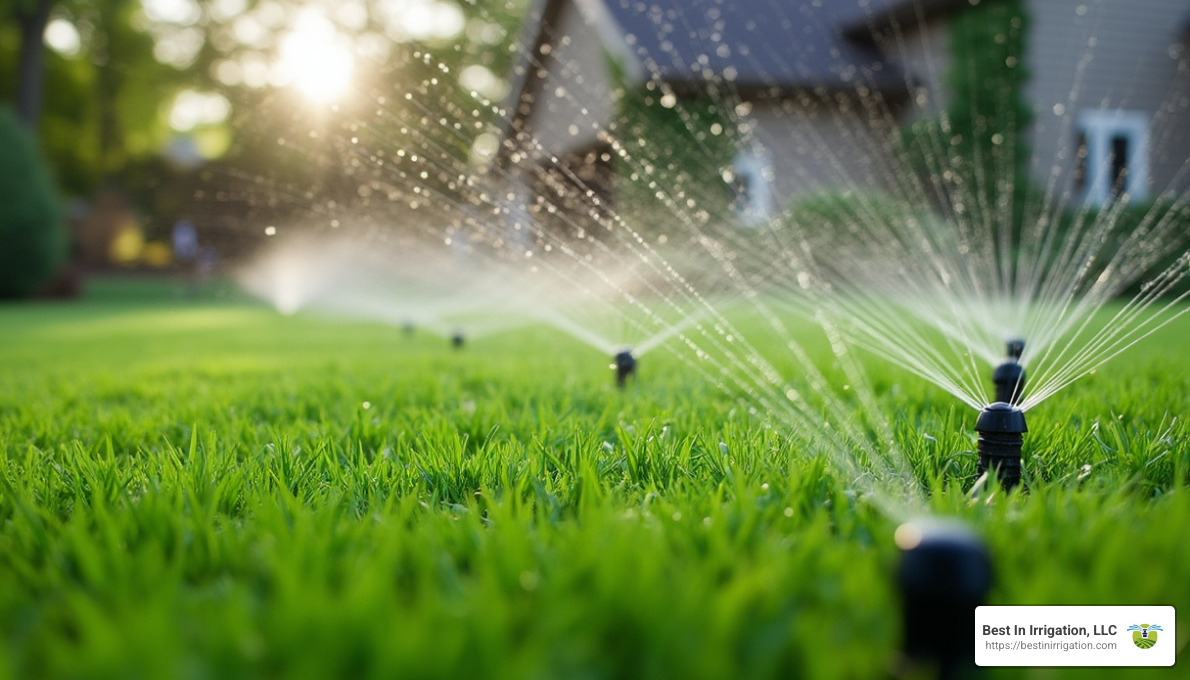
Investing in a lawn sprinkler systems installation is one of the smartest decisions you can make for your home’s landscape, your wallet, and your free time. Whether you’re hoping to finally ditch the hassle of manual watering or aiming to improve your property’s curb appeal, a quality irrigation system delivers lasting results.
At Best In Irrigation, LLC, we’ve been proudly helping Massachusetts homeowners create lush, beautiful lawns for the past 9 years. We understand the unique challenges of our New England climate—like those famously unpredictable seasons and soil that can sometimes seem downright stubborn. But with our deep local experience and commitment to water conservation and cutting-edge technology, we’ve perfected the art (and science!) of custom irrigation solutions.
Throughout this guide, we’ve explored every step involved in the process—from assessing your lawn’s specific needs, understanding different types of sprinkler systems, and carefully planning and installing your new system. We’ve also discussed the significant time-saving benefits, property value increases, and environmental advantages that come from choosing professional irrigation services over struggling with a DIY project.
Let’s face it: every homeowner dreams of glancing out the window to see a vibrant, healthy lawn without having to drag around hoses or fuss with manual sprinklers. With a professionally installed irrigation system, this dream becomes your reality. You save water, reduce stress, and free up valuable time to spend on things you actually enjoy (like relaxing on that perfect lawn!).
If you’re ready to explore your options for lawn sprinkler systems installation, the irrigation pros at Best In Irrigation, LLC are just a call or click away. We offer free consultations, customized solutions custom to the specifics of your landscape, and the peace of mind that comes with knowing your system was designed and installed right the first time.
From start to splash, let us help you achieve the lush, worry-free lawn you’ve always wanted.
Contact us for your lawn sprinkler installation needs