


Why Regular Sprinkler Maintenance Matters
Quick Answer: Lawn Sprinkler System Maintenance Essentials
- Inspect system at least once per season (4× yearly)
- Clean sprinkler heads at least once annually
- Check for leaks in heads, valves, and pipes regularly
- Test water pressure (ideal: 30-50 psi)
- Verify voltage (ideal: 22-28 volts)
- Adjust watering schedule seasonally
- Winterize before freezing to prevent pipe damage
Your lawn sprinkler system works tirelessly behind the scenes, ensuring your landscape stays lush and vibrant through every season. Just like your car needs regular oil changes, your lawn sprinkler system maintenance deserves the same attention. Without it, you’re essentially crossing your fingers and hoping for the best – not the smartest approach for something that protects your outdoor investment!
“We take some things for granted—like that ice cream in the freezer or that your lawn sprinklers will always turn on—sorry, it doesn’t work that way,” as one irrigation expert humorously puts it. The truth is, neglected systems quickly become problematic systems, leading to water waste, higher utility bills, and that dreaded call for emergency repairs.
Did you know that about 80% of irrigation systems need at least minor repairs after winter? That’s why seasonal care isn’t just a good idea—it’s essential. Regular maintenance does more than just save water; it protects your investment and keeps your property looking its best when neighbors start noticing.
When you commit to maintaining your sprinklers, you’re signing up for some impressive benefits. You’ll enjoy an extended system lifespan (often 5+ years longer than neglected systems), reduced water bills (many homeowners see 20-30% savings), and a healthier lawn and plants that receive just the right amount of hydration. Plus, you’ll face fewer emergency repairs and contribute to environmental conservation by preventing unnecessary water waste.
For Massachusetts homeowners dealing with our distinct seasonal changes, proper maintenance becomes even more critical as systems face everything from summer heat waves to those notorious New England winter freezes.
The Value of Consistent Care
Think of your lawn sprinkler system maintenance as preventative healthcare for your landscape. Just as you wouldn’t skip your annual physical, your irrigation system deserves regular checkups to catch small issues before they become expensive problems.
A well-maintained sprinkler system delivers rewards you’ll notice immediately. Your turf becomes healthier and more lush, with even water distribution ensuring proper hydration without dry patches or soggy areas. This promotes deeper root growth and greater drought resistance—something particularly valuable during those hot Massachusetts summers.
The financial benefits are equally impressive. Reduced repair costs are perhaps the most obvious advantage. Catching a small leak early might cost you minutes and pennies, while waiting until pipes burst could mean hundreds or even thousands in repairs. At Best In Irrigation, we’ve seen countless examples of how regular maintenance saves our Massachusetts customers significant money over time.
Your property value also gets a nice boost. Real estate experts consistently note that improved property value comes with well-maintained landscaping. A properly functioning irrigation system that maintains a beautiful landscape can increase your home’s value by 5-10%—not bad for a system that’s often hidden underground!
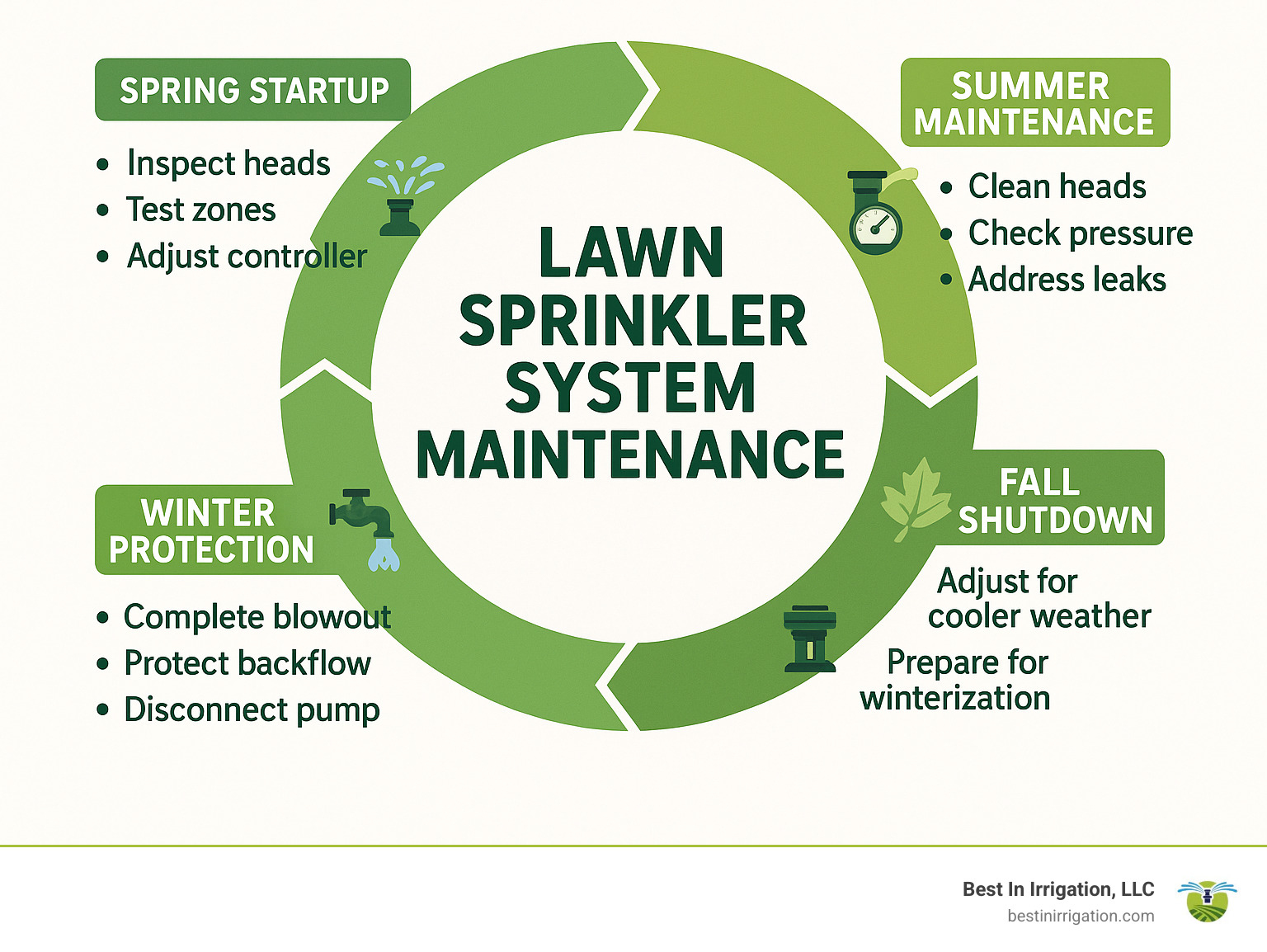
Consistent care isn’t complicated, but it does require attention to detail and a seasonal approach that addresses the unique challenges of each time of year. From spring activation to winter protection, each maintenance phase plays a crucial role in keeping your system performing at its best year after year.
Seasonal Schedule & Common Problems
In Massachusetts, your sprinkler system faces unique challenges with our changing seasons. Just like you’d dress differently for a January snowstorm than an August beach day, your irrigation system needs different care throughout the year.
Spring Start-Up (March-April)
When spring flowers start peeking through, it’s time to wake up your sprinkler system too. This crucial restart involves turning the water supply back on, giving everything a thorough inspection for winter damage, and testing each zone. You’ll want to check for any leaks or breaks that might have developed during the cold months, clean out debris that’s collected in the heads, and reset your controller for spring’s watering needs.
“Spring startup is like getting your sprinkler system out of hibernation,” says one of our technicians. “It might be a bit groggy at first, but with proper care, it’ll be ready to work hard all season.”
Mid-Summer Tune-Up (June-July)
By midsummer, your landscape has grown and changed, which means your lawn sprinkler system maintenance needs adjustment too. This is when you’ll want to realign spray patterns to account for taller plants, clean any nozzles clogged by summer debris, and check for pressure issues. It’s also the perfect time to verify your rain sensor is working properly and optimize your watering schedule for those hot summer days when evaporation is highest.
Fall Shutdown (September-October)
As leaves start to change, so should your irrigation approach. Fall maintenance includes adjusting watering for cooler temperatures (plants need less water as growth slows), clearing fallen leaves and debris from heads, and checking your system for any repairs needed before winter sets in. This is also when you should begin planning for winterization – perhaps the most important maintenance task for New England systems.
Winterization (Before First Freeze)
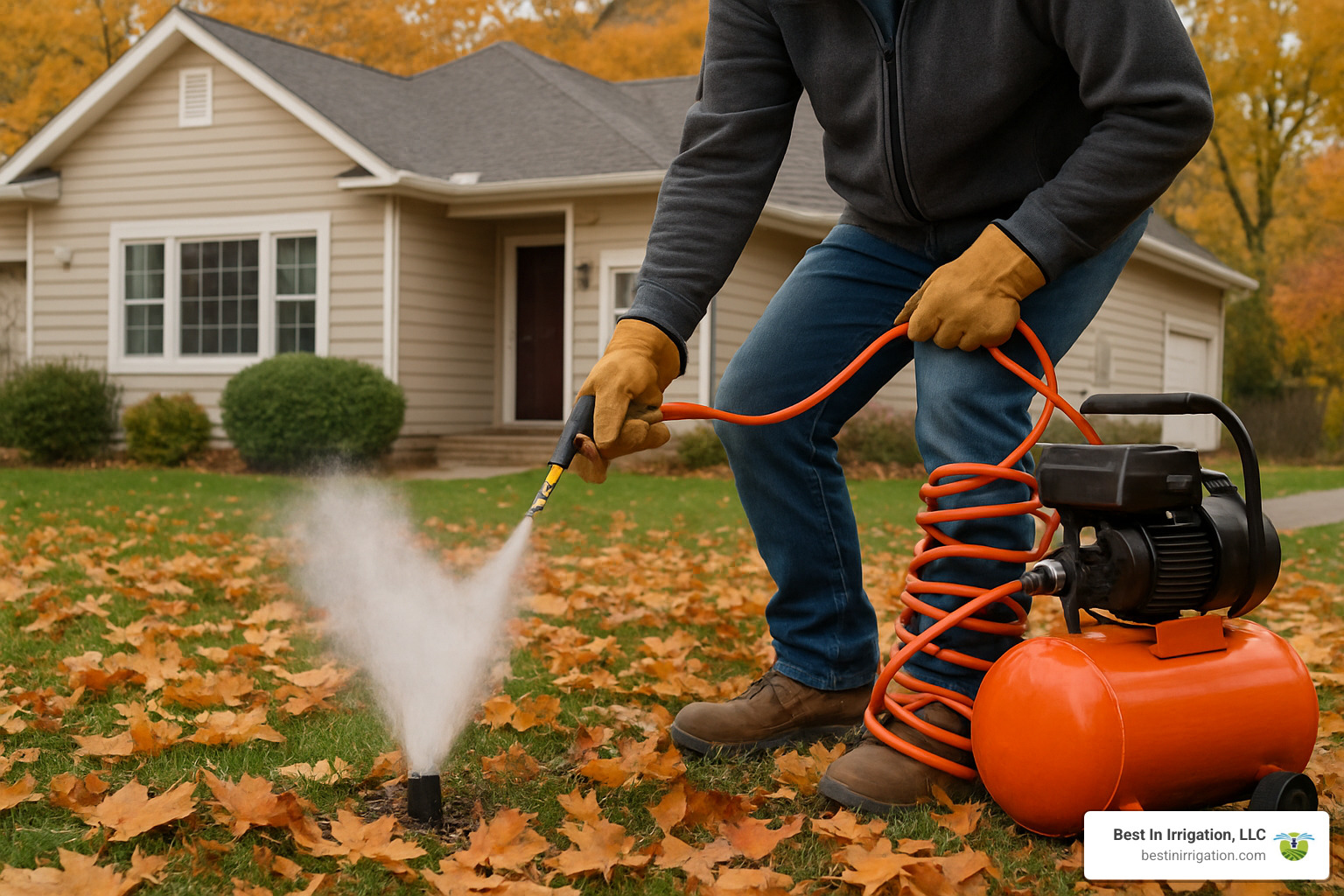
This isn’t optional in Massachusetts – it’s essential! Proper winterization involves blowing out all water from your system using compressed air, shutting down your controller or setting it to winter mode, insulating any exposed components, and protecting your backflow preventer from freezing temperatures.
Throughout the seasons, you’ll likely encounter some common problems. Clogged heads from dirt and lawn clippings can reduce water flow, while broken sprinkler lines might appear after accidental damage from lawn equipment or winter freezing. Misaligned rotors often waste water on sidewalks instead of plants, and low pressure results in spotty coverage. Don’t forget to watch for controller errors from programming issues or electrical problems, and excessive weed growth which often signals improper watering patterns.
How Often Should You Inspect?
For a healthy, efficient system, we recommend a rhythm of inspections:
Comprehensive inspections should happen twice per watering season – once during spring startup and again in mid-summer when your system is working hardest. Monthly visual checks help you catch obvious issues before they become costly problems, while post-storm reviews after heavy weather can identify damage from high winds or lightning. Always perform a pre-freeze inspection before winterizing to identify any repairs needed.
“If you laid on the couch all winter, never moving, you’d be a little creaky come spring, right?” This perfectly describes why your sprinkler system needs attention after dormant periods.
Most Frequent Failures You’ll Spot
During your regular walk-throughs, keep an eye out for these warning signs:
Dry spots in your otherwise green lawn often signal coverage problems with your sprinklers. If you notice soggy areas that remain consistently wet, you might have underground leaks or improper drainage issues that need addressing.
Valve leaks typically announce themselves with water pooling around valve boxes – a clear sign something’s wrong. If you see misting spray instead of defined water patterns, your system likely has excessive pressure problems. And zones that don’t activate at all point to electrical faults in your controller, wiring, or solenoids.
In our nine years helping Massachusetts homeowners, we’ve found that early detection of these issues dramatically reduces both repair costs and water waste. Taking a proactive approach to lawn sprinkler system maintenance saves you money while keeping your landscape looking its best.
More info about Irrigation System Maintenance
Step-by-Step Lawn Sprinkler System Maintenance Checklist
Getting your hands a little dirty with lawn sprinkler system maintenance isn’t just satisfying—it’s also a great way to protect your investment and keep your landscape looking its best. Let’s walk through the essential tasks that will keep your sprinklers running smoothly year after year.
Cleaning & Unclogging Sprinkler Heads
You know that frustrating moment when you turn on your sprinklers and one head just spits and sputters? That’s usually a clogged head, and it can reduce your system’s efficiency by up to 30%.
“Think of sprinkler heads like shower heads,” I often tell homeowners. “They get mineral buildup and debris just the same way.” Cleaning them is surprisingly simple—start by locating all your sprinkler heads and clearing away any grass or soil that’s crowding them. For pop-ups, carefully unscrew the nozzle and soak it in warm vinegar water for about 30 minutes.
An old toothbrush works wonders for gently scrubbing away those stubborn mineral deposits. Don’t forget to check the small filter inside most heads—it’s amazing what can get trapped in there! Before reassembling, run some water through the open head to flush out any lurking debris.
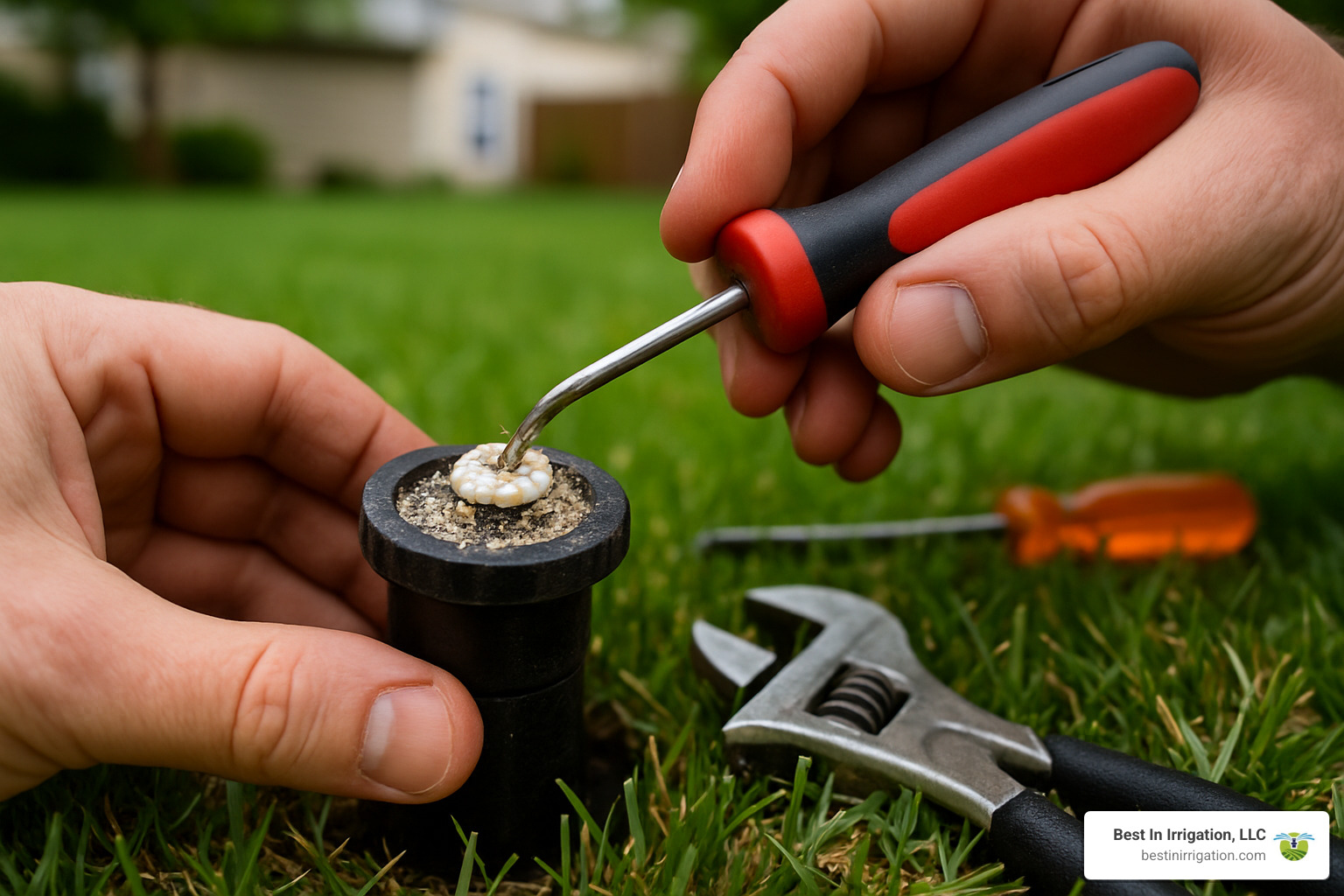
Aim to perform this simple maintenance at least once a year, though twice annually (spring and mid-summer) is ideal for Massachusetts homeowners dealing with our varied seasons.
Detecting & Fixing Leaks
Water leaks aren’t just wasteful—they can create soggy lawn spots, encourage fungal growth, and even damage your home’s foundation if left unchecked. Becoming a leak detective is easier than you might think!
Start with a casual walk around your property when the system is running. Look for unusually wet areas, sunken spots in your lawn, or patches of grass that seem suspiciously greener than the rest. When you spot a suspicious area, grab a screwdriver and gently probe the soil—if it’s unusually damp underground, you might have found your culprit.
For a more methodical approach, try the water meter test: turn off all water in your home, note your meter reading, wait two hours, and check again. Any movement suggests a leak somewhere in your system.
Once you’ve pinpointed a leak, carefully dig around the area to expose the problem. Most residential leaks happen at connection points, around valve bodies, at sprinkler head bases, or where pipes cross under walkways. For repairs, compression couplers work great for quick fixes, while proper PVC cement creates more permanent solutions.
“The sooner you catch a leak, the simpler the fix,” our technicians at Best In Irrigation often remind customers. “What starts as a drip can quickly become a flood for your wallet.”
For more in-depth guidance on finding hidden leaks, check out this research on leak detection strategies.
Checking and Adjusting Sprinkler Valves
Think of valves as the traffic controllers of your irrigation system—they direct water where it needs to go, when it needs to go there. When they malfunction, your whole system suffers.
To start valve maintenance, locate your valve manifold (usually hiding in a green box partially buried in your yard). Check for any water pooling or dripping around the valve bodies—this is the most obvious sign of trouble. Test each valve’s manual operation by gently turning the solenoid or bleed screw to verify they’re working properly.
If you notice persistent problems like valves that won’t fully close (causing water to seep continuously) or won’t open (leaving zones dry), you might need to disassemble and clean the internal diaphragms and seals. Most valve issues stem from tiny debris that prevents proper sealing or worn-out components that need replacement.
Don’t forget to check those electrical connections too! Ensure all wiring to your valves is secure and protected from moisture. For more detailed guidance on valve repairs, visit our Irrigation System Repairs page.
Monitoring & Adjusting Water Pressure
Water pressure is the Goldilocks factor of irrigation—it needs to be just right. Too low, and you’ll get weak spray and poor coverage. Too high, and you’ll create mist that blows away before reaching your plants.
To check your current pressure, simply attach a pressure gauge to an outdoor spigot. Most residential sprinkler systems perform best between 30-50 psi. If your readings fall outside this range, you’ve found a key area for improvement.
High pressure is actually more common than low pressure in many Massachusetts neighborhoods. When sprinkler heads create a fine mist rather than defined water droplets, they’re wasting water through evaporation and wind drift. Installing a pressure-reducing valve can solve this problem and extend the life of your entire system.
For consistently low pressure, consider a booster pump—especially if you’re at the end of a municipal water line or rely on well water. Your plants (and water bill) will thank you for the improved efficiency.
Testing System Voltage Safely
The electrical components of your sprinkler system need proper voltage to function correctly, but testing them requires some caution. Always start by turning off power at the source before doing any electrical work.
With a multimeter set to AC voltage measurement, check the terminal voltage at your controller when a zone is activated. The reading should fall between 22-28 volts, with 24 volts being the sweet spot. If zones aren’t activating properly, you may need to test voltage at the valve locations as well.
“Electrical work on sprinkler systems is like baking a cake,” as one of our technicians puts it. “Follow the recipe precisely, or you might not like the results.” If you’re at all uncomfortable working with electrical components, this is definitely a task best left to professionals. For detailed guidance on voltage testing, this research on using multimeters with irrigation systems provides excellent step-by-step instructions.
DIY Lawn Sprinkler System Maintenance vs Professional Help
While many lawn sprinkler system maintenance tasks are well within the average homeowner’s capabilities, some situations definitely call for professional expertise. Finding the right balance can save you money while ensuring your system gets the care it needs.
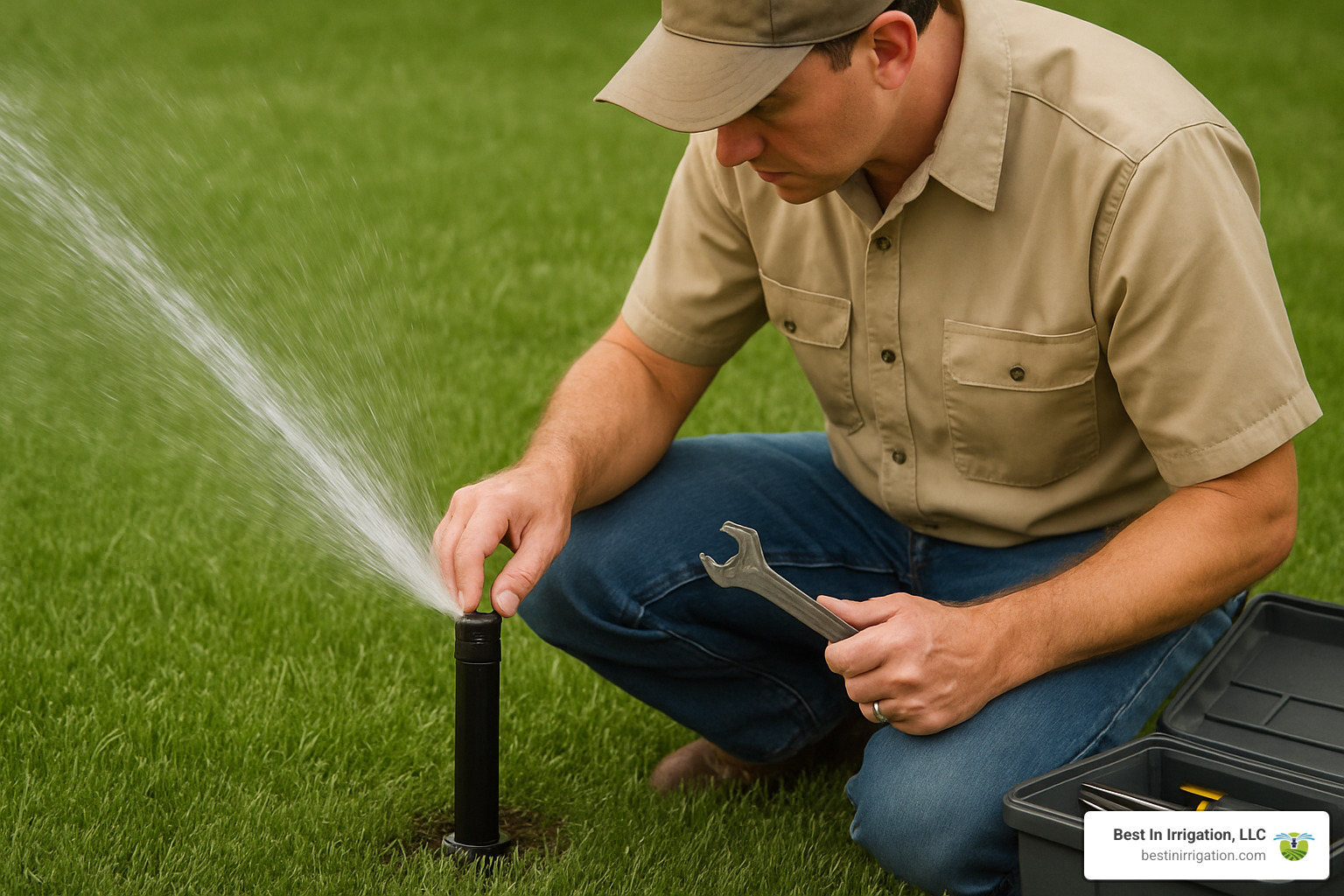
DIY maintenance makes sense for basic visual inspections, cleaning sprinkler heads, adjusting spray patterns, programming your controller, and even simple winterization in milder climates. These tasks require minimal specialized tools and present little risk of causing damage.
However, I strongly recommend calling professionals like our team at Best In Irrigation when dealing with electrical problems, performing complete system blowouts for winter, repairing underground pipe breaks, installing new components, or addressing persistent pressure issues. Many Massachusetts municipalities also require professional backflow testing annually—it’s not just about skill but also about certification and compliance.
The advantages of professional service include:
– Technical expertise with complex system components
– Specialized equipment for tasks like winterization
– Time efficiency (what takes you a weekend might take pros just hours)
– Warranty protection on both parts and labor
– Safety assurance for electrical and high-pressure work
Most Massachusetts homeowners find that a combined approach works best: handling simple maintenance themselves while scheduling professional inspections twice yearly. This balances cost-effectiveness with proper system care.
Smart Technology, Rain Sensors & Efficiency Boosters
Let’s face it – your sprinkler system should work smarter, not harder. Modern technology has revolutionized lawn sprinkler system maintenance, making it easier to keep your landscape looking beautiful while using less water and spending less time fiddling with controllers.
Integrating Rain Sensors
Have you ever cringed watching your neighbor’s sprinklers running full blast during a downpour? Rain sensors prevent this wasteful scenario by automatically shutting off your irrigation system when Mother Nature is already doing the watering for you.
“Letting sprinklers run in a rainstorm is wasteful and may overwhelm your yard,” is something we often remind our Massachusetts customers. Installing a rain sensor is surprisingly simple – just mount it in an open area where it can accurately detect rainfall, connect it to your controller’s sensor terminals, and you’re set.
The benefits go beyond just saving water. Many Massachusetts municipalities now require rain sensors on new installations because they’re so effective at conservation. Plus, they’ll save you money on your water bill while preventing potential landscape damage from overwatering.
Remember to clean your rain sensor annually and replace batteries as needed – a small maintenance task that ensures this simple device continues protecting your lawn and your wallet.
Leveraging Smart Controllers
Smart irrigation controllers are like having a personal gardener who knows exactly when and how much to water your landscape – except they never take vacations or call in sick.
“Smart technology is making lives easier in every field, including gardening,” and your sprinkler system is no exception. These intelligent devices can reduce water usage by an impressive 15-30% compared to traditional timers.
What makes these controllers so special? They adjust watering schedules based on local weather conditions, can be controlled from your smartphone anywhere you have internet access, and can even detect leaks automatically. Many models track your water usage over time, giving you insights into consumption patterns and helping identify potential issues before they become problems.
For busy Massachusetts homeowners, the convenience of being able to check on your system while on vacation or adjust schedules during unexpected weather changes is invaluable. Smart controllers also excel at customizing programs for different landscape needs – giving your thirsty vegetable garden more water than your drought-resistant native plant area.
Adjusting Watering by Season & Plant
Your lawn in July has very different needs than in October, yet many homeowners never adjust their watering schedules throughout the year. This is one of the simplest ways to improve your lawn sprinkler system maintenance routine.
In Massachusetts, we recommend tailoring your approach seasonally:
Spring: As temperatures warm up, set your system for 2-3 days per week with moderate run times. This helps establish growth after winter dormancy.
Summer: During peak heat, increase to 3-4 days per week, but water in early morning hours (ideally 4-6 AM) when evaporation is minimal and water pressure is optimal.
Fall: Scale back to 1-2 days per week with reduced run times as temperatures cool and plants require less moisture.
Winter: Your system should be fully winterized and dormant to prevent freeze damage.
Beyond seasonal adjustments, consider the specific needs of your landscape. Those hostas in the shady corner need far less water than your sun-baked lawn. Creating separate irrigation zones for different plant types can dramatically improve efficiency.
“Adding 2 to 4 inches of mulch to beds can help conserve water and reduce the strain on your sprinkler system,” is advice we give to all our customers. This simple addition can reduce water needs by up to 25% by retaining soil moisture and suppressing thirsty weeds.
Your soil type also matters – clay soils hold water longer but absorb it slowly, meaning they benefit from less frequent but longer watering sessions. Sandy soils drain quickly and may need more frequent, shorter waterings to prevent runoff.
By making these thoughtful adjustments to your irrigation approach, you’ll not only save water and money, but you’ll also promote healthier plant growth throughout your landscape. Your garden will thank you with more vibrant blooms and lusher foliage – all while requiring less maintenance and resources.
More info about Lawn Irrigation System Tips
Frequently Asked Questions about Lawn Sprinkler System Maintenance
How do I measure my sprinkler’s water output?
Ever wonder if your lawn is getting too much or too little water? The answer is sitting in your pantry! The “tuna can test” is a clever, simple way to measure your sprinkler’s output:
Place several empty tuna cans (or similar flat containers) throughout different zones of your lawn. Run your sprinkler system for exactly 30 minutes, then grab a ruler and measure the water depth in each can. Calculate the average depth across all your containers.
Most lawns thrive with about 1/2 inch of water per watering session. If your tuna cans collect more or less than this target, simply adjust your controller’s run time accordingly.
“Using tuna cans or a cupcake pan to measure how much water your sprinklers deliver in 30 minutes gives you concrete data to stop guessing,” explains our technicians. This simple kitchen-to-lawn hack prevents both drowning your grass and leaving it thirsty.
What’s the best way to winterize a residential system?
In Massachusetts, winter can be merciless to irrigation systems. Proper winterization isn’t just recommended—prevent costly freeze damage:
First, shut off the water supply at the main valve to your irrigation system. Next, turn off the controller by either disconnecting power or setting it to “rain” or “off” mode. If your system has drain valves, open them to begin emptying the lines.
The most critical step is to blow out the lines using an air compressor. Make sure you’re using a compressor with adequate CFM (cubic feet per minute) capacity for your system size. Work methodically zone by zone, and never exceed 50 psi of air pressure to avoid damaging components.
Don’t forget to protect your backflow preventer by insulating or removing it, depending on your specific model. Finally, take notes or photos during the process to make spring startup smoother.
As we often tell our Massachusetts customers: “GET THE WATER OUT OF YOUR PIPES, VALVES, AND HEADS BEFORE THE FIRST FREEZE.” Even tiny amounts of trapped water can crack fittings and pipes when frozen, turning a simple maintenance task into an expensive spring repair.
For a complete guide on winterization, check out More info about How to Blow Out Lawn Sprinkler System.
When should I call a professional?
While lawn sprinkler system maintenance often starts as a DIY project, sometimes you need to wave the white flag and call in the experts. Here’s when to pick up the phone:
Persistent leaks that you can’t locate or fix after basic troubleshooting need professional attention. Water continuously seeping somewhere in your system isn’t just wasteful—it can damage your landscape and home foundation.
Controller faults where zones won’t activate or the controller behaves unpredictably often indicate electrical issues beyond basic fixes. Similarly, no-start zones that remain stubbornly dry despite your best troubleshooting efforts usually need a trained eye.
Complex wiring issues should always be left to professionals. As one of our technicians likes to say, “Irrigation wiring is where DIY dreams often go to die.” Water and electricity are a dangerous combination for the untrained.
Many municipalities require annual backflow testing certification by licensed professionals to ensure your irrigation system isn’t contaminating the public water supply.
Finally, complete winterization in our Massachusetts climate is something most homeowners prefer to leave to experts. The peace of mind knowing your system is properly protected is worth the service call.
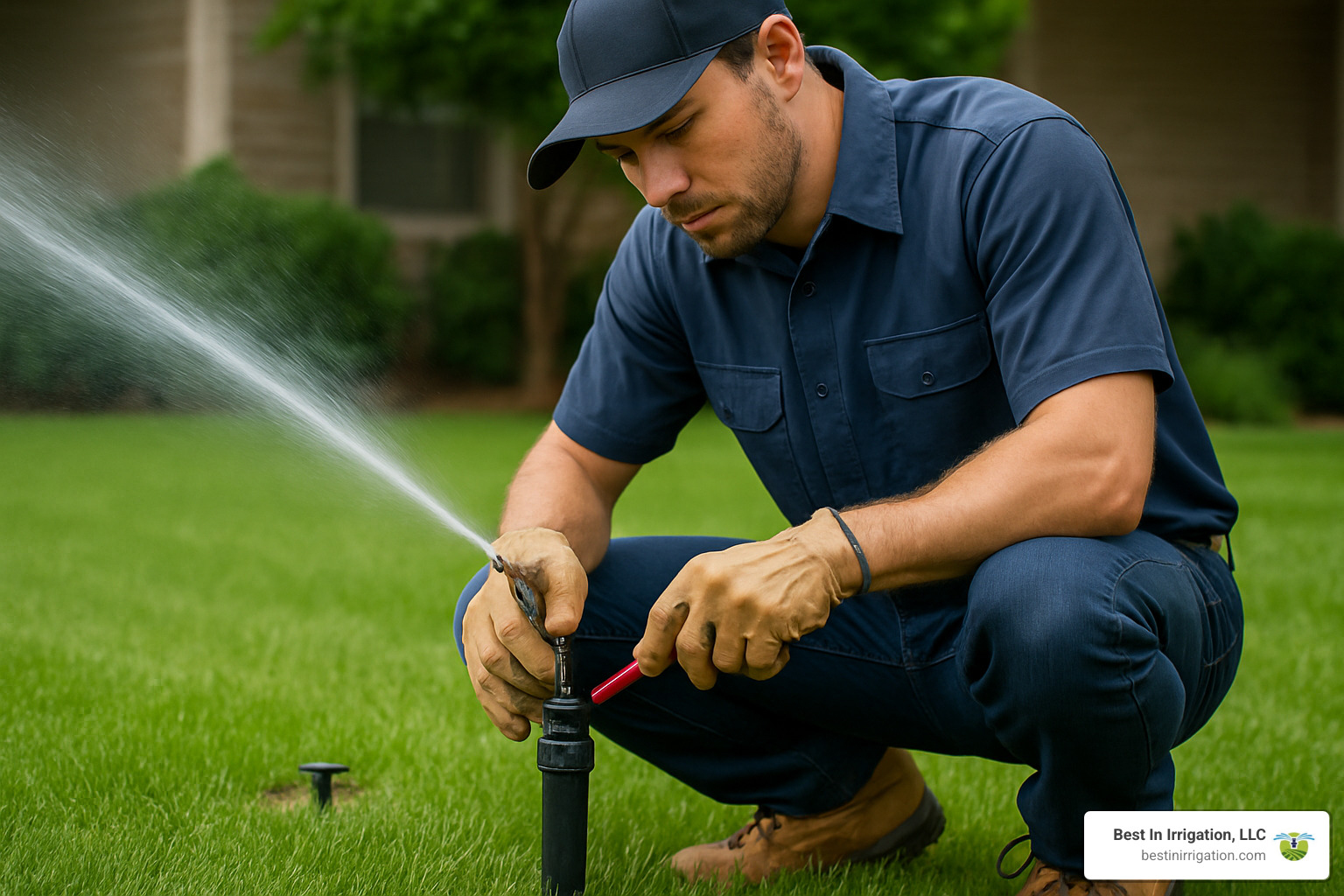
“If it were that easy, there’d be no such thing as irrigation technicians,” as the saying goes. At Best In Irrigation, our nine years of experience in Massachusetts has taught us that some problems require specialized knowledge and equipment that most homeowners simply don’t have in their garage.
Conclusion
Lawn sprinkler system maintenance isn’t just a chore to check off your seasonal to-do list—it’s an investment in your property’s health and your financial well-being. Like neglecting oil changes in your car, ignoring your irrigation system leads to predictable and preventable problems.
What happens when maintenance falls by the wayside? The consequences can hit both your lawn and your wallet:
Water waste becomes significant, with even small leaks potentially sending thousands of gallons annually down the drain. Your landscape suffers too, as improper watering creates perfect conditions for moss, fungus, and turf diseases to take hold. Those monthly utility bills? They’ll climb steadily higher as your system works inefficiently. And in our Massachusetts winters, forgotten winterization can lead to frozen pipes that crack and burst, sometimes requiring complete system replacement.
Perhaps most frustrating is watching your irrigation investment deteriorate years before its time. Components that should last 10-15 years might fail in just 3-5 without proper care.
By contrast, homeowners who commit to regular lawn sprinkler system maintenance enjoy lush, healthy landscapes that improve their property’s beauty and value. They spend less on water bills throughout the season. They rarely face those panic-inducing emergency repair calls. Their systems serve them faithfully for years longer than average. And they can take pride in conserving water—an increasingly precious resource.
At Best In Irrigation, LLC, we’ve spent nine years helping Massachusetts homeowners steer the unique challenges of New England’s distinct seasons. Our experience consistently shows that proactive maintenance saves money compared to emergency repairs—often by a significant margin.
Think of your irrigation system as you would any valuable home system. Just as you wouldn’t ignore your furnace until it fails on the coldest night of winter, your sprinklers deserve regular attention to perform their best when you need them most.
Whether you tackle maintenance yourself or partner with professionals, consistency is the key. Develop a seasonal schedule, stick to it, and your lawn—and your wallet—will thank you for years to come.
Remember: a little care today prevents big headaches tomorrow. Your landscape deserves nothing less.
Easy lawn sprinkler system maintenance word list:
– how to blow out lawn sprinkler system
– how to turn on lawn sprinkler system
– how often should i water my lawn with sprinkler system
