


Why Smart Sprinkler Installation is Revolutionizing Lawn Care
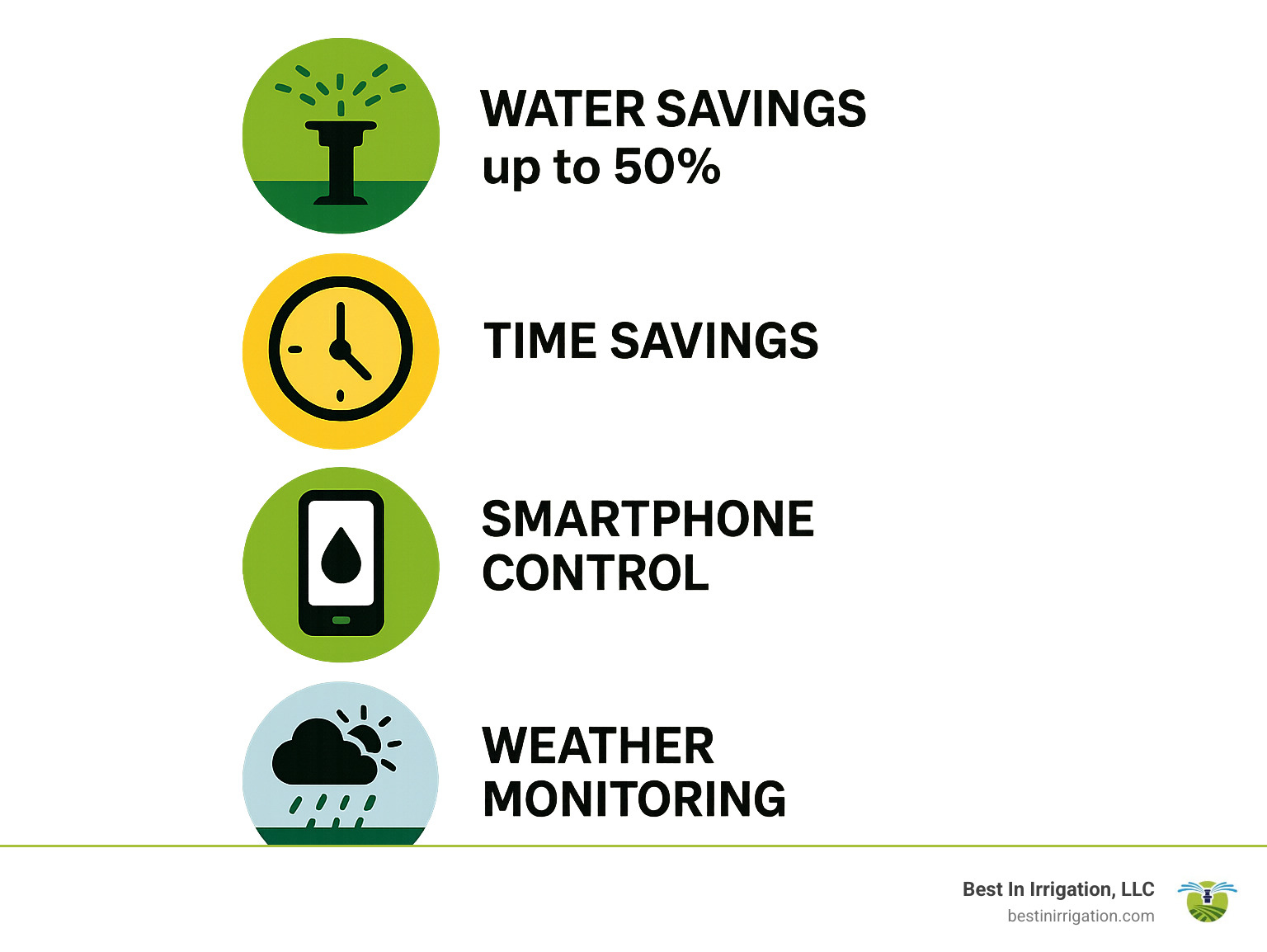
Lawn sprinkler system installation has evolved far beyond simple timers. Today’s intelligent systems monitor weather, adjust watering schedules automatically, and can be controlled from your smartphone. This smart irrigation technology offers automated watering and significant water conservation, leading to lower utility bills and a healthier Massachusetts lawn.
The installation process involves several key stages:
- Planning and Design: Mapping your property, testing water pressure, and creating irrigation zones.
- Safety and Prep: Calling 811 to mark utility lines and gathering tools.
- Installation: Digging trenches, connecting to the main water supply, and laying pipes.
- System Setup: Installing sprinkler heads and wiring the smart controller.
- Testing and Finishing: Flushing the system, checking for leaks, and adjusting spray patterns.
A typical DIY installation takes 16-20 hours, while professional installation ensures optimal design and compliance with local codes. Smart systems use weather data and soil sensors to prevent overwatering, automatically adjust for seasons, and allow remote monitoring via mobile apps. For Massachusetts homeowners, this technology provides an ideal balance of lawn care automation and resource conservation.
Simple guide to lawn sprinkler system installation:
Planning and Preparation: Your Blueprint for Success
Proper planning is the most critical phase of a lawn sprinkler system installation. A detailed system design ensures a perfectly watered lawn, avoiding soggy spots and dry patches. This phase involves measuring your property, identifying watering zones (e.g., sunny vs. shady areas), and planning sprinkler head placement for complete coverage.

Your design depends on your home’s water supply. First, perform a water pressure test with a gauge on an outdoor faucet; systems need 30-35 PSI to work correctly. Next, measure the flow rate (GPM) using the bucket test: time how long it takes to fill a 5-gallon bucket to find your gallons per minute (most systems need 10-13 GPM). These numbers dictate your system’s capacity and help you plan zones to ensure head-to-head coverage, where each sprinkler’s spray overlaps the next. Most homes need four to seven zones. Finally, check with your local building department for permits. For comprehensive guidance, visit our Sprinkler System Design resource.
Essential Safety Precautions Before You Dig
Before breaking ground, you must know what’s buried in your yard. Hitting underground gas, power, or cable lines is dangerous and expensive. The solution is simple and free: call 811. This national service coordinates with local utilities to mark underground lines. Plan for this to take a few business days. While waiting, locate your home’s main water shutoff valve and gather personal protective equipment like safety glasses and gloves. For more safety tips, see our Tips for Installing a Sprinkler System.
Gathering Your Tools and Materials
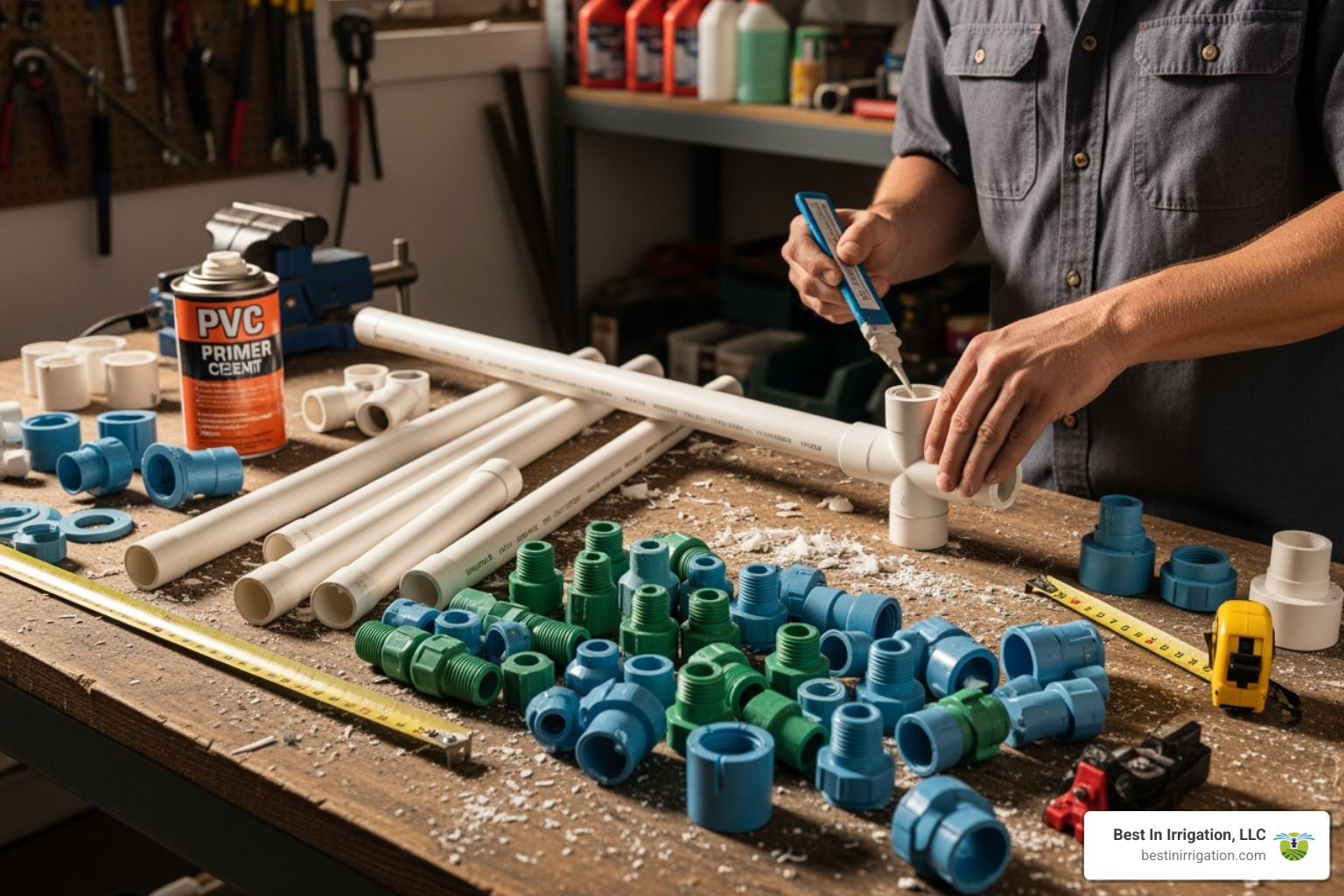
To avoid project delays, gather all your tools and materials beforehand. You’ll need a trenching shovel, but renting a power trencher is highly recommended. Other essential tools include a PVC pipe cutter, adjustable pliers, a tape measure, and marking flags.
Your materials list will include schedule 40 PVC pipe (3/4-inch or 1-inch), PVC primer and cement, various sprinkler heads, a valve box, and low-voltage wire. The heart of the system is the smart controller. Swing joints are also recommended to connect sprinkler heads for easy adjustment and durability. For a complete breakdown, explore our Best DIY Lawn Sprinkler System guide. To learn more about how these systems work, visit our guide on the Automatic Underground Sprinkler System.
Your Step-by-Step Lawn Sprinkler System Installation Guide
With planning complete, it’s time to bring your lawn sprinkler system installation to life. This process follows a logical sequence: marking and digging trenches, connecting the water supply and valve manifold, laying pipes and installing sprinkler heads, and wiring the smart controller.
This project typically takes 16 to 20 hours. Taking your time at each step ensures a reliable system. For more insights, check out our guide on How an Irrigation System is Installed.
Step 1: Mark and Dig Your Trenches
This is the most physically demanding part of the installation. Transfer your layout plan to your lawn using stakes or flags for sprinkler locations and string lines for pipe paths. Dig trenches 6 to 12 inches deep to protect pipes from lawn aeration. While a shovel works for small areas, renting a power trencher will save significant time and effort. To get under walkways, you can use a jet spray nozzle on a PVC pipe connected to a garden hose to bore a tunnel. For more detailed guidance, explore our Lawn Sprinkler Installation resources.
Step 2: Connect to the Main Water Supply and Assemble the Manifold
This step involves tapping into your home’s main water line. If you’re not comfortable with plumbing, consider hiring a professional for this connection. First, turn off your house water at the meter. Cut into a cold water line and install a T-fitting to start your irrigation system. A backflow preventer installation is crucial and required by most local codes to protect your drinking water. Next, place the valve box to house and protect your zone valves. When assembling your zone valves on the manifold, use Teflon tape on threaded connections and PVC cement with primer for pipe joints to ensure leak-proof seals. This is covered in our Installing Irrigation Systems guide.
Step 3: Lay the Pipes and Install Sprinkler Heads
Now, create the pipe network. Lay PVC pipe in the trenches, working from one sprinkler location to the next. Use a PVC cutter for clean cuts and apply primer and cement for permanent joints. At each sprinkler location, install tee fittings for heads, connecting them with swing joints. These flexible connectors allow for easy height and position adjustments and protect heads from damage.
Before installing heads, flushing the system is essential. Manually operate each zone valve to let water flow through the open pipes, clearing out any dirt or debris that could clog nozzles. Once flushed, attach your sprinkler heads. Use pop-up sprinklers for lawns and rotor heads for larger areas. Select nozzles based on the required spray pattern. You can see different spray patterns in action to help decide.
Step 4: Wire the Valves to Your Smart Controller
This final step automates your system. Run low-voltage wire from your controller’s location (often the garage) to each zone valve in the valve box. Use waterproof connectors for all outdoor wire connections. Connect the common wire to all valves and an individual wire to each specific zone valve. At the controller, connect the wires to the clearly labeled terminals.
Mount the smart controller according to the manufacturer’s instructions, ensuring it has power and can connect to your home’s WiFi. Finally, complete the WiFi setup and app installation on your smartphone to gain full remote control over your system. For more on professional options, visit our New Sprinkler System Installation page.
Understanding Costs and System Types
When planning a lawn sprinkler system installation, a primary consideration is the cost. The total investment depends on several factors, including your yard’s size and whether you choose a DIY or professional installation.
Breaking Down the Cost of Lawn Sprinkler System Installation
The biggest cost decision is between a DIY project and professional installation. A DIY approach involves material costs and tool rentals, plus a significant time commitment (16-20 hours for a two-zone system). Professional installation has a higher upfront cost but includes expert design, labor, specialized equipment, and often a warranty for peace of mind.
| Factor | DIY Installation | Professional Installation |
|---|---|---|
| Initial Investment | Primarily materials and tool rentals. | Includes materials, labor, specialized equipment, and professional design. |
| Time Commitment | Significant personal time (e.g., 16 to 20 hours for a two-zone system). | Minimal personal time; project completed efficiently by experienced team. |
| Complexity | Best for simpler layouts; complex designs can be challenging. | Handles complex layouts, challenging terrain, and advanced features with ease. |
| Expertise | Requires basic plumbing, electrical, and landscaping knowledge. | Benefits from years of specialized training and experience. |
| Permits/Codes | Homeowner responsible for researching and obtaining all necessary permits and compliance. | Professional handles all permits, inspections, and ensures adherence to local codes. |
| Design Accuracy | Relies on homeowner’s ability to plan for optimal coverage and water pressure. | Precision design ensures optimal water distribution and efficiency, custom to your yard. |
| Warranty/Support | Limited to product warranties; troubleshooting is homeowner’s responsibility. | Often includes installation warranty and ongoing support for peace of mind. |
| Long-Term Savings | Potential for initial cost savings, but less efficient design can lead to higher water bills. | Optimized design leads to significant water savings and lower utility bills over time. |
Key factors that influence the final cost include lawn size, system complexity (basic timer vs. smart system), soil type (rocky soil increases labor), and complex landscape features. For detailed pricing information, review our guides on the Cost to Install an Irrigation System and the Cost of a New Sprinkler System.
Choosing the Right Sprinkler System for Your Yard
Modern irrigation offers a variety of components to create a custom solution for your landscape.
- In-ground pop-up sprinklers are ideal for most lawn areas, staying hidden until they activate to deliver a controlled spray.
- Rotor sprinklers are better for larger properties, as they rotate to send streams of water over greater distances efficiently.
- Drip irrigation delivers water directly to the roots of plants in flower beds, gardens, and around trees, minimizing evaporation and runoff.
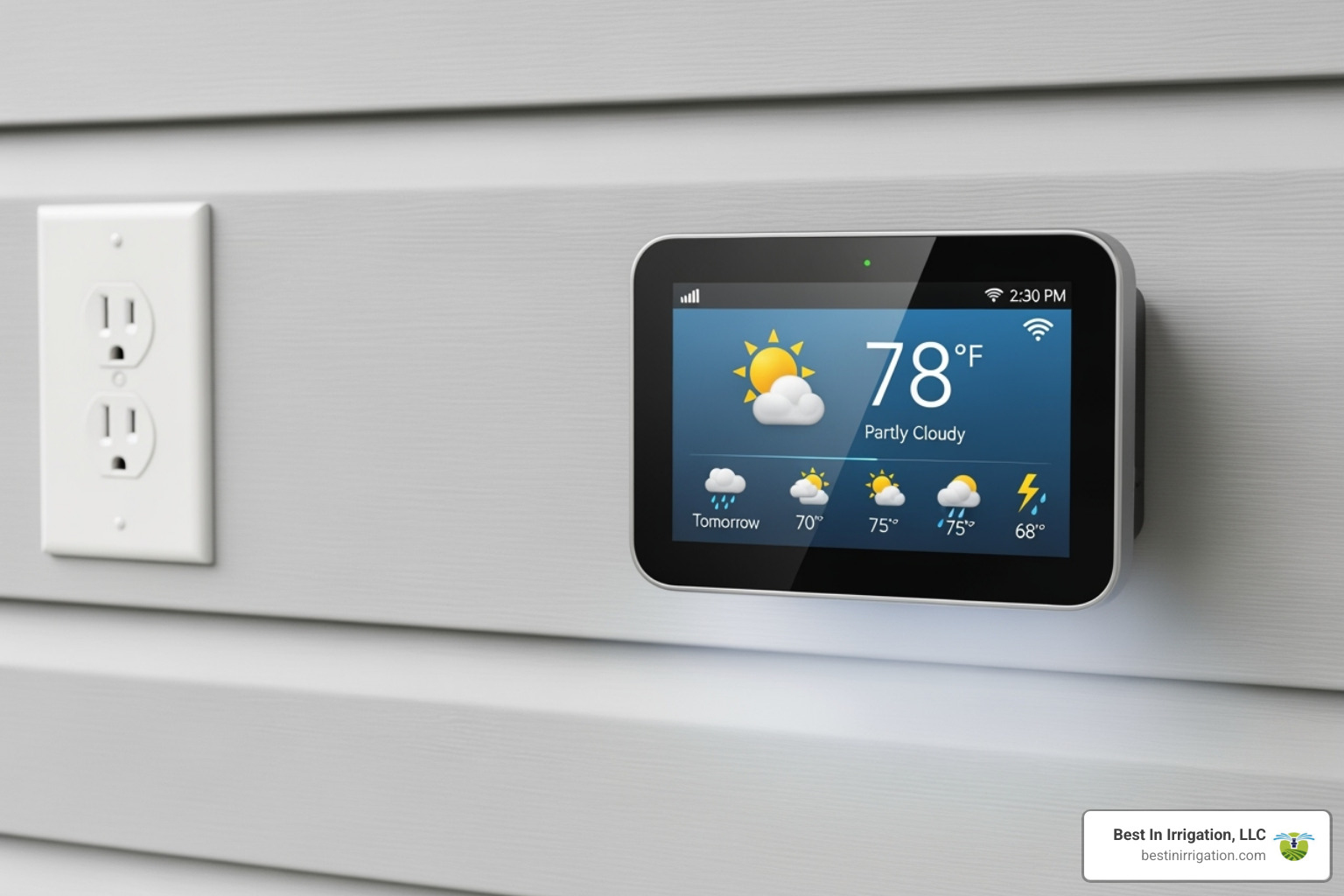
- Smart sprinkler systems are the brain of the operation. Smart controllers use weather sensors, soil moisture sensors, and WiFi connectivity to automate watering intelligently. They adjust schedules for rain, temperature, and humidity, all controllable from your smartphone. This technology saves significant water and promotes a healthier landscape.
A typical residential system might combine these technologies for optimal results. For more guidance, explore our Lawn Sprinkler Systems Installation resource.
Final Steps: Testing, Backfilling, and Programming
You’re in the home stretch! After all that digging, pipe laying, and wiring, your lawn sprinkler system installation is nearly complete. These final steps are where we transform your collection of pipes and sprinklers into a finely tuned watering machine. Think of this phase as the dress rehearsal before opening night – we want everything running perfectly before we bury the evidence of our hard work.
Flushing and Testing Your New System
Testing before backfilling makes fixing any issues much easier. Start by manually operating each zone valve one at a time to check for leaks at connection points. Next, perform a final system flush by running water through each zone for several minutes to clear out any debris that could clog nozzles.
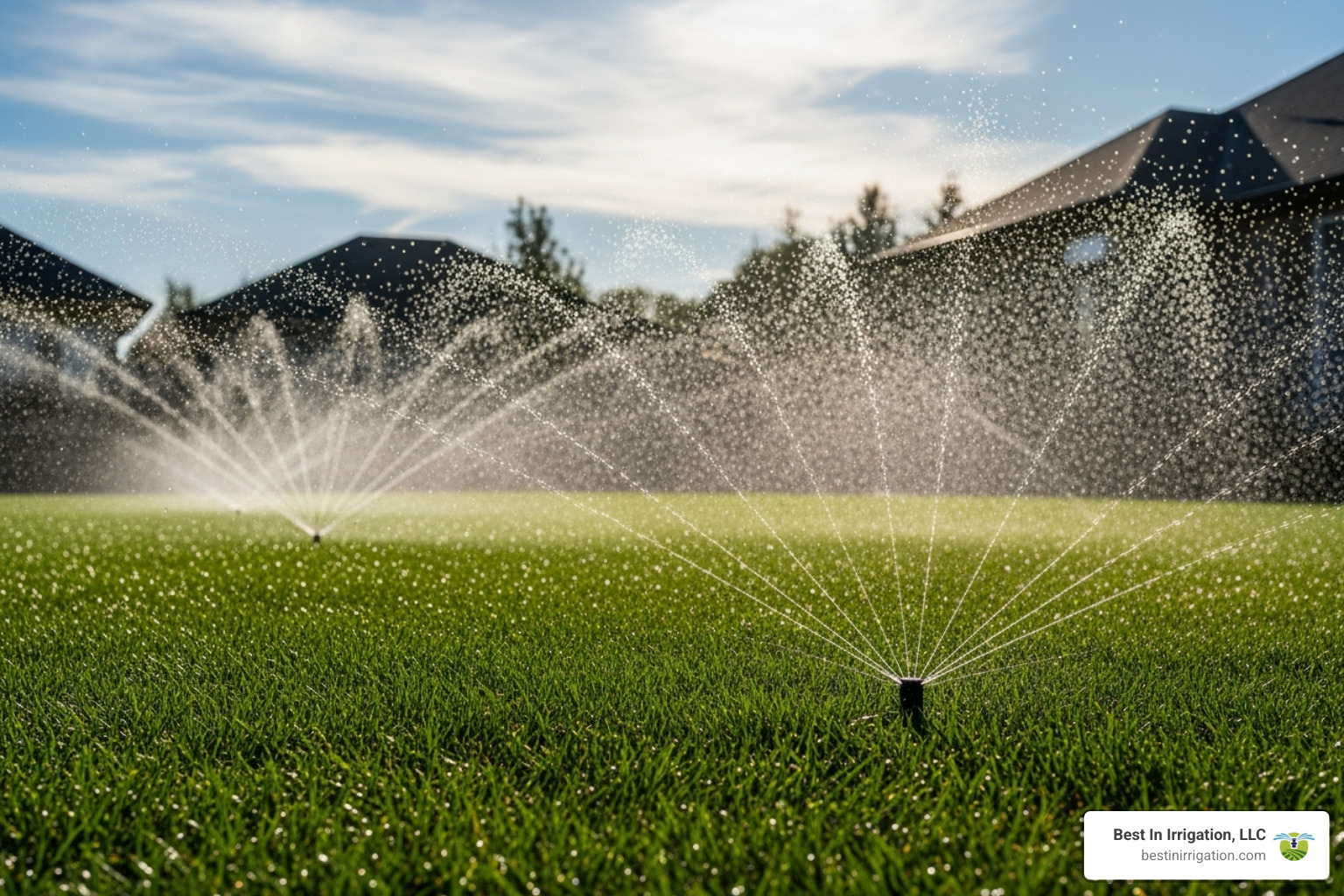
Once the water runs clean, attach your nozzles to the sprinkler heads, choosing the correct pattern for each location (e.g., quarter-circle for corners). Now, check your spray patterns by turning on each zone. The goal is head-to-head coverage, where the spray from each sprinkler reaches the neighboring heads. Use the adjustment screws on the heads to fine-tune the spray radius and direction for even watering.
Programming Your Smart Controller for Peak Efficiency
Programming your smart controller open ups its full potential. Modern mobile apps make this process intuitive.
- Set up zones: Give each zone a descriptive name (e.g., “Front Yard”) in the app.
- Create schedules: For each zone, set start times (early morning is best), run times, and watering days based on the area’s needs.
- Enable smart features: Turn on automatic weather adjustments so the system skips watering on rainy days and adjusts for temperature.
- Use seasonal adjust: This feature lets you easily increase or decrease watering across all zones by a percentage as seasons change.
- Learn manual cycles: Know how to run a single zone manually for testing or spot watering.
Explore your controller’s water conservation settings, like “cycle and soak,” which improves water absorption. Once programmed and tested, you can backfill the trenches. For more helpful tips, you can Follow us for more tips.
Frequently Asked Questions about Sprinkler Installation
Here are answers to the most common questions we receive about lawn sprinkler system installation.
How deep should sprinkler lines be buried?
For most residential projects, trenches should be 6 to 12 inches deep. This depth protects pipes from lawn aeration equipment and light digging. In Massachusetts, this is often sufficient to be below the frost line, but it’s always wise to check local building codes, as they may require a different depth.
Can I install a sprinkler system myself?
Yes, a DIY lawn sprinkler system installation is a manageable project for homeowners with basic plumbing and electrical skills. It typically requires 16 to 20 hours of work for a standard system. The main challenges are the physical labor of trenching and the technical task of connecting to the main water line while adhering to local plumbing codes.
What water pressure do I need for a sprinkler system?
Water pressure is critical for system performance. Most residential sprinkler systems require a static water pressure of at least 30 to 35 PSI (pounds per square inch). Equally important is the water flow rate, which should be 10 to 13 GPM (gallons per minute). Low pressure or flow results in poor coverage, while excessively high pressure can damage components. It is essential to test both pressure and flow before designing your system.
Conclusion: Enjoy a Smarter, Greener Lawn
Whether you’ve completed a DIY lawn sprinkler system installation or are considering professional help, you’ve invested in the long-term health and beauty of your property. A smart irrigation system saves water, saves time, and ensures a vibrant, healthy landscape with minimal effort.
The ability to control your system from a smartphone, combined with automatic weather adjustments, means your lawn gets precisely the water it needs. No more overwatering or dry spots—just consistent, efficient care.
For Massachusetts homeowners who want a flawless system without the demanding labor of a DIY project, professional installation is the ideal solution. The expert team at Best In Irrigation, LLC brings 9 years of trusted expertise to every project, specializing in custom, water-conserving systems using cutting-edge technology. Our deep understanding of New England’s climate and local codes ensures your system will perform optimally for years.
If you’re ready for a professionally designed and installed system, explore our irrigation system installation services. Our experienced Lawn Sprinkler System Contractors will create a solution custom to your property’s unique needs.
