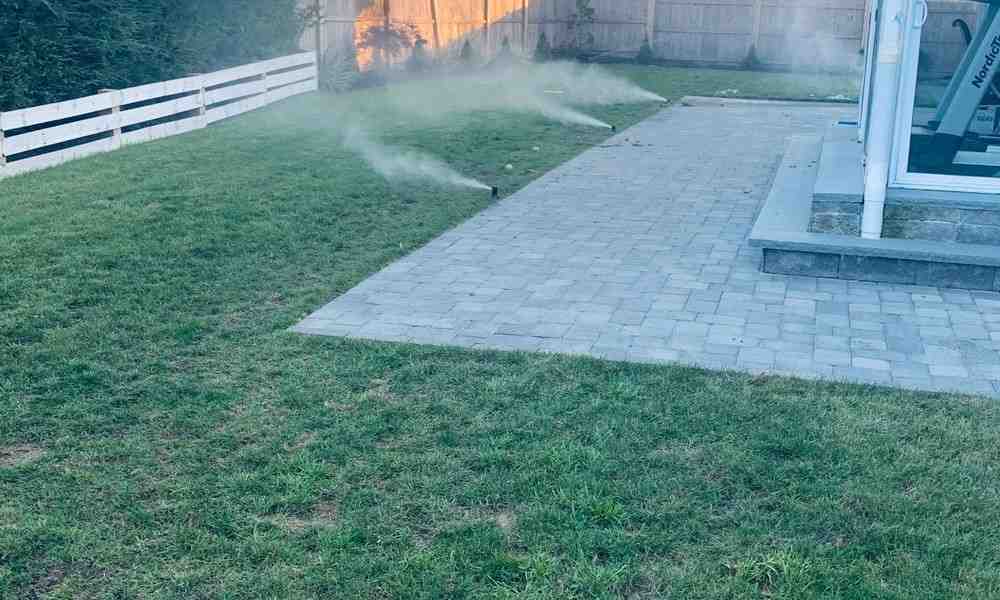

Why an Irrigation System is Essential for Your Lawn
A drip irrigation system delivers water directly to plant roots, reducing waste and promoting healthier growth. It also saves you time and money while helping to conserve this precious resource.
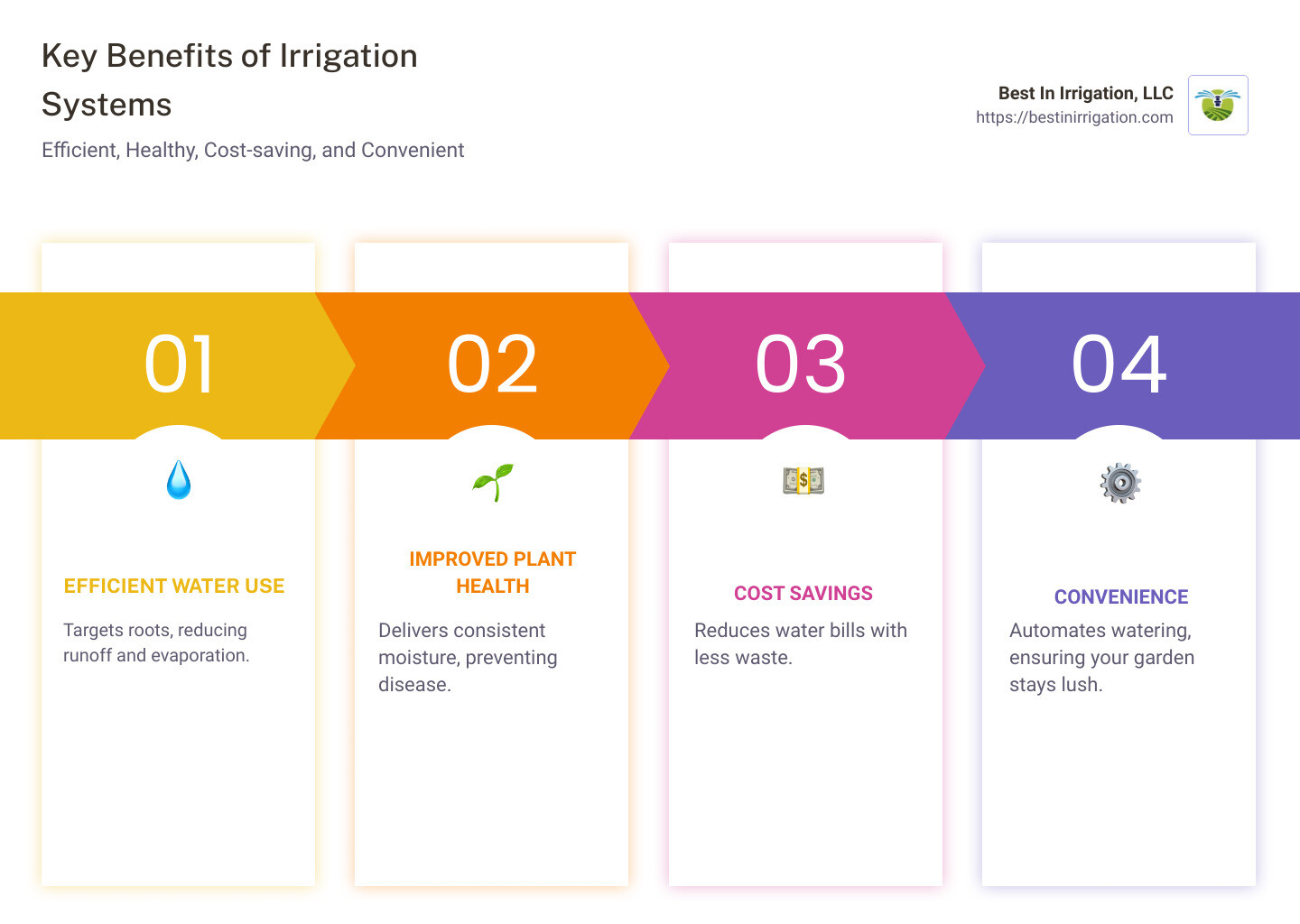
Key Benefits of Irrigation Systems:
- Efficient Water Use: Targets roots, reducing runoff and evaporation.
- Improved Plant Health: Delivers consistent moisture, preventing disease.
- Cost Savings: Reduces water bills with less waste.
- Convenience: Automates watering, ensuring your garden stays lush.
Watering a lawn manually can be tedious and inefficient. Properly installed irrigation systems ensure your plants get just the right amount of water, avoiding the extremes of over-watering and under-watering. This balance is critical for promoting resilient, healthy, and vibrant landscapes.
At Best In Irrigation, LLC, we specialize in modern irrigation solutions that suit your specific lawn and garden needs. Our systems are designed to conserve water and simplify your gardening routine. Whether you prefer a DIY approach or professional installation, we provide the expertise and support you need to maintain an eco-friendly, beautiful yard.
Types of Irrigation Systems
Choosing the right irrigation system for your lawn or garden can make a world of difference in water efficiency and plant health. Here, we’ll break down the main types of systems to help you decide which one is perfect for your needs.
Drip Irrigation Systems
Drip irrigation systems are known for their water efficiency. They deliver water directly to the root zone of each plant through a network of tubing and emitters. This method minimizes water waste by reducing runoff and evaporation.
Benefits:
- Water Efficiency: Drip systems are about 90% efficient in water usage.
- Root Zone Watering: Water goes straight to the plant roots, ensuring they get the moisture they need.
- Low Water Waste: Less water is lost to evaporation or runoff.
Installation Tips:
- Plan your layout carefully to ensure each plant gets adequate water.
- Use a pressure regulator to maintain consistent water pressure.
- Regularly check emitters for clogs to keep the system running smoothly.
Sprinkler Systems
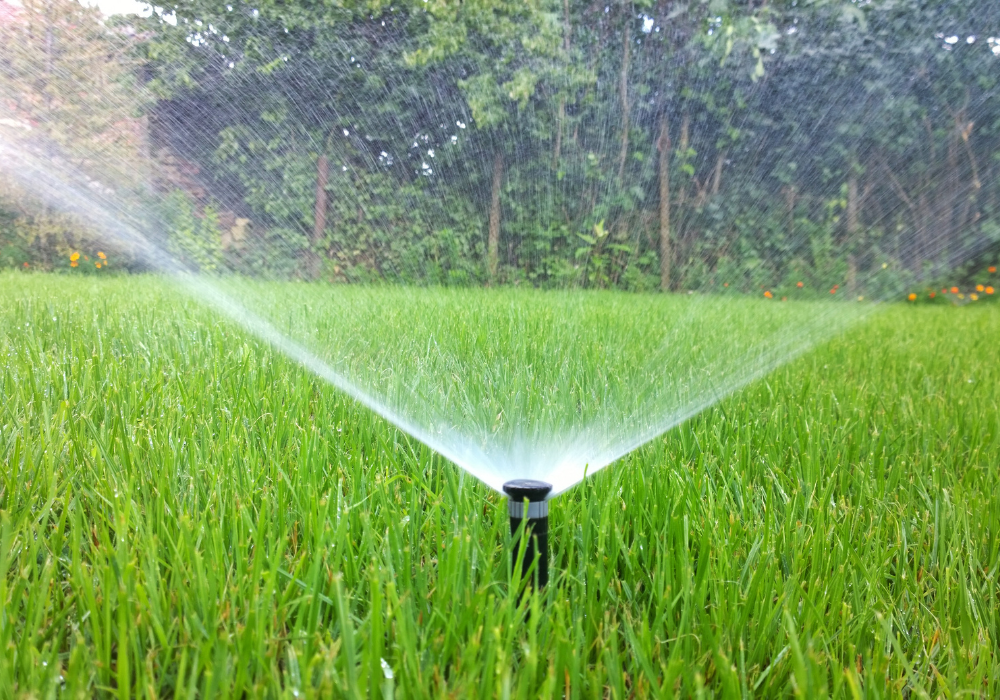
Sprinkler systems are great for covering large areas like lawns. They use sprinkler heads that pop up and spray water evenly across a designated area. These systems often come with smart controls and Wi-Fi compatibility for easy management.
Benefits:
- Coverage Area: Ideal for large, open spaces.
- Spray Patterns: Various spray patterns to suit different needs.
- Smart Controls: Automated scheduling with timers or controllers.
Soaker Hose Systems
Soaker hoses are porous hoses that allow water to seep through their length, directly watering the soil and roots. They are perfect for garden beds, rows of plants, or along hedges.
Benefits:
- Targeted Watering: Directly waters the soil and roots.
- Easy Installation: Lay them on the surface or bury under mulch.
- Water Efficiency: Reduces evaporation and runoff.
In-Ground Sprinkler Systems
In-ground sprinkler systems are a permanent solution for large areas. They consist of a network of pipes installed below the surface with sprinkler heads that pop up to water the garden.
Benefits:
- Uniform Coverage: Provides consistent watering across a broad area.
- Timer Control: Automated scheduling for hassle-free watering.
- Permanent Installation: Less intrusive and more attractive.
Above-Ground Sprinkler Systems
Above-ground sprinkler systems are a cost-effective and flexible option. They are movable and come with adjustable spray patterns, making them ideal for temporary setups.
Benefits:
- Movable: Easily repositioned as needed.
- Adjustable Spray Patterns: Customizable to suit different areas.
- Cost-Effective: Less expensive than in-ground systems.
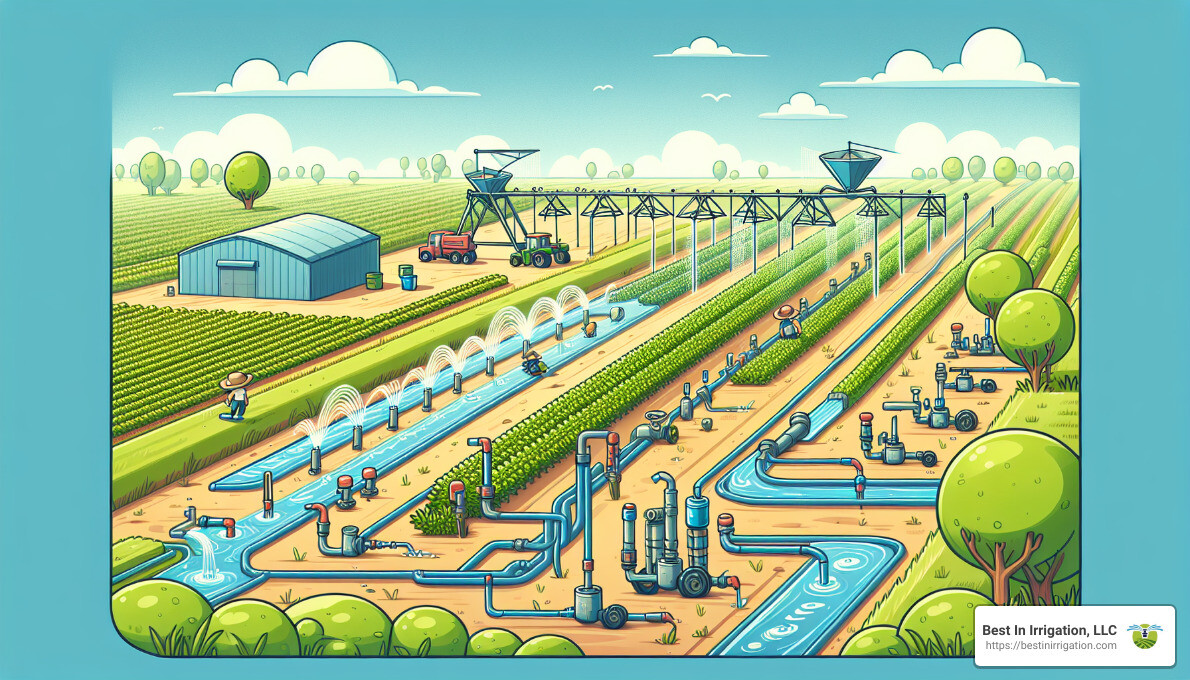
Each of these systems has its own set of advantages. The key is to match the system to your garden’s needs for the best results. Next, we’ll dig into how to choose the right irrigation system based on your specific requirements.
How to Choose the Right Irrigation System
Choosing the right irrigation system for your garden involves considering several key factors. Let’s break it down to make the process simple and straightforward.
Garden Size and Layout
Start with the basics: the size and layout of your garden. Measure your garden’s dimensions and sketch a rough layout. Include key features like flower beds, lawns, and vegetable patches. This sketch will help you visualize where you need to place your irrigation components.
Key steps:
- Measure your garden: Use a measuring tape to get accurate dimensions.
- Sketch the layout: Draw your garden to scale, marking all important areas.
- Identify zones: Divide your garden into zones based on plant types and water needs.
Plant Watering Needs
Different plants have different water requirements. Grouping plants with similar needs together can make your irrigation system more efficient. For example, succulents need less water than vegetables.
Tips for efficient planning:
- Group plants: Place plants with similar water needs in the same zone.
- Consider water requirements: Note down how much water each plant type needs.
- Plan irrigation zones: Design your system to meet the specific needs of each zone.
Water Source and Pressure
Your water source and its pressure are crucial for an efficient irrigation system. Identify where your water will come from—main water line, rain barrel, or well. Use a pressure gauge to check the water pressure from your source.
Steps to follow:
- Locate your water source: Determine if you’ll use a main water line, rain barrel, or well.
- Check water pressure: Use a pressure gauge to measure the pressure. This will help you select the right components.
- Consider flow rate: Ensure your system can handle the water flow rate without issues.
Soil Type Considerations
Soil type affects how water is absorbed and retained. Knowing your soil type helps you choose the right irrigation method and emitter flow rates.
Soil types and considerations:
- Clay Soil: Absorbs water slowly but retains it well. Water once a week, breaking the watering time into intervals to prevent runoff.
- Sandy Soil: Drains quickly and needs more frequent watering. Water three times a week.
- Loam: Ideal for most plants. Absorbs and holds water well. Water twice a week.
Local Regulations
Before you start, check with your local water authority or homeowners’ association for any regulations or restrictions on irrigation systems. This step ensures compliance and avoids potential fines.
Steps to ensure compliance:
- Research local regulations: Check with local authorities for any rules on water usage and irrigation systems.
- Follow guidelines: Make sure your system meets all local requirements.
- Install necessary components: Some areas may require backflow preventers or other specific components.
By considering these factors, you can choose the perfect irrigation system for your garden. Next, we’ll guide you through the materials needed for installation and the step-by-step process to set up your system.
Installation Guide for Irrigation Systems
Planning Your System
Garden Assessment
Start by measuring your garden. Draw a simple map to scale, noting key features like flower beds, lawns, and trees. This helps in planning the layout of your irrigation system.
Water Source and Pressure Check
Identify your water source. It could be a main water line, rain barrel, or well. Use a pressure gauge to check your water pressure. Knowing this helps in selecting the right components. Too high or too low pressure can affect system performance.
System Layout
Sketch where pipes and emitters (sprinklers or drip heads) will go. Ensure even coverage without over-watering any section. Plan for zones if your garden has diverse plant types. Each zone can be controlled separately to meet different watering needs.
Materials Needed
Here’s a checklist of materials you’ll need:
- Pipes or Tubing: PVC or polyethylene, depending on your system type.
- Fittings: Elbows, T-connectors, and end caps.
- Connectors: To join pipe sections.
- Sprinkler Heads or Drip Emitters: For water delivery.
- Valves: Shut-off and control valves.
- Pressure Regulator: To manage water pressure.
- Filter: To prevent debris from clogging the system.
Step-by-Step Installation
Connecting Water Source
- Install a Backflow Preventer: This device keeps contaminated water from flowing back into your clean water supply.
- Add a Shut-Off Valve: This allows you to control the irrigation system independently from the rest of your house. Choose a valve that matches your main water line size.
Laying the Main Line
- Trench Depth: Dig trenches 6 to 12 inches deep to protect pipes from damage and freezing.
- Run the Main Line: From the water source to various garden zones. Use thread seal tape on threaded joints to prevent leaks.
Setting Up Emitters
- Branch Out Lateral Lines: Use T-connectors to reach the areas that require watering.
- Install Emitters: Place emitters close to the base of each plant for drip systems. For sprinklers, ensure the radius and arc cover the entire area.
Testing and Adjustments
Leak Checks
Turn on the water and flush the system to clear any debris. Check all connections for leaks.
Proper Coverage
Test the system to ensure water is reaching all intended areas. Adjust sprinkler heads or emitter placement as needed.
System Tweaks
Make necessary adjustments, such as changing sprinkler head angles or emitter flow rates, to achieve uniform coverage.
Regular Maintenance
Periodically check for clogs or leaks. Clean filters and replace any damaged components to keep your system running smoothly.
By following these steps, you’ll have a well-planned and efficient irrigation system that keeps your garden thriving. Next, we’ll explore the benefits of using an irrigation system.
Benefits of Using an Irrigation System
Using an irrigation system is one of the best ways to conserve water in your garden. These systems are designed to deliver water directly to the plant roots, minimizing runoff and evaporation. This targeted approach reduces water waste significantly.
For instance, drip irrigation systems can save up to 50% more water compared to traditional watering methods. This is especially important in areas facing water restrictions or drought conditions. Efficient water use not only helps your garden but also has a positive environmental impact.
Healthier Plants
Consistent and precise watering is crucial for plant health. An irrigation system ensures that your plants receive the right amount of water at the right time. This consistent moisture reduces plant stress and prevents common issues like over-watering or under-watering.
For example, drip irrigation systems deliver water slowly and directly to the soil, promoting deeper root growth and reducing the risk of fungal diseases. Healthier plants are more resilient and productive, leading to more vibrant flowers and higher vegetable yields.
Time-Saving
One of the biggest advantages of an irrigation system is the time it saves. Automated watering systems take the guesswork and manual labor out of garden maintenance. You can set programmable schedules that water your garden even when you’re not around.
Imagine not having to drag hoses around or worry about watering your plants while on vacation. With a timer, your system can water your garden at optimal times, such as early morning or late evening, ensuring maximum efficiency and minimal water loss.
Frequently Asked Questions about Irrigation Systems
What is an irrigation system?
An irrigation system is a network designed to supply water to plants efficiently. It automates the watering process, ensuring your garden gets the right amount of water without manual effort.
Purpose: The main goal is to maintain consistent soil moisture, promoting healthy plant growth and conserving water. This is especially important in areas where rainfall is insufficient or unpredictable.
Types: The most common types include drip irrigation, sprinkler systems, soaker hoses, in-ground systems, and above-ground systems. Each type caters to different garden needs and layouts.
How does an irrigation system work?
An irrigation system works by distributing water through a network of pipes, valves, and emitters. Here’s a quick breakdown:
Components:
– Pipes or Tubing: These carry water from the source to different parts of the garden.
– Valves: Control the flow of water to different zones.
– Emitters: Include sprinkler heads or drip emitters, which release water to the plants.
Pressure System: The water pressure from your source (like a main water line or rain barrel) drives the system. A pressure regulator ensures the pressure is optimal, preventing damage to the system and ensuring even water distribution.
Sprinkler Heads and Valves: Sprinkler heads spray water over a large area, while valves control which zones get watered. Drip emitters, on the other hand, release water slowly at the plant’s base, minimizing water waste.
Is an irrigation system the same as a sprinkler system?
Not exactly. While all sprinkler systems are a type of irrigation system, not all irrigation systems are sprinklers.
Interchangeable Terms: Sometimes, people use the terms interchangeably, but it’s important to know the difference.
Functionality:
– Sprinkler Systems: Use sprinkler heads to spray water over a large area. They are ideal for lawns and large gardens.
– Drip Irrigation Systems: Deliver water directly to the plant’s root zone using drip emitters. They are highly efficient, especially for garden beds and individual plants.
– Soaker Hoses: Lay on the ground and seep water slowly into the soil. They are great for hedges and garden rows.
In summary, while both systems aim to water plants efficiently, they do so in different ways. Choosing the right system depends on your garden’s needs, plant types, and water source.
Next, we’ll explore the benefits of using an irrigation system, including water conservation, healthier plants, and time-saving advantages.
Conclusion
Choosing the right irrigation system can transform your garden, making it healthier, more beautiful, and easier to maintain. Whether you opt for a drip irrigation system, a sprinkler system, or a soaker hose, the benefits are clear.
Summary
Irrigation systems ensure your plants receive consistent watering, which is crucial for their growth and health. These systems are designed to conserve water by targeting the root zones directly, reducing runoff and evaporation. The result? Healthier plants and a greener garden.
Benefits
- Water Conservation: Efficient water use reduces waste and helps the environment. Drip and soaker systems are particularly good at minimizing water loss.
- Healthier Plants: Consistent moisture levels reduce plant stress and prevent diseases. Your garden will thrive with the right amount of water delivered precisely where it’s needed.
- Time-Saving: Automated systems free up your time. You can set a watering schedule and let the system do the work, giving you more time to enjoy your garden.
Best In Irrigation, LLC
At Best In Irrigation, LLC, we specialize in designing and installing irrigation systems that meet your specific needs. Our expertise ensures you get the most efficient system, custom to conserve water and keep your landscape healthy. We offer professional installation services and support for DIY enthusiasts.
Final Thoughts
Investing in an irrigation system is a smart move for any gardener. It saves water, promotes plant health, and simplifies your gardening routine. Whether you need a simple drip system for your garden beds or a comprehensive in-ground sprinkler system for your lawn, Best In Irrigation, LLC has you covered.
Ready to transform your garden? Contact us today for a free estimate and take the first step towards a lush, healthy landscape.
By following these steps and tips, you’ll be well on your way to a lush, healthy garden with minimal effort and maximum efficiency. Happy gardening!