


Install Sprinkler Blowout: 10 Essential Success Tips
When it’s time to install sprinkler blowout systems, the stakes couldn’t be higher. As winter creeps into Massachusetts with its icy grip, ensuring your sprinkler system is properly winterized becomes a top priority for homeowners. Winterizing your irrigation system isn’t just a seasonal chore; it’s a necessary precaution to safeguard your investment from freezing damage and ensure a green lawn next year.
- Prevent Damage: Blowing out your sprinkler system protects the underground lines and sprinkler heads from freezing, which can cause cracks or bursts.
- Save Money: Avoid costly repairs by taking steps now to maintain your irrigation system over the long term.
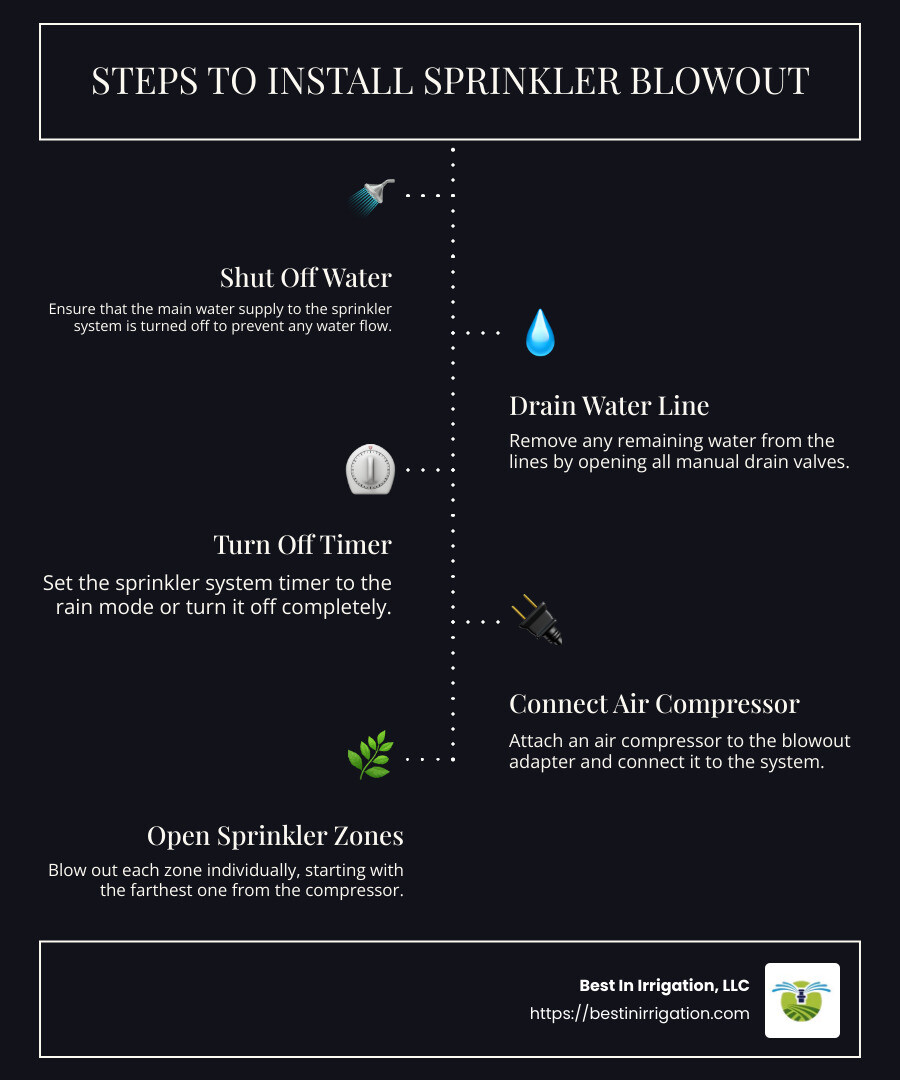
- Steps Overview: Shut off the water, turn off the timer, and blow out each sprinkler zone using an air compressor.
Failing to winterize can lead to expensive repair bills, with rigid PVC pipes potentially bursting, while flexible polyethylene pipes may develop leaks. Preparing your sprinkler system in the early fall, before temperatures drop below 32 degrees Fahrenheit, is key to a trouble-free spring startup.
Install sprinkler blowout word list:
– commercial sprinkler blowout
– sprinkler blowout near me
What You’ll Need for a Sprinkler Blowout
Getting ready to install a sprinkler blowout system? You’ll need the right tools to make the process smooth and effective. Here’s a simple checklist to ensure you’re fully prepared:
Essential Tools and Equipment
- Air Compressor
An air compressor is crucial for blowing out the water from your sprinkler lines. Make sure it can produce at least 30 to 50 cubic feet per minute (CFM) and operate at pressures between 40 to 80 pounds per square inch (PSI). This ensures enough power to clear the system without damaging the pipes.
- Blowout Adapter
This adapter connects your air compressor to the sprinkler system. It’s often used for winterizing RVs, so it should be easy to find. Ensure it fits securely to avoid leaks during the process. - Channel Lock Pliers
These pliers are handy for loosening and tightening connections, especially when dealing with stubborn or old parts. They provide the grip needed to manage different components of the sprinkler system. - Bucket
Use a bucket to catch water when draining the main line. Place it under the hose bib to prevent water from spilling onto the ground or into unwanted areas. This helps keep your work area clean and dry.
Quick Tips
- Check the Airflow Valves: Before starting, ensure the airflow valves on the compressor are closed. This prevents sudden bursts of air that could damage your system.
- Mind Your PSI: Keep the PSI below 50 for polyethylene pipes and up to 80 for rigid PVC. This helps protect the lines from excessive pressure.
- Zone-by-Zone Approach: Even the most powerful home compressors can’t blow out the entire system at once. Work through each zone individually, starting with the farthest one.
With these tools and tips in hand, you’ll be well on your way to a successful sprinkler blowout installation. Next, we’ll dive into how to connect the air compressor and manage your sprinkler zones efficiently.
Preparing Your Sprinkler System for Blowout
Before you can dive into the actual blowout, you need to prepare your sprinkler system properly. This involves a few crucial steps: shutting down the water supply, draining the water line, and turning off the timer.
Shutting Down and Draining the Water Line
The first step is to shut off the water supply to your sprinkler system. This is done by turning off the isolation valve. This valve stops water from flowing into the system from your main water line.
Next, you’ll need to locate the hose bib—a small faucet usually found outside before the backflow preventer or sometimes inside after the isolation valve. Place a bucket under the hose bib to catch any water, then open it to drain the water from the main sprinkler line. This step is critical to ensure that no water remains in the pipes, which could freeze and cause damage during the winter months.
Turning Off the Timer
If your sprinkler system operates on a timer, it’s important to turn it off. This prevents the system from accidentally activating during the winter. Some timers have a rain mode option. This mode tells the timer that it’s raining, so it doesn’t run the sprinklers. This feature allows you to keep your programming intact and simply switch off rain mode when spring arrives.
By following these steps, you’ll set up your system for a successful blowout, protecting it from the harsh winter conditions. Next, we’ll explore how to connect your air compressor to the system and start blowing out the sprinkler lines.
How to Install Sprinkler Blowout
Once your sprinkler system is prepped, it’s time to install the sprinkler blowout. This involves connecting an air compressor, opening the sprinkler zones, and carefully blowing out the lines. Let’s break down each step for a smooth process.
Connecting the Air Compressor
First, you’ll need an air compressor with the right specifications. A compressor that delivers between 30 to 50 cubic feet per minute (CFM) and operates at 40 to 80 pounds per square inch (PSI) is ideal. Make sure to use a blowout adapter to connect the compressor to your irrigation system. These adapters are commonly used for winterizing RVs and should be readily available.
Before connecting, ensure all airflow valves on the compressor are closed. This prevents any sudden bursts of air that could potentially damage your sprinkler system. Once everything is secure, attach the compressor to the irrigation system using the adapter.
Opening Sprinkler Zones
Now, it’s time to open the sprinkler zones. It’s crucial to do this zone-by-zone to avoid over-pressurizing the system. Start with the zone farthest from the main water line. This ensures that all water is pushed out effectively.
If your yard has uneven terrain, like small hills, begin with the highest zone. This helps in clearing the lines thoroughly, as gravity aids in draining the water.
Blowing Out the Sprinkler Line
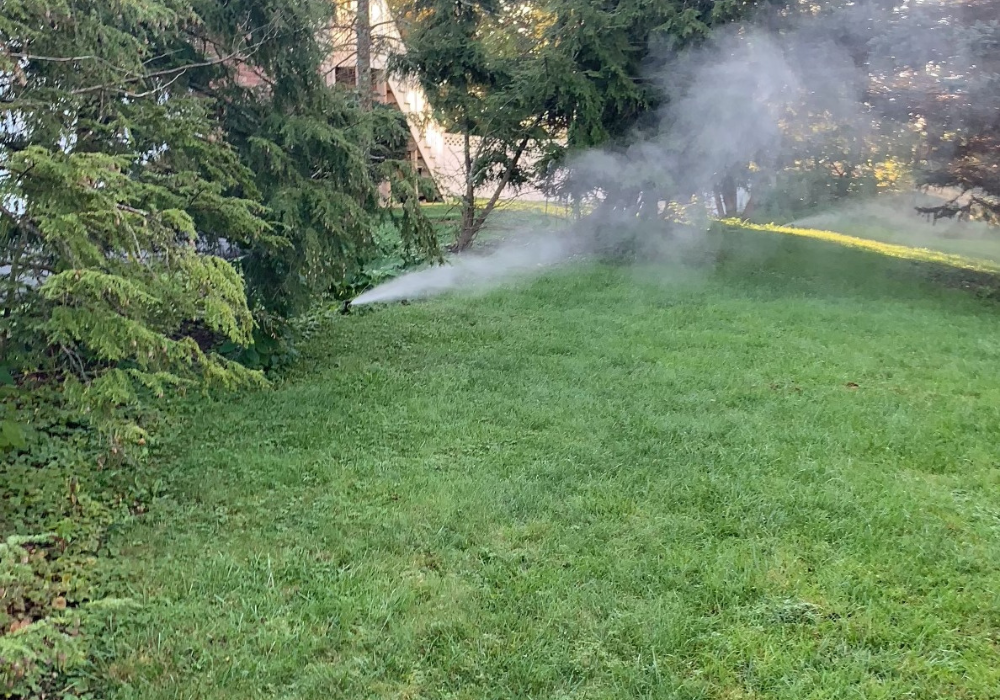
With the zones open, you can now proceed to blow out the sprinkler line. Pay attention to the backflow valves. Ensure they are closed to prevent damage during the blowout process.
Keep the air pressure within safe limits—no more than 50 PSI for flexible polyethylene pipes and up to 80 PSI for rigid PVC pipes. This precaution helps prevent any damage to the irrigation lines.
Allow the compressor to run until the sprinkler heads spit out air instead of water. This usually takes about two minutes per zone. It’s a good idea to repeat the process for each zone until no water is left in the lines. Some experts recommend doing this at least three times to ensure thoroughness.
By following these steps, you’ll ensure a successful sprinkler blowout, protecting your system from the harsh winter months. Next, we’ll look at the differences between manual and automatic drain methods.
Manual and Automatic Drain Methods
Winterizing your sprinkler system isn’t just about blowing out the lines. It’s also crucial to drain any remaining water to prevent freezing. There are two main methods for this: manual and automatic drain systems. Let’s explore both.
Manual Drain Method
The manual drain method is straightforward but requires a bit of elbow grease. Here’s how to do it:
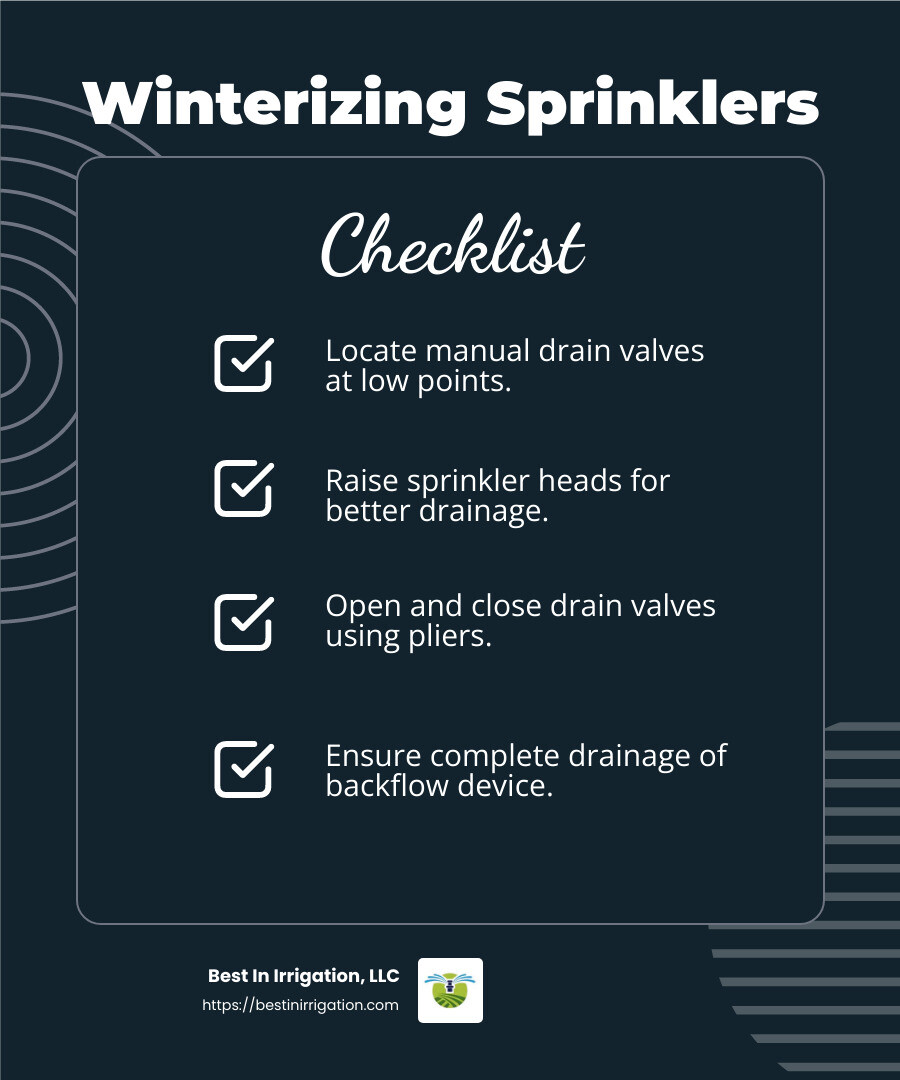
- Locate Manual Drain Valves: These are typically found at the ends of your irrigation piping or at low points in the system. If you’re unsure, check your system’s layout or consult a professional.
- Raise Sprinkler Heads: If your system has check valves, you might need to raise the sprinkler heads. This provides an additional outlet for the water to drain.
- Open the Drain Valves: Use channel lock pliers if the valves are tough to turn. Opening these valves allows the water to flow out, preventing any residual water from freezing.
- Draining the Backflow Device: Don’t forget to drain the backflow preventer. This step is critical as it protects the internal components from damage due to freezing.
- Close Valves Once Drained: After the water has stopped flowing, close all the valves. This ensures that no water re-enters the system during winter.
Automatic Drain Method
For those who prefer a hands-free approach, automatic drain systems are a great option. They come equipped with valves that automatically open and drain the pipes when the pressure drops. Here’s how it works:
- Relieve Pressure: Begin by running a sprinkler head to reduce the internal pressure. This action triggers the automatic drain valves to open.
- Wait for Draining: Once the pressure is sufficiently low, the automatic valves will do their job. Give the system a few hours to ensure all water has drained out.
- Check for Complete Drainage: After draining, verify that water is no longer present in the system. If your sprinkler heads have check valves, you may need to raise them to ensure complete drainage.
By choosing the right drainage method, you can protect your sprinkler system from the damaging effects of winter. Up next, we’ll address some common questions about sprinkler blowout to help you master this essential task.
Frequently Asked Questions about Sprinkler Blowout
How much PSI do you need to blowout a sprinkler system?
When performing a sprinkler blowout, it’s crucial to use the correct air pressure to avoid damaging your system. For most systems, keep the pressure below 50 PSI. This is especially important if you have flexible polyethylene pipes. If your system uses rigid PVC pipes, you can safely increase the pressure up to 80 PSI. Always check your system specifications to ensure you’re using the right pressure.
How long should you blow out a sprinkler system?
Timing is key when blowing out your sprinkler system. Generally, aim for about two minutes per zone. This duration should be enough to clear the lines of water. You’ll know it’s time to move to the next zone when the spray from the sprinkler heads changes from water to air. Don’t rush this step; clearing the lines thoroughly helps prevent freeze damage.
When should you blow out the sprinklers for winter?
Timing your sprinkler blowout is just as important as doing it correctly. Ideally, you should winterize your system before freezing temperatures arrive. Consider scheduling this task in early fall. By doing so, you ensure that your system is protected well before temperatures drop below freezing, which can lead to costly repairs if water is left in the pipes.
By understanding these key aspects, you can confidently perform a sprinkler blowout and safeguard your irrigation system through the winter months.
Conclusion
Winterizing your sprinkler system is crucial to prevent costly damages caused by freezing temperatures. By following the steps outlined in this guide, you can ensure your irrigation system is ready to withstand the winter months.
Recap of Steps:
1. Gather Your Equipment: You’ll need an air compressor, blowout adapter, channel lock pliers, and a bucket.
2. Prepare Your System: Shut off the water, drain the water line, and turn off the timer.
3. Install Sprinkler Blowout: Connect the air compressor using a blowout adapter, open each sprinkler zone, and blow out the lines carefully.
4. Choose Draining Method: Use manual or automatic drain methods to ensure all water is cleared.
The importance of winterizing cannot be overstated. It protects your sprinkler system from the harsh effects of freezing, extending its lifespan and saving you from expensive repairs. Timing is key—aim to complete the blowout before the first freeze.
At Best In Irrigation, LLC, we specialize in providing custom irrigation solutions across Massachusetts. Our expertise ensures your system is well-prepared for winter, leveraging the latest technology and our deep understanding of New England’s climate.
For more information on our services and to schedule your blowout, visit our Lawn Irrigation System Blowouts page. Let us help you enjoy a worry-free winter, knowing your sprinkler system is in expert hands.
