


Home Irrigation System Winterization: Top Tips 2024
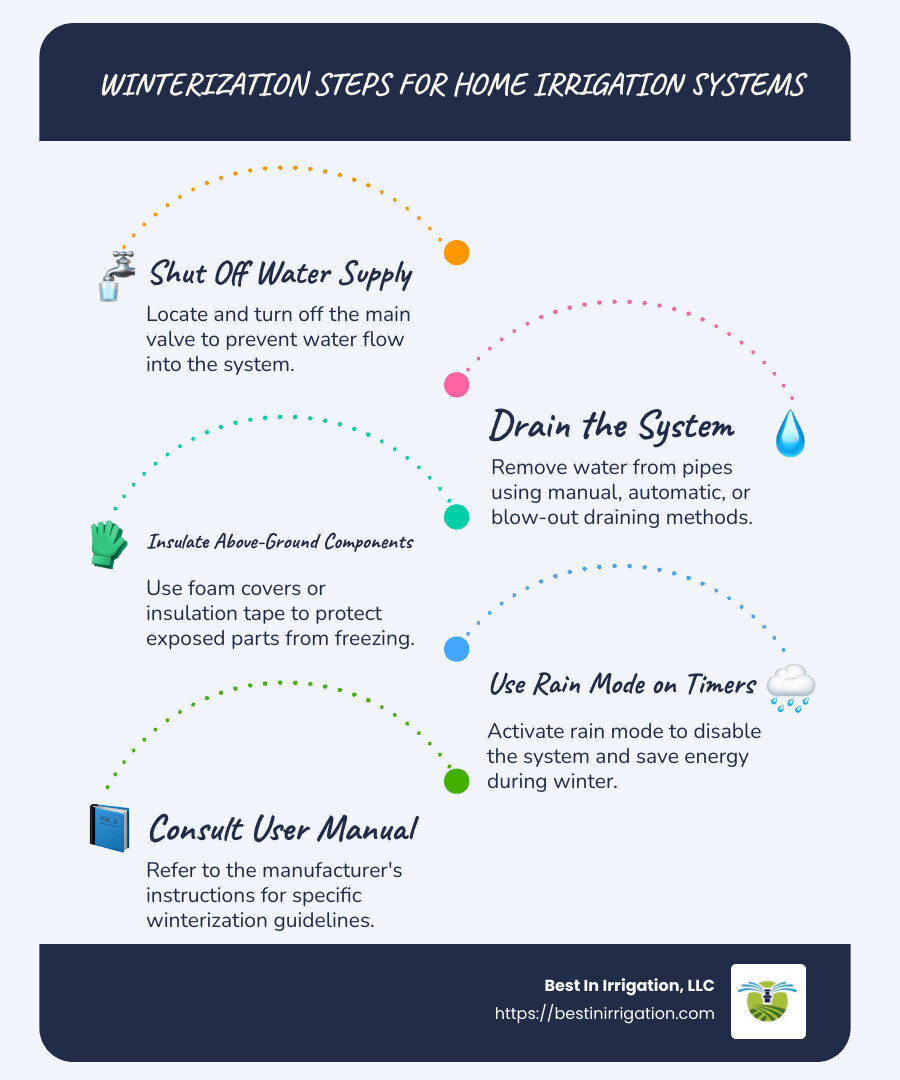
Home irrigation system winterization is essential as freezing temperatures approach. Ensuring your irrigation system is properly winterized means preventing potential damage. This includes:
- Shutting off the water supply
- Draining water from pipes
- Insulating above-ground components
With these steps, you can avoid costly repairs and keep your system ready for spring.
Winter brings a unique set of challenges for your home irrigation system. As temperatures drop in Massachusetts, any water left in your pipes can freeze, expand, and cause cracks. These issues not only lead to expensive repairs but can also disrupt the growing season when warmth returns.
Year-round maintenance is crucial to keeping your irrigation system efficient and cost-effective. It’s not just about preventing damage; it’s about ensuring your landscape flourishes despite harsh weather. By taking proactive steps to winterize, you set the stage for a lush, green lawn when spring arrives.
Similar topics to home irrigation system winterization:
– average cost of sprinkler blowout
– cost of sprinkler winterization
– cheap sprinkler blowout
Why Winterization is Crucial
Winter can be a harsh season for your home irrigation system. When temperatures plummet, any water remaining in your system’s pipes can freeze. This freezing leads to water expansion, a process that can cause serious damage. Think of it like a can of soda left in the freezer—when the liquid inside expands, it can burst the container. The same thing happens with your irrigation pipes.
Cracked pipes and damaged fittings are common consequences of not winterizing your system. Once a pipe cracks, it can lead to leaks or even a complete system failure. This can be costly to repair and might leave your lawn without water when it needs it the most.
In Massachusetts, where frost levels can extend deep into the ground, the risk is even higher. A single freeze can cause substantial damage if your system isn’t properly prepared. This is why winterization isn’t just a recommendation—it’s a necessity.
By taking steps to protect your irrigation system before winter hits, you’re not just avoiding damage; you’re also setting up your landscape for success in the spring. Proper winterization ensures that your system remains in good shape and ready to nurture your plants when the warmer weather returns.
Steps for Home Irrigation System Winterization
Winterizing your home irrigation system involves three critical steps: shutting off the water supply, draining the system, and insulating above-ground components. Let’s break it down.
Shutting Off the Water Supply
First, you need to shut off the water supply to your irrigation system. Locate the main valve, which is often near the water meter or a backflow preventer. This valve stops water from entering your system during the winter months. If you don’t have a main shut-off valve, consider installing one as a smart investment for future winters.
Draining the System
Once the water is shut off, it’s time to drain the system. This step is crucial to prevent any remaining water from freezing and expanding inside the pipes.
There are three methods to drain your system:
- Manual Draining: Open the manual drain valves at the lowest points of your system. This allows the water to flow out by gravity. Remember to wear eye protection to guard against any unexpected sprays.
- Automatic Draining: If your system has automatic drain valves, these will activate when the water pressure drops, allowing water to escape. Check your system’s solenoid settings to ensure they are functioning correctly.
- Blow-Out Draining: This method uses an air compressor to force any remaining water out of the pipes. It’s effective but requires caution. Use an air compressor with the correct PSI and CFM settings, and never exceed the recommended pressure to avoid damaging your system. Consider hiring a professional if you’re unsure about this process.
Insulating Above-Ground Components
Finally, protect your system’s above-ground components. Use foam covers or insulation tape to wrap exposed pipes, valves, and backflow preventers. This insulation helps prevent freezing and cracking during cold spells.
For backflow preventers, ensure that air vents and drain outlets remain unblocked while insulating. This allows any residual water to escape and prevents pressure buildup.
By following these steps, you can safeguard your irrigation system against the harsh effects of winter. Proper home irrigation system winterization ensures that your landscape will be ready to thrive come springtime.
Methods for Draining Your Irrigation System
Draining your irrigation system is a critical part of home irrigation system winterization. It ensures that no water is left in the pipes to freeze and cause damage. Let’s explore the three main methods: manual draining, automatic draining, and blow-out draining.
Manual Draining
Manual draining is straightforward but requires a bit of effort. Here’s how to do it:
- Locate the Shut-Off Valves: Find the manual drain valves, usually positioned at the system’s lowest points. These valves allow gravity to do the work, letting water escape naturally.
- Release the Pressure: Before opening the valves, make sure to release any built-up pressure in the system. This can be done by briefly running a sprinkler head.
- Open the Valves: Carefully open each valve. It’s wise to wear eye protection to shield against any unexpected water sprays.
- Check for Complete Drainage: Ensure all water has drained out. This might require lifting sprinkler heads if they have check valves to allow any trapped water to flow out.
Automatic Draining
Automatic draining systems are designed for convenience. They activate when water pressure falls below a certain threshold:
- Turn Off the Water Supply: As with manual systems, start by shutting off the main water supply.
- Activate Draining: Once the water is off, the automatic valves will open. This is triggered by the drop in water pressure.
- Check Solenoid Settings: Ensure the solenoids are correctly set to facilitate proper air flow and drainage.
- Inspect for Residual Water: Even with automatic systems, check areas between the shut-off valve and backflow device for any leftover water.
Blow-Out Draining
The blow-out method is efficient but requires caution. It involves using an air compressor to clear the pipes:
- Prepare the Equipment: Use an air compressor rated at the appropriate PSI (pounds per square inch) and CFM (cubic feet per minute). This ensures enough force to clear the pipes without causing damage.
- Safety Precautions: Always wear safety gear and never stand over components while the system is pressurized.
- Connect the Compressor: Attach the compressor to the irrigation system using a compatible coupler.
- Initiate the Blow-Out: Gradually increase the air pressure to expel water through the sprinkler heads. Avoid exceeding the system’s pressure rating to prevent damage.
- Disconnect and Check: Once done, disconnect the compressor and check for any remaining water.
Draining your irrigation system properly is essential to protect it from winter damage. Whether you choose manual, automatic, or blow-out draining, each method has its own steps and precautions. By following these guidelines, you can ensure your irrigation system is ready to withstand the winter chill.
Additional Tips for Protecting Your Irrigation System
When it comes to home irrigation system winterization, going the extra mile can save you from costly repairs. Here are some additional tips to protect your system from the harsh winter weather.
Insulating Pipes and Components
Exposed pipes are vulnerable to freezing. To protect them, use foam insulation or pipe wrap tape. These materials provide an extra layer of protection against the cold.
- Foam Insulation: This is easy to apply and available at most home improvement stores. Wrap the foam around the pipes and secure it with tape.
- Pipe Wrap Tape: This is another great option. It’s flexible and can be wrapped tightly around pipes and fittings.
Insulating your pipes is an inexpensive way to prevent freezing and potential damage.
Using Rain Mode on Timers
If your irrigation system has an automatic timer, consider using the rain mode feature. This setting temporarily disables the system without losing your programmed schedule.
- Energy Savings: By switching to rain mode, you save energy as the system won’t activate unnecessarily during the off-season.
- Simple Activation: Most timers have a straightforward switch for rain mode. Check your model’s user manual for specific instructions.
This feature is especially useful in areas with unpredictable weather, as it prevents the system from running during rain or snow.
Consulting the User Manual
Your irrigation system’s user manual is a valuable resource. It contains manufacturer’s instructions and specific actions for winterization.
- DIY Approach: If you’re handling the winterization yourself, the manual will guide you through the process step-by-step.
- Troubleshooting: Manuals often include troubleshooting tips for common issues, saving you time and frustration.
- Model-Specific Information: Each system is different. The manual ensures you don’t miss any critical steps unique to your setup.
By following the user manual, you can confidently protect your system and avoid potential pitfalls.
Taking these additional precautions will help ensure your irrigation system remains in top condition throughout the winter. Next, we’ll address some common questions about home irrigation system winterization.
Frequently Asked Questions about Home Irrigation System Winterization
Can I winterize my own sprinkler system?
Yes, you can winterize your own sprinkler system, but it requires a few essential steps to be done correctly. First, shut off the water supply to prevent any more water from entering the system. This is usually done at the main valve near your water meter.
Next, turn off any timers associated with your irrigation system. Many systems have a rain mode that allows you to pause operations without losing your settings.
Finally, drain the water from the system. This step is crucial to avoid water freezing inside the pipes, which can cause significant damage.
What happens if you don’t winterize your sprinkler system?
If you skip winterizing your sprinkler system, you risk severe damage when temperatures drop. Frozen pipes can lead to cracked fittings as the water expands. This not only disrupts your irrigation system but can also lead to costly repairs.
When water freezes, it expands. In a confined space like a pipe, this expansion can cause the pipe to burst. The damage might not be immediately evident, but you’ll likely notice problems when you try to use the system again in the spring.
How do I winterize my sprinklers when I don’t have a pump?
If you don’t have a pump, you can still winterize your sprinklers using manual draining. Many systems have shut-off valves located at low points or ends of the piping. Open these valves one at a time to let the water run out completely.
Ensure you’re wearing eye protection during this process, as water may release under pressure. Once the water has run out, close the valves to keep debris from entering the pipes.
Manual draining is effective and doesn’t require specialized equipment, making it a great option for those without a pump.
By following these steps, you can ensure your irrigation system is ready to withstand the winter months without damage.
Conclusion
At Best In Irrigation, LLC, we understand the importance of protecting your home irrigation system during the harsh New England winters. Our professional services are designed to ensure your system is safeguarded from freeze damage, preventing costly repairs and extending the life of your investment.
Our team specializes in home irrigation system winterization, offering custom solutions that prioritize water conservation and efficiency. We use cutting-edge technology to provide precise and reliable service, ensuring optimal performance even in the coldest months.
With over nine years of expertise in the New England region, we have honed our skills to deliver exceptional service that meets the unique needs of each landscape. Our commitment to quality and innovation sets us apart, making us a trusted partner for homeowners seeking peace of mind during winter.
Don’t leave your irrigation system’s protection to chance. Rely on our skilled professionals to prepare your system for winter’s challenges. Contact us today for expert assistance and ensure your irrigation system is in the best hands.
