


Efficient Irrigation Solutions: 2024’s Ultimate Guide
Efficient irrigation solutions are more crucial than ever as the world grapples with water scarcity, rising populations, and the impacts of climate change. To maintain a vibrant lawn while keeping water bills in check, consider these quick, eco-friendly strategies:
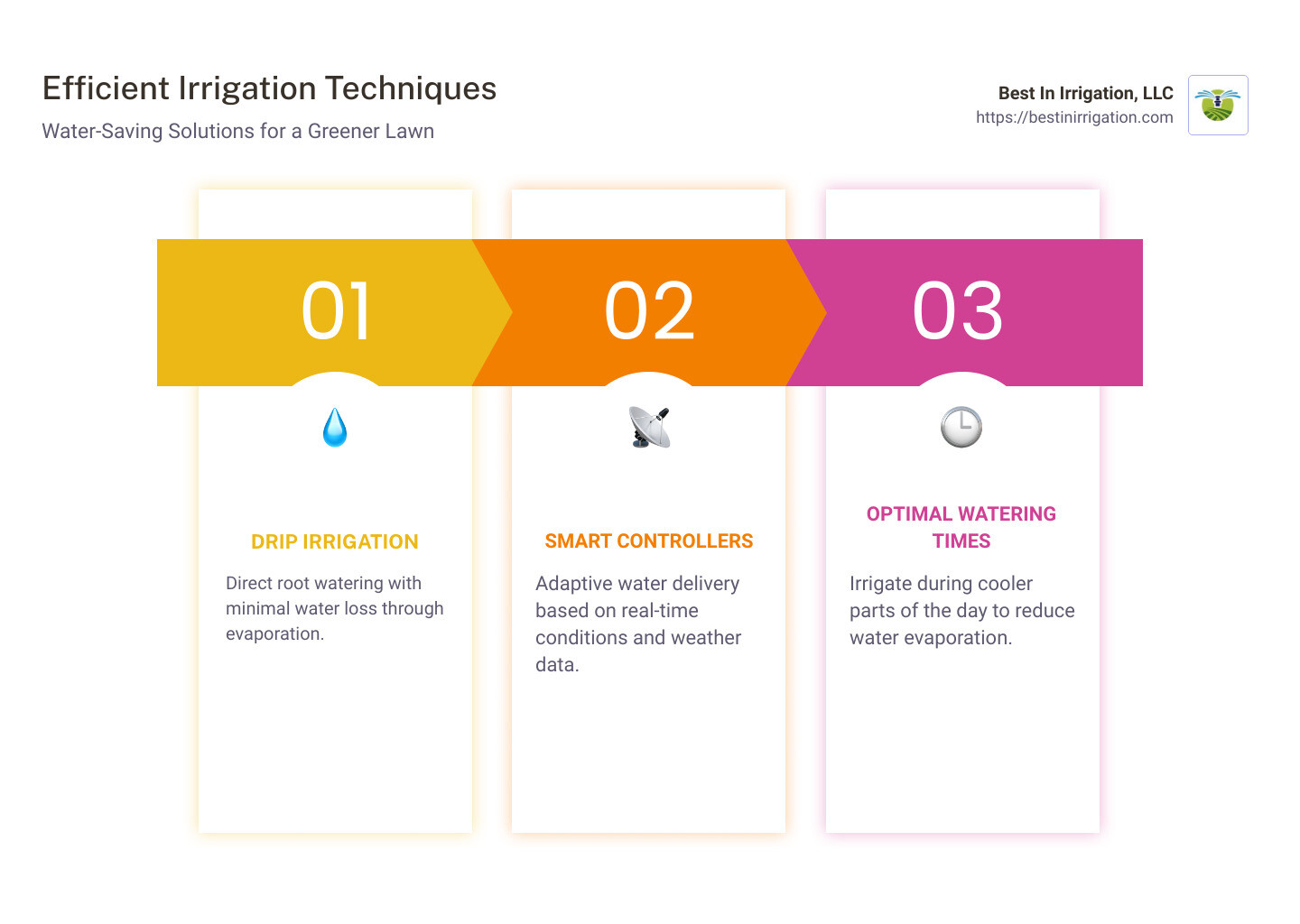
- Implement a drip irrigation system for direct root watering and minimal evaporation.
- Use smart controllers and sensors to adapt water delivery to real-time conditions.
- Schedule watering during cooler parts of the day to reduce loss to evaporation.
As the UN World Water Development Report highlights, global water use has skyrocketed over the past century, driven by population growth and economic development. Each drop now holds vital importance, especially against the looming backdrop of climate change which threatens future water availability.
In this guide, “The Ultimate Guide to Efficient Irrigation Solutions for Your Lawn,” we dig into diverse systems, smart technologies, and best practices to help you create a sustainable and lush landscape while conserving water. Find how you can make every drop count to safeguard both your home’s beauty and our planet’s precious resources.
Understanding Efficient Irrigation Solutions
Efficient irrigation solutions are essential for conserving water and maintaining lush landscapes. With climate change and population growth intensifying water scarcity, adopting water-efficient irrigation practices is more important than ever.
Reducing Water Waste
Water waste is a common issue in traditional irrigation systems. It’s estimated that up to 50% of water used for outdoor irrigation is wasted due to evaporation, wind, or runoff. By implementing innovative irrigation practices, you can significantly reduce this waste.
- Drip Irrigation: This system delivers water directly to the roots of plants, minimizing evaporation and runoff. It’s highly efficient, using up to 70% less water than traditional methods.
- Soaker Hoses: These hoses release water slowly and evenly along their length, making them ideal for dense plantings or individual plants.
Innovative Irrigation Practices
Innovative practices can further improve water efficiency. These methods ensure that plants receive the right amount of water without wastage.
- Smart Controllers: These devices use weather data and site conditions to adjust watering schedules automatically. This prevents overwatering and ensures efficient water application.
- Soil Moisture Sensors: Placed strategically, these sensors detect soil moisture levels, preventing unnecessary watering.
- Rain Sensors and Gauges: By measuring rainfall and shutting off systems during rain, these devices prevent unnecessary irrigation.
Water-Saving Methods
Adopting certain watering techniques can also conserve water:
- Watering at the Right Time: Watering in the early morning or late evening reduces evaporation.
- Cycle and Soak: For areas prone to runoff, divide watering into shorter cycles with breaks in between. This allows water to soak into the soil effectively.
- Proper System Design: Group plants with similar water needs and install separate valves for turf and plants to ensure efficient watering.
By integrating these water-efficient irrigation strategies, you can maintain a healthy lawn while conserving water and reducing your environmental impact. As we continue to face the challenges of water scarcity, these practices are not just beneficial—they’re necessary for sustainable living.
Types of Efficient Irrigation Systems
Choosing the right irrigation system is crucial for efficient irrigation solutions. Let’s explore some of the most effective systems available today, each with its unique benefits.
Drip Irrigation
Drip irrigation is often hailed as the most efficient irrigation system. It delivers water directly to the plant’s root zone, minimizing evaporation and ensuring that each plant gets exactly what it needs. This method is perfect for gardens where water conservation is a priority. By applying water at ground level, drip systems significantly reduce water waste. They’re ideal for water-scarce regions and can boost plant health by providing consistent moisture.
Soaker Hoses
Soaker hoses are another excellent option for water-efficient gardening. These hoses “sweat” water along their entire length, making them perfect for dense plantings or individual plants. You can customize the watering to suit your garden’s unique layout, ensuring that water is applied precisely where it’s needed. This targeted approach helps conserve water and promotes healthier plant growth.
Traditional Automatic Spray Systems
Traditional automatic spray systems use pop-up spray heads to distribute water. These systems are adjustable, allowing for full circle, half-circle, or quarter-circle spray patterns. However, they tend to be less efficient than other systems like rotors or drip irrigation because they apply water faster than some soils can absorb. Ensuring proper head-to-head coverage is essential for uniform water distribution.
Rotor Systems
Rotor systems are typically more efficient than traditional spray systems. They apply water at a slower rate, allowing for better moisture absorption in the soil. Rotor systems are particularly suited for small turf areas, thanks to their adjustable patterns and slower water application. This makes them a great choice for lawns and landscapes that require precise watering without the risk of runoff.
By understanding these different efficient irrigation systems, you can choose the best one for your lawn or garden, ensuring that your plants thrive while conserving precious water resources.
Smart Irrigation Technology
Smart irrigation technology is changing how we care for our lawns and gardens, making efficient irrigation solutions more accessible and effective. Let’s explore the key components that make these systems so smart.
Smart Controllers
Smart controllers are like the brains of your irrigation system. They use weather data and site conditions to automatically adjust watering schedules, ensuring your plants get just the right amount of water. By tapping into local weather information, these controllers can modify watering times based on rainfall, temperature, and humidity. This means no more watering while it’s raining or during a heatwave when the soil dries out faster.
Automatic adjustments help in efficient water application, reducing water waste and saving you money on your water bill. For instance, if a cool, cloudy day is forecasted, your smart controller might reduce watering to prevent overwatering, which can harm plants and lead to runoff.
Soil Moisture Sensors
Soil moisture sensors are a game-changer in preventing overwatering. These sensors are strategically placed in the ground to detect the moisture level in the soil. When the soil is already moist, the sensors signal the system to hold off on watering. This ensures that your plants get water only when they truly need it, promoting healthier growth and conserving water.
The strategic placement of these sensors is crucial. They should be placed in areas that represent the average moisture level of your garden. This way, the readings are accurate and reflect the actual needs of your plants.
Rain Sensors and Gauges
Rain sensors and gauges are essential for preventing unnecessary watering. These devices measure rainfall and automatically shut off your irrigation system when enough rain has fallen. This means you won’t be watering your lawn during a downpour, which is a common waste of water with traditional systems.
By incorporating rain sensors, you can ensure that your irrigation system only runs when it’s needed, further enhancing water efficiency. This not only conserves water but also protects your plants from the negative effects of overwatering, such as root rot or fungal diseases.
Smart irrigation technology, with its ability to adapt to changing conditions, offers a modern solution to traditional watering woes. With smart controllers, soil moisture sensors, and rain sensors, you can achieve a lush, healthy garden while being kind to the environment and your wallet.
Best Practices for Efficient Irrigation
Proper System Design
Designing your irrigation system properly is the first step toward achieving efficient irrigation solutions. Start by using separate valves for turf and plants. This allows you to water each area according to its specific needs. Turf generally requires different watering schedules compared to shrubs or flower beds.
Group plants by water needs to create irrigation hydrozones. This means placing plants with similar water requirements together. Doing so ensures that each group receives the right amount of water, preventing both overwatering and underwatering.
Another critical component is the installation of a backflow preventer. This device stops contaminated water from flowing back into your clean water supply, keeping your water source safe.
Regular Maintenance
Regular maintenance is crucial for keeping your irrigation system in top shape. Monitoring and maintaining systems involves checking for leaks, clogs, and misaligned emitters. Leaks can waste a significant amount of water, so fixing them promptly is essential.
Adjusting schedules based on seasonal changes or plant growth is also important. As your garden evolves, your watering needs may change. Regularly updating your system’s schedule ensures that you’re using water wisely.
Watering Techniques
When it comes to watering, timing is everything. Watering in the morning or evening is ideal because temperatures are cooler, reducing evaporation. This means more water reaches the roots where it’s needed most.
Avoid overwatering by using appropriate emitters that match the needs of your plants. Drip emitters, for example, deliver water directly to the root zone, minimizing waste. It’s also important to adjust your watering based on weather conditions, such as reducing water during rainy periods.
By implementing these best practices, you can ensure your irrigation system is both efficient and effective, promoting a healthy, vibrant garden while conserving water.
Frequently Asked Questions about Efficient Irrigation Solutions
What is the most efficient irrigation method?
Drip irrigation is widely recognized as the most efficient irrigation method. This system delivers water directly to the roots of plants, significantly reducing water loss due to evaporation and runoff. According to research, drip systems can increase water efficiency by up to 90% compared to traditional methods. This precision watering ensures that plants receive the moisture they need without wasting water, making it a top choice for those looking to conserve resources.
How can we improve the efficiency of irrigation?
Improving irrigation efficiency involves more than just choosing the right system. It requires a combination of altering farming practices and embracing innovative techniques. Here are some key strategies:
- Crop Rotation: This practice can help maintain soil health and reduce water needs by alternating crops with different water requirements.
- Conservation Tillage: By minimizing soil disturbance, this method helps retain moisture in the soil, reducing the need for frequent watering.
- Innovative Irrigation Practices: Implementing new technologies, such as smart irrigation systems, can further improve efficiency. These systems adjust watering schedules based on real-time data, ensuring optimal water use.
What are the advantages of a smart irrigation system?
Smart irrigation systems offer several advantages that improve water efficiency and plant health:
- Real-Time and Historical Data: These systems use sensors to gather data on weather conditions and soil moisture levels. This information helps in creating precise watering schedules that meet the plants’ needs without overwatering.
- Modified Watering Schedules: Unlike traditional systems, smart irrigation can automatically adjust watering times based on current conditions, such as rainfall or temperature changes. This adaptability ensures that water is used effectively and efficiently.
Incorporating these smart technologies into your irrigation practices can lead to significant water savings and healthier landscapes. By leveraging data and technology, smart systems provide a custom approach to watering, reducing waste and promoting sustainable water use.
Conclusion
At Best In Irrigation, LLC, we pride ourselves on delivering custom solutions that align with your specific landscaping needs. Our focus on water conservation ensures that each system we design and install not only maintains the beauty of your lawn but also contributes to sustainable water use. With our expertise, you can rest easy knowing your irrigation system is both efficient and eco-friendly.
Our commitment to cutting-edge technology sets us apart. We incorporate the latest advancements in smart irrigation systems to optimize water use and improve the health of your plants. These technologies, such as weather-based controllers and soil moisture sensors, allow for precise watering schedules that adapt to your landscape’s unique requirements.
Having served the New England region for over nine years, we have built a reputation for trusted expertise. Our team understands the local climate and soil conditions, enabling us to provide solutions that are both innovative and practical. Our experience ensures that your irrigation system is designed to withstand the challenges of the New England weather while maximizing water efficiency.
Choosing Best In Irrigation, LLC means investing in the future of your landscape. Our systems are designed to conserve water, save you money, and keep your lawn lush and healthy. Let us help you achieve a beautiful, sustainable outdoor space.
For more information on how we can assist with your irrigation needs, including emergency repairs, visit our Irrigation System Repairs page. Your landscape deserves the best, and with our expertise, it’s in good hands.
