


Drip Irrigation System Benefits: Top 3 Efficient Solutions
Drip irrigation system benefits have revolutionized the way we water our gardens, especially for those of us living in Massachusetts who are eager to conserve water while maintaining lush, vibrant landscapes. At its core, drip irrigation is all about efficiency and conservation. It delivers water directly to the roots of plants, reducing waste and promoting healthier growth. This method not only saves precious water resources but also lowers water bills—a win-win for both the environment and your wallet.
Key Benefits:
- Water Conservation: Up to 50% water savings compared to traditional methods.
- Efficient Irrigation: Targeted watering reduces evaporation and runoff.
- Healthier Plants: Consistent moisture and reduced disease risks.
- Cost Savings: Lower water bills and energy costs.
For Massachusetts homeowners facing rising water costs and striving for eco-friendly solutions, drip irrigation offers the perfect blend of technology and practicality. It’s a system that aligns with modern values: sustainable, efficient, and reliable.

Understanding Drip Irrigation Systems
Drip irrigation systems are a game-changer for gardeners and landscapers, offering precise water delivery right where it’s needed most: the root zone. This targeted approach means plants get the moisture they need without unnecessary waste.
Water Delivery
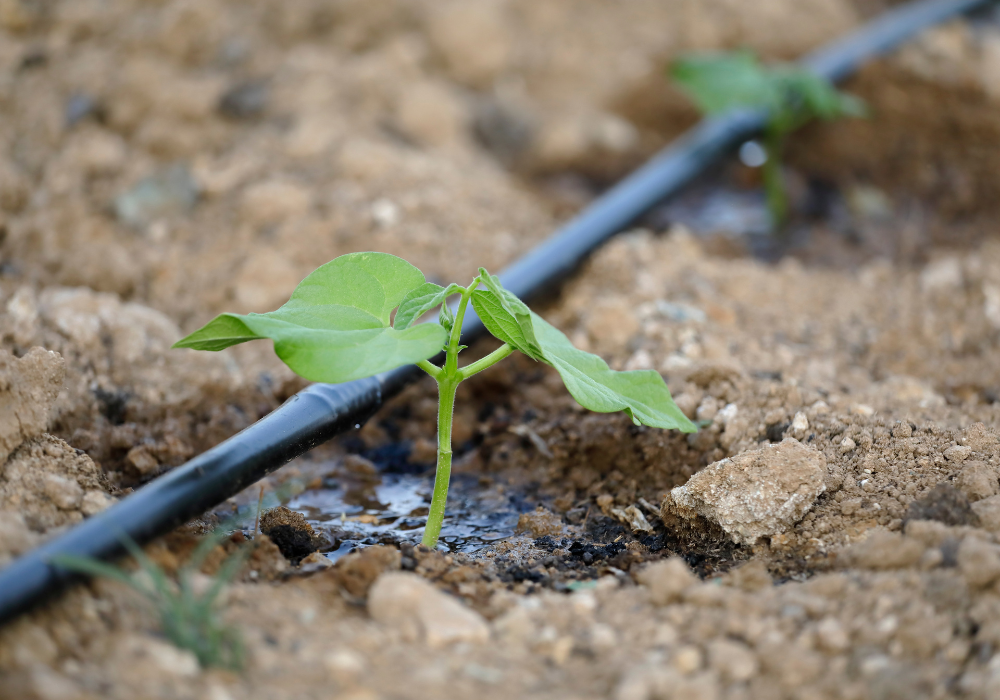
At the heart of a drip irrigation system is its ability to deliver water efficiently. Instead of spraying water over a large area, drip systems use a network of tubing to direct water straight to the soil around each plant. This minimizes evaporation and ensures that every drop counts.
Root Zone Targeting
The magic of drip irrigation lies in its focus on the root zone. By applying water directly to the roots, these systems promote deep root growth, leading to stronger and healthier plants. This method reduces water loss due to runoff and evaporation, making it especially valuable in areas with water restrictions.
Emitters
Emitters are the small components that release water from the tubing to the soil. They come in various designs, each custom to different watering needs. Some emitters drip slowly, while others may have a slight spray pattern. The key is that they provide consistent and controlled water flow, ensuring that plants receive just the right amount of water.
By understanding these core elements of drip irrigation systems, gardeners can make informed decisions to optimize their watering strategies. With drip irrigation, every drop is used wisely, supporting both plant health and water conservation efforts.
Drip Irrigation System Benefits
When it comes to watering your garden, drip irrigation systems stand out for their exceptional efficiency and effectiveness. Let’s explore the key benefits that make this system a wise choice for gardeners and landscapers alike.
Water Efficiency
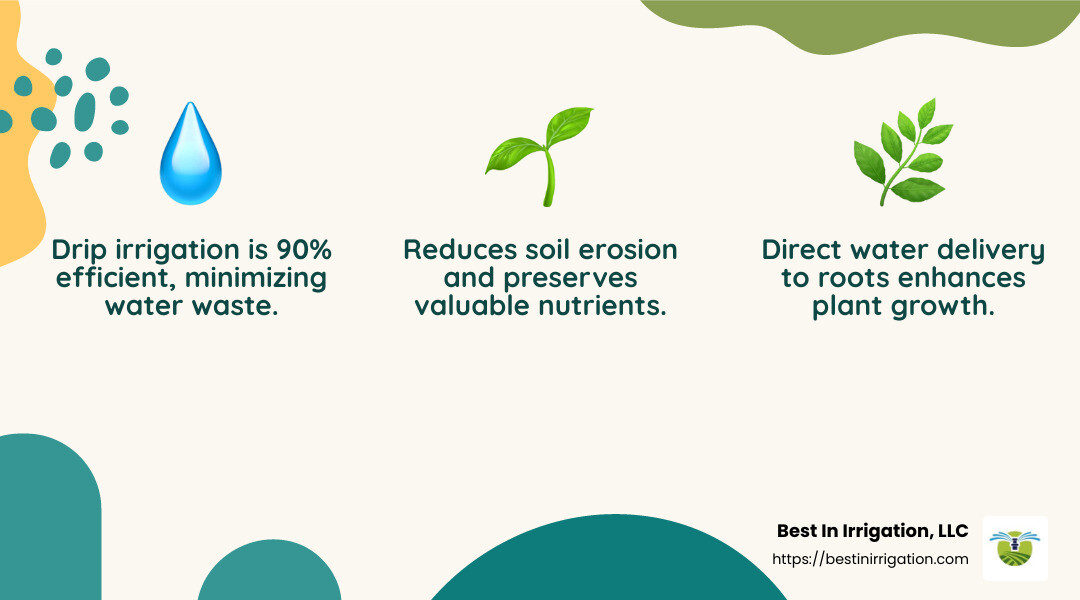
One of the most significant advantages of drip irrigation is its remarkable water efficiency. Traditional irrigation methods, like sprinklers, can waste up to 50% of water due to evaporation and runoff. In contrast, drip systems are about 90% efficient. They deliver water directly to the plant roots, minimizing waste and ensuring that every drop is used effectively. This is especially crucial in regions with water restrictions or during dry seasons.
Reduced Runoff
Runoff is a common problem with conventional watering systems, leading to soil erosion and nutrient loss. Drip irrigation minimizes this issue by applying water slowly and directly to the soil. This gentle delivery method allows the soil to absorb water more effectively, reducing the likelihood of runoff. By keeping water where it’s needed, drip systems help maintain soil integrity and prevent valuable nutrients from washing away.
Nutrient Retention
In addition to reducing runoff, drip irrigation systems support nutrient retention in the soil. When water flows over the surface, it can carry away essential nutrients needed for plant growth. Drip irrigation reduces this risk by delivering water precisely to the root zone. This targeted watering approach helps keep nutrients in place, promoting healthier and more robust plant growth.
In summary, drip irrigation systems offer substantial benefits in terms of water efficiency, reduced runoff, and nutrient retention. These advantages make them an excellent choice for anyone looking to water wisely and sustainably.
By focusing on these benefits, you can ensure that your gardening efforts are both effective and environmentally friendly. Now, let’s dive into the specific advantages of adopting drip irrigation, including how it contributes to water conservation and improved plant health.
Advantages of Drip Irrigation
Water Conservation
Drip irrigation is a champion of water savings. Unlike traditional methods that can waste up to half the water used, drip systems achieve about 90% efficiency. This efficiency means you use less water while keeping your plants healthy. By delivering water directly to the roots, drip irrigation minimizes evaporation and ensures that every drop counts. This is crucial in areas with water restrictions or during dry spells.
Improved Plant Health
Drip irrigation doesn’t just save water; it also promotes healthier plants. By keeping foliage dry, this system helps reduce the spread of diseases like fungus. Wet leaves are a breeding ground for problems, but with drip irrigation, plants receive water at the roots where it’s needed most. This method prevents mildew and fungal infections, leading to stronger, more resilient plants.
Soil and Nutrient Management
Another significant benefit of drip irrigation is its role in soil and nutrient management. Traditional watering can lead to soil erosion and nutrient loss, as water runs off and carries away valuable soil components. Drip irrigation minimizes these issues by applying water slowly and directly to the root zone. This approach not only reduces erosion but also helps retain nutrients in the soil, ensuring your plants have what they need to thrive.
Drip irrigation systems offer a trifecta of benefits: they conserve water, improve plant health, and manage soil nutrients effectively. These advantages make them an ideal choice for gardeners seeking a sustainable and efficient watering solution.
Next, let’s explore some of the challenges and considerations when implementing a drip irrigation system.
Challenges and Considerations
System Maintenance
While drip irrigation systems offer many benefits, they do come with some challenges, particularly in maintenance. One common issue is clogging. Emitters can get blocked by dirt or mineral deposits, especially if your water is hard or contains a lot of calcium. This can reduce the efficiency of the system and may require frequent attention to keep everything running smoothly.
Regular checks are crucial. Inspect filters, emitters, and tubing to ensure they are free from blockages. Cleaning filters and flushing the lines periodically can help prevent clogs. A well-maintained system is key to maximizing water efficiency and plant health.
Installation Requirements
Installing a drip irrigation system requires careful planning and the right materials. Start by sketching a layout of your garden, noting where pipes and emitters will go. This helps ensure even coverage and prevents over-watering in any section.
You’ll need specific materials for setup, including tubing, connectors, and emitters. Choosing the right size and type is essential for system performance. Also, consider using a pressure regulator to manage water flow and prevent damage to the system.
Proper setup is critical. Ensure that the tubing is staked securely and that emitters are placed close to the plants’ root zones. Avoid burying the tubing, as this can lead to clogging and make maintenance more difficult.
While the initial setup can be complex, investing time in planning and installation can lead to a highly efficient watering system.
Next, we’ll address some frequently asked questions about drip irrigation systems.
Frequently Asked Questions about Drip Irrigation Systems
What is the main advantage of drip irrigation?
The main advantage of drip irrigation is its remarkable water efficiency. Drip systems deliver water directly to the plant’s root zone, ensuring minimal waste. This targeted method helps conserve water by reducing runoff and evaporation. In fact, drip irrigation systems are about 90% efficient in water usage. This means more water reaches the plants, and less is lost to the environment.
Is a drip irrigation system worth it?
Absolutely! A drip irrigation system is a wise investment for several reasons. First, it offers significant cost savings. By using water more efficiently, you can reduce your water bills over time. In areas with water restrictions, this system allows you to maintain a healthy garden without breaking the rules. Plus, the consistent moisture delivery can lead to healthier plants and improved growth, adding even more value to your garden.
What are the downsides of drip irrigation?
While drip irrigation offers many benefits, there are some challenges to consider. Clogging is a common issue, especially if your water contains minerals like calcium. This can block emitters and reduce system efficiency. Regular maintenance is essential to keep everything working smoothly. You’ll need to check and clean filters, flush lines, and inspect emitters to prevent blockages. Additionally, the initial installation can be complex and may require an investment in materials and time. However, with proper care, a drip irrigation system can be a highly effective and efficient solution for your garden.
Conclusion
Choosing the right irrigation system can make all the difference in maintaining a lush, healthy landscape. At Best In Irrigation, LLC, we specialize in providing custom solutions custom to the unique needs of both residential and commercial properties in Massachusetts. With our focus on water conservation and cutting-edge technology, we ensure your landscape thrives while minimizing water usage.
Our expertise in the New England region gives us a deep understanding of local climate conditions and soil types, allowing us to design systems that are both efficient and effective. Whether you’re looking to reduce water bills or promote healthier plant growth, our drip irrigation systems offer numerous benefits, including water efficiency, improved plant health, and nutrient retention.
We pride ourselves on our ability to create personalized irrigation systems that address specific challenges and optimize water use. Our team of experts is dedicated to providing ongoing support and maintenance, ensuring your system performs at its best for years to come.
Ready to transform your landscape with a drip irrigation system? Contact us today for a free estimate and let us help you achieve a beautiful, sustainable garden. With Best In Irrigation, LLC, you can trust your landscape is in good hands.
