


The Evolution of Lawn Sprinklers: From Basic to Brilliant
Looking for cool lawn sprinklers to upgrade your yard? Here’s a quick answer:
Top Cool Lawn Sprinkler Types:
– Smart Sprinklers: App-controlled, weather-adaptive systems like OtO that can save up to $4,240 over two seasons
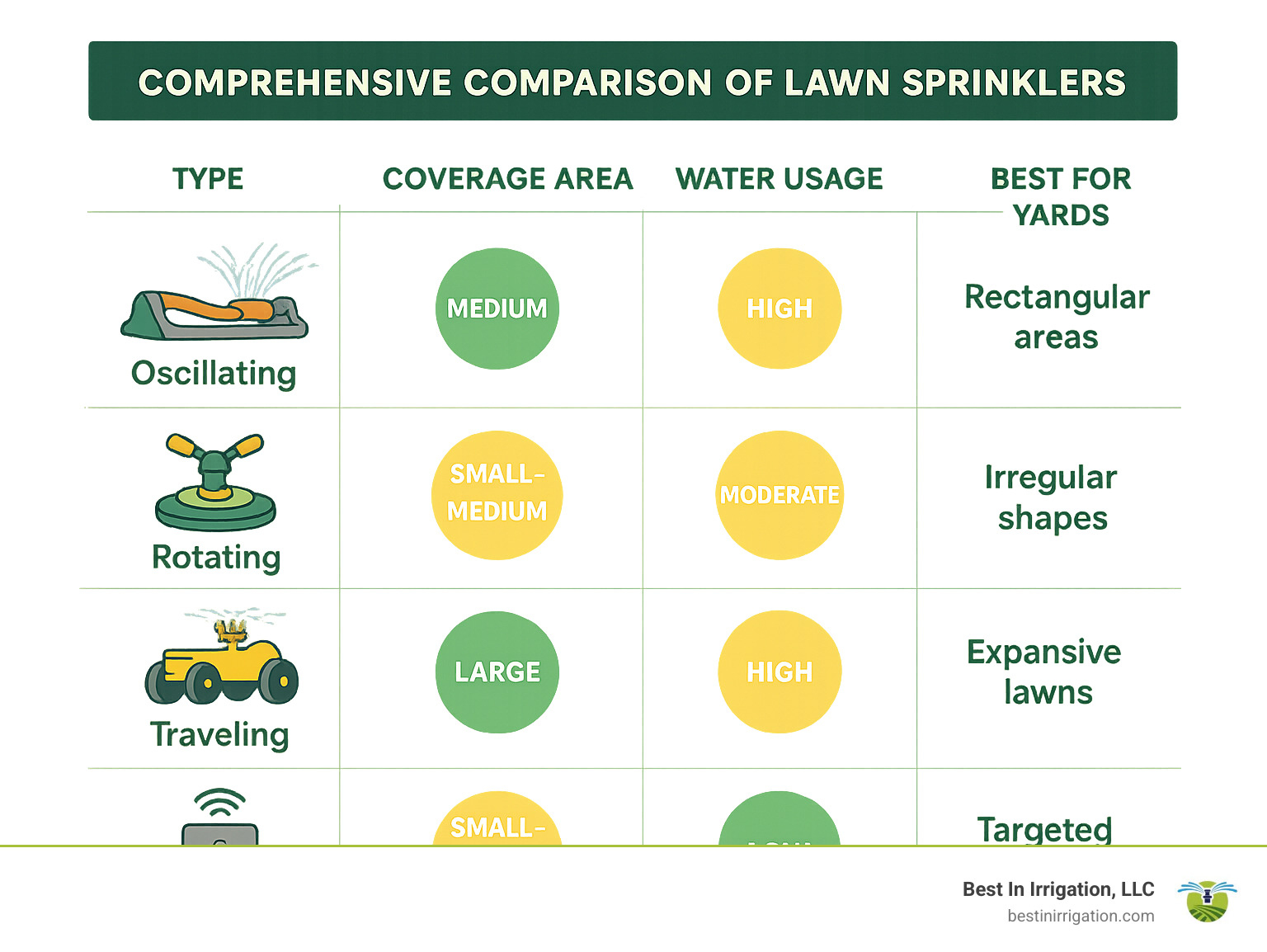
– Oscillating Sprinklers: Cover up to 4,973 square feet with back-and-forth motion
– Traveling Sprinklers: Self-propelled units covering up to 13,500 square feet
– Multi-Pattern Turrets: Offering 9+ spray patterns for customized watering
– Tripod Sprinklers: Liftd units that simulate rainfall from above
The humble lawn sprinkler has come a long way from the basic garden hose attachment. Today’s cool lawn sprinklers combine innovative technology, water-saving features, and even entertainment value to transform the mundane task of watering your lawn into something, well, cool.
Whether you’re looking to conserve water, automate your irrigation, or simply add a fun element to your yard, modern sprinklers offer solutions that would have seemed like science fiction just a decade ago. From smart systems that check the weather forecast before deciding whether to water, to traveling sprinklers that steer your yard like tiny tractors, the options are both practical and surprisingly entertaining.
According to our research, the average lawn sprinkler uses about 630 gallons of water per hour with a standard hose. But newer models can dramatically reduce this consumption while still maintaining a lush, green yard. Most lawns only need about 1 inch of water per week, which can be efficiently delivered in two 30-minute sessions with the right sprinkler.
As Massachusetts homeowners increasingly seek ways to maintain beautiful landscapes while being environmentally conscious, the evolution of sprinkler technology couldn’t come at a better time. The right cool lawn sprinkler can help you achieve that perfect balance between a gorgeous yard and responsible water usage.
Handy cool lawn sprinklers terms:
– best micro sprinkler
– best retic sprinklers
– best irrigation system
What Makes a Sprinkler Truly “Cool”?
When we talk about cool lawn sprinklers, we’re not just referring to water temperature. Today’s innovative sprinklers have earned their “cool” status by blending smart technology with practical design – making lawn care easier, more efficient, and yes, even a bit fun!
The coolest sprinklers on the market incorporate precision nozzles that let you tailor water distribution to your yard’s unique shape and needs. No more wasting water on the driveway or sidewalk! Many modern systems now include weather-skip technology that automatically cancels watering when rain is detected or forecasted – a feature that scientific research shows can reduce water usage by 15-20%.
Material quality makes a huge difference in sprinkler performance and longevity. While metal sprinklers (particularly brass or zinc models) have traditionally outlasted plastic ones by several seasons, today’s high-quality UV-resistant polymers are closing the durability gap. At Best In Irrigation, we’ve seen these advanced polymers withstand our harsh Massachusetts winters remarkably well.
Perhaps what makes today’s sprinklers truly cool is their focus on sustainability. With water conservation becoming increasingly important, especially during our occasional New England dry spells, sprinklers that deliver adequate moisture while minimizing waste represent the gold standard. The most efficient models can reduce water usage by up to one-third compared to traditional sprinklers while keeping your lawn lush and healthy.
And let’s not forget the fun factor! Many innovative sprinklers incorporate playful designs that make watering an entertaining activity. There’s something undeniably joyful about watching kids dash through a sprinkler on a hot summer day – the same sprinkler that’s keeping your lawn green.
Stand-Out Features to Look For
When shopping for cool lawn sprinklers, certain features separate the truly innovative models from basic options. Multi-pattern heads offer up to 9 different spray patterns, letting you water everything from narrow garden beds to wide-open lawns with the same device. This versatility means you don’t need multiple sprinklers for different areas.
Flow control dials are another game-changer, allowing you to adjust water pressure right at the sprinkler rather than running back and forth to the spigot. This precise control helps prevent overwatering and runoff – something we at Best In Irrigation are passionate about.
We’re particularly excited about the emergence of solar-powered sprinkler components. These innovative systems use small solar panels to power smart features without requiring batteries or electrical connections – perfect for remote areas of your yard where power access is limited.
Rain sensors have saved our Massachusetts customers countless gallons of water over the years. These clever devices detect when it’s raining and automatically shut off your sprinkler system – no more embarrassing (and wasteful) sprinklers running during a downpour!
For those with delicate plants or new seedlings, mist modes create a gentle, fog-like spray that won’t damage fragile growth or wash away soil. And families with children particularly appreciate kid-play safe designs that offer efficient lawn watering but can switch to safe water play with a simple adjustment.
The right cool lawn sprinkler isn’t just about keeping your grass green – it’s about finding that perfect balance between conservation, convenience, and maybe even a little bit of summer fun.
Cool Lawn Sprinklers for Every Yard Size
Finding the perfect cool lawn sprinkler is a lot like shopping for shoes – one size definitely doesn’t fit all! Your yard’s unique dimensions and shape play a huge role in determining which sprinkler will give you that lush, green lawn without wasting water or leaving dry patches.
Small-Yard Superstars — Pocket-Sized Cool Lawn Sprinklers
If you’re working with a cozy urban yard, balcony garden, or just a modest patch of grass, don’t worry – good things come in small packages!
Stationary turret sprinklers are the tiny titans of small spaces, covering areas up to 1,200 square feet with impressive efficiency. I love recommending these to our Massachusetts clients with limited space because they pack a punch despite their compact size. The best ones feature durable all-metal construction that won’t tip over even when your water pressure is cranked up high. With a simple twist, you can switch between multiple spray patterns to perfectly match your yard’s needs.
For those quirky-shaped yards with corners and curves, micro-rotors are absolute game-changers. These low-profile sprinklers can be fine-tuned to water only where you want, keeping water off your walkways, patio, and your neighbor’s property (they’ll thank you for that!).
Got delicate flowers or fresh seedlings? Gentle mist sprinklers create a cloud-like spray that won’t wash away soil or damage tender plants. After years of installing irrigation systems throughout Massachusetts, we’ve seen how these gentle giants can transform vegetable gardens and flower beds with their nurturing hydration.
For yards with obstacles like trees or garden furniture, spike-based systems are your best friend. You can position them strategically around obstacles and link them together to create a custom watering network that fits your unique space perfectly.
Mid-Size Marvels — Versatile Cool Lawn Sprinklers
Medium yards (roughly 1,000 to 5,000 square feet) need sprinklers with a bit more range but still plenty of precision.
Adjustable oscillating sprinklers are the true workhorses for mid-sized lawns. The best models can cover an impressive 4,973 square feet and feature intuitive twin touch controls that let you adjust both width and range. If you’re using well water (as many of our Massachusetts customers do), look for models with dirt-resistant drives that won’t get gunked up with sediment or minerals.
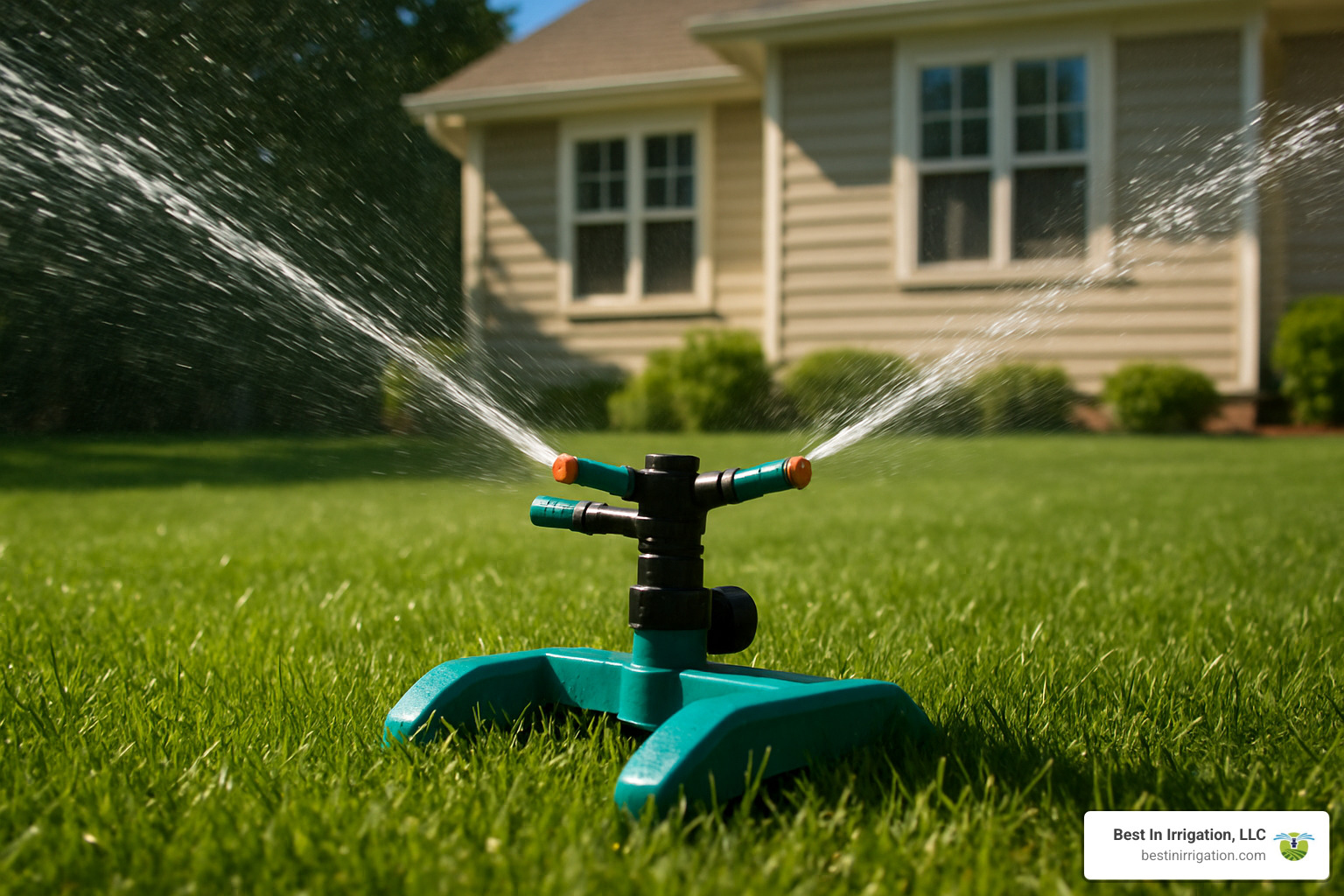
Gear-drive rotors are like the luxury sedans of the sprinkler world – smooth, quiet, and sophisticated. Their internal gearing creates consistent rotation without the “tick-tick-tick” noise of impact sprinklers. You can easily adjust them to cover partial or full circles, making them perfect for lawns with varying shapes or sections that need different amounts of water.
After 9 years of hands-on experience throughout Massachusetts, we’ve finded that most mid-size yards benefit from a combination approach. Using different sprinkler types for different areas of your property – perhaps oscillating sprinklers for open areas and micro-rotors for narrow strips – creates the most efficient watering system.
Large-Lawn Legends — High-Coverage Cool Lawn Sprinklers
Got a sprawling yard exceeding 5,000 square feet? You’ll need sprinklers specifically designed to cover vast areas without wasting water or leaving you with a sky-high water bill.
Tripod impact sprinklers are the undisputed champions of large-area coverage. Mounted on adjustable stands reaching heights of up to 48 inches, these powerful performers create a rainfall effect by spraying water from above. The best models can cover a diameter of up to 85 feet and adjust from 25° to a full 360° rotation. Their sturdy metal construction ensures they’ll withstand high water pressure season after season.
Perhaps the most fascinating option for large lawns is the traveling tractor sprinkler. These self-propelled marvels follow your garden hose path, watering as they go. A single traveling sprinkler can cover up to 13,500 square feet in one session – that’s three average-sized lawns! They’re particularly brilliant for irregularly shaped properties where you’d otherwise be constantly moving stationary sprinklers around.
For optimal performance with large-coverage sprinklers, hose diameter makes a significant difference:
- 1/2-inch hose: Delivers approximately 630 gallons per hour at 60 PSI
- 5/8-inch hose: Delivers approximately 1,020 gallons per hour at 60 PSI
- 3/4-inch hose: Delivers approximately 1,860 gallons per hour at 60 PSI
For large lawns, we typically suggest at least a 5/8-inch hose, with 3/4-inch being ideal for traveling sprinklers and high-output impact models. The increased flow not only improves coverage but also maintains consistent pressure throughout your system, ensuring every corner of your lawn gets the hydration it needs.
Smart vs. Traditional: Which Twist Fits Your Routine?
The world of lawn sprinklers has evolved into two distinct paths: innovative smart systems and improved traditional designs. Your lifestyle, tech comfort level, and specific watering needs will guide which option makes the most sense for your yard.
Smart controllers have revolutionized lawn irrigation. These Wi-Fi-connected marvels sync with weather services to fine-tune your watering schedule based on actual conditions. Expecting rain tomorrow? Your smart sprinkler already knows and will skip the scheduled watering. Facing a scorching heat wave? It’ll automatically increase hydration to keep your lawn lush.
The OtO smart sprinkler represents the cutting edge of this technology, featuring precision nozzles that let you create custom-shaped watering zones right from your smartphone. This means you can target your grass perfectly while avoiding sidewalks, driveways, and garden features. The water savings are impressive – research shows smart sprinklers can save homeowners up to $4,240 over two 8-month seasons compared to conventional in-ground systems.
Many of these intelligent systems integrate seamlessly with voice assistants like Amazon Alexa and Google Assistant. Imagine starting or adjusting your watering schedule with a simple voice command while preparing dinner or relaxing on the couch!
Traditional hose-end cool lawn sprinklers haven’t been left behind, though. They’ve evolved with superior materials and mechanisms while maintaining their plug-and-play simplicity. The beauty of these upgraded classics? No programming required, no Wi-Fi connection needed, and absolutely no learning curve. For hands-on homeowners who enjoy active yard maintenance, these improved traditional models offer the perfect blend of improved technology with familiar operation.
In our 9 years of experience at Best In Irrigation, LLC, we’ve found that Massachusetts homeowners typically choose between smart and traditional systems based on how much time they want to invest in managing irrigation. If you travel frequently or prefer a “set it and forget it” approach, smart systems deliver exceptional convenience. If you enjoy being actively involved in your yard care or simply prefer mechanical solutions over digital ones, upgraded traditional cool lawn sprinklers might be your perfect match.
More info about automatic controllers
Setting Up a Smart Cool Lawn Sprinkler
If you decide to accept the future with a smart cool lawn sprinkler system, here’s what the setup process typically involves:
- Wi-Fi pairing: Your smart sprinkler will connect to your home network through a straightforward app-guided process. Most require standard 2.4GHz Wi-Fi rather than the newer 5GHz band, so double-check that your network supports this.
- Zone mapping: The most sophisticated systems allow you to use your smartphone to “draw” custom watering zones on a photo or map of your yard. This precision targeting is the secret behind the remarkable water efficiency of smart sprinklers.
- Weather integration: During setup, you’ll authorize the system to access local weather data. This enables intelligent features like Wind Skip, which prevents watering during breezy conditions when evaporation and drift would waste water.
- Firmware updates: Like all smart devices, these sprinklers receive occasional software updates to improve performance and add new features. Most update automatically when connected to Wi-Fi.
The initial configuration takes about 30-45 minutes, but once set up, smart sprinklers practically run themselves. Many of our Massachusetts clients tell us they haven’t touched their controller in months because the system handles everything automatically.
Dialing-In a Classic Sprinkler for Peak Performance
Traditional cool lawn sprinklers may not have digital brains, but with proper setup, they can still deliver excellent results:
- Pressure checks: Before running any sprinkler, check your water pressure. Most residential systems operate between 30-60 PSI. Insufficient pressure leads to poor coverage, while excessive pressure can damage the sprinkler mechanism.
- Manual timers: While not as sophisticated as smart controllers, today’s hose timers have improved dramatically. Look for models with multiple programs and rain delay features to add automation to traditional sprinklers.
- Staggered placement: For optimal coverage with traditional sprinklers, follow the “head-to-head” principle—position sprinklers so their spray just reaches neighboring sprinklers. This creates even watering without frustrating dry spots.
- Morning watering: Set timers or plan to water in early morning (4-7 AM) when evaporation is minimal and wind is typically lightest. This simple timing adjustment maximizes the amount of water that actually reaches your plant roots.
Picking the Perfect Fit: Shape, Materials & Coverage Math
Finding your ideal cool lawn sprinkler isn’t just about buying what looks nice—it’s about matching the right tool to your unique yard. Think of it as finding the perfect puzzle piece for your outdoor space.
Start by creating a simple map of your yard. You don’t need fancy software—a rough sketch on paper works great, or if you’re tech-savvy, try a lawn measurement app on your phone. Mark down trees, flower beds, and those awkward corners that never seem to get enough water. This little bit of homework will save you tons of frustration later!
“Most of our customers are surprised by how much more efficient their watering becomes with the right sprinkler placement,” we often tell homeowners at Best In Irrigation, LLC. “It’s like the difference between watering with a fire hose versus a gentle rain.”
For those tidy rectangular yards, oscillating sprinklers typically provide the most even coverage. If your yard resembles more of a circle or has an irregular shape, rotating or impact sprinklers that adjust to specific arc patterns will be your best friends.
Calculating your coverage needs doesn’t require an engineering degree. For rectangular areas, simply multiply:
Length × Width = Area in square feet
For circular areas (like that space around your favorite maple tree):
3.14 × radius² = Area in square feet
When it comes to materials, quality matters—especially in our sometimes harsh Massachusetts climate. After installing systems throughout New England for 9 years, we’ve learned that metal sprinklers made from brass, zinc, or aluminum typically withstand winter storage better and last 5+ years with basic care. That said, modern UV-resistant polymer sprinklers have come a long way! The best ones now include metal components at stress points while staying lightweight and resistant to corrosion.
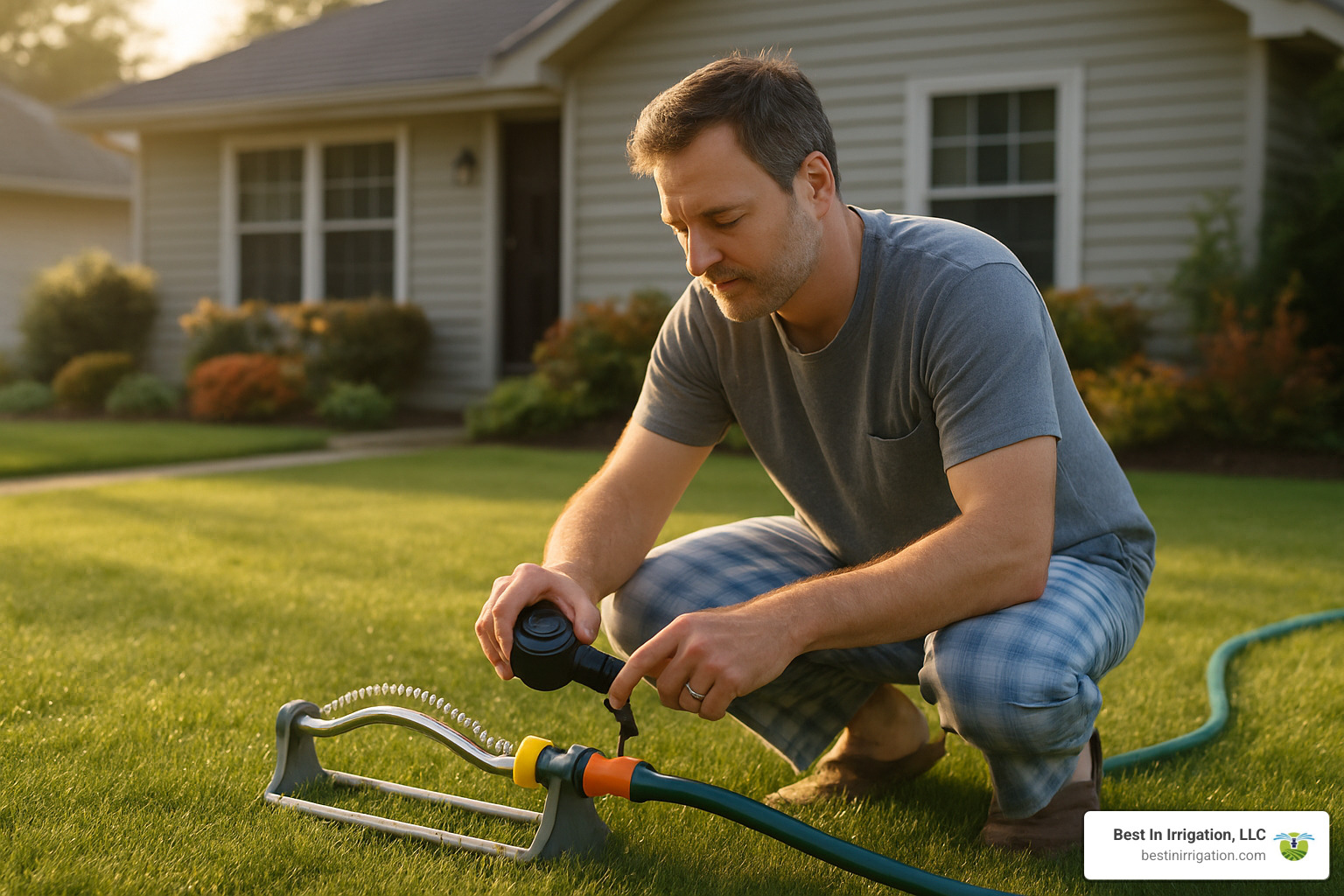
Whatever material you choose, regular nozzle cleaning is essential. Those tiny water minerals build up over time, so look for models with easy-access nozzles or built-in cleaning tools. Your future self will thank you when you’re not poking at clogged holes with a safety pin!
Here’s a handy comparison of the main sprinkler types:
| Sprinkler Type | Coverage Area | Best For | Water Efficiency | Durability |
|---|---|---|---|---|
| Oscillating | Up to 4,973 sq ft | Rectangular yards | Medium | Medium |
| Rotating | 1,200-3,600 sq ft | Circular areas | High | High |
| Pulsating/Impact | Up to 5,670 sq ft | Large open spaces | Medium-High | Very High |
| Traveling | Up to 13,500 sq ft | Irregular large yards | High | High |
More info about sprinkler systems
Quick Calculator: How Many Minutes Should I Water?
“How long should I run my sprinkler?” might be the question we hear most often at Best In Irrigation, LLC. The answer isn’t one-size-fits-all, but we can give you a reliable method to figure it out.
Most lawns need about 1 inch of water weekly—ideally split into two sessions to encourage those roots to grow deep and strong. Here’s a simple test anyone can do:
- Place a few flat-bottomed containers (empty tuna cans work perfectly) around your yard
- Run your sprinkler for exactly 30 minutes
- Measure the water depth in each container and find the average
- Use this formula: (1 ÷ average depth) × 30 = minutes needed for 1 inch
Let’s say your sprinkler delivers about 1/4 inch of water in half an hour. You’d need to run it for 120 minutes total each week—best split into two 60-minute sessions a few days apart.
Your water pressure makes a big difference too. A system running at 60 PSI will water much faster than one at 30 PSI. If your sprinkler seems to be underperforming, a pressure check might solve the mystery.
During those inevitable New England dry spells, be sure to check local water restrictions. You can often get by with reducing to 3/4 inch per week if needed. Focus on deeper, less frequent watering to train your grass to develop drought-resistant roots. Your lawn will thank you when those August heat waves hit!
Water Wisely: Setup, Scheduling & Maintenance Hacks
After installing thousands of irrigation systems across Massachusetts over the past 9 years, we’ve gathered quite a few tricks of the trade. Let me share some of our best practices for getting the most from your cool lawn sprinklers while being kind to both your water bill and the environment.
The early bird catches the worm—and the perfect watering window! Schedule your sprinklers to run between 4:00 and 7:00 AM. This magical morning time reduces evaporation while giving your grass plenty of time to dry before evening, helping prevent those pesky fungal diseases that love dampness. If mornings just aren’t possible with your schedule, late afternoon (4:00-6:00 PM) works as your next best option.
Your lawn’s thirst changes with the seasons, just like our New England weather. In our cooler spring and fall months, you can dial back to watering just once weekly. When summer heat waves hit, you might need to bump up to twice weekly sessions. The beauty of today’s smart controllers is they handle these seasonal tweaks automatically by monitoring temperature and rainfall data.
Winter in Massachusetts can be brutal on irrigation systems. Before that first hard freeze arrives, make winterization your priority—disconnect hoses, drain all components, and store portable cool lawn sprinklers safely indoors. For in-ground systems, professional blowout service removes every drop of water to prevent expensive freeze damage come spring.
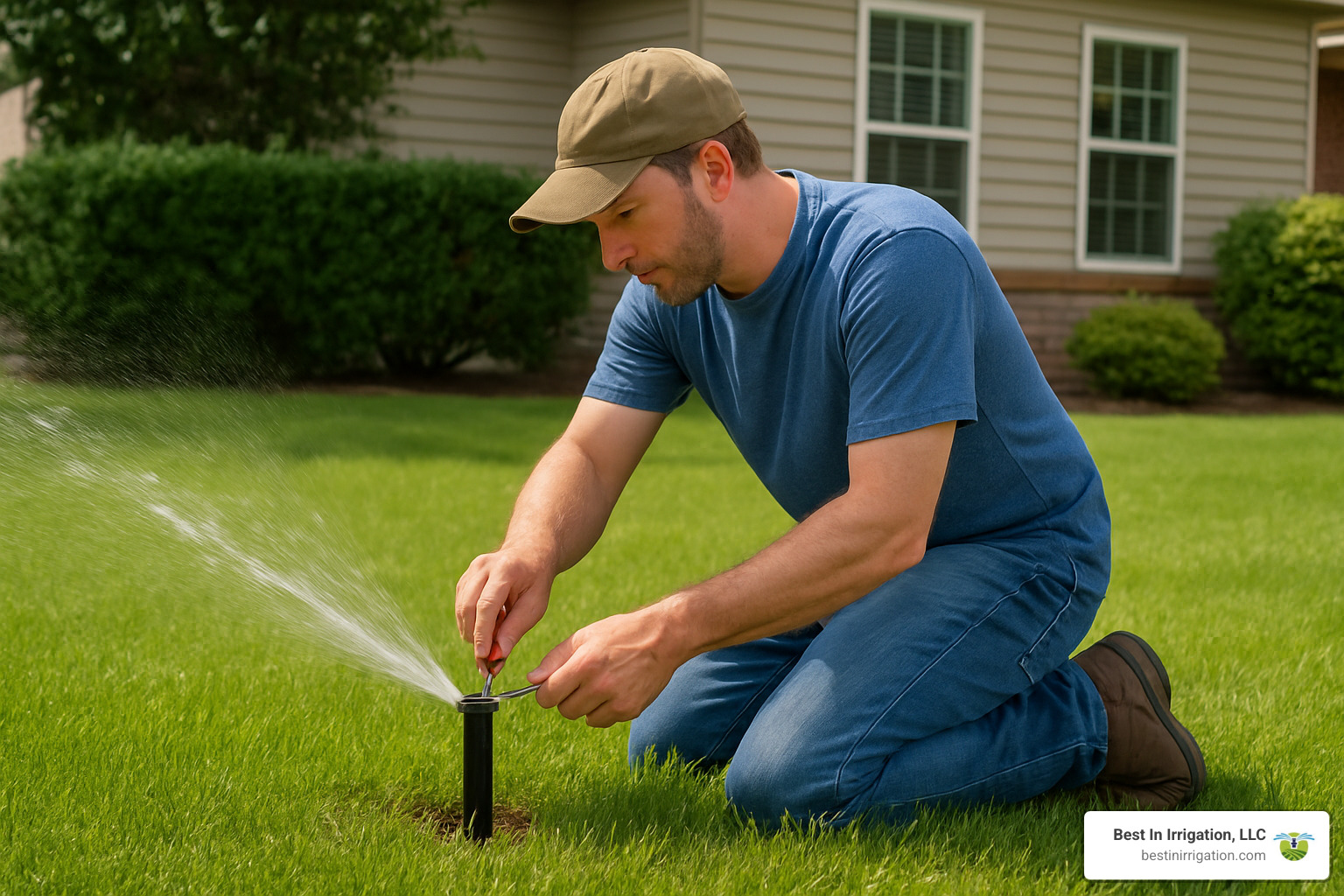
Those perfect spray patterns won’t stay perfect without a little TLC. Mineral deposits and tiny debris love to clog nozzles over time. A quick monthly cleaning during watering season keeps everything flowing smoothly. Most quality sprinklers include their own cleaning tool or feature nozzles designed for easy maintenance.
Even without a fancy smart system, you can make your traditional setup more efficient with a simple rain sensor retrofit. These affordable devices are like little weather watchers that prevent your system from running when Mother Nature has already handled the watering for you. They’re simple to install but make a huge difference in both water conservation and your utility bills.
For those with existing irrigation systems, consider scheduling a professional efficiency audit. At Best In Irrigation, LLC, we regularly identify simple adjustments that can reduce water usage by 15-30% while actually improving lawn health. Sometimes it’s just a matter of fixing a tilted sprinkler head or adjusting a spray pattern.
Kid-&-Pet Fun Without Wasting Water
Who says being water-wise can’t be wildly fun? Several cool lawn sprinklers pull double-duty as summer entertainment centers without compromising conservation efforts.
Those whirling flower-shaped sprinklers aren’t just adorable—they combine efficient lawn watering with visual delight and play value. They spin and dance while creating gentle spray patterns that work perfectly for both your perennials and your playful kids.
Families with children and four-legged friends might consider dedicated splash pads that connect right to your irrigation system. The beauty of these is they can be activated only for playtime, then return to efficient lawn-watering mode when the fun is done.
When setting up play-friendly watering zones, position sprinklers with adjustable arcs to direct water only where it’s needed—on the lawn, not your patio or driveway. A simple timer can limit play sessions to 20-30 minutes, striking that perfect balance between summer fun and responsible water use.
Safety always comes first—ensure all electrical connections are properly protected with GFCI outlets, and double-check that there are no tripping hazards from hoses or sprinkler bases. Place your play sprinklers on flat, grassy areas to minimize both runoff and the mud puddles that inevitably follow (though let’s be honest, kids love those puddles!).
For garden beds and plants that need consistent moisture but aren’t part of the play zone, consider adding a separate drip irrigation sideline. This targeted approach delivers water exactly where plants need it without the spray, keeping your flowers happy while the kids stay cool.
With a thoughtful setup, your lawn can be both beautifully maintained and the neighborhood’s favorite summer hangout—all while keeping your water usage responsible and your conscience clear.
Frequently Asked Questions about Cool Lawn Sprinklers
Do smart sprinklers really save money?
Absolutely! While smart sprinklers might make your wallet a bit lighter upfront, they typically deliver impressive savings over time. Our Massachusetts customers are often surprised by how quickly these systems pay for themselves. Research shows that advanced systems like the OtO can save homeowners up to $4,240 over two 8-month seasons compared to traditional in-ground systems.
These savings come from several clever features working together. Smart sprinklers check the weather forecast and automatically skip watering when rain is expected. They use precision zone control to ensure water lands exactly where it’s needed—on your grass, not your driveway. They also adjust automatically as seasons change and can even detect leaks before they become costly problems.
Most of our clients at Best In Irrigation, LLC report that their smart systems paid for themselves within 1-2 seasons through reduced water bills. Your exact savings will depend on local water rates, the size of your lawn, and how efficiently (or inefficiently) you were watering before.
Which sprinkler covers the most area without moving it?
If you’re looking to water the maximum area without playing musical sprinklers all afternoon, tripod-mounted impact sprinklers are the champions of stationary coverage. These liftd powerhouses can spray water up to 85 feet in diameter—covering approximately 5,670 square feet from a single position. They simulate natural rainfall by spraying from above, making them perfect for large, open lawns.
For truly impressive coverage without lifting a finger, traveling sprinklers are the way to go. These fascinating little “tractors” follow the path of your garden hose while watering, covering up to 13,500 square feet in a single journey. They’re especially valuable for oddly-shaped properties where stationary sprinklers would need constant repositioning.
If your yard is more rectangular (like most suburban lots), a high-quality oscillating sprinkler can cover up to 4,973 square feet while creating that satisfying back-and-forth pattern we all find oddly mesmerizing.
How often should I run my sprinkler for a healthy lawn?
This is one of the most common questions we hear at Best In Irrigation, LLC, and the answer depends on several factors—but we can provide some helpful guidelines that work well for Massachusetts lawns.
Most established lawns thrive with about 1 inch of water per week, ideally divided into two watering sessions rather than daily sprinkles. This approach encourages grass to develop deeper, more drought-resistant roots. The exact duration depends on your specific sprinkler’s output (that’s where the tuna can test mentioned earlier comes in handy).
In practical terms, your watering schedule should follow the seasons:
* Spring and Fall: Once-weekly watering is typically sufficient when temperatures are moderate
* Summer: Bump up to twice weekly during hot periods, especially July and August
* Rainy Periods: Give your sprinkler (and water bill) a break when Mother Nature does the work for you
For newly seeded or sodded lawns, you’ll need more frequent, lighter watering until roots establish. We generally recommend daily light watering for the first two weeks, then gradually transitioning to the standard schedule over the next month.
The most reliable indicator of proper watering is your lawn itself—if you can see footprints remaining visible after walking across the grass, it’s telling you it’s thirsty.

Conclusion
The world of cool lawn sprinklers has come a long way from the simple hose attachments of yesteryear. Today’s options offer Massachusetts homeowners an exciting blend of technology, efficiency, and yes—even a bit of fun—for keeping lawns lush and green.
From smart systems that check tomorrow’s weather forecast before deciding whether to water, to traveling sprinklers that steer your yard like tiny lawn tractors, modern irrigation solutions prioritize both performance and conservation. These innovations aren’t just cool gadgets—they’re practical tools that can transform your relationship with lawn maintenance.
At Best In Irrigation, LLC, we’ve spent nearly a decade helping homeowners throughout Massachusetts find irrigation solutions that match their unique landscapes and lifestyles. We’ve seen how the right sprinkler system can revitalize struggling lawns while simultaneously reducing water usage and utility bills. Many of our customers are surprised to learn that their new system can be fully installed in just one day, with minimal disruption to their property.
What makes today’s cool lawn sprinklers truly special is how they balance eco-friendly operation with genuine convenience. Whether you choose a cutting-edge smart controller that handles everything automatically or a high-quality traditional sprinkler that gives you hands-on control, you’re investing in both your landscape and your free time.
After all, the ultimate purpose of any irrigation system isn’t just maintaining your lawn—it’s creating more opportunities for you to enjoy it. With the right sprinklers handling the watering, you can focus on the backyard barbecues, family games, and peaceful moments that make your outdoor space special.
Ready to find how modern irrigation technology can transform your approach to lawn care? Our team of irrigation experts specializes in matching Massachusetts homeowners with perfect watering solutions custom to their specific needs, preferences, and property characteristics.
More info about irrigation system installation
