


Building sprinkler system installation is a crucial aspect of fire safety, offering a shield against potential fires. Imagine the comfort of knowing your home or building is constantly protected by an automatic system that detects and combats fires even before they become dangerous. A sprinkler system ensures not only safety but also peace of mind.
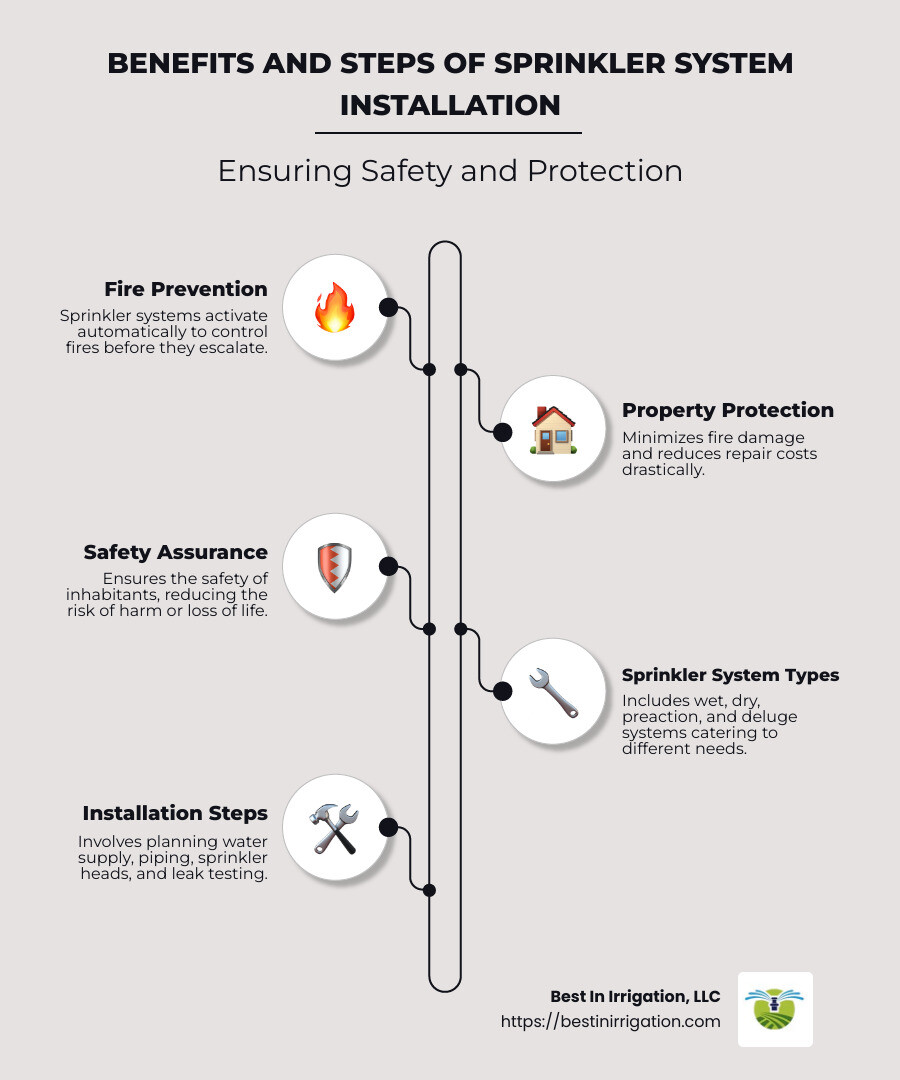
Key Benefits of Building Sprinkler System Installation:
1. Fire Prevention: Sprinkler systems act fast, often controlling fires before emergency services arrive.
2. Property Protection: By minimizing fire damage, sprinkler systems can save homeowners thousands in repair costs.
3. Safety Assurance: Protects inhabitants and reduces the risk of harm or loss of life.
As construction practices and materials evolve, homes and buildings increasingly rely on sprinkler systems for improved safety. Despite their importance, the road to installation can be littered with complexities. This guide will equip you with the knowledge needed for a successful installation.
Building sprinkler system installation terms you need:
– cost of sprinkler system in house
– house sprinkler system installation
– new sprinkler system installation
Understanding Building Sprinkler System Installation
Installing a building sprinkler system can seem daunting, but breaking it down into steps makes it manageable. Fire sprinkler systems are vital for fire protection, acting as a first line of defense against potential fires. They automatically detect and combat fires, often before they become a major threat.
What is a Fire Sprinkler System?
A fire sprinkler system is an active fire protection method. It sprays water at a set pressure when it detects a fire, helping to control or extinguish it. These systems are now common in both residential and commercial buildings, providing a quick response that can save lives and reduce property damage.
Installation Steps
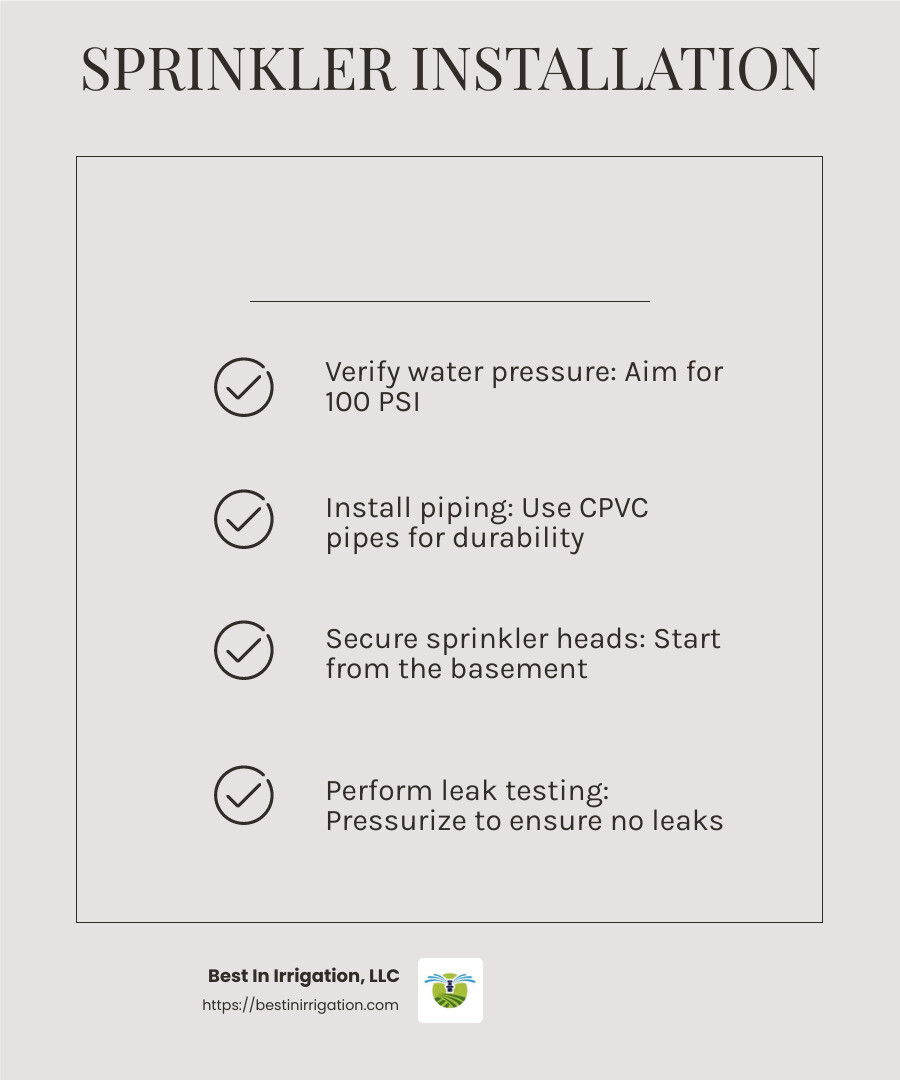
- Verify Water Pressure: Before installing, it’s crucial to check your water supply’s pressure. Ideally, you need around 100 PSI for optimal performance. If pressure is low, consider adding water storage tanks or a pump.
- Install Piping: Begin in the basement, running pipes upward to the first floor. CPVC pipes are recommended for their durability. Secure pipes with galvanized straps and join them with cement.
- Secure Sprinkler Heads: Install sprinkler heads starting in the basement and moving upwards. Protective cages can prevent accidental activation, especially in areas with low ceilings.
- Make Wall Cutouts: On the first floor, cut out sections of walls to conceal pipes. This keeps the system discreet and protected.
- Leak Testing: Once installed, pressurize the system to check for leaks. This step ensures the system is ready to function effectively during a fire emergency.
Water Pressure Considerations
Water pressure is a critical factor in the effectiveness of a fire sprinkler system. Without adequate pressure, the system may fail to deliver enough water to control a fire. If your pressure is below the recommended 100 PSI, you might need additional equipment to boost it.
Understanding these key aspects of building sprinkler system installation will help ensure your system is effective and reliable. Proper planning and execution can make all the difference in fire safety and property protection.
In the next section, we’ll explore the different types of fire sprinkler systems available, helping you choose the right one for your specific needs.
Step-by-Step Guide to Installing a Building Sprinkler System
Installing a building sprinkler system involves several crucial steps to ensure it functions correctly and provides reliable fire protection. Let’s break down the process into manageable parts:
Water Supply
Start by verifying your water supply.
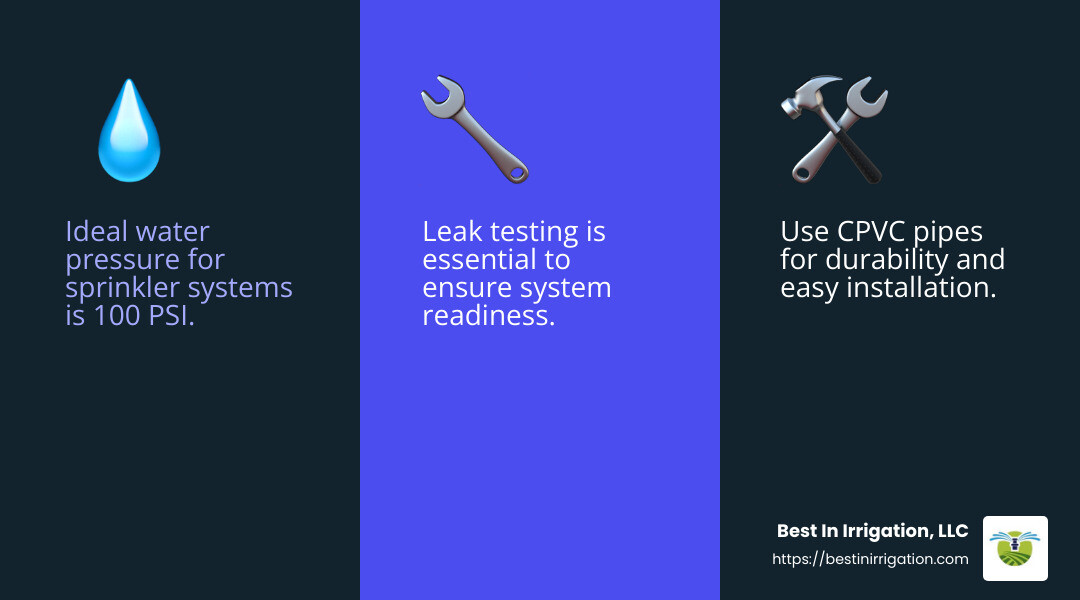
The water pressure should ideally be around 100 PSI. This ensures that the sprinkler system can deliver water effectively during a fire. If your water pressure is below this level, consider installing a pump or water storage tanks to boost it.
Piping Installation
Begin with the basement.
- Use CPVC pipes for their durability and ease of installation.
- Run the pipes from the basement to the first floor, securing them with galvanized straps.
- Join the pipes using cement to ensure a tight, leak-free connection.
Wall Cutouts
- On the first floor, make cutouts in the walls to conceal the pipes.
- This not only protects the pipes but also keeps the system discreet.
Sprinkler Heads
Install the sprinkler heads starting in the basement.
- Move upwards to cover all necessary areas.
- Use protective cages around the sprinkler heads, especially in areas with low ceilings, to prevent accidental activation.
Leak Testing
Pressurize the system for a leak test.
- Once all components are installed, it’s essential to test the system for leaks.
- This ensures that the system is ready to operate effectively during a fire emergency.
By following these steps, you can set up a reliable building sprinkler system that provides crucial fire protection. Proper installation and testing are key to ensuring the system’s functionality and your property’s safety.
Next, we’ll dig into the various types of fire sprinkler systems available, so you can choose the one that best suits your needs.
Types of Fire Sprinkler Systems
Choosing the right fire sprinkler system is crucial for effective fire protection. Let’s explore the four main types: wet pipe systems, dry pipe systems, preaction systems, and deluge systems.
Wet Pipe Systems
Wet pipe systems are the most common type. They are simple and reliable, with pipes that are always filled with water. When a fire triggers the sprinkler head, water is immediately released to douse the flames.
Benefits:
- Quick response time since water is already in the pipes.
- Low maintenance needs due to fewer components.
Ideal For: Residential buildings, office spaces, and areas where temperatures remain above freezing.
Dry Pipe Systems
Dry pipe systems are similar to wet pipe systems, but the pipes are filled with pressurized air or nitrogen instead of water. When a fire occurs, the air pressure drops, allowing water to flow into the pipes and onto the fire.
Benefits:
- Prevents water from freezing in the pipes, making it suitable for colder environments.
- Offers a slight delay, which can be beneficial in areas with sensitive equipment.
Ideal For: Unheated warehouses, parking garages, and cold storage facilities.
Preaction Systems
Preaction systems require a two-step process to activate. They are filled with air, like dry pipe systems, but need both a detection system to sense a fire and the sprinkler head to activate before water is released.
Types:
- Single Interlock: Requires only one event (either detection or sprinkler activation) to release water.
- Double Interlock: Requires both detection and sprinkler activation, providing extra security.
Benefits:
- Reduces risk of accidental water release, ideal for areas with valuable equipment.
Ideal For: Museums, libraries, and data centers.
Deluge Systems
Deluge systems have open sprinkler heads and are connected to a water supply via a deluge valve. When the system detects a fire, the valve opens, and water flows from all the sprinkler heads simultaneously.
Benefits:
- Provides a rapid and thorough response to fires, ideal for high-hazard areas.
Ideal For: Chemical plants, aircraft hangars, and areas with flammable liquids.
Understanding these types of fire sprinkler systems helps you make an informed choice for your building’s fire protection needs. Each system offers unique benefits suited to specific environments, ensuring safety and peace of mind.
Next, we’ll address some frequently asked questions about installing a building sprinkler system to help you steer the process with confidence.
Frequently Asked Questions about Building Sprinkler System Installation
How much does it cost to add a sprinkler system to a building?
The cost of adding a building sprinkler system varies depending on several factors, including the type of system and the building’s size. On average, the cost per square foot can fluctuate due to regional differences and the complexity of the project. For instance, installing sprinklers in a small office might be less expensive than in a large warehouse. Factors such as local labor rates and material costs also play a significant role.
How long does it take to install a sprinkler system in a building?
Installation time can vary widely based on the size and complexity of the job. A simple installation in a small building might take a few days, while larger projects could extend over several weeks. Factors such as building layout, the type of sprinkler system chosen, and any unforeseen challenges can affect the timeline. It’s essential to plan accordingly and allow for potential delays to ensure a smooth installation process.
Can I install my own sprinkler system?
While it’s possible to undertake a DIY installation of a building sprinkler system, it’s important to consider your skills and the tools required. Installing a sprinkler system involves detailed planning, trenching, connecting to the water supply, and testing the system. If you’re not experienced in plumbing or electrical work, hiring a professional might be the safer option. Proper installation is crucial for the system to function effectively in an emergency.
Navigating the installation of a building sprinkler system can seem daunting, but understanding these key aspects can help streamline the process. Next, we’ll explore how investing in a sprinkler system improves fire prevention and property protection.
Conclusion
Investing in a building sprinkler system is a proactive step towards enhancing fire prevention and ensuring property protection. These systems are designed to detect fires early and act swiftly, minimizing damage and potentially saving lives. With the right system in place, you can significantly reduce the risk of extensive fire damage, which not only safeguards your property but also provides peace of mind.
At Best In Irrigation, LLC, we understand the importance of protecting your home or business from fire hazards. Our team specializes in providing custom sprinkler solutions that align with your specific needs. With our focus on cutting-edge technology and water conservation, we ensure that your sprinkler system is not only effective but also efficient.
Our nine years of trusted expertise in the New England region means you can rely on us for quality service and support. Whether you’re considering a sprinkler system for a new building or looking to upgrade an existing one, Best In Irrigation, LLC is here to help every step of the way.
Explore our irrigation system installation services to find how we can assist you in enhancing your property’s safety and resilience against fire threats. A well-installed sprinkler system is more than just a safety feature—it’s an investment in your property’s future.
