


Blow Out the Sprinkler System: 5 Easy Vital Steps
Why Winterizing Your Sprinkler System Matters
When it comes to preparing your home for colder months, blow out the sprinkler system often tops the list of necessary tasks. Why? Because neglecting to winterize can lead to serious consequences like frozen pipes, system damage, and costly repairs come springtime.
And let’s face it, dealing with unexpected repair bills is never fun. By taking a proactive approach, you can save time, money, and headaches. The blow-out method is a reliable way to ensure that all water is cleared from your system, safeguarding your investment through the harsh winter months.
Imagine a smooth springtime transition where your sprinkler system kicks back into gear without a hitch. This isn’t just a dream—it’s the reality of homeowners who prioritize winterizing their sprinkler systems. Plus, the process can be done efficiently and safely with the right tools and steps, making it a smart move for any homeowner aiming to protect their landscape year-round.
Quick blow out the sprinkler system definitions:
- average cost of sprinkler blowout
- irrigation system winterization
- winterization for sprinkler system
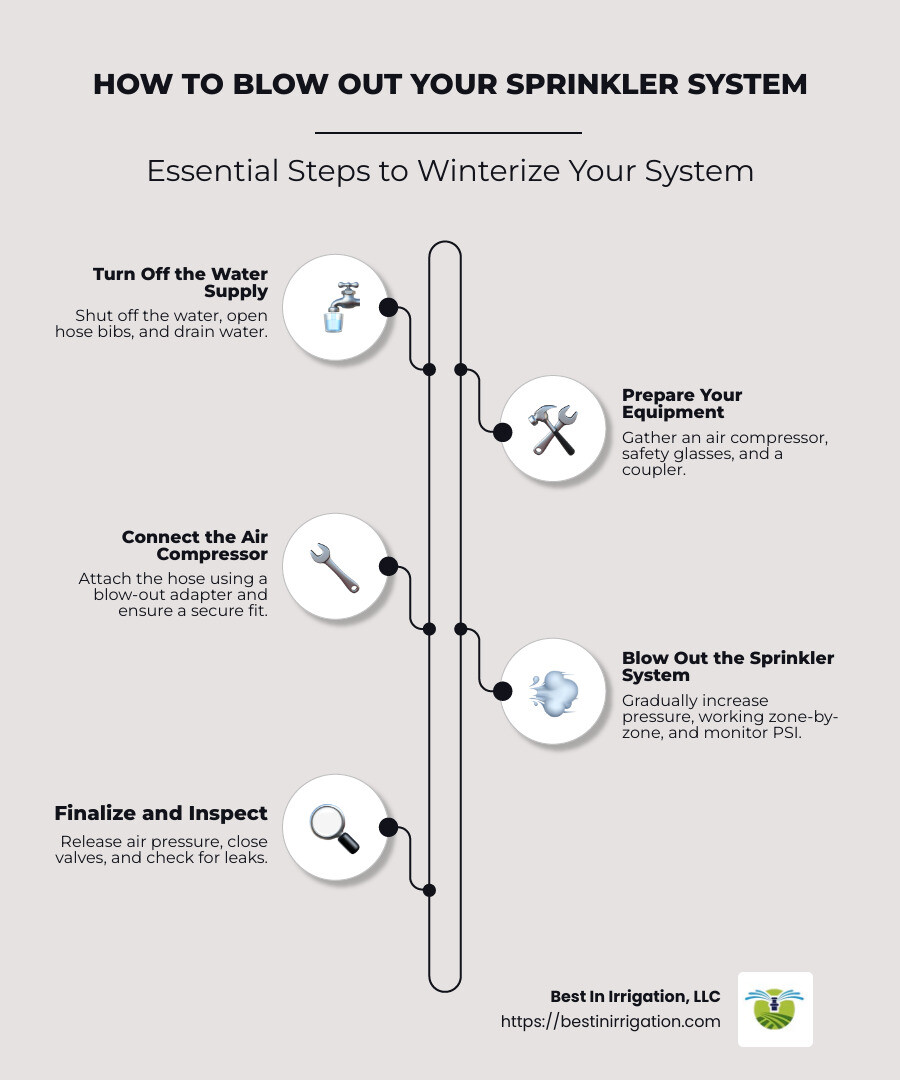
Step 1: Turn Off the Water Supply
The first step to blow out the sprinkler system is turning off the water supply. This is crucial to prevent any more water from entering the system while you work.
Shut Off the Water
Locate the isolation valve for your sprinkler system. This valve is usually found near your main water line. Once you find it, turn it off completely. This action stops any new water from flowing into your irrigation system.
Open Hose Bibs
Next, you need to release any water that’s already in the pipes. Find the hose bib, which is often located outside your house, before the backflow preventer. Place a bucket underneath and open the hose bib. This will let the water drain out.
Tip: Hose bibs can sometimes be found inside, especially in colder regions, so check both indoors and outdoors.
Drain the Water
After opening the hose bib, let the remaining water drain from the main sprinkler line. This step ensures that your system is free of water, reducing the risk of freezing during winter.
Once you’ve completed these tasks, your system is ready for the next steps in the blow-out process. By following these steps, you’re taking the first crucial action towards protecting your sprinkler system from winter damage.
Step 2: Prepare Your Equipment
Before you blow out the sprinkler system, gather the necessary tools and gear to ensure a smooth process. Proper preparation can make all the difference in protecting your irrigation system.
Air Compressor
Choose an air compressor that is powerful enough for the job. You’ll need a model that can produce air at a volume of at least 30 to 50 cubic feet per minute (cfm) and pressures of 40 to 80 PSI. This ensures that the compressor can effectively clear all the water from your pipes without causing damage.
Tip: For PVC piping, do not exceed 80 PSI, and for polyethylene piping, keep it under 50 PSI to prevent any potential damage.
Safety Glasses
Safety first! Wear protective goggles to shield your eyes from debris that might be dislodged during the blow-out process. Compressed air can mobilize dirt, leaves, and other particles, so it’s important to protect your eyes at all times.
Coupler
A coupler is essential for connecting the air compressor to your sprinkler system. Make sure you have the right coupler that fits both your air compressor and the irrigation system. If the fittings don’t match, you may need an adapter to ensure a snug connection.
Pro Tip: An air compressor blow-out adapter, commonly used for winterizing RVs, can be a handy tool for this task.
Once your equipment is ready, you’re all set to move on to the next step, where you’ll connect the air compressor to your irrigation system. This preparation ensures that the blow-out process will be efficient and effective, keeping your sprinkler system safe through the cold months.
Step 3: Connect the Air Compressor
Now that your equipment is ready, it’s time to connect the air compressor to your sprinkler system. This step is crucial for ensuring a successful blow-out.
Attach the Hose
First, attach the air hose to your compressor. Make sure it’s long enough to reach your sprinkler system easily. A flexible hose is best, as it allows for easier maneuvering around your yard.
Check for leaks: Before proceeding, inspect the hose for any cracks or air leaks. A leak can reduce air pressure and make the blow-out less effective.
Use a Blow-Out Adapter
Next, you’ll need a blow-out adapter to connect the air hose to your sprinkler system. This adapter is essential because most sprinkler systems aren’t designed to connect directly to an air compressor.
Tip: If the adapter doesn’t fit snugly, you may need a quick-connect coupling to bridge the gap. This ensures a secure connection and prevents air from escaping.
Ensure a Secure Fit
Once the hose and adapter are in place, double-check the connections. Everything should be tight and secure. A loose connection can lead to air leaks, which will weaken the blow-out process.
Remember: A secure fit is crucial for maintaining the air pressure needed to clear water from the system effectively.
By carefully connecting your air compressor, hose, and adapter, you’re setting the stage for a successful blow-out. This step ensures that your system will be free of water and ready to withstand the winter freeze.
With the connections secure, you’re now ready to move on to the exciting part—blowing out the sprinkler system zone by zone.
Step 4: Blow Out the Sprinkler System
Now that everything is connected, it’s time to blow out the sprinkler system. This part is crucial for removing all the water, protecting your pipes from freezing and cracking during winter.
Gradual Pressure Increase
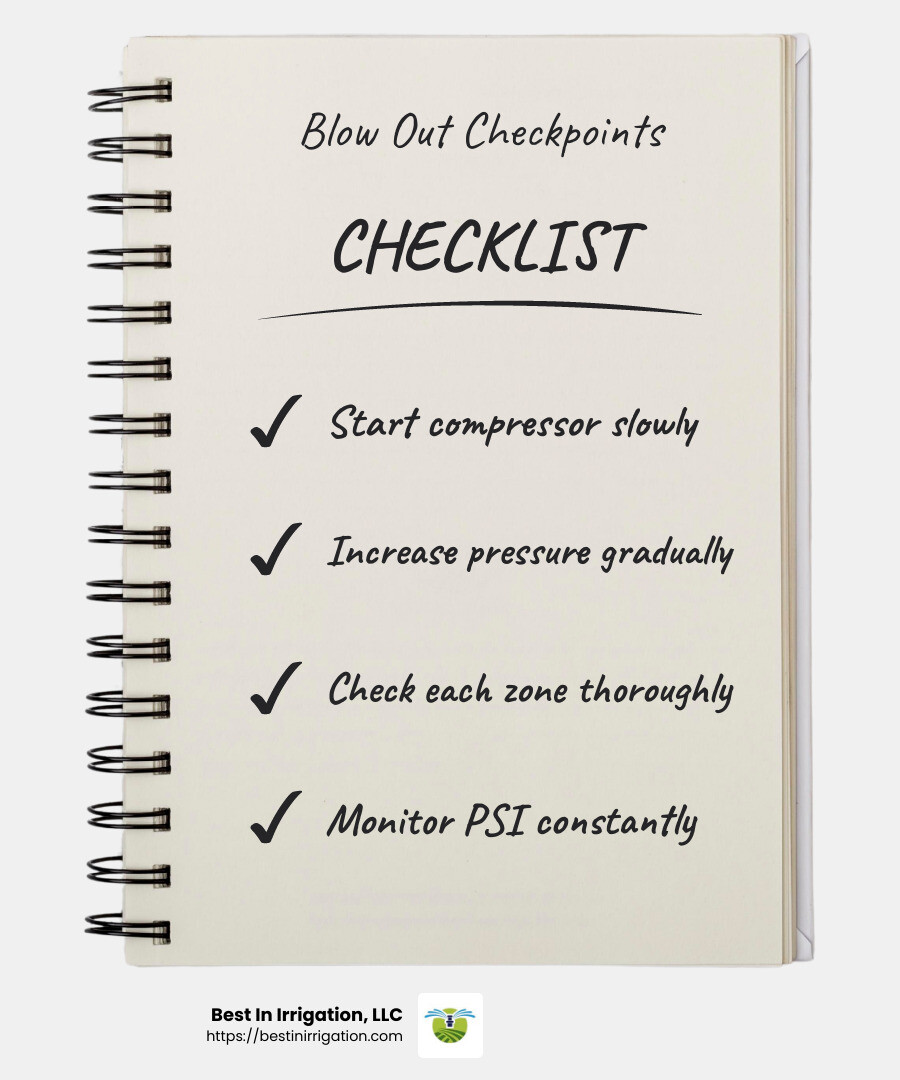
Start by turning on your air compressor slowly. Gradually increase the pressure until you reach the recommended PSI for your system. This is typically between 40 to 80 PSI, depending on your pipe type. For PVC piping, you can go up to 80 PSI, but for polyethylene, keep it below 50 PSI to avoid damage.
Important: Never exceed these limits. Too much pressure can burst your pipes and cause costly repairs.
Zone-by-Zone Approach
Once the compressor is running, begin with the zone farthest from the mainline. This ensures that all water is pushed out effectively. Open the valves for this zone and watch as the water sprays out. Wait until you see only air coming through before moving to the next zone.
Repeat this process for each zone, working your way closer to the main water line. Each zone should take about two minutes, but it’s crucial to ensure that the spray turns to air before moving on.
Tip: If your system is on uneven terrain, start with the higher zones first. They may require higher pressure to clear out all the water.
Monitor PSI
Keep a close eye on the PSI gauge throughout the process. Monitoring the pressure ensures that it remains within safe limits. If you notice the pressure dropping or rising unexpectedly, pause and check for leaks or blockages.
Remember: Safety first. Always wear safety glasses and keep bystanders away from the area to avoid accidents.
By following these steps, you can effectively blow out each zone, ensuring your sprinkler system is ready for winter. Once you’ve finished with all the zones, it’s time to finalize and inspect your work.
Step 5: Finalize and Inspect
With all zones cleared of water, it’s time to wrap up the process and ensure everything is in order. This final step is essential to confirm your sprinkler system is ready for the winter months.
Release Air Pressure
First, turn off the air compressor. Then, slowly release any lingering air pressure by opening the backflow device valves a couple of times. This helps to avoid any trapped air pockets that might cause issues later on.
Close Valves
Next, close all the valves you opened during the blowout. This includes the shut-off valve on the compressor and any backflow device valves you used. Closing these valves prevents water from accidentally entering the system and freezing during the cold months.
Check for Leaks
Now, take a moment to inspect your system for any leaks. Walk around and visually check the sprinkler heads, pipes, and connections. Look for water drips or any signs of moisture. If you spot a leak, address it promptly to avoid damage.
Quick Tip: If you notice any parts that seem worn or damaged, consider replacing them before spring. This proactive step can save you from headaches when it’s time to reactivate your system.
By finalizing and inspecting your sprinkler system, you ensure it’s thoroughly prepared for winter. This careful attention to detail helps prevent costly repairs and ensures your system will work flawlessly when warmer weather returns.
Frequently Asked Questions about Blowing Out Sprinkler Systems
Can I blow out my sprinkler system myself?
Yes, you can blow out your sprinkler system yourself! Many homeowners do it to save on service fees. However, you’ll need the right equipment, including a homeowner-grade air compressor. While most home compressors might not be powerful enough to handle the entire system at once, they can effectively blow out the system zone-by-zone.
If you’re unsure about doing it yourself or if your system is complex, consider hiring an irrigation specialist. They have the expertise and equipment to ensure the process is done safely and correctly.
What is the average cost of a sprinkler blowout?
The cost of hiring a professional to blow out your sprinkler system typically ranges from $50 to $150. This price can vary based on the size of your yard and the number of zones in your system. Larger systems with additional zones may incur higher costs.
Doing it yourself can save money, but make sure you have the necessary equipment and follow safety guidelines to avoid potential damage.
What does “blow out sprinklers” mean?
To blow out the sprinkler system means using high pressure air to remove any remaining water from the pipes and sprinkler heads. This process is crucial for preventing freeze damage during the winter months. By forcing air through the system, you ensure that all the water is expelled, protecting your investment and avoiding costly repairs when spring arrives.
This method is effective but requires caution. Applying too much pressure can damage the system, so monitoring the PSI and adjusting gradually is key.
Conclusion
At Best In Irrigation, LLC, we understand the importance of protecting your irrigation system, especially as winter approaches. Our expertise in water conservation ensures that your system not only survives the cold months but also thrives when spring arrives. Using cutting-edge technology, we provide solutions that are both efficient and environmentally friendly.
Winterizing your irrigation system is a crucial step in maintaining its longevity. By choosing us, you’re opting for a service that prioritizes the health of your landscape and the conservation of precious water resources. Our team of experts is dedicated to delivering top-notch service, ensuring your system is ready to face the winter chill without any hitches.
Whether you’re looking to blow out your sprinkler system or need a full winterization service, we’re here to help. Our custom solutions are designed to meet the specific needs of your landscape, ensuring optimal performance and water efficiency.
Ready to winterize your irrigation system? Contact us now to learn more about how we can help you keep your system in peak condition all year round. Your landscape deserves the best, and with Best In Irrigation, LLC, you can trust it’s in good hands.
