


Blow Out Sprinklers for Winter: 5 Simple Must-Do Steps
Blow out sprinklers for winter is essential to protect your irrigation system from the harsh effects of freezing temperatures. This simple process can prevent costly damage and ensure your system is ready to function efficiently when spring arrives.
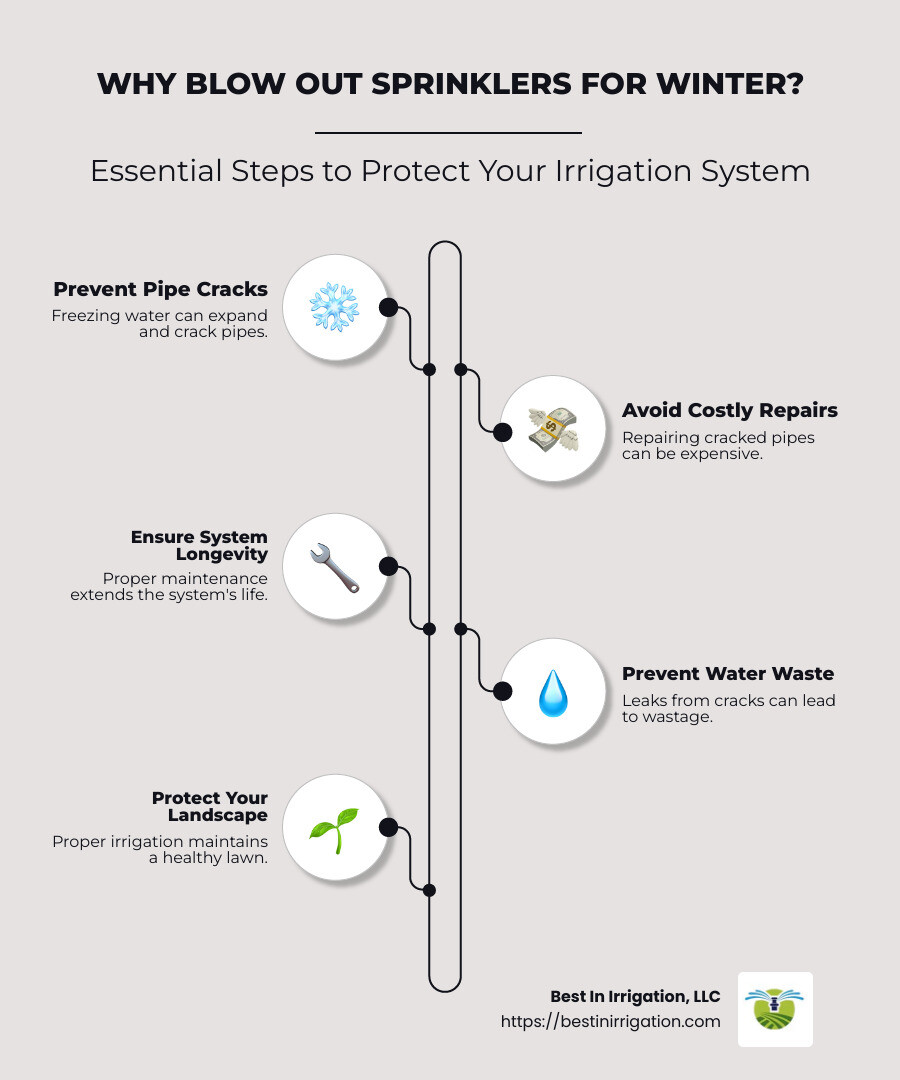
- Why It’s Important:
- Prevents pipe cracks
- Avoids costly repairs
- Ensures longevity of the system
As temperatures drop, any remaining water in your sprinkler system can freeze, causing pipes to crack or burst. This not only leads to repair costs but could also result in water wastage and higher bills. By taking the time to blow out your sprinklers, you safeguard your investment and keep your lawn lush year-round.
Homeowners, especially in regions like Massachusetts with severe winters, should prioritize winterizing their irrigation systems. It might seem like a chore, but it is an investment in maintaining a healthy, vibrant landscape. Plus, it can save you from mid-winter headaches and the hefty costs of untimely repairs.
Blow out sprinklers for winter word guide:
– draining sprinkler system for winter
– cost of sprinkler winterization
– sprinkler freeze valve
Why You Need to Blow Out Your Sprinklers
When winter approaches, blow out sprinklers for winter becomes a crucial task for anyone with an in-ground irrigation system. Ignoring this step can lead to frozen pipes, cracked lines, and costly repairs. Let’s break down why this simple maintenance task is so important.
Prevent Freezing
As temperatures dip below freezing, any water left in your sprinkler system can turn to ice. Ice expands, putting pressure on the pipes. This can lead to cracks or even bursts. By blowing out your system, you remove the water, eliminating the risk of freezing.
Avoid Pipe Cracks
Cracked pipes are a common issue when water is left in the system over the winter. Rigid PVC pipes are particularly vulnerable to bursting. Flexible polyethylene pipes might develop slower leaks, but both types can be damaged. Blowing out the system ensures no water remains to cause these problems.
Ensure System Longevity
Regularly maintaining your sprinkler system by blowing it out each fall helps extend its life. Without lingering water, there’s less risk of corrosion and mold buildup inside the pipes. This keeps your system in good shape, ready to water your lawn effectively as soon as spring arrives.
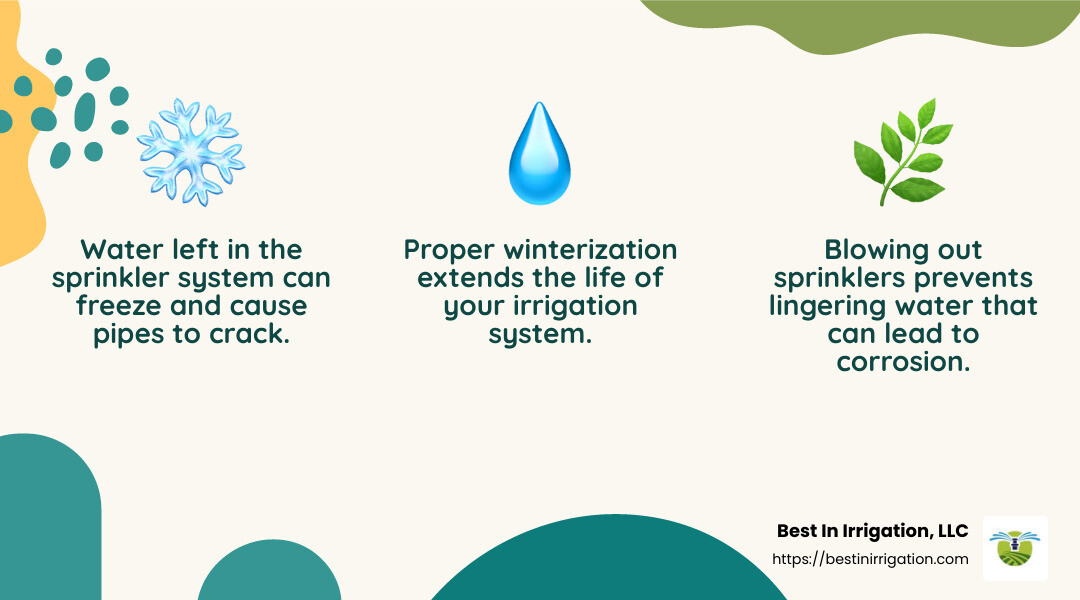
Winterizing your sprinkler system is more than just a seasonal chore. It’s a proactive measure to protect your investment, keep your lawn looking great, and avoid unexpected repair bills. In areas with harsh winters, like Massachusetts, this step is especially vital. By ensuring your irrigation system is properly maintained, you can enjoy peace of mind all winter long.
Tools and Materials Needed
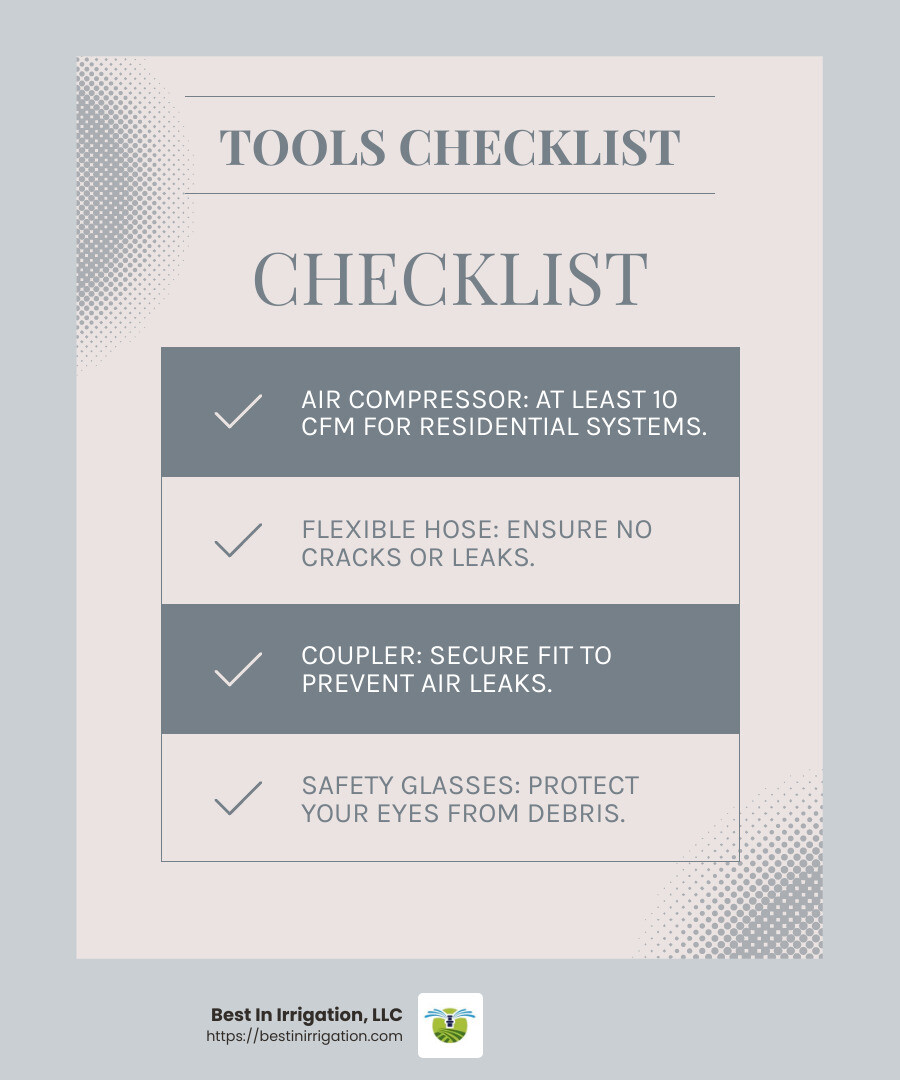
To blow out sprinklers for winter, you’ll need a few key tools and materials. These items will help you get the job done efficiently and safely. Let’s explore what you’ll need:
Air Compressor
An air compressor is essential for this task. It pushes air through the sprinkler system, removing any lingering water. Look for a model that offers at least 10 cubic feet per minute (CFM) for residential systems. This ensures enough power to clear each zone effectively. If your system’s layout is complex, consider renting a more powerful compressor.
Flexible Hose
You’ll need a flexible hose to connect your air compressor to the irrigation system. Make sure it’s long enough to reach from the compressor to the connection point on your system. It’s crucial to check that the hose is free of cracks or leaks to maintain the necessary air pressure during the blowout process.
Coupler
A coupler is used to connect the hose to the irrigation system. This small device ensures a snug fit, preventing air leaks. Depending on your system’s design, you may need an adapter to make the coupler fit properly. A secure connection is vital for maintaining pressure and ensuring a thorough blowout.
Safety Glasses
Safety should always come first. When working with compressed air, debris and water can be expelled forcefully from the sprinkler heads. Wearing safety glasses will protect your eyes from potential hazards. It’s a simple step that keeps you safe throughout the process.
Irrigation Multitool
An irrigation multitool can be incredibly handy. It typically includes various tools like screwdrivers and wrenches that are useful for adjusting sprinkler heads, valves, and other components. Having this tool on hand can make small adjustments or repairs quick and easy.
With these tools and materials ready, you’re set to tackle the task of winterizing your sprinkler system. Each item plays a crucial role in ensuring the process goes smoothly, protecting your system from winter’s harsh conditions.
Next, we’ll walk you through the step-by-step guide to blow out your sprinklers efficiently and safely.
Step-by-Step Guide to Blow Out Sprinklers for Winter
Turn Off the Water Supply
First things first, you need to shut off the main water supply to your sprinkler system. This stops water from entering the pipes while you work. Locate the hose bib—a small faucet—usually found near the isolation valve. Open it up to drain any remaining water from the main line into a bucket. This step is crucial to prevent any leftover water from freezing and damaging your pipes.
Prepare Your Air Compressor
Next, set up your air compressor. Adjust the compressor settings to meet the PSI requirements for your system. For PVC pipes, keep it below 80 PSI, and for flexible polyethylene pipes, stay under 50 PSI. Safety is key here. Wear safety glasses and ensure the compressor is in good working order. This includes checking for any leaks or malfunctions before proceeding.
Attach the Air Compressor to the Irrigation System
Now, it’s time to connect the air compressor to your sprinkler system. Use a flexible hose and a coupler to make the connection. If needed, an adapter can help ensure a snug fit. Close the backflow valves to protect them from damage during the process. Once everything is securely connected, you’re ready to move on.
Blow Out Each Sprinkler Zone
Begin the blowout by focusing on one sprinkler zone at a time. Start with the farthest zone from the main line. This ensures that all water is pushed out effectively. Monitor the pressure closely to avoid exceeding your system’s limits. When the water stops spraying, move on to the next zone. Repeat this process until all zones are clear of water.
Final Steps and Safety Tips
After blowing out each zone, it’s time to wrap up. Release any remaining air pressure from the system by carefully opening and closing the backflow valves a few times. Make sure all valves are securely closed to prevent any air or water from re-entering the system. Lastly, insulate above-ground fixtures like exposed pipes and sprinkler heads to protect them from freezing temperatures. This final step ensures your system is fully winterized and ready to withstand the cold months ahead.
With these steps completed, your sprinkler system is now safely prepared for winter. Next, we’ll explore alternative methods for winterizing sprinklers, giving you more options to protect your investment.
Alternative Methods for Winterizing Sprinklers
If the blow out method seems too complex or risky, there are other ways to winterize your sprinkler system. Let’s explore two alternative methods: manual drain and automatic drain. Each has its pros and cons, so choose the one that best fits your setup and comfort level.
Manual Drain Method
The manual drain method is straightforward and doesn’t require special equipment. It’s best suited for systems with manual valves at the ends and low points of the piping.
Steps:
- Turn off the water supply to the sprinkler system.
- Locate and open the manual drain valves. These are usually found at the low points of the system.
- Allow the water to fully drain out. You might need to raise some sprinkler heads if your system has check valves, as these allow water to flow in only one direction.
- Once drained, close all valves to keep the system secure for winter.
Pros:
- No need for specialized tools.
- Simple and easy to do yourself.
Cons:
- May not fully remove all water, leaving a slight risk of freezing.
- Requires manual effort to locate and operate each valve.
Automatic Drain Method
The automatic drain method is more convenient but requires a system equipped with automatic drain valves.
Steps:
- Shut off the water supply to the sprinkler system.
- Briefly run one of the sprinkler heads to relieve water pressure in the system.
- The automatic valves should open and drain the water once the pressure drops sufficiently.
- Check for any remaining water between the shut-off valve and the backflow device, and drain if necessary.
Pros:
- Convenient and requires less manual effort.
- Automatically activates when pressure drops.
Cons:
- Requires a specific system setup with automatic valves.
- Can be more costly to install if not already in place.
Both methods offer viable alternatives to the blow out technique. Consider your system type, the time you have available, and your comfort level with each method. By choosing the right approach, you can ensure your sprinkler system is safe from the harsh winter months.
Next, we’ll address some frequently asked questions about blowing out sprinklers for winter, providing you with even more insights to keep your system in top shape.
Frequently Asked Questions about Blowing Out Sprinklers for Winter
When to blow out sprinklers for winter?
Timing is crucial when it comes to blowing out sprinklers for winter. You want to complete this task before temperatures dip below 32°F. Ideally, aim for early fall. This gives you a buffer before the first frost, ensuring your pipes are empty and safe from freezing.
Can I blow out my sprinkler system myself?
Yes, you can blow out your sprinkler system yourself, but only if you have the proper tools and feel comfortable with the process. You’ll need an air compressor, a flexible hose, and a coupler to connect everything. Safety glasses are also a must to protect your eyes. If you’re unsure or lack the right equipment, it’s wise to hire a professional. They have the experience to do the job safely and efficiently.
Will my sprinklers freeze at 20 degrees?
Absolutely. At 20 degrees, there’s a significant risk of freezing and damage to your sprinkler system. Water left in the pipes can expand as it freezes, leading to cracks or bursts. This is why blow out your system before the cold hits. By doing so, you prevent costly repairs and ensure your system’s longevity.
Conclusion
Winterizing your sprinkler system is an essential task that helps prevent costly damage and ensures your system is ready to go when spring arrives. By blowing out sprinklers for winter, you remove all water from the pipes, eliminating the risk of freezing and cracking. This simple step can save you from expensive repairs and prolong the life of your irrigation system.
Here’s a quick recap of the steps:
- Turn Off the Water Supply: Shut off the main water line and drain any remaining water.
- Prepare Your Air Compressor: Set it to the correct PSI and follow safety precautions.
- Attach the Air Compressor: Connect it to your irrigation system using a flexible hose and coupler.
- Blow Out Each Sprinkler Zone: Start with the farthest zone and move systematically.
- Final Steps: Release air pressure, close all valves, and insulate above-ground fixtures.
While DIY is possible with the right tools and knowledge, hiring a professional can offer peace of mind. At Best In Irrigation, LLC, we provide expert services to ensure your system is winter-ready. With our cutting-edge technology and focus on water conservation, you can trust us to protect your investment. Don’t wait until it’s too late — reach out to us for professional help and enjoy a worry-free winter!
