


Why Winterizing Your Sprinkler System is Crucial
When winter arrives, you need to blow out my sprinklers. This crucial step protects your home’s irrigation system from serious cold weather damage.
Water left in your pipes can freeze and expand, which can crack pipes, damage sprinkler heads, and ruin valves. Fixing these issues in the spring can be very expensive. A simple winterization now prevents costly repairs later and extends the life of your sprinkler system.
Here’s what you need to know:
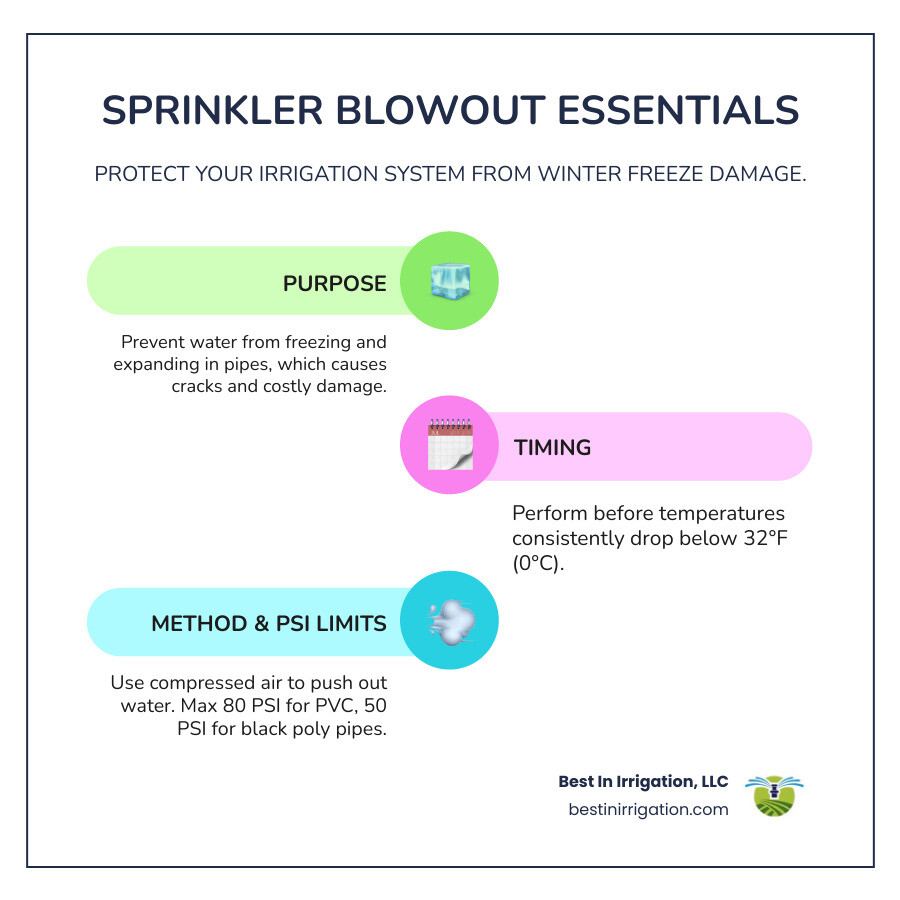
- Purpose: To prevent pipes and sprinkler parts from freezing and breaking.
- Timing: Before the first hard freeze (when temperatures stay below 32°F).
- How It Works: Compressed air pushes all water out of the system.
- Pressure Limits:
- For PVC pipes: Do not use more than 80 PSI.
- For black poly pipes: Do not use more than 50 PSI.
This preventative measure is a key part of responsible Irrigation System Maintenance and avoids turning your lawn into a repair nightmare. The potential risks of not winterizing are severe, leading to burst pipes, damaged valves, and broken sprinkler heads.
Explore more about blow out my sprinklers:
3 Methods for Winterizing Your Sprinkler System
Preparing your residential irrigation system for winter is a must. There are three main ways to get your sprinklers ready for the cold: the manual drain method, the automatic drain method, and the blow-out method. Each has unique features regarding effectiveness, difficulty, and required tools. Understanding these differences is key for proper Winterization for Sprinkler System.
Here’s a quick comparison:
| Method | Effectiveness (in cold climates) | Difficulty | Required Tools |
|---|---|---|---|
| Manual Drain | Moderate | Easy | Shovel (sometimes), wrenches |
| Automatic Drain | Moderate | Easy | None (system designed to drain itself) |
| Blow-Out | High | Intermediate | Air compressor, blow-out adapter, safety gear |
The Manual Drain Method
The manual drain method is suitable for milder climates or systems designed with manual drain valves. It uses gravity to clear water from the pipes.
Here’s how it works:
- Shut off the water supply to your sprinkler system.
- Drain the backflow device by opening its test cocks or drain plugs, following the manufacturer’s instructions.
- Locate and open all manual drain valves, which are typically at the lowest points of your irrigation lines.
- If your sprinkler heads have check valves, you may need to gently raise the heads to let trapped water escape.
- Wait for drainage to complete, then close all manual drain valves and test cocks.
This method is straightforward but may not be fully effective on uneven ground where water can get trapped.
The Automatic Drain Method
Some systems have automatic drain valves that open when water pressure drops below about 10 PSI, allowing water to drain out on its own.
Here’s the process:
- Shut off the water supply.
- Relieve system pressure by running a sprinkler head for a minute. This triggers the automatic valves to open.
- Wait for the system to drain. You won’t see the underground valves work, but the system will empty over time.
- Drain the backflow device separately, as automatic valves do not drain it.
- Close any manually operated valves (like the main shut-off) once draining is complete.
Like the manual method, this is convenient but may not remove 100% of the water, making the blow-out method a safer choice for Winterizing Underground Sprinklers in harsh climates.
The Blow-Out Method Overview
For cold regions like Massachusetts, the blow-out method is the most effective way to winterize a residential sprinkler system. It uses compressed air to force all water out of the pipes, valves, and sprinkler heads, ensuring the system is completely dry.
Unlike gravity-based methods, compressed air actively clears water from low spots and areas with check valves, offering the highest level of protection against burst pipes and costly spring repairs.
To blow out my sprinklers, you’ll need an air compressor, a blow-out adapter, and safety gear. Because this method involves pressurized air, it’s crucial to follow the correct procedure to avoid damaging your system or causing injury. We’ll cover the detailed steps for how to Blow Out Sprinklers for Winter in the next section.
How to Blow Out My Sprinklers: A Step-by-Step Guide
If you’re ready to blow out my sprinklers, this guide will walk you through each step to protect your residential irrigation system. This is a detailed guide for a complete Sprinkler Blowout and Aeration. While we strive to make this process clear, safety and proper technique are crucial. If you feel unsure, our team at Best In Irrigation, LLC is always here to help!
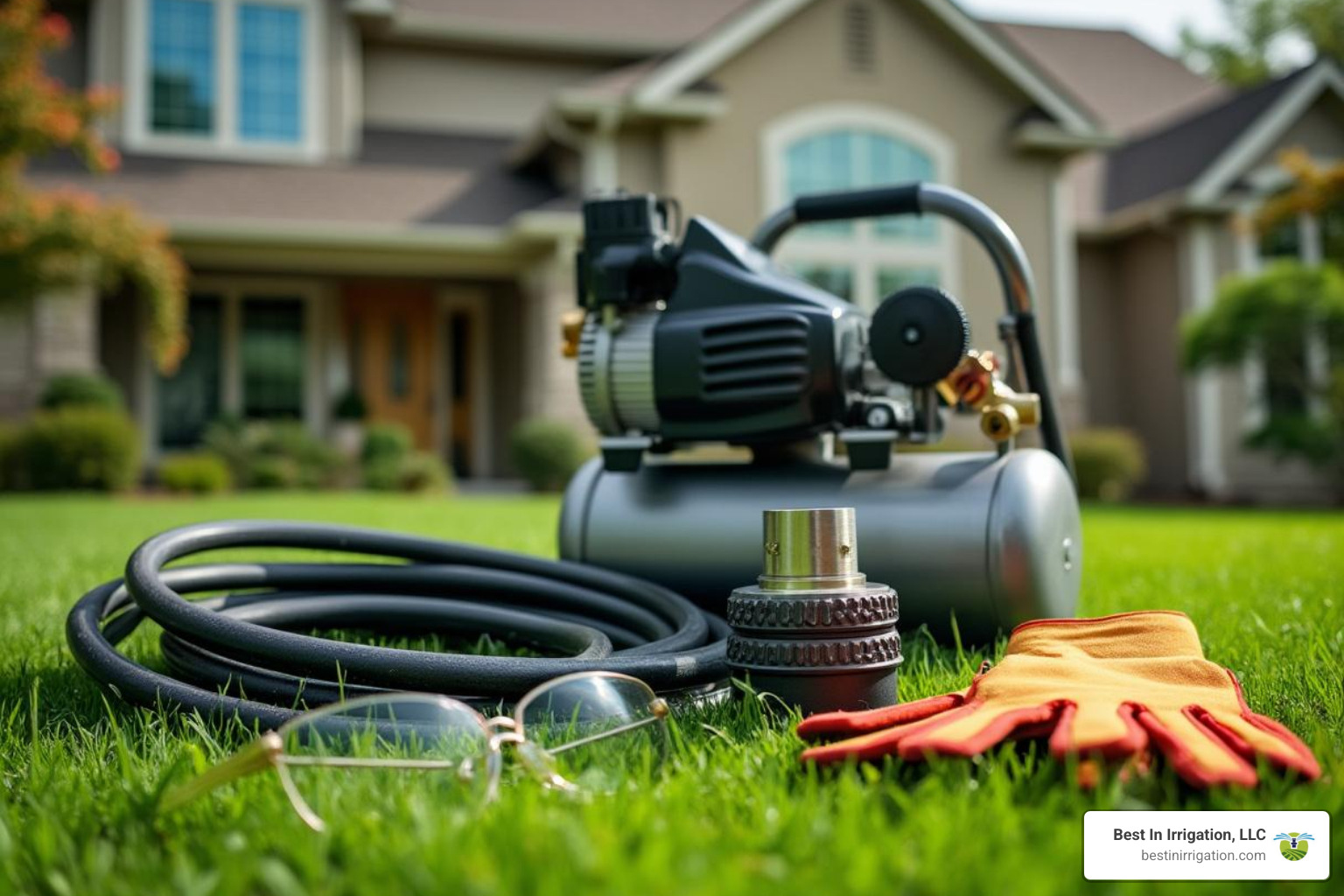
What You’ll Need to Blow Out My Sprinklers
Before you start, gather your tools to make the process smoother and safer.
- Air Compressor: For most residential systems, one that delivers 30-50 cubic feet per minute (CFM) is ideal. A higher CFM rating works faster. While Blowing Out Sprinklers with Small Compressor is possible, it will take much longer.
- Blow-Out Adapter: A fitting to connect the compressor hose to your sprinkler system’s winterization port.
- Safety Glasses: Non-negotiable. Compressed air can propel debris at high speeds.
- Garden Hose (optional): May be needed depending on your adapter.
- Wrench or Pliers: For tightening connections.
- Backflow Preventer Key (if applicable): For turning off or draining your specific device.
Step 1: Shut Off the Water Supply
This is the most critical first step. You must cut off the water flowing into your sprinkler system.
- Find and close the main shut-off valve. It’s usually a lever or round-handled valve located near your water meter or before the backflow preventer.
- Protect the backflow preventer. This device is vulnerable to freeze damage. After shutting off the water, drain it by opening its two small test cocks or drain plugs. Check your model’s specific instructions.
- Drain any indoor pipes that are part of the irrigation line and run through unheated spaces like a garage or basement.
Step 2: Connect the Air Compressor
With the water off, it’s time to hook up the compressor.
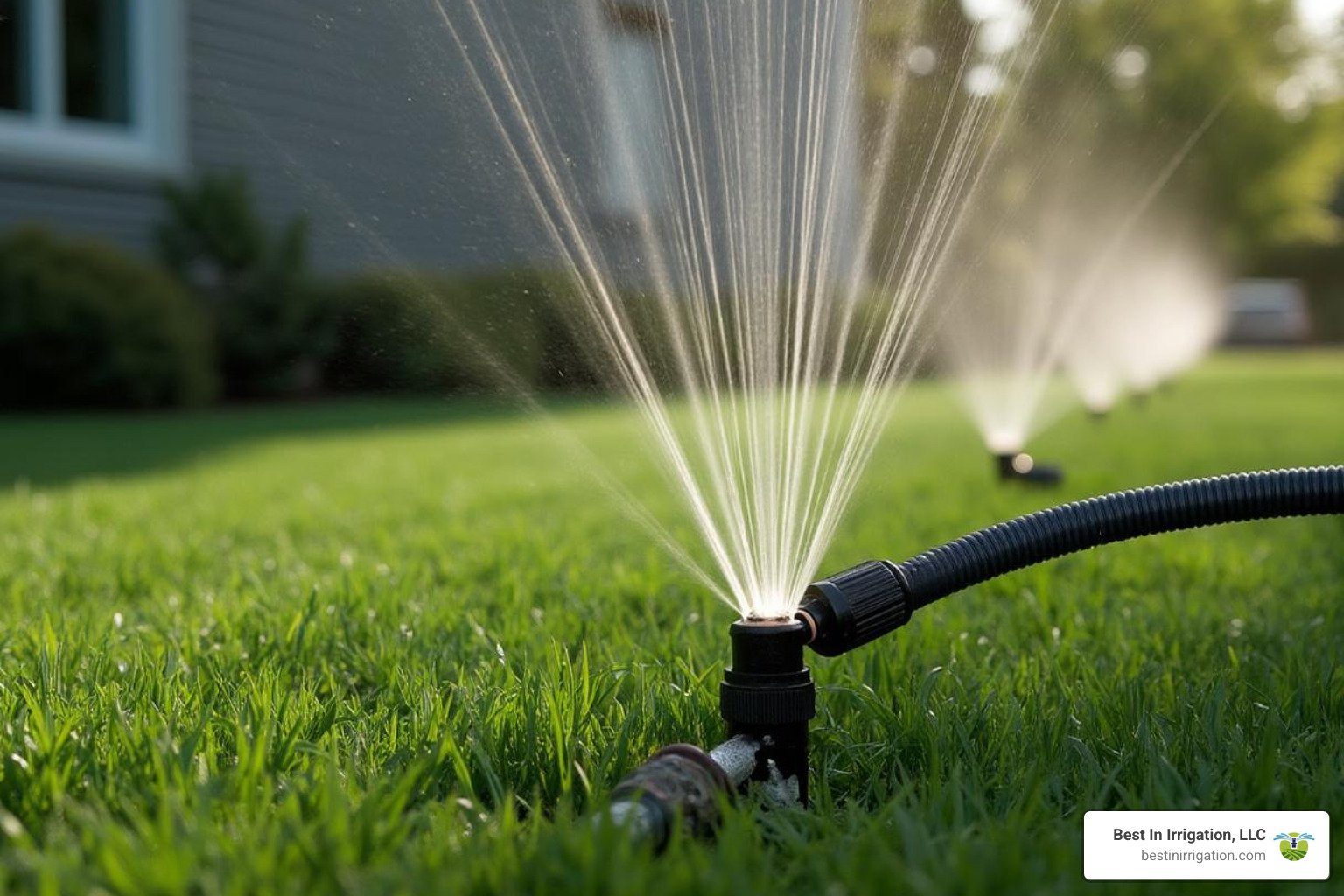
- Locate the blow-out port. This is a threaded fitting, often a hose bib, located after the backflow preventer. Crucially, never blow compressed air through the backflow device, as this can cause serious damage.
- Attach the blow-out adapter securely to the port.
- Connect the air hose from the compressor to the adapter, ensuring a tight connection.
- Isolate the backflow device by closing the appropriate valves on it. This ensures air flows directly into the irrigation lines, bypassing the delicate backflow components. If unsure how to Install Sprinkler Blowout connections, consult a professional.
Step 3: Blow Out Each Zone
Now for the main event. The key is to work through your system one zone at a time.
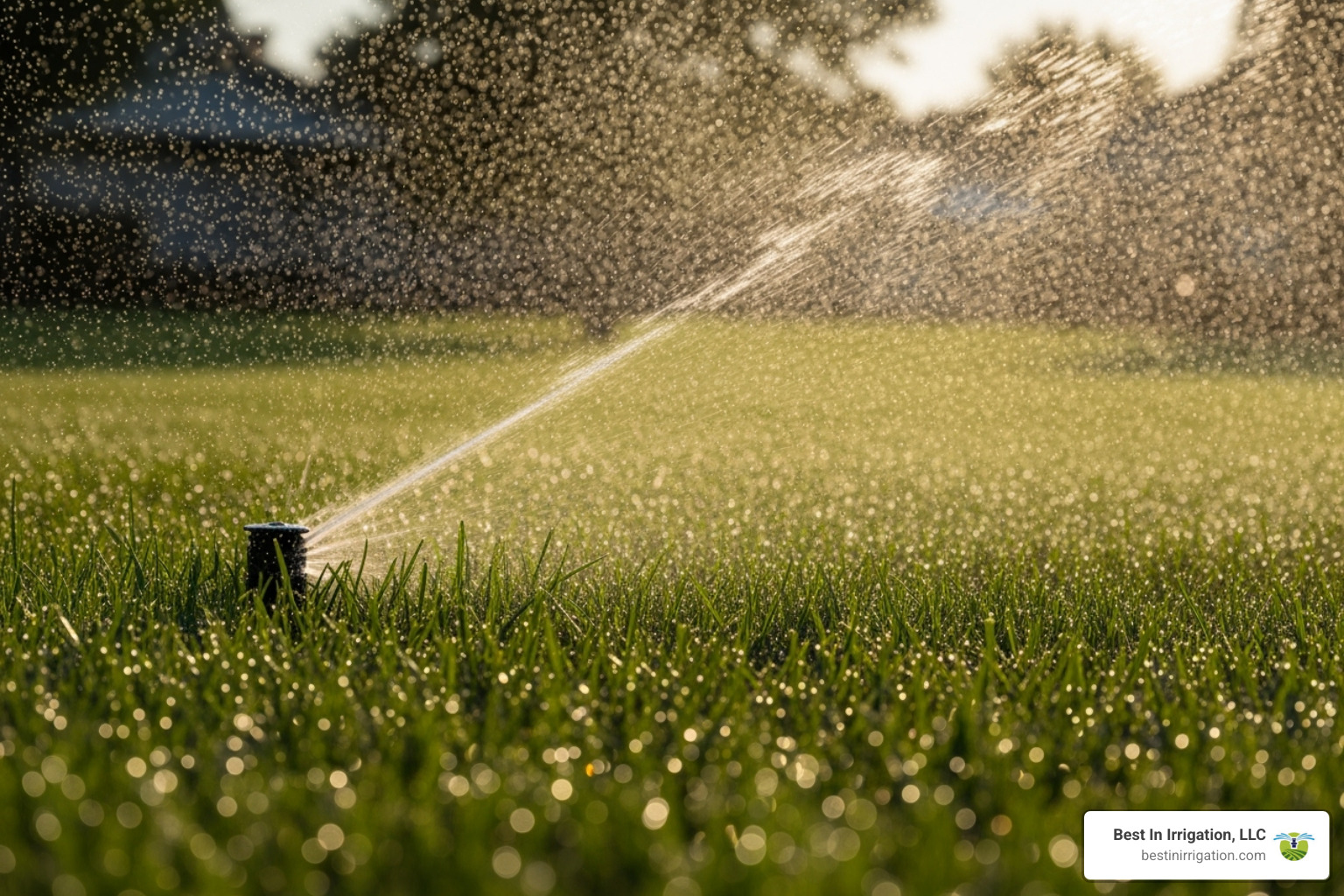
- Select a zone on your controller. Start with the zone furthest from the compressor or at the highest elevation.
- Slowly introduce air from the compressor. Do not blast the system with full pressure. Adhere to the pressure limits: no more than 80 PSI for PVC pipe and no more than 50 PSI for poly pipe.
- Monitor the sprinkler heads in the active zone. You’ll see water spray out, then a mix of air and water, and finally just a fine mist or pure air. A zone is clear when only air is coming out of all heads. This typically takes about two minutes per zone.
- Move to the next zone. Once a zone is clear, turn it off at the controller and open the next one. Repeat the process until all zones, including any drip zones, are cleared. For extra assurance, you can run through all zones a second time briefly.
Step 4: Disconnect and Finalize
You’re almost done. Just a few final steps to secure your system for winter.
- Turn off the air compressor.
- Release any remaining air pressure from the main line by briefly opening a test cock or drain valve.
- Disconnect your equipment once the pressure is released.
- Close all valves, including drain valves, test cocks, and the main shut-off valve, to seal the system.
- Turn off your sprinkler controller or set it to “rain mode” to prevent it from running during the winter.
Key Safety Precautions and Best Practices
Before you blow out my sprinklers, let’s talk safety. Working with compressed air requires caution. Follow these best practices to get the job done right.
- Wear Safety Glasses: This is non-negotiable. Protect your eyes from flying debris.
- Use Hearing Protection: Air compressors are loud.
- Keep Your Distance: Never stand directly over sprinkler heads, valves, or other components while the system is pressurized.
- Introduce Air Slowly: Start with low pressure and increase it gradually to avoid sudden surges that can damage pipes.
- Keep the Area Clear: Ensure pets and children are a safe distance away.
- Don’t Over-Pressurize: Stick to the recommended PSI limits for your pipe type.
- Work One Zone at a Time: Blowing out multiple zones at once can create dangerous pressure spikes.
- Don’t Over-Dry: Once a zone is blowing only air, move on. Excessive air can create heat and wear out internal parts.
For more valuable tips and savings, be sure to check out Best In Irrigation, LLC on Facebook. Get more savings and tips from Best In Irrigation, LLC on Facebook.
What PSI Should Be Used When Blowing Out Sprinklers?
Using the correct air pressure (PSI) is critical. Too little won’t clear the water, and too much can burst pipes. While PSI is the “push,” you also need enough air “volume” (CFM) to clear the lines, with 30-50 CFM being a good target for most residential systems.
Follow these pressure limits based on your pipe material:
- For PVC Piping: Stick to no more than 80 PSI.
- For Polyethylene Piping: Keep it at or below 50 PSI.
The risk of over-pressurizing can lead to burst pipes, damaged seals, and broken sprinkler heads. Always err on the side of caution. For the most accurate advice, check out the Best Pressure to Blow Out Sprinklers.
When is the Best Time to Winterize?
Timing is everything. The golden rule is to blow out my sprinklers before the first hard freeze. A hard freeze occurs when temperatures drop below 32°F for several hours, long enough for the ground to freeze and ice to form in your pipes.
Monitor local forecasts as fall progresses. When you see overnight temperatures consistently dipping into the low 30s, it’s time to act. In places like Massachusetts, this often means getting the job done in late September or October. Getting it done in early fall is ideal to avoid being caught by an unexpected cold snap.
Regional climate differences matter, but the key is always to winterize before the ground freezes. Don’t procrastinate, as a sudden freeze can leave your system vulnerable to expensive damage. For seasonal reminders, follow Best In Irrigation, LLC on Twitter! Follow Best In Irrigation, LLC on Twitter for seasonal reminders.
DIY vs. Hiring a Professional
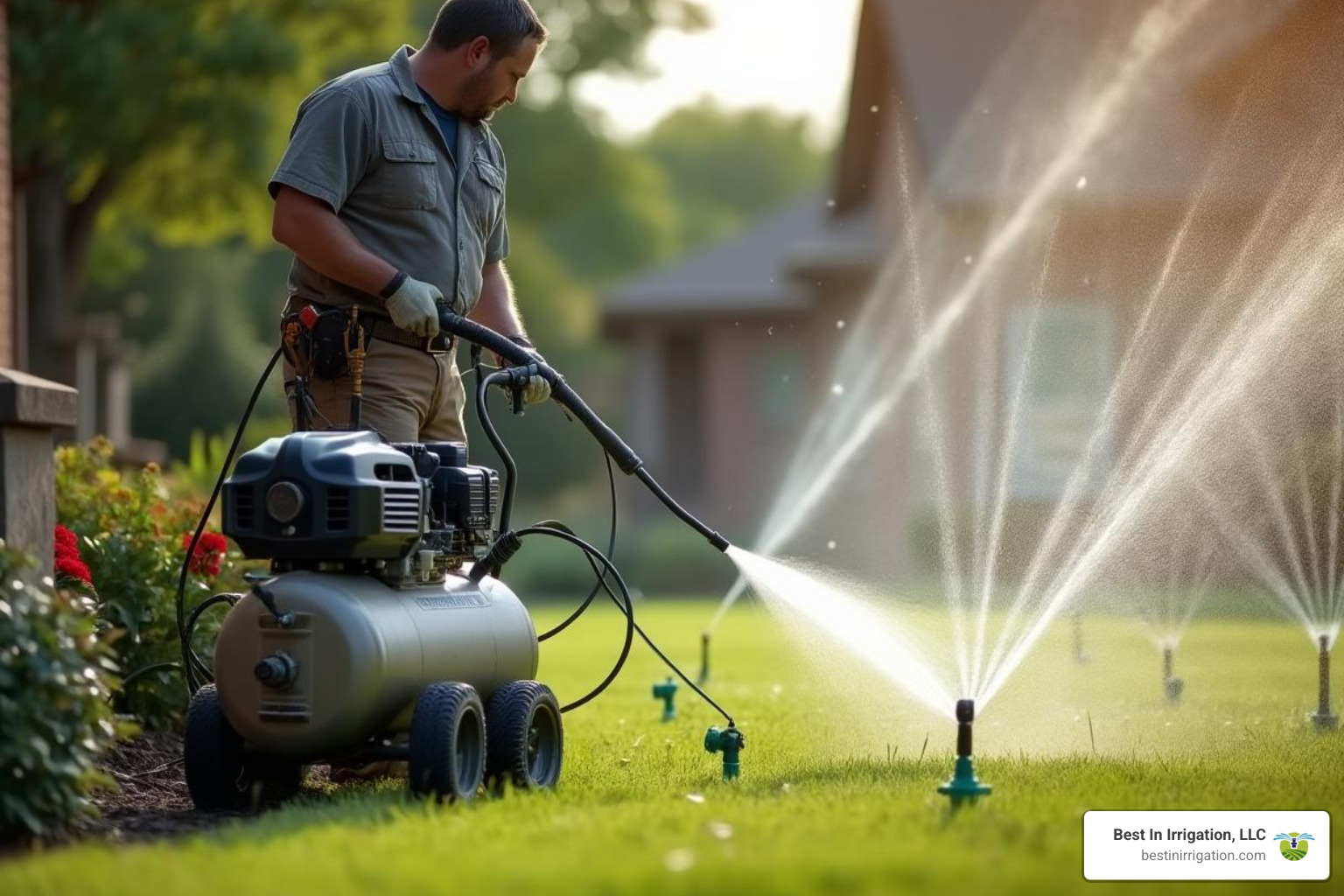
Homeowners often wonder whether to blow out my sprinklers themselves or hire a professional. Both are valid options, depending on your equipment, time, and comfort level.
The DIY route can take anywhere from 30 minutes to 3.5 hours, depending on your system’s size and your compressor’s power. The main challenge for DIYers is having a suitable air compressor and blow-out adapter. A small pancake compressor may struggle with larger systems, and there’s a risk of damaging your system if the procedure isn’t done correctly.
Hiring a professional like Best In Irrigation, LLC ensures the job is done safely and efficiently. We use commercial-grade equipment with high CFM ratings to clear any residential system, big or small. This saves you time and provides peace of mind that the job is done right, minimizing the risk of freeze damage.
Consider hiring a pro for your Irrigation System Winterization Services if:
- You don’t own a suitable air compressor.
- Your system is large or complex.
- You’re uncomfortable working with compressed air.
- You’ve had freeze damage in the past.
While there’s an Average Cost to Blow Out Sprinkler System, it’s a smart investment. The cost of repairing burst pipes and broken valves can be significantly higher.
Frequently Asked Questions about Sprinkler Blowouts
It’s normal to have questions about winterizing your residential sprinkler system. Here are some of the most common questions we hear.
How long does it take to blow out a sprinkler system?
The time it takes to blow out my sprinklers varies, typically from 30 minutes to 3.5 hours. The duration depends on your system’s size, the number of zones, and the power (CFM) of your air compressor. Larger systems with more zones or those cleared with a smaller compressor will take longer.
What happens if I don’t blow out my sprinklers?
Skipping winterization is a costly gamble. When water freezes in your pipes, it expands by about 9%, creating immense pressure. This can lead to severe damage:
- Cracked Pipes: PVC pipes can burst, requiring expensive excavation and replacement.
- Broken Sprinkler Heads: Trapped water can crack the plastic casings.
- Damaged Valves: The internal components can break, causing leaks or failures.
- Ruined Backflow Preventer: This critical, expensive device is highly susceptible to freeze damage.
In short, failing to blow out my sprinklers often leads to expensive spring repairs.
Can I use my small pancake compressor?
While you can technically use a small pancake compressor, it’s not ideal for most residential systems. The key issue is CFM (cubic feet per minute), or air volume, not just pressure (PSI). Pancake compressors have low CFM, meaning they can’t push a large volume of air.
Using one will take much longer, require multiple cycles per zone, and may cause the compressor to overheat. For a more effective and efficient job, a larger compressor is recommended. If you do attempt Winterizing Sprinkler System with Pancake Compressor, be prepared for a lengthy process.
Conclusion
Properly winterizing your residential sprinkler system is one of the smartest preventative maintenance tasks a homeowner can perform. This small effort protects your investment, prevents costly damage from frozen pipes, and ensures your lawn and garden are ready for spring. By following our guide on how to blow out my sprinklers, remembering safety rules and PSI limits, you can rest easy knowing your system is protected.
At Best In Irrigation, LLC, we bring 9 years of trusted expertise to New England homes. We specialize in custom residential irrigation solutions and understand our local climate’s challenges. Protecting your system extends its life and ensures it runs efficiently for years.
For comprehensive support, explore our professional Irrigation System Winterization services. Let us ensure your system is perfectly prepared for the cold, so you can look forward to a vibrant lawn next spring.
