


Watering Wisdom: Finding the Perfect Sprinkler System
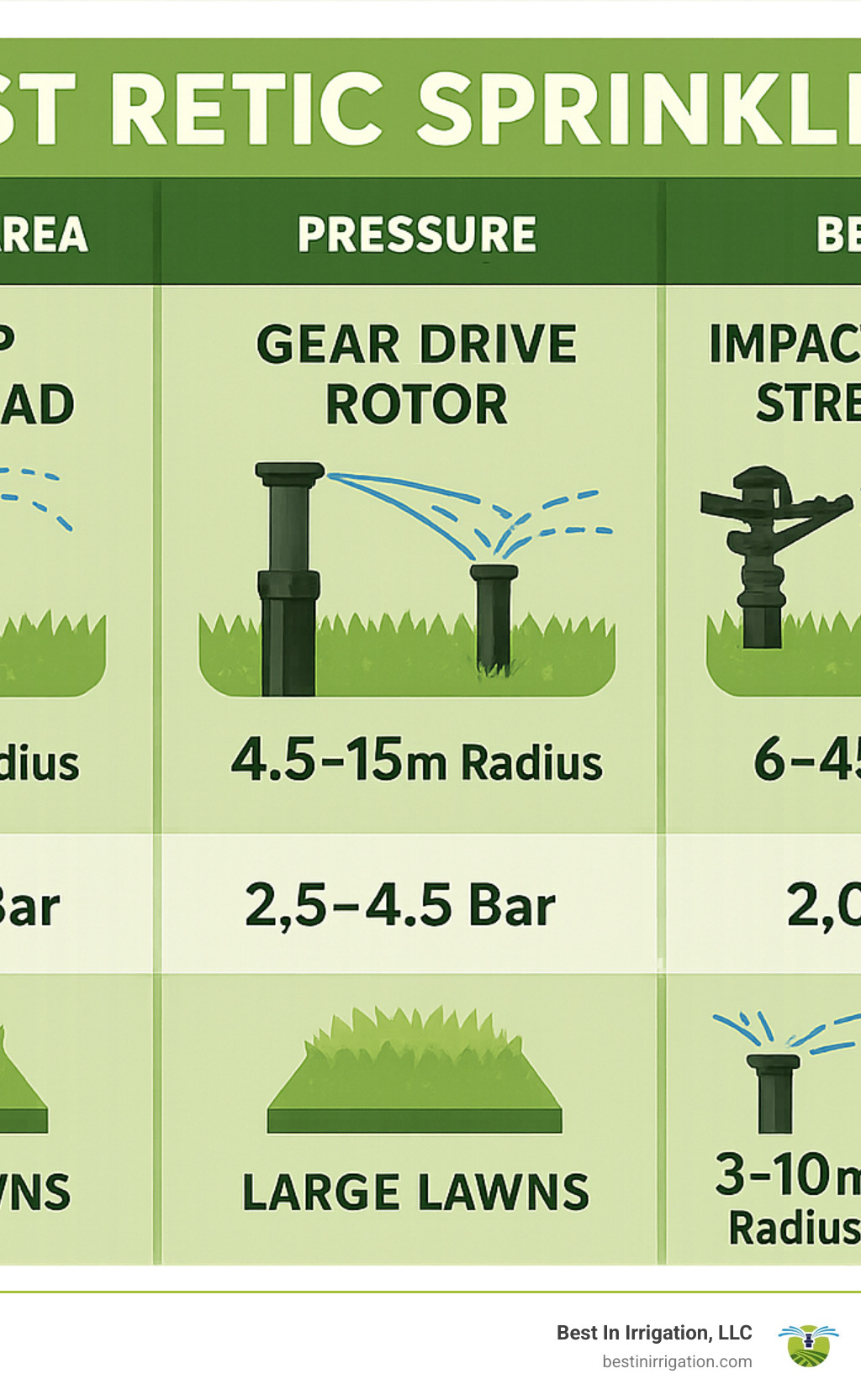
Looking for the best retic sprinklers for your residential landscape? Here’s a quick overview of the top options based on lawn size:
- Small Lawns (up to 200 m²): Pop-up spray heads with 1-4.5m radius
- Medium Lawns (200-500 m²): Gear drive rotors with 4.5-15m radius
- Large Lawns (500+ m²): Impact sprinklers or stream rotors with 6-45m reach
- Water-Efficient Option: MP Rotator-style stream rotors using as little as 1L/min
Choosing the right reticulation (retic) sprinkler system can transform your garden from a thirsty, patchy lawn into a lush, water-efficient oasis. When installed correctly, the best retic sprinklers deliver consistent coverage while minimizing water waste—an important consideration for today’s environmentally conscious homeowner.
A well-designed reticulation system does more than just water your lawn. It saves time, reduces water bills, and ensures your plants receive exactly what they need. No more dragging hoses around the yard or forgetting to move the sprinkler, resulting in soggy spots alongside parched patches.
“Setting up an irrigation system to water your lawn is common—but doing it wrong can lead to overwatering, weed growth, or dry patches,” notes irrigation expert Christopher Null. This is why understanding the different types of sprinklers and their applications is crucial before making your selection.
Modern retic sprinklers come in various designs, from traditional pop-ups that disappear when not in use to sophisticated gear-drive rotors that distribute water evenly across larger areas. The right choice depends on several factors: your lawn’s size and shape, local water pressure, soil type, and even local water restrictions.
With water conservation becoming increasingly important, manufacturers have developed innovative sprinkler technologies that can reduce water usage by up to 30% compared to traditional models while maintaining healthy turf. These advancements include precision nozzles, pressure regulation, and multi-stream delivery systems that minimize runoff and evaporation.
Best retic sprinklers word roundup:
– best micro sprinkler
– best irrigation system
– best horse arena sprinklers
Why Reticulation Matters for Homeowners
Reticulation systems are more than a convenience—they’re an investment in your property’s health and value. A properly designed and installed retic system delivers multiple benefits:
Healthier Turf and Plants: Consistent, even watering promotes deeper root growth and more resilient lawns. Unlike manual watering, which often results in shallow root systems, automated retic sprinklers can be programmed to deliver slow, deep watering that encourages roots to grow downward.
Lower Water Bills: Despite what you might think, automated irrigation typically uses less water than manual methods. The best retic sprinklers apply water precisely where and when it’s needed, eliminating wasteful runoff and evaporation. Many homeowners report water savings of 20-30% after switching to a properly designed system.
Climate Resilience: With increasingly unpredictable weather patterns, having a flexible watering system is crucial. Modern retic systems can be adjusted seasonally or even connected to smart controllers that automatically adapt to weather conditions, ensuring your landscape thrives even during challenging weather.
Increased Property Value: A lush, well-maintained landscape adds curb appeal and real estate value. Potential buyers often view an installed irrigation system as a desirable feature that saves them future work and expense.
As water conservation becomes more critical in many regions, having an efficient irrigation system isn’t just good for your garden—it’s becoming a necessity for responsible homeownership.
Pop-Up Spray Heads — Small Lawn Specialists
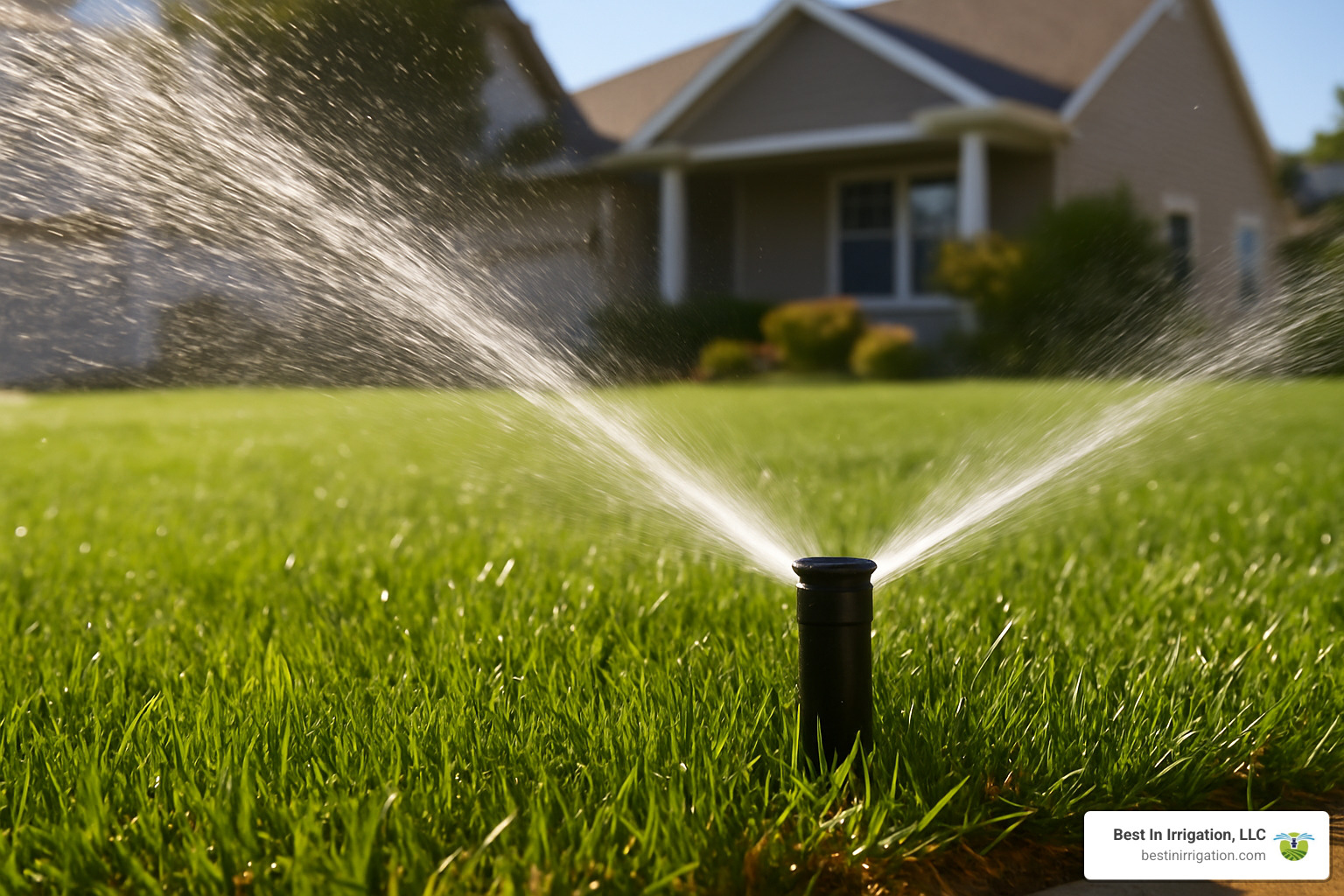
If you’ve got a cozy backyard or a modest front lawn, pop-up spray heads might just be your perfect watering companions. These clever little sprinklers hide beneath your lawn when not in use, only making an appearance when it’s time to water. Once they’ve finished their job, a simple spring mechanism tucks them neatly back into the ground – no trip hazards, no eyesores!
The magic happens at about 40-60 PSI, where these compact sprinklers truly shine. They typically reach up to 4.5 meters around them, making them ideal for smaller spaces. What makes pop-ups particularly handy is their adjustability – you can set them to spray in patterns from 40° all the way up to full 360° circles, perfect for those awkward corners and irregular garden shapes.
Shopping for pop-ups? You’ll find them in various heights – 2-inch, 3-inch, 4-inch, and 6-inch models are common in residential settings. This measurement tells you how high they’ll rise above ground when activated. If you’ve got taller grass or ground cover plants, opt for the taller versions to ensure water reaches over your greenery.
Unlike their rotating cousins, pop-ups deliver water in a consistent spray pattern that mimics gentle rainfall. This makes them quick workers – they’ll deliver the right amount of water in less time than rotary sprinklers, perfect for busy homeowners who want efficient watering without the wait.
More info about Automatic Sprinkler Heads
Are Pop-Ups the best retic sprinklers for tight spaces?
When it comes to those tricky tight spots in your garden, best retic sprinklers for the job are often pop-up spray heads. Their precision is what makes them shine – need to water around your prized rose bushes without soaking the walkway? Pop-ups have you covered with their adjustable spray patterns that can steer around obstacles with surprising accuracy.
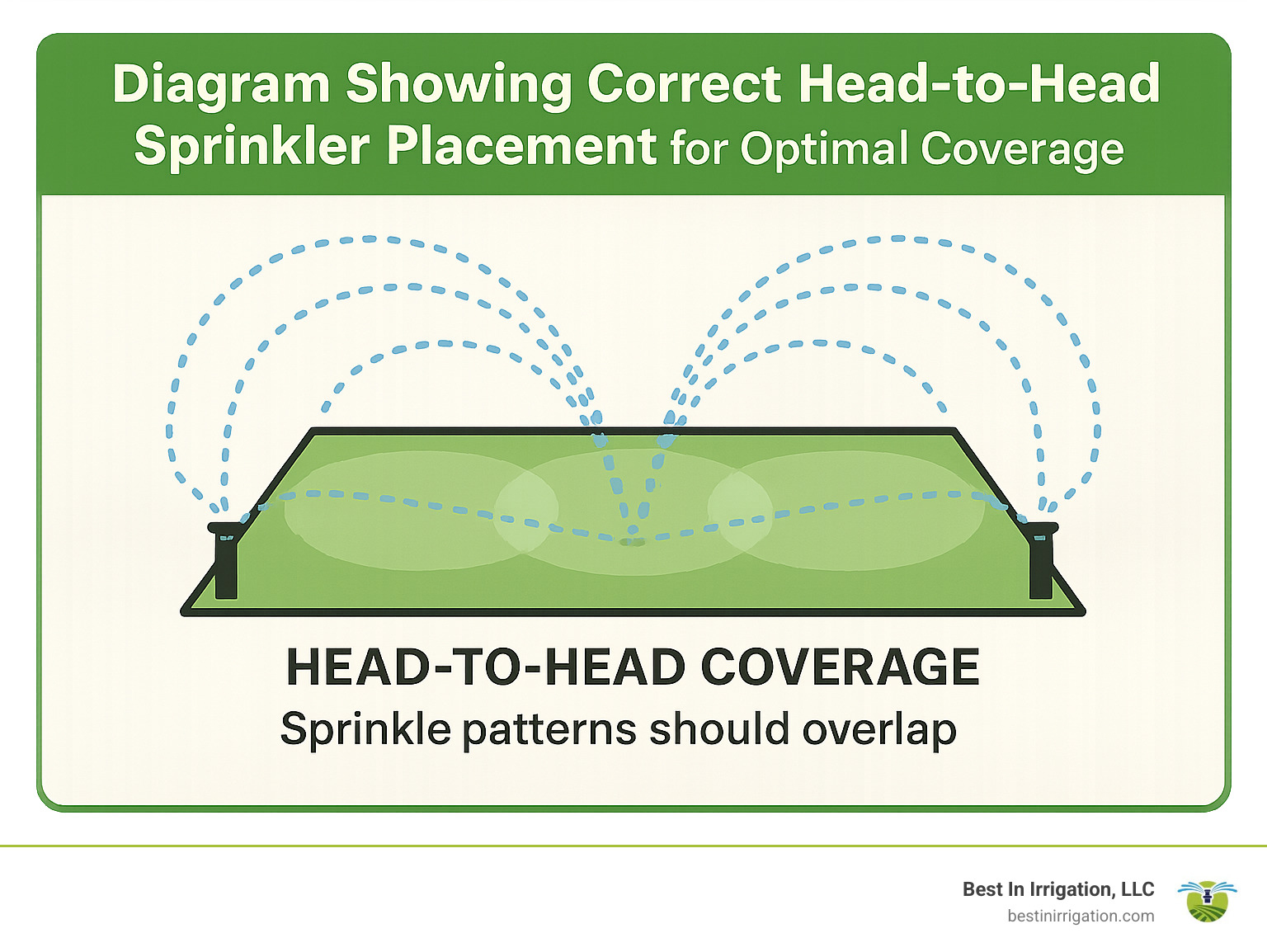
The secret to pop-up success lies in what professionals call “head-to-head” coverage. Rather than placing a single sprinkler in the center of your lawn and hoping for the best, imagine your sprinklers forming a perimeter. Each one should spray far enough to reach its neighboring sprinklers, creating a beautiful overlap that eliminates those frustrating dry patches.
As one of our irrigation specialists often says, “Think of your sprinklers like team players passing the ball to each other, not lone rangers trying to cover the whole field.” This perimeter approach ensures every inch of your lawn receives the hydration it needs, even accounting for those breezy days that might push water slightly off course.
Speaking of breeze – if you’ve ever seen your sprinkler system creating a fine mist that drifts away before reaching the grass, you’re witnessing pressure problems in action. Too much pressure breaks water into tiny droplets that are easily carried off by even the gentlest winds. The fix? Consider adding pressure-regulating heads or valves to keep your spray patterns perfect and your water where it belongs – on your lawn, not your neighbor’s driveway!
Pros & Cons at a Glance
Pros of Pop-Up Spray Heads:
Pop-ups win hearts with their quick installation process – perfect for DIY enthusiasts who don’t want to spend their entire weekend on irrigation projects. They’re also wonderfully budget-friendly, making them accessible for most homeowners looking to upgrade from manual watering. Their precise coverage means water goes exactly where you want it, while remaining aesthetically pleasing by disappearing completely when not in use. The versatile nozzle options let you customize water patterns for different areas of your yard without needing different sprinkler types.
Cons of Pop-Up Spray Heads:
On the flip side, pop-ups are somewhat prone to wind drift – those fine water droplets can blow off course on breezy days. They also have a higher flow rate (up to 4 liters per minute on half-circle settings), which might be a consideration if water conservation is your top priority. Their shorter range of about 4.5 meters means you’ll need more heads to cover larger areas compared to other sprinkler types. Lastly, without careful adjustment, you might experience potential overspray onto pathways or driveways.
For small to medium residential lawns with interesting shapes and obstacles, pop-up spray heads offer the perfect balance of affordability, precision, and ease of use. Their ability to blend seamlessly into your landscape when not in use makes them a favorite among homeowners who want effective irrigation without sacrificing their garden’s visual appeal.
Rotor & Gear-Drive Heads — Versatile Mid-Size Solutions
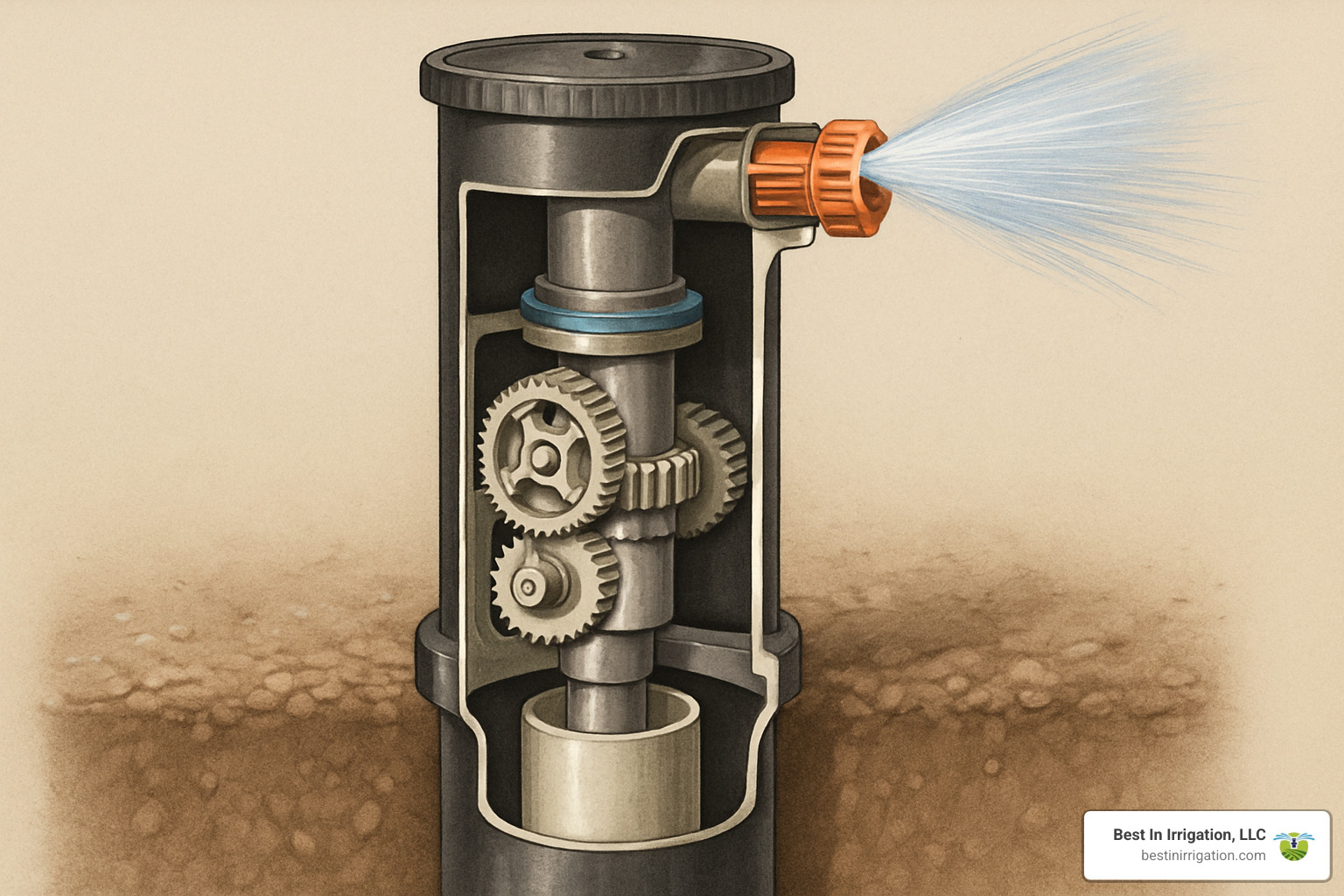
When your lawn stretches beyond the compact category into that medium-sized sweet spot (about 200-500 square meters), rotor and gear-drive sprinklers become your irrigation best friends. Unlike their pop-up cousins that spray water in a constant pattern, these clever devices deliver water in rotating streams that gracefully sweep across your lawn.
What makes these sprinklers special is their sophisticated internal gear-drive mechanism – it’s like having a tiny transmission inside your sprinkler! Water pressure powers these precision gears, converting energy into that smooth, controlled rotation we all find so satisfying to watch. Manufacturers seal these mechanisms tightly, protecting them from soil, debris, and the occasional curious ant, ensuring they’ll keep spinning reliably season after season.
“Most homeowners don’t realize that rotors actually save water while covering more ground,” explains our irrigation specialist at Best In Irrigation. “They deliver water more slowly, giving the soil time to absorb moisture properly instead of creating runoff.”
With an impressive reach of 4.5 to 15.25 meters, rotors cover significantly more territory than standard pop-ups. This extended coverage means you’ll need fewer heads throughout your yard – potentially simplifying your system design and reducing installation costs. Who doesn’t love efficiency?
The real magic happens in how rotors deliver water. Rather than drenching an area quickly, they take their time, applying water at a lower precipitation rate. This patient approach allows for better soil absorption and significantly reduces wasteful runoff – particularly valuable if your yard has slopes or dense clay soil that drinks water slowly.
| Feature | Pop-Up Spray Heads | Rotor/Gear-Drive Heads |
|---|---|---|
| Radius | 1-4.5 meters | 4.5-15.25 meters |
| Flow Rate | 1-4 LPM | Variable, often lower |
| Pressure Requirement | 20-30 PSI | 30-50 PSI |
| Precipitation Rate | High | Low to Medium |
| Water Efficiency | Moderate | High |
| Wind Resistance | Poor to Moderate | Good |
| Best Application | Small areas, complex shapes | Medium lawns, rectangular areas |
More info about Efficient Lawn Irrigation Systems
Why Rotors rank among the best retic sprinklers for family yards
When it comes to typical suburban lawns, rotor and gear-drive sprinklers have earned their reputation as best retic sprinklers for good reason. They hit that perfect balance between coverage, efficiency, and durability that makes them ideal for those medium-sized family yards where the kids play catch and the dog chases squirrels.
Most homes in Massachusetts naturally provide the 30-50 PSI that rotors love – it’s like they were made for each other! This “Goldilocks zone” of water pressure means rotors typically perform beautifully without requiring any additional pressure boosters or reducers. One less thing to worry about!
If you’ve got active kids or pets, you’ll appreciate rotor durability. Quality models feature robust internal components and tough seals that stand up to the occasional soccer ball impact or enthusiastic dog pounce. Many include thoughtful design elements like reinforced risers and internal springs that forgive accidental encounters with the lawn mower or wayward frisbee.
Unlike spray heads that create a fine mist easily carried away by the slightest breeze, rotors deliver water in heavier streams that stand their ground even on windy days. This means more water reaches your grass and less waters your neighbor’s driveway – a win-win for everyone.
“After nine years of installing irrigation systems across Massachusetts, we’ve found that rotor sprinklers offer the perfect middle-ground solution for most suburban homes,” notes our lead technician. “They provide excellent coverage while keeping water usage reasonable – something our customers really appreciate when the utility bill arrives.”
Pros & Cons at a Glance
Pros of Rotor & Gear-Drive Heads:
Water efficiency is perhaps their greatest strength, with studies showing they’re up to 30% more efficient than traditional spray heads thanks to their slower, more targeted delivery method. Their wind resistance means more water reaches your plants even on breezy New England days, while their extended coverage (4.5-15.25 meters) means fewer heads and less complexity in your system. The reduced runoff from their lower precipitation rate is particularly valuable for sloped yards, and their durable construction means fewer replacements over the years.
Cons of Rotor & Gear-Drive Heads:
They do require a higher initial investment than basic pop-up spray heads, though this often pays for itself in water savings over time. Their larger spacing requirements make them less suitable for very small or narrow spaces around your home. You’ll need to plan for longer watering cycles due to their lower precipitation rate, and they can be sensitive to pressure fluctuations if your home water supply is inconsistent. Finally, adjusting arc and radius settings can take a bit more patience and finesse than simpler sprinkler types.
Rotor and gear-drive sprinklers offer that perfect balance of efficiency, coverage, and value that makes them ideal for typical family yards. Their ability to distribute water evenly while minimizing waste makes them not just a practical choice, but an environmentally responsible one too. When you’re ready to create a beautiful, sustainable landscape that thrives through Massachusetts’ variable seasons, rotors deserve serious consideration in your irrigation plan.
Impact & Stream Rotors — Best Retic Sprinklers for Large, Efficient Coverage
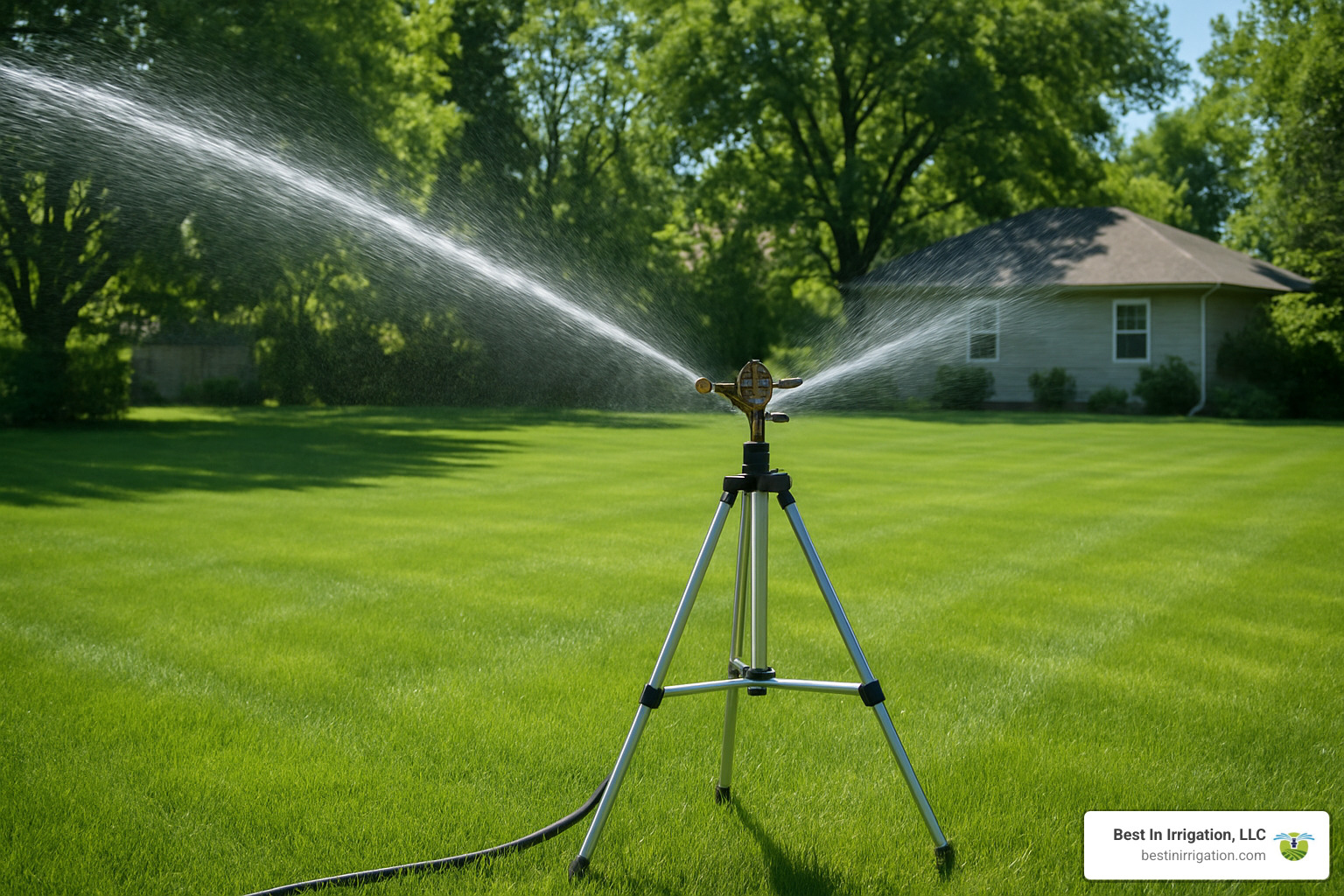
If you’ve got a sprawling yard that exceeds 500 square meters, you’ll need some serious watering power. This is where impact sprinklers and advanced stream rotors truly shine as the best retic sprinklers for expansive landscapes. These powerhouses combine impressive reach with smart water delivery, giving you the perfect solution for those larger residential properties.
You probably know impact sprinklers by their distinctive sound – that familiar “ch-ch-ch-ch” rhythm that’s become the soundtrack of summer afternoons. This isn’t just background noise; it’s actually the spring-loaded arm momentarily interrupting the water stream before snapping back into position. This clever pulsating action breaks water into droplets that resist wind and soak deeply into your soil.
Most impact sprinklers perform beautifully at 25-50 PSI, reaching an impressive 6 to 45+ meters depending on your model and water pressure. To put that in perspective, a single well-placed impact sprinkler might cover an area that would otherwise need three or four smaller sprinklers!
For maximum convenience with minimum fuss, tripod-mounted models like the Orbit Impact Sprinkler offer incredible versatility. Perched atop their three-legged stands, these liftd sprinklers can drench up to 527 square meters with a reach of nearly 25 meters in diameter. By delivering water from above, they easily clear obstacles like taller plantings and ensure even coverage across your entire lawn.
Stream rotors represent the newest innovation in sprinkler technology – think of them as the Tesla of the irrigation world. Rather than creating a curtain of mist, these sophisticated sprinklers deliver multiple rotating streams that apply water precisely and gradually. The result? Dramatically reduced runoff, minimal evaporation, and a healthier lawn that makes the neighbors green with envy.
Latest research on state water rules
How Stream Rotors earn the title of best retic sprinklers for saving water
There’s a good reason why stream rotors have earned their reputation as the water-saving champions among the best retic sprinklers available today. Their design fundamentally transforms water delivery, helping you maintain a lush landscape while keeping your water bills (and environmental footprint) in check.
The numbers tell the story: while traditional spray heads can guzzle up to 4 liters per minute on a half-circle pattern, stream rotors sip as little as 1 liter per minute while doing the same job. This isn’t about shortchanging your lawn – it’s about smart hydration that allows for better absorption with virtually no waste.
“Think of it like watering a plant with a drinking straw versus a fire hose,” explains one of our irrigation specialists at Best In Irrigation. “The slower, more targeted approach allows water to soak in rather than run off.”
The multi-stream design creates plumper water droplets that laugh in the face of wind and evaporation. Each precisely targeted stream hits exactly where it’s needed, and the gradual rotation ensures deep penetration rather than surface pooling. This becomes especially valuable during those Massachusetts summers when water restrictions might kick in, or during dry spells when every drop counts.
The slow, thorough watering pattern also encourages your grass to develop deeper, stronger roots. Instead of shallow, frequent watering that creates weak, surface-level root systems, stream rotors promote roots that reach deep into the soil. The result? Turf that’s naturally more drought-resistant and requires less frequent watering over time – a win-win for your lawn and your water bill.
We’ve helped countless Massachusetts homeowners upgrade to stream rotor technology, and many report water savings of 25-30% while actually improving the health of their landscapes.
Pros & Cons at a Glance
Pros of Impact Sprinklers:
– Maximum Radius: A single unit can cover an impressive 6-45+ meters
– Audible Operation: That distinctive clicking sound serves as a helpful “it’s working” indicator
– Adjustable Coverage: Most models let you fine-tune both arc and distance
– Robust Construction: Typically built with durable materials that handle years of use
– Versatile Mounting: Choose from in-ground, spike, sled, or tripod installations
Cons of Impact Sprinklers:
– Noise Level: The clicking sound might not be appreciated by everyone, especially in quiet neighborhoods
– Setup Weight: Tripod models can be a bit hefty when you need to relocate them
– Higher Initial Cost: Quality impact sprinklers represent a larger upfront investment
– Visibility: Above-ground models don’t hide away like pop-ups when not in use
Pros of Stream Rotors:
– Exceptional Water Efficiency: Uses up to 75% less water than traditional heads
– Reduced Runoff: The slower application rate means better absorption in all soil types
– Wind Resistance: Those chunky water droplets stay on target even on breezy days
– Even Distribution: Multiple streams ensure no dry spots or over-watered areas
– Compatible with Lower Pressure: Many models perform admirably even with modest PSI ratings
Cons of Stream Rotors:
– Premium Price Point: Higher initial investment than basic sprinkler options
– Longer Run Times: Lower flow rates mean you’ll need extended watering schedules
– Occasional Nozzle Maintenance: Those multiple small openings may need periodic cleaning
– More Complex Setup: Proper adjustment requires a bit more attention to detail
Both impact sprinklers and stream rotors offer fantastic solutions for larger residential properties. Your best choice will depend on your specific yard conditions, available water pressure, local water rules, and personal preferences about aesthetics and noise. At Best In Irrigation, we’re happy to help you steer these options to find the perfect fit for your Massachusetts property.
Selecting, Installing & Maintaining the Best Retic Sprinklers
So you’ve learned about all the best retic sprinklers available—but how do you actually turn that knowledge into a lush, water-efficient lawn? Let’s walk through the practical side of bringing your irrigation dreams to life.
Before heading to the store or clicking “buy now,” take a moment to gather essential information about your property. Start by sketching your yard on paper (nothing fancy needed!) with rough measurements of all the areas you want to water. Note any buildings, pathways, and existing water lines. Think of this as your irrigation roadmap—it’ll save you headaches later.
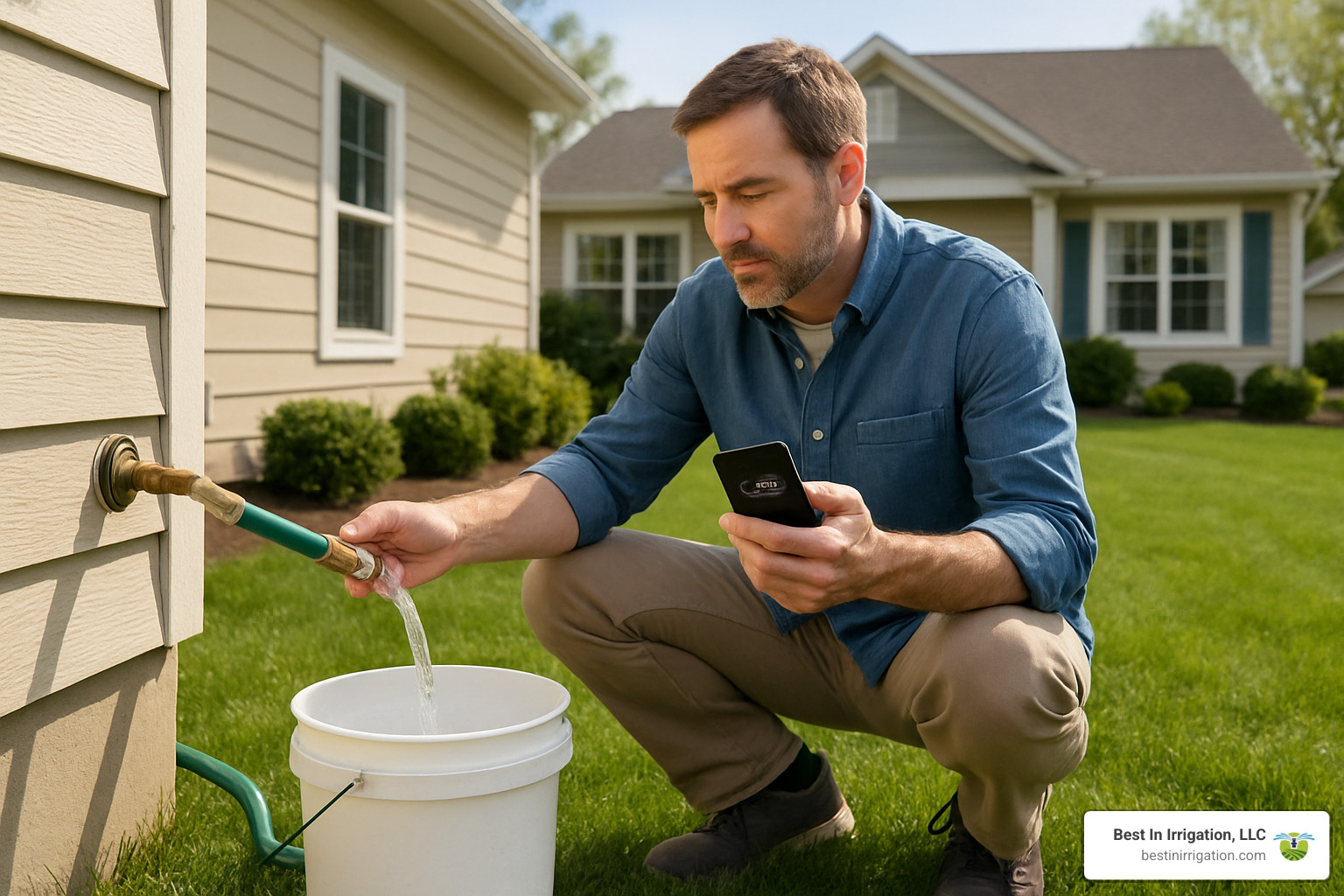
Next, you’ll need to understand your water supply. I always tell my Massachusetts customers that this step is like checking your car’s engine before a road trip—essential for avoiding breakdowns! You need two critical numbers: your water pressure (measured in PSI) and your flow rate (measured in GPM or LPM).
“Most homeowners are surprised to learn how simple it is to measure their own water flow,” says our lead technician at Best In Irrigation. “The bucket test is something anyone can do.” Simply time how long it takes to fill a 9-liter bucket from your outdoor spigot. Divide 9 by the number of seconds, then multiply by 60—that’s your flow rate in liters per minute. For pressure, an inexpensive gauge from any hardware store will give you a reading when attached to your outdoor faucet.
Once you understand your water supply, divide your yard into zones based on watering needs. Your thirsty vegetable garden shouldn’t be on the same zone as your drought-resistant native plants—they have completely different requirements!
Your soil type plays a huge role in how you should water. Sandy soil? You’ll need frequent, shorter watering sessions since water drains quickly. Heavy clay soil? Longer, less frequent watering allows time for slow absorption. Not sure what you have? Grab a handful of moist soil and squeeze it—sandy soil falls apart, loamy soil forms a loose ball, and clay soil creates a sticky lump.
Consider upgrading to a smart controller if you’re serious about water conservation. These clever devices adjust your watering schedule based on local weather conditions—some even connect to soil moisture sensors. Many of our Massachusetts customers see water savings of 15-30% after installing a smart controller, which means the device often pays for itself within a couple of seasons.
If you’re in a region with freezing winters (like we have here in Massachusetts), don’t forget about winterizing your system. A proper blow-out procedure removes all water from the pipes and components before freezing temperatures arrive. Skip this step, and you might be replacing cracked pipes come springtime!
More info about Irrigation System Design
7 Key Buying Factors
When it’s time to select the best retic sprinklers for your home, keep these seven factors in mind:
Lawn size makes a huge difference in which sprinklers will work best. For cozy yards under 200 m², pop-up spray heads typically provide perfect coverage. Medium lawns (200-500 m²) usually benefit from rotors, while sprawling properties over 500 m² call for impact sprinklers or stream rotors with their impressive reach.
The shape of your property might seem like an afterthought, but it significantly affects sprinkler selection. Have lots of tight corners and oddly-shaped areas? Pop-up spray heads with adjustable patterns will be your best friend. Working with wide-open rectangles? Rotary sprinklers can efficiently cover these spaces with fewer heads.
Your home’s water pressure is like the engine powering your entire system. Too low (under 30 PSI), and many sprinklers won’t function properly—they’ll produce weak coverage or fail to pop up at all. Too high (above 70 PSI), and you’ll create mist that blows away before reaching your plants. Measure first, then choose sprinklers designed for your pressure range.
Understanding your soil type helps you avoid both wasted water and unhappy plants. Sandy soil drains quickly and may need sprinklers with higher precipitation rates used more frequently. Clay soil absorbs water slowly—pair it with low-precipitation sprinklers like stream rotors to prevent wasteful runoff.
Different plant types have unique watering needs. Your lush vegetable garden requires different watering than your established trees and shrubs. Consider creating separate zones for areas with distinct requirements rather than trying to water everything the same way.
Be sure to check local water restrictions before designing your system. Many communities limit watering to specific days or times. Some offer exemptions for high-efficiency systems, so installing water-conserving equipment might actually give you more flexibility in when you can water.
While upfront budget matters, don’t forget to consider long-term water costs. Those premium stream rotors might cost more initially, but if they cut your water bill by 30%, they’ll pay for themselves many times over during your system’s lifespan.
DIY vs Pro Installation
Wondering whether to install your own sprinkler system or call in the pros? Let’s break down what’s involved in each approach.
If you’re considering the DIY route, start by doing thorough research. Draw detailed plans, including measurements and the location of each component. Before you dig, call 811 to have underground utilities marked—this free service helps prevent accidentally cutting gas or electrical lines (definitely not a fun way to meet your neighbors!).
Purchase quality components compatible with your water supply, and be realistic about the time commitment. Most DIY installations take several weekends to complete, especially for first-timers. You’ll need proper tools like trenching shovels, pipe cutters, and PVC cement. Take photos as you go—they’ll be invaluable if you need to troubleshoot or make repairs later.
Professional installation through a company like Best In Irrigation offers significant advantages. Our technicians bring specialized knowledge about local soil conditions, plant water requirements, and Massachusetts regulations. We’ve seen how properties in our region respond to different irrigation approaches, and we design systems with these insights in mind.
Consider professional installation if your property is complex with multiple zones, if you have pressure issues that require special design considerations, or if you’re not comfortable with basic plumbing and electrical work. Professional installation also includes proper backflow prevention—critical for protecting your home’s drinking water.
For those who want a middle ground, we offer design consultation services. We’ll help create an effective plan based on your specific property, even if you handle the physical installation yourself. This hybrid approach provides cost savings while ensuring your system is properly designed from the start.
More info about Irrigation System Installation
Troubleshooting Common Retic Issues
Even the best retic sprinklers need a little TLC sometimes. Here’s how to handle common issues:
When you notice clogged nozzles creating uneven spray patterns, don’t worry—it’s usually an easy fix. Remove the nozzle and clean it with a small wire or pin. Before reinstalling, run the system briefly to flush out any remaining debris. To prevent future clogs, consider adding a filter at your water source—think of it as a bouncer that keeps unwanted particles from crashing your sprinkler party.
Spotting dry patches in your otherwise green lawn? Check that your sprinklers follow the “head-to-head” coverage principle—each sprinkler should throw water far enough to reach neighboring sprinklers. Adjust arc settings to ensure complete coverage, and don’t be afraid to add an extra head if there’s a stubborn dry spot that just won’t go away.
Overspray onto sidewalks and driveways wastes water and can create slippery conditions. Most quality sprinklers include a radius adjustment screw—turn it clockwise to reduce the spray distance. A quarter turn often makes a significant difference without requiring complete repositioning of the head.
Unexplained soggy areas or sudden increases in your water bill might indicate underground leaks. Turn on your system and look for spots where water bubbles up from the ground. For hidden leaks, check each zone’s water usage—significant differences between similar zones often point to leaks.
When sprinkler heads refuse to pop up, first check for obvious obstructions like overgrown grass or soil buildup. If the area is clear, the issue might be internal—either a damaged spring mechanism or insufficient pressure. Try cleaning the head or temporarily removing neighboring heads to increase pressure to the problematic one.
Uneven coverage often happens when different types of sprinklers are mixed on the same zone. Each sprinkler type has a different precipitation rate, so some areas get drenched while others stay dry. Group compatible heads with similar precipitation rates on the same zone for best results.
If your controller seems confused about when to run, check the basics first—power supply, programming, and wire connections. Test solenoid valves manually to determine if the issue is with the controller or the valves themselves. And don’t forget to check for that classic programming error—AM versus PM settings!
Frequently Asked Questions about the best retic sprinklers
How many sprinkler heads can I run per zone?
This depends entirely on your available water flow. As a practical example, if your flow test shows you have 15 GPM available and each of your chosen heads uses 3 GPM, you can run about 5 heads per zone (always leave a 10-15% margin for safety). Trying to run too many heads on limited flow is like trying to fill five glasses from a slow-dripping faucet—nobody gets enough!
How do I calculate my water flow rate?
The bucket test is wonderfully simple. Time how long it takes to fill a container of known volume, then do some quick math. If a 9-liter bucket fills in 45 seconds, your flow rate is 12 LPM (9 liters ÷ 45 seconds × 60 seconds = 12 LPM). This number is crucial for designing your system—it tells you how many sprinklers you can run simultaneously.
What’s the correct spacing for sprinkler heads?
Think of sprinkler coverage like shingles on a roof—you need overlap to prevent leaks. The industry standard is “head-to-head” spacing, meaning each sprinkler throws water far enough to reach adjacent sprinklers. In practice, this usually means spacing heads at about 50-60% of their diameter of throw. For a sprinkler with a 10-meter diameter coverage, place heads 5-6 meters apart. This creates the overlapping coverage necessary to eliminate dry spots.
Do smart controllers actually save water?
Absolutely! When properly installed and programmed, smart controllers typically reduce water usage by 15-30%. They’re like having a weather-savvy gardener who knows exactly when your plants need water. They prevent watering during rain events and adjust run times based on temperature, humidity, and seasonal needs. One of our customers in Framingham saved nearly 25,000 gallons in a single season after upgrading to a smart controller!
How deep should I bury my sprinkler pipes?
In Massachusetts’ freeze-prone climate, irrigation pipes should typically be buried at least 12 inches (30 cm) deep. A good rule of thumb is to dig to a depth equal to the pipe diameter plus 10 cm. This provides adequate protection from both freezing temperatures and accidental damage from garden tools. Valves need extra protection—either bury them deeper or use insulated valve boxes.
How often should I run my sprinklers?
Quality over quantity is the rule here. Most established lawns benefit from deep, infrequent watering rather than frequent shallow sprinkling. This encourages roots to grow deeper, making your lawn more drought-resistant. In typical conditions, watering once or twice per week is often sufficient. During hot summer months, you might increase to 2-3 times weekly. The goal is to apply enough water to soak 6-8 inches into the soil, encouraging those deep roots that will serve your lawn well during dry spells.
Conclusion
Finding the best retic sprinklers for your home isn’t just about buying the newest gadget—it’s about creating a sustainable watering solution that works with your unique landscape. Whether you’ve settled on nimble pop-up spray heads for your compact garden, reliable gear-drive rotors for your family yard, or water-conscious stream rotors for your sprawling property, the right choice will reward you with years of healthy, vibrant greenery.
Let’s be honest—water isn’t getting any cheaper. In fact, conservation has become both an environmental responsibility and a practical necessity as water costs climb in many regions. Today’s water-efficient sprinklers aren’t just good for the planet; they’re good for your wallet too, often reducing consumption by 20-30% compared to older models. That’s money staying in your pocket while you still enjoy a lush, green landscape.
Here at Best In Irrigation, LLC, we’ve spent nearly a decade helping Massachusetts homeowners steer the unique challenges of New England’s climate and soil conditions. Our experience has taught us that water-smart systems aren’t just about the right sprinkler heads—they’re about thoughtful design that respects both your landscape needs and our shared water resources.
Even the most advanced sprinklers will struggle if they’re not part of a well-designed system. Think of your irrigation setup as an ecosystem—every component matters, from the quality of your pipes to the intelligence of your controllers. Regular check-ups, seasonal adjustments, and prompt repairs aren’t just maintenance tasks—they’re investments that extend your system’s life and maximize its efficiency.
Whether you’re starting fresh or upgrading an aging system, we encourage you to think beyond basic timers and sprinklers. Smart controllers that adjust to weather patterns, rain sensors that prevent watering during downpours, and zone-specific programming that delivers precisely what each area needs—these technologies transform a simple sprinkler system into an intelligent water management solution that adapts to your landscape’s changing needs throughout the year.
By investing in quality components now and maintaining them properly, you’re setting yourself up for years of trouble-free operation. Your landscape will stay beautiful through dry spells and heat waves, all while using water wisely—proving that responsible resource management and stunning greenery can absolutely go hand in hand.
More info about installation services
