


Why Small Lawn Areas Need Specialized Irrigation Solutions
The best lawn sprinkler for small area irrigation comes down to precision-engineered in-ground systems with adjustable spray heads, high-efficiency rotary nozzles, and specialized strip-pattern nozzles that eliminate overspray and ensure complete coverage.
Top Small Area Sprinkler Solutions:
- Pop-up spray heads with variable arc nozzles for precise boundaries
- High-efficiency rotary nozzles with multi-stream technology for slopes
- Strip-pattern nozzles for long, narrow grass areas
- Bubblers and micro-sprays for garden beds and tree rings
- Professional system design to match precipitation rates
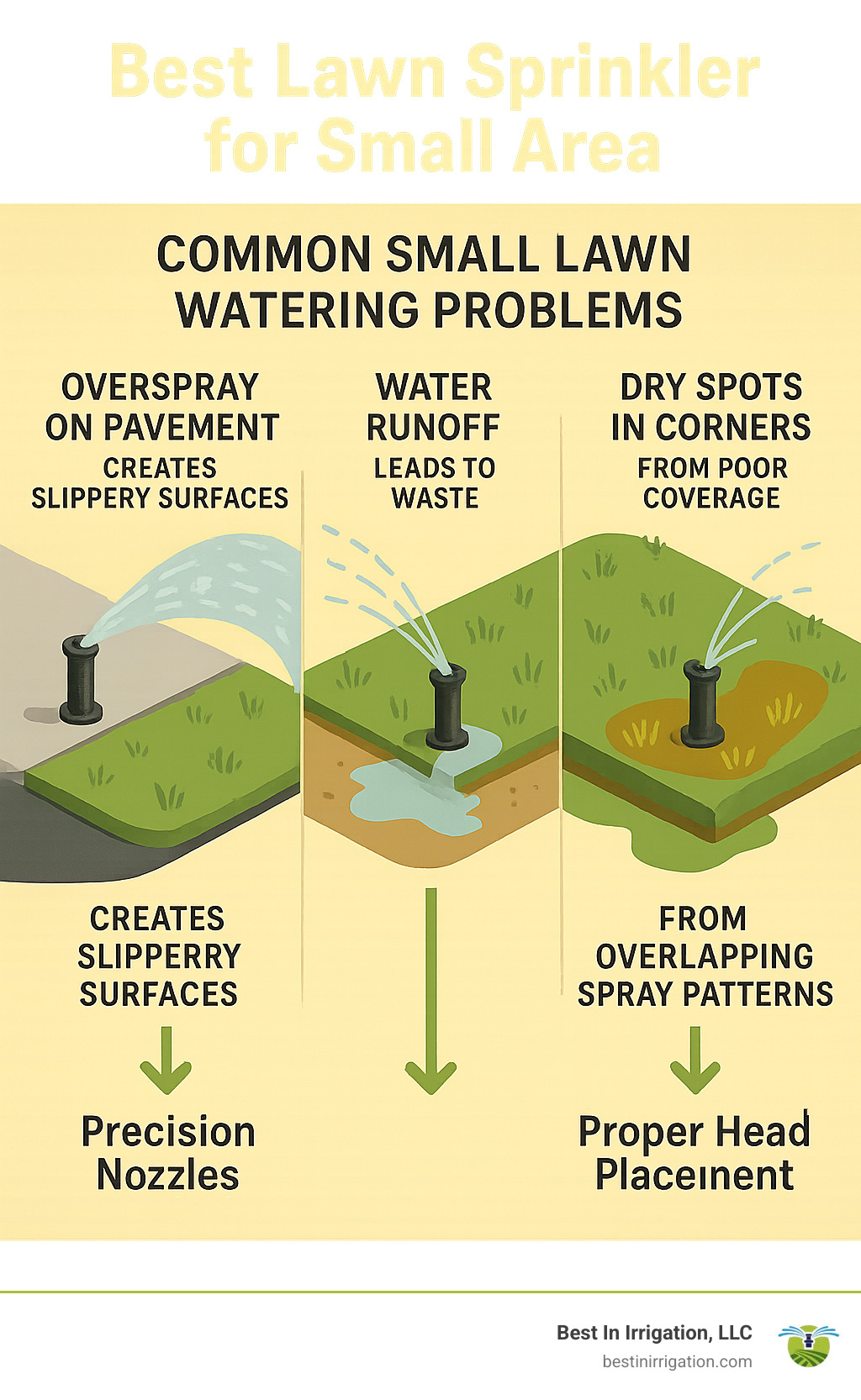
Small residential lawns face unique watering challenges that standard irrigation approaches simply can’t solve effectively. Overspray onto sidewalks, driveways, and fences wastes water and creates maintenance headaches. Uneven coverage leaves dry patches in corners while flooding other areas.
According to irrigation research, homeowners with improperly designed systems often struggle with “donut-shaped zones of brown grass” around sprinkler heads due to inadequate water pressure or poor head selection. The key is matching the right in-ground sprinkler technology to your specific space.
Massachusetts homeowners particularly benefit from weather-responsive smart controllers and high-efficiency nozzles that reduce water waste while maintaining that lush, green lawn you want. Professional installation ensures your system delivers exactly the right amount of water exactly where you need it.
Know your best lawn sprinkler for small area terms:
Why Standard Watering Methods Fail in Small Yards
Picture this: you’re standing in your small yard with a hose-end sprinkler, watching helplessly as it waters your driveway, your neighbor’s fence, and everything except the grass you’re trying to keep green. Sound familiar? You’re not alone in this daily irrigation dance.
Most homeowners start with portable sprinklers thinking they’ll solve their watering woes. After all, how hard can it be to water a small lawn? The reality is that finding the best lawn sprinkler for small area coverage is trickier than it looks. Traditional sprinklers are designed for large, uniform spaces – not the cozy, oddly-shaped yards most of us actually have.
The main villains here are overspray and uneven coverage. Your oscillating sprinkler doesn’t know the difference between your prized petunias and your concrete patio. It just sprays everywhere, creating a mess of problems that go way beyond a slightly damp driveway.
Even worse, many homeowners find themselves moving their sprinkler four or five times just to cover one narrow strip of grass. By the time you’ve repositioned it for the third time, the first area is already bone dry again. It’s like trying to paint a masterpiece with a roller designed for barns.
The Problem with Overspray and Runoff
When water lands everywhere except where you want it, you’re dealing with more than just an annoying inconvenience. Overspray creates a domino effect of problems that hit both your wallet and your property.
Wasted water is the most obvious issue. Every drop that hits your sidewalk is money literally going down the drain. Your water bill climbs while your grass stays thirsty – not exactly the outcome you were hoping for.
Then there’s the slippery pavement problem. Water on walkways creates slip hazards, especially when algae starts growing in those constantly wet spots. Nobody wants their front entrance turning into an ice rink every morning.
Stained fences and siding are another headache. Constant water exposure leaves ugly mineral deposits and creates perfect conditions for mold and mildew. What started as lawn care becomes an expensive cleaning and repair project for your home’s exterior.
The environmental impact shouldn’t be ignored either. Here in New England, water conservation matters. Wasting precious water resources through poorly designed irrigation goes against everything we believe in for sustainable landscaping.
Most frustrating of all is poor soil absorption. When water hits the ground too fast or in excessive amounts, your soil can’t drink it up. Instead, it runs off, taking valuable topsoil and nutrients with it. Your lawn ends up undernourished despite all that watering effort.
Achieving Even Coverage in Awkward Spaces
Small residential lawns come with their own unique challenges that make standard watering methods look downright silly. Try watering a long, narrow strip of grass along your driveway with a traditional sprinkler – you’ll quickly find why so many homeowners give up and let those areas turn brown.
Curved garden beds tucked against patios are another nightmare scenario. Your sprinkler either misses half the area or floods your outdoor furniture. There’s no middle ground with equipment that wasn’t designed for precision work.
Even adjustable oscillating sprinklers that claim to handle narrow areas often spray too high, making them useless on windy days. You end up watering your neighbor’s yard instead of your own, which doesn’t exactly build community goodwill.
The result? Dry patches in corners where the spray pattern just can’t reach, and wet spots where coverage overlaps. Some sections of your lawn thrive while others struggle, creating that patchy, unhealthy look that screams “amateur hour” to anyone walking by.
Inconsistent water delivery becomes the norm instead of the exception. Your lawn develops a split personality – lush and green in some spots, stressed and brown in others. It’s like having a zebra instead of a lawn.
Even some in-ground systems fail when they’re not properly designed for small spaces. Without professional planning and the right equipment, they miss corners, struggle with curved edges, and fail to provide the complete coverage your lawn needs to stay healthy and beautiful.
This is exactly why precision-engineered in-ground systems with adjustable features make such a difference. They’re designed to handle the real-world challenges of residential lawns, not the fantasy of perfectly rectangular grass fields that exist only in sprinkler manufacturer dreams.
The Best Lawn Sprinkler Heads for Small Areas: In-Ground Head Types
When you’re dealing with a small residential lawn, the difference between frustration and satisfaction often comes down to choosing the right sprinkler head technology. We’ve seen too many homeowners struggle with portable sprinklers that leave dry spots in corners, soak the mailman, and generally make lawn care feel like a part-time job.
The best lawn sprinkler for small area irrigation isn’t a one-size-fits-all solution – it’s a carefully designed in-ground system that uses different types of pop-up heads for different zones in your yard. Think of it like having the right tool for each job, except these tools disappear underground when they’re not working.
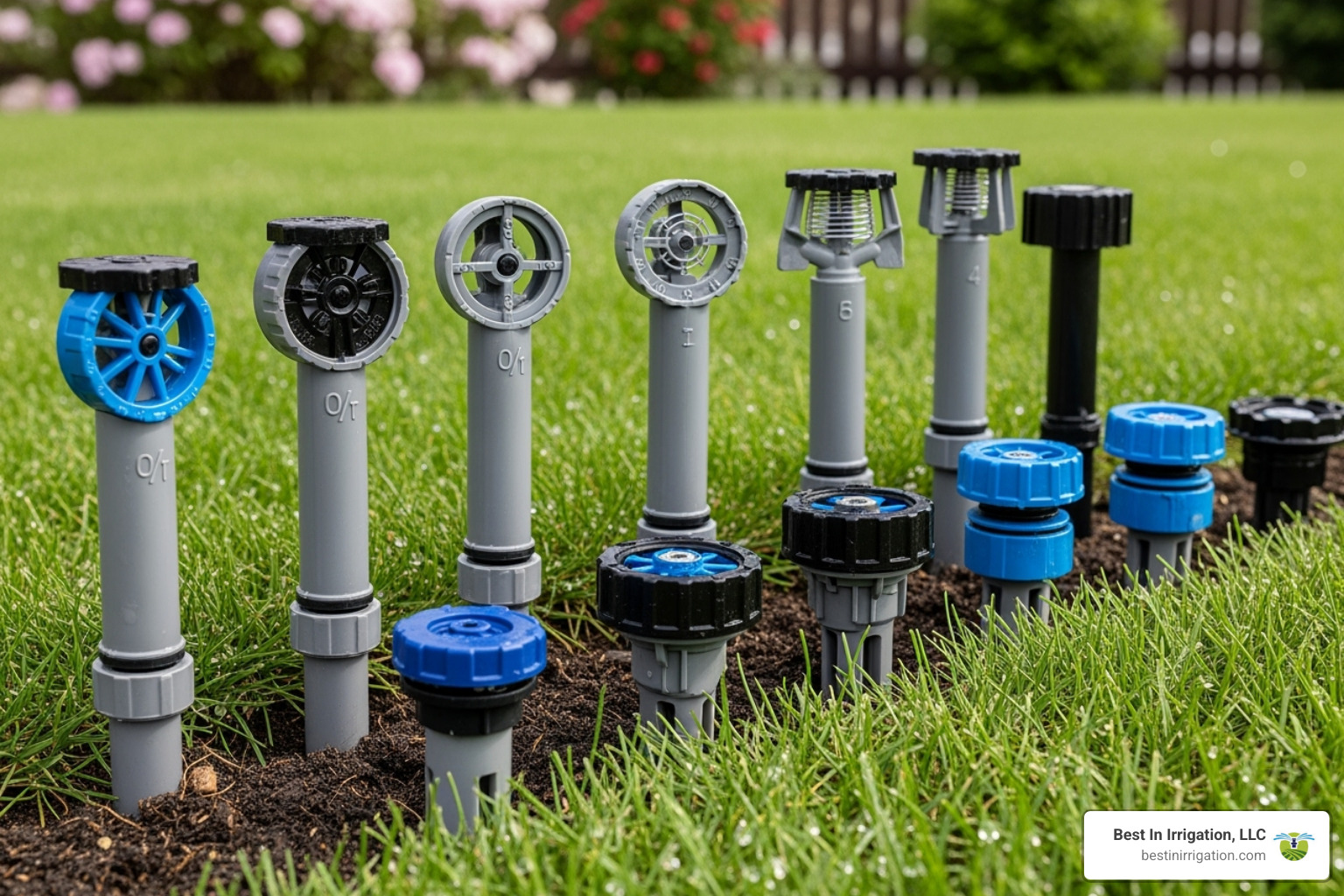
Professional in-ground systems offer something portable sprinklers simply can’t: precision control and aesthetic appeal. No more tripping over hoses or moving sprinklers around your yard like chess pieces. These heads pop up when it’s time to water, do their job efficiently, then disappear back into the ground.
Pop-Up Spray Heads with Precision Nozzles
For most small lawn areas, pop-up spray heads are the reliable workhorses that get the job done right. But here’s where modern technology really shines – today’s precision nozzles can be customized to fit your exact space like a custom suit.
Fixed spray patterns work beautifully for simple, regular shapes. Whether you need a quarter-circle for a corner bed or a half-circle along a property line, these nozzles deliver consistent, predictable coverage every time.
The real game-changer, though, is variable arc nozzles (VANs). These adjustable heads let us dial in the exact spray pattern your space needs, from 0 to 360 degrees. Got a curved garden bed that winds around your patio? We can make the spray follow that curve precisely, ensuring every inch of grass gets watered without a drop landing on your outdoor furniture.
For those tricky strip-pattern areas – like the narrow grass strip between your driveway and fence – we use specialized nozzles that spray in rectangular patterns. End-strip nozzles water from one end of a long, narrow area, while side-strip nozzles cover the length from the side. It’s like having a sprinkler that understands geometry.
Low precipitation rate nozzles are particularly valuable in small spaces because they apply water more slowly and gently. This prevents the runoff that’s so common in compact areas, especially if your soil tends toward clay or your yard has any slope at all.
High-Efficiency Rotary Nozzles
If your small lawn has challenges like slopes, compacted soil, or areas that seem to shed water like a duck’s back, high-efficiency rotary nozzles might be your best friend. Instead of creating a solid sheet of water like spray heads, these clever devices emit multiple rotating streams.
The beauty of this multi-stream technology is in its gentleness. Water falls like a steady, soft rain rather than a downpour, giving your soil time to actually absorb it. This slow water application virtually eliminates runoff, even on slopes that would challenge traditional spray heads.
These nozzles typically offer adjustable radius control from 8 to 30 feet, making them perfect for small to medium residential lawns. They’re particularly effective on slopes where water tends to run off quickly, and in areas with clay soil that needs time to absorb moisture properly.
Bubblers and Micro-Sprays for Garden Beds
Your small landscape isn’t just lawn – it likely includes flower beds, trees, and shrubs that need a completely different watering approach. This is where bubblers and micro-sprays shine, delivering water exactly where plant roots need it most.
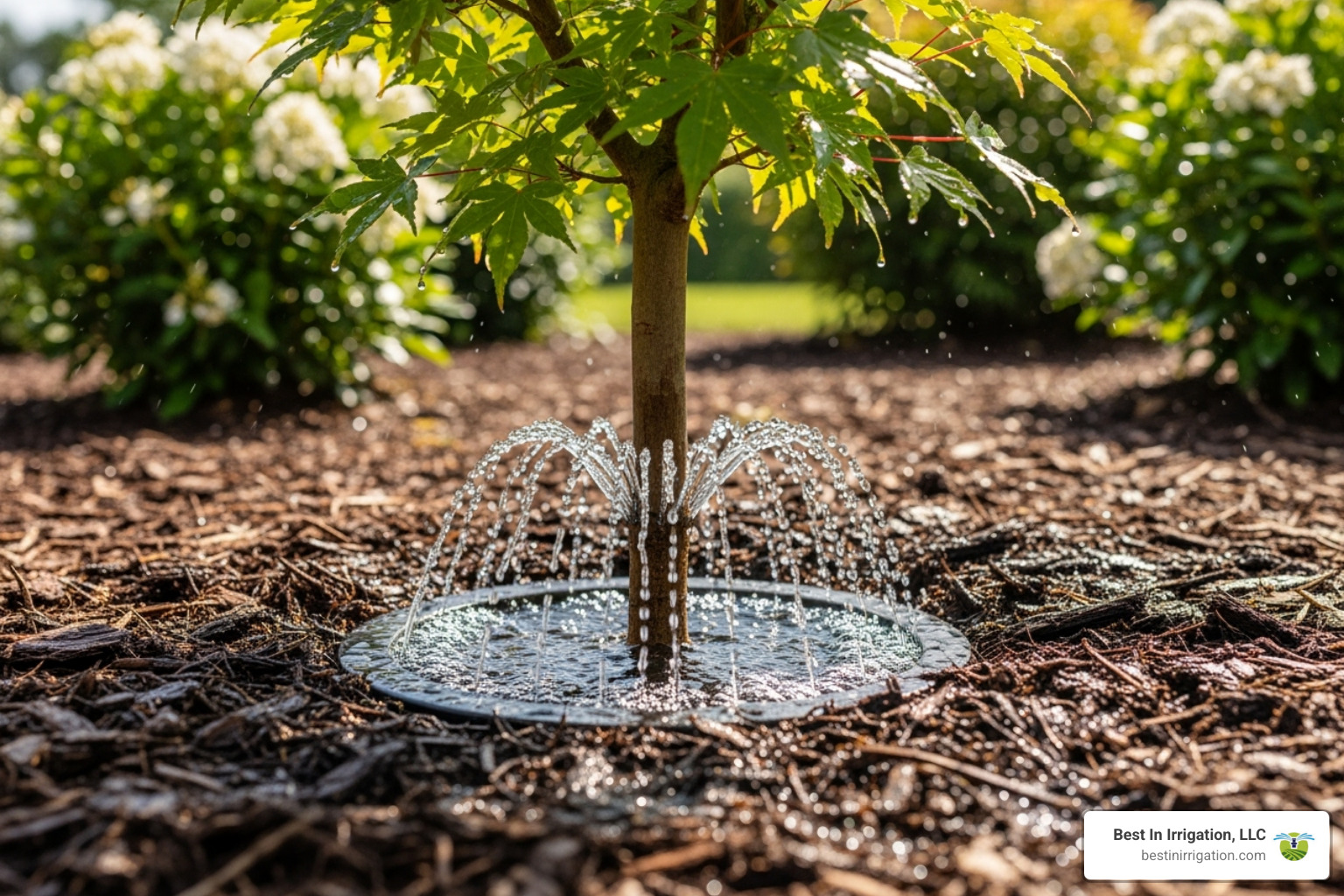
Bubblers provide flood-style watering that creates a small basin of water around plants, encouraging deep root growth and drought resistance. They’re perfect for tree rings and contained flower beds, delivering up to 2 gallons per minute in a 5-foot diameter area with absolutely zero overspray.
This deep root soaking approach is particularly valuable for establishing new plantings or maintaining mature trees and shrubs. Since the water is applied directly at ground level, there’s no risk of wetting foliage (which can promote disease) or accidentally watering your neighbor’s driveway.
Micro-sprays offer a middle ground between bubblers and traditional spray heads. These tiny, precise heads provide gentle, short-range coverage that’s perfect for clusters of plants or delicate garden areas that need more coverage than a single bubbler can provide.
For more detailed information about this specialized watering approach, you can explore Let’s Talk About Flood Bubblers, which explains how this technology can transform your garden’s health and water efficiency.
Key Adjustable Features for Pinpoint Accuracy
The magic of the best lawn sprinkler for small area solutions lies not just in the type of head, but in the sophisticated adjustable features that allow for pinpoint accuracy. Think of it like having a precision instrument instead of a fire hose – you get exactly what you need, exactly where you need it.
This level of precision control is what truly separates a professional in-ground irrigation system from those frustrating hose-end sprinklers that seem to water everything except your lawn. It’s how we ensure water conservation, optimize system performance, and create a truly customized solution for your unique residential landscape.
Customizing Spray Patterns for Irregular Shapes
Let’s be honest – small yards are rarely perfect squares. They come with curved pathways, cozy patios, charming garden beds, and lawn shapes that would make a geometry teacher weep. That’s where the beauty of adjustable spray arcs really shines.
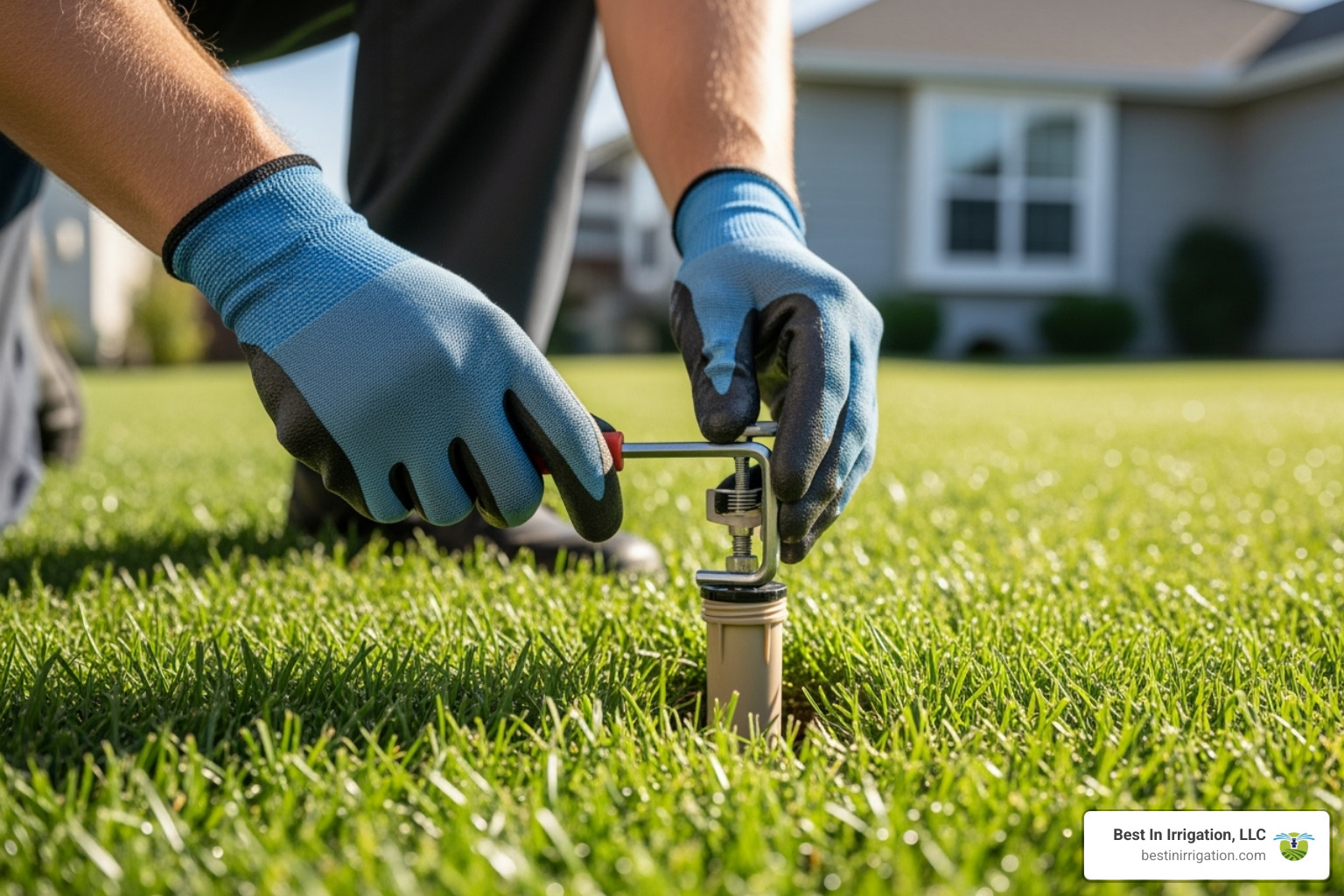
With modern pop-up spray and rotary nozzles, we can fine-tune the arc of water to follow your lawn’s exact contours. Need a sprinkler head to spray precisely 107 degrees to follow that curved garden border? No problem. Want exactly 215 degrees of coverage to hit that corner spot without soaking your neighbor’s prized roses? We’ve got you covered.
Radius control is equally important in tight spaces. There’s nothing worse than a sprinkler that hits your kitchen window or creates a mini-flood against your fence. We can dial down the throw distance to ensure water lands exactly within your lawn’s boundaries – not a drop wasted on pavement or siding.
This ability to set precise boundaries eliminates all that guesswork and constant repositioning you’d face with manual sprinklers. Instead of playing “sprinkler hopscotch” around your yard, you get consistent, targeted coverage that respects every edge of your property.
The Importance of Matched Precipitation Rates (MPR)
Now, this might sound like technical jargon, but Matched Precipitation Rates are actually one of the most important concepts for healthy, efficient irrigation in small residential systems. Think of it this way: imagine trying to fill different sized buckets with the same garden hose – some would overflow while others barely get wet.
MPR means that all the sprinkler heads in a particular zone apply water at roughly the same rate per square foot, regardless of their spray pattern. So whether you have a quarter-circle head tucked in a corner or a half-circle head along a straight edge, they’re both delivering water at the same pace.
This uniform water delivery prevents those frustrating “donut-shaped zones of brown grass” that plague poorly designed systems. Without MPR, some areas get drenched while others stay thirsty, leading to patchy, unhealthy lawns that no amount of fertilizer can fix.
The real beauty comes when we need to mix different head types in your small, complex yard. Maybe we’re using spray heads along the edges and rotary nozzles for the main turf area. With MPR-matched nozzles, we can seamlessly blend these different technologies while ensuring every square inch gets exactly the right amount of water.
This precision translates directly into better system efficiency and water conservation. By applying water at an optimal, uniform rate, we maximize soil absorption and minimize waste – which your water bill will definitely appreciate. For more insights on smart watering practices, check out Smart Summer Watering.
Choosing Durable Materials for Your System
When we design and install an in-ground irrigation system for your home, we think about more than just getting water to your grass. We’re building something that needs to work perfectly for years to come, through New England’s harsh winters, blazing summers, and everything in between.
The truth is, not all sprinkler components are created equal. While you might be tempted by bargain-basement plastic heads at the big box store, we’ve learned (sometimes the hard way) that professional-grade materials make all the difference between a system that works beautifully for decades versus one that leaves you frustrated and calling for repairs every season.
Think of it this way: your irrigation system is like the foundation of your home’s curb appeal. You wouldn’t build a house foundation with cheap materials, so why compromise on the system that keeps your landscape healthy and beautiful?
Here’s what we’ve finded about materials that truly stand the test of time in residential irrigation:
| Component | Professional-Grade Plastic | Metal Components (Brass/Stainless Steel) |
|---|---|---|
| Durability | High-impact, UV-resistant plastics that won’t crack or fade after years of sun exposure | Exceptional longevity – brass nozzles and stainless steel components can last 20+ years |
| Performance | Precision-molded spray patterns that maintain accuracy over time | Superior water flow characteristics and consistent spray patterns |
| Maintenance | Easy to service with replaceable internal components | Corrosion-resistant with minimal maintenance requirements |
| Weather Resistance | Engineered to handle freeze-thaw cycles without cracking | Unaffected by temperature extremes or UV exposure |
| Cost Over Time | Lower upfront cost but may need replacement sooner | Higher initial investment but exceptional long-term value |
Professional-grade plastics aren’t the flimsy materials you might imagine. Modern irrigation plastics are UV-stabilized, meaning they won’t become brittle and crack after a few seasons in the sun. They feature heavy-duty wiper seals that keep dirt and debris out of the moving parts, and they’re designed with precise tolerances that ensure your best lawn sprinkler for small area performance remains consistent year after year.
Brass nozzles and stainless steel components represent the gold standard in residential irrigation. Brass naturally resists corrosion and maintains its spray characteristics indefinitely. Stainless steel springs and mechanisms won’t rust or seize up, ensuring your pop-up heads continue to rise and retract smoothly for decades.
The pop-up height of your sprinkler heads matters too. We typically use heads that extend 4-6 inches above ground level, ensuring they clear your grass height while remaining protected when retracted. Quality heads feature reinforced casings that can handle being hit by mowers or foot traffic without breaking.
What really sets professional systems apart is the attention to detail in the internal mechanisms. Check valves prevent water from draining out of low-lying heads, pressure-regulating devices ensure consistent performance across your entire system, and filtration screens keep debris from clogging your precision nozzles.
After nine years of installing systems throughout Massachusetts, we’ve seen how the right materials can make or break a homeowner’s irrigation experience. The systems we installed with quality components years ago are still running like clockwork, while cheaper installations often require frequent repairs and replacements.
When you invest in a professionally designed system with quality materials, you’re not just buying sprinklers – you’re investing in years of worry-free lawn care and the peace of mind that comes with knowing your system will work beautifully, season after season.
