


Why DIY Sprinkler Systems Are Perfect for Massachusetts Homeowners
The best diy lawn sprinkler system can transform your yard into the lush, green landscape you’ve always wanted while cutting your water bills and giving you complete control over installation.
Top DIY Sprinkler Systems at a Glance:
- Quick-Snap Gear Drive Kit – Best for small yards up to 1,250 sq ft
- Rain Bird 32ETI Pop-Up Kit – Semi-underground convenience for medium lawns
- Orbit WaterMaster + Impact Heads – Modular automation system
- PVC Grid Micro-Spray – Ultra-budget option under $70
- Poly Pipe Stake System – Portable seasonal setup
Massachusetts homeowners face unique challenges with our variable weather and water conservation needs. A DIY sprinkler system lets you water efficiently during our hot summers while avoiding the high costs of professional installation.
The benefits are clear: You’ll save thousands compared to professional systems, customize coverage for your exact lawn shape, and upgrade components as your budget allows. Plus, you can easily winterize the system yourself to handle our harsh New England winters.
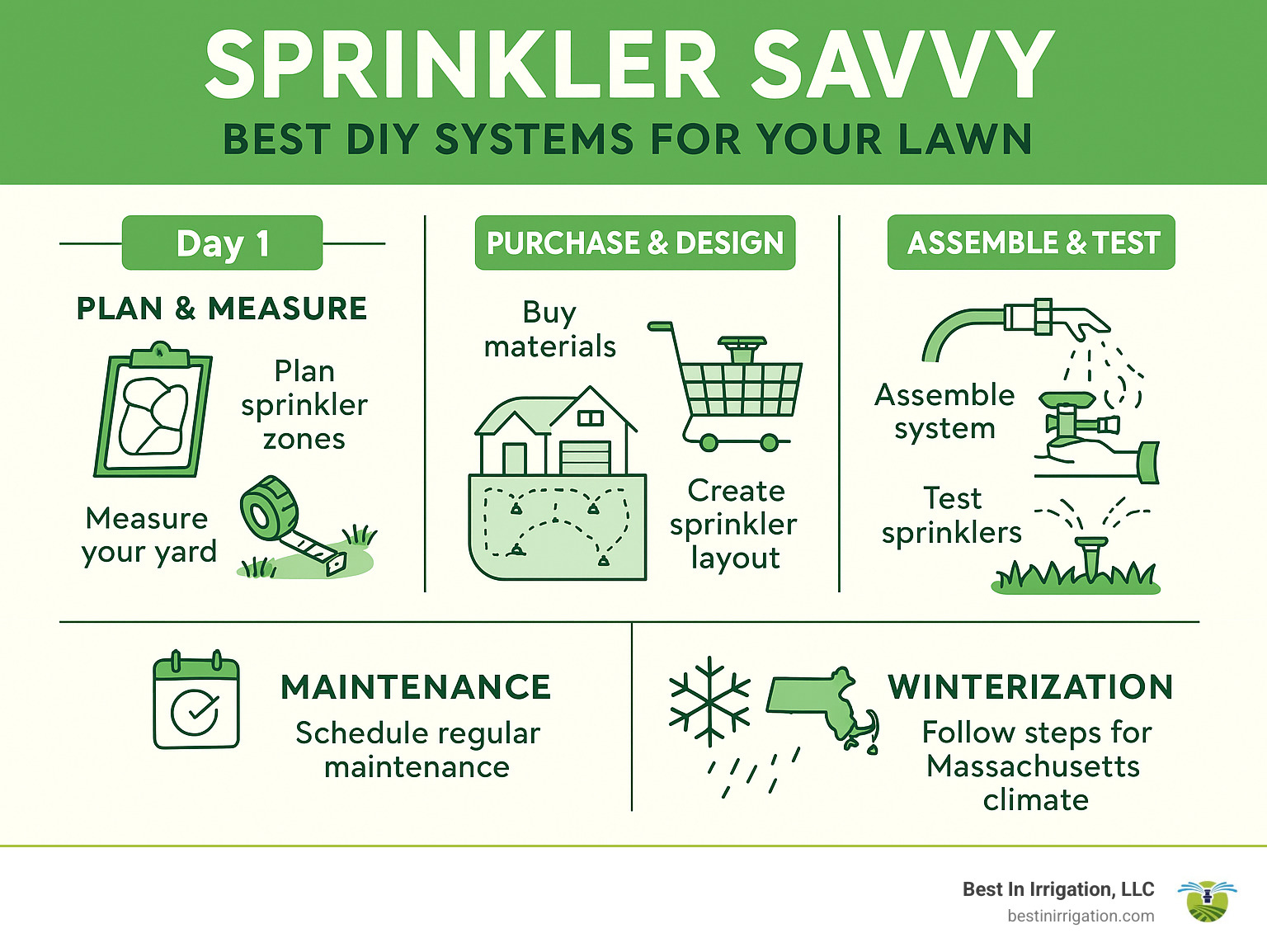
Must-know best diy lawn sprinkler system terms:
– Best Lawn Sprinkler Systems
– best automatic sprinkler heads
– best lawn sprinkler system company
What Makes the Best DIY Lawn Sprinkler System?
Finding the best diy lawn sprinkler system for your Massachusetts home doesn’t have to be overwhelming. The most successful DIY systems share key traits: they’re simple to install, match your water capacity, and handle New England weather.
Above-ground systems are perfect if you want to avoid digging entirely – just connect, position, and you’re watering within hours. Semi-underground systems give you that professional look with pop-up heads while keeping installation manageable. PVC pipe systems let you create custom networks using standard plumbing parts, while hose-based systems might be the smartest starting point for most homeowners.
DIY vs Professional Comparison:
| Feature | DIY System | Professional System |
|---|---|---|
| Initial Cost | Budget-friendly | Premium investment |
| Installation Time | 1-2 weekends | 1-3 days |
| Customization | High | Medium |
| Winterization | Self-service | Service calls |
| Expansion | Easy | Expensive |
| Permits Required | Usually none | Often required |
More info about lawn sprinkler costs
Understanding Your Water Supply
Before choosing any system, you need to know what your home’s plumbing can deliver. Most Massachusetts homes operate between 30-50 PSI water pressure, which works perfectly for residential sprinkler systems.
Testing your water pressure is straightforward with a pressure gauge from any hardware store. Check both static pressure (no water running) and working pressure (while water flows). You’re looking for 40-65 PSI for optimal performance.
The bucket method for calculating flow rate (GPM) is surprisingly accurate. Fill a 5-gallon bucket from your outdoor spigot while timing the process. Divide 5 by the time in minutes for your available GPM.
Never use more than 75% of your total available flow rate. Impact sprinklers typically need 2-4 GPM each, rotary heads want 3-6 GPM, and spray heads use 1-3 GPM.
More info about Tips for Installing Sprinkler System
Planning Your Layout
Smart layout planning separates a best diy lawn sprinkler system from a frustrating collection of dry spots. The secret is “head-to-head coverage” – each sprinkler’s spray pattern should reach its neighbors.
Start by measuring your lawn accurately. Google Maps satellite view works well for basic dimensions. Create a simple scaled drawing for planning sprinkler placement.
Zoning is where the magic happens. Your sunny front lawn needs different watering than shaded areas. Separate these into different zones for optimal water usage. Don’t forget about slopes and soil type – sloped areas need shorter, more frequent cycles to prevent runoff.
Product Roundup: 5 Top-Rated DIY Sprinkler Solutions
After nine years of working with irrigation systems across Massachusetts, we’ve seen homeowners struggle with choosing the right DIY setup. The good news? Today’s best diy lawn sprinkler system options are better than ever, and there’s truly something for every yard size and budget.
We’ve narrowed down the field to five standout systems that consistently deliver great results for homeowners. Each one shines in different situations – whether you’re working with a postage-stamp city lot or dealing with New England’s unpredictable weather patterns.
The rotary kits dominate our top picks because they provide the most even coverage with the least water waste. These systems use rotating heads that throw water in a controlled arc, much like professional installations. For homeowners wanting that “set it and forget it” experience, smart sprinklers with Wi-Fi connectivity have become incredibly popular, especially among our tech-savvy clients.
PVC builds remain the most customizable option – perfect if you enjoy weekend projects and want complete control over your system design. Meanwhile, hose-end timers paired with quality sprinkler heads offer the easiest entry point for beginners who aren’t ready to commit to a permanent installation.
For those watching every dollar, our budget picks prove you don’t need to spend a fortune to keep your lawn green. These systems might require a bit more hands-on management, but they deliver impressive results when properly set up.
What makes these five systems special isn’t just their performance – it’s their proven track record with real homeowners facing real Massachusetts weather. From scorching July heat waves to unexpected spring frosts, these systems have shown they can handle whatever New England throws at them.
The key is matching the right system to your specific needs, which is exactly what we’ll help you do in the detailed reviews that follow.
1. Quick-Snap Gear Drive Kit – Best DIY Lawn Sprinkler System for Small Yards
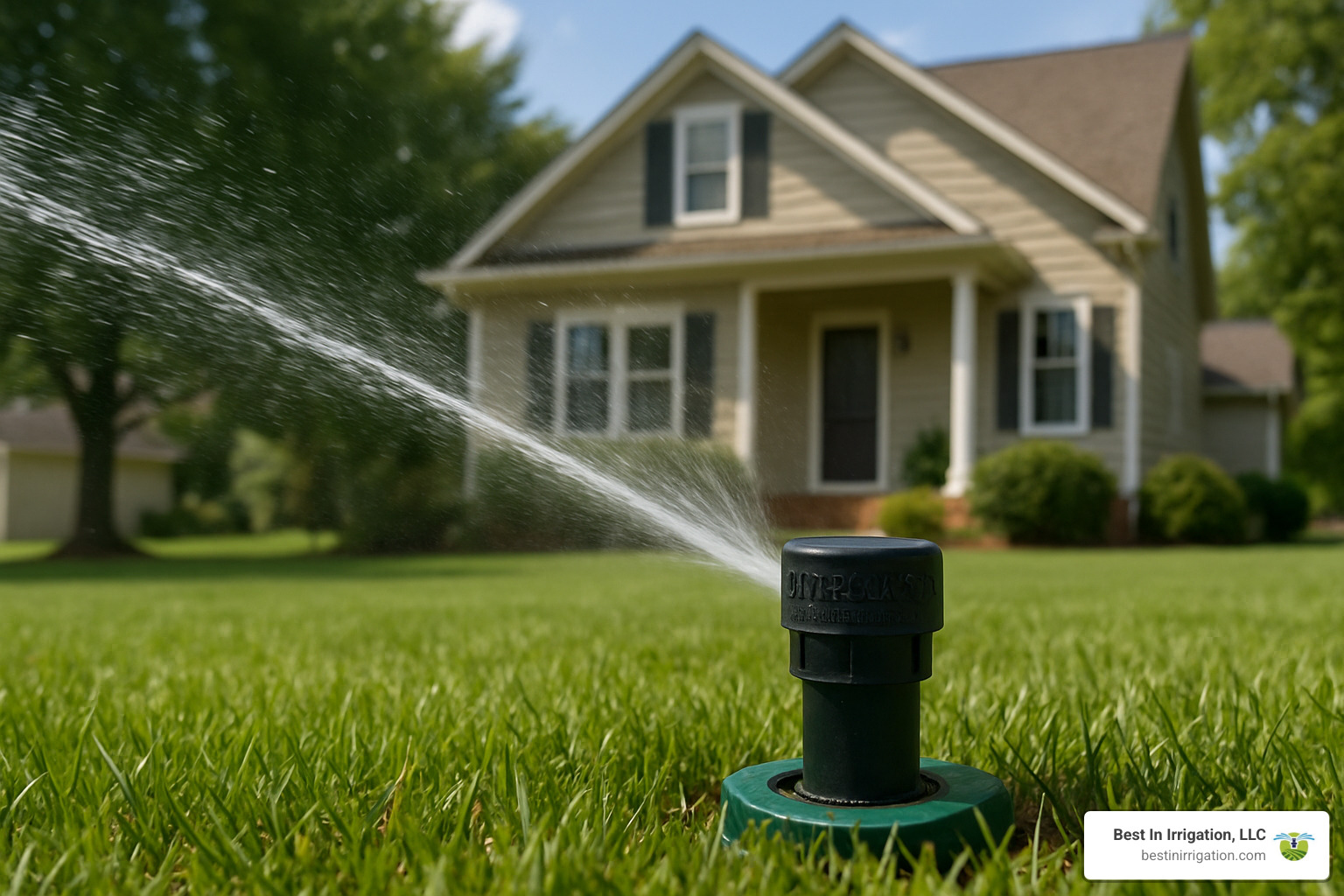
If you’re looking for the best diy lawn sprinkler system for a smaller yard, the Quick-Snap gear drive kit hits that sweet spot between simplicity and performance. This isn’t your typical wobbly sprinkler that tips over in the wind – it’s a serious piece of equipment that happens to be incredibly easy to install.
The magic happens with the gear-driven rotating mechanism that creates smooth, consistent coverage across your entire lawn. With a 40-foot radius, one unit can easily handle up to 1,250 square feet. That means most front yards or smaller backyards can be covered by a single sprinkler – pretty impressive for a DIY solution.
What really sets this system apart is its adjustable spray pattern. Using the included metal key, you can dial in coverage from a narrow 20° arc for those tricky side yard strips all the way up to a full 360° circle. No more guessing whether you’re hitting every corner of your lawn.
The above-ground installation means you can literally have this running in under an hour. The clever design lets you dig a small hole about 7.5 inches deep to conceal the sprinkler body while keeping it fully functional. Your neighbors will think you hired professionals, but you’ll know better.
Here’s where it gets really smart – pair this with a basic hose-end timer and you’ve got complete automation for your watering schedule. One Massachusetts homeowner told us they were amazed at how professional their lawn looked after installing this system, especially considering how simple the setup was.
The durable construction means this isn’t a one-season wonder. The gear mechanism outlasts those cheap oscillating sprinklers by years, making it a solid investment for homeowners who want reliability without the complexity of underground systems.
This system works best for rectangular or square lawn areas between 500-1,500 square feet. If your yard fits that description and you want to avoid trenching, this Quick-Snap kit delivers professional results with true DIY simplicity.
Sprinkler System Install – Overview
More info about Best Lawn Sprinkler Systems
2. Rain Bird 32ETI Pop-Up Kit – Semi-Underground Convenience
If you want the polished look of a professional system without the professional price tag, the Rain Bird 32ETI kit might be your perfect match. This best diy lawn sprinkler system option gives you those satisfying pop-up sprinklers that disappear into your lawn when they’re not working their magic.
The kit handles 1,000-3,000 square feet of lawn coverage, making it ideal for most suburban backyards. You’ll need at least 6 GPM of water flow and 40-75 PSI of pressure to keep everything running smoothly. Each sprinkler head can reach 16-24 feet, so you’ll get solid overlap coverage without any annoying dry spots.
What makes this system special is its self-draining design. Living in Massachusetts means dealing with freezing temperatures, and this feature automatically protects your investment when winter hits. No more worrying about burst pipes or cracked fittings – the system takes care of itself.
The kit comes with everything you need to get started: six pop-up rotary sprinklers with Rain Curtain nozzles, 125 feet of distribution tubing, an automatic timer with manual override, and all the fittings and tools for installation. It’s like getting a complete irrigation starter pack in one box.
Installation is refreshingly straightforward compared to full underground systems. You’ll only need to dig 6-12 inches deep instead of the 18+ inches that professional systems require. Your back will thank you, and you can actually finish the project in a weekend instead of hiring a crew.
The pop-up heads are the real stars here. When the system’s off, they sit flush with your lawn, so you can mow right over them. When it’s time to water, they rise up like little lawn soldiers and get to work. Your neighbors might wonder how you got such a professional-looking setup.
Pro tip: If you have any slopes in your yard, run two shorter watering cycles instead of one long one. This prevents water from running off and actually gets more moisture down to the roots where it belongs.
This system works best for homeowners who want their sprinklers to be invisible when not in use but still want the convenience of automatic watering. It’s the perfect middle ground between basic above-ground systems and full professional installations.
3. Orbit WaterMaster Timer + Impact Heads – Modular & Expandable
When you want the flexibility to grow your irrigation system over time, the Orbit WaterMaster timer paired with brass impact heads creates a rock-solid foundation. This setup thinks like a professional installation but installs like a weekend DIY project.
The Orbit WaterMaster 4-zone timer acts as the brain. Each zone can run on its own schedule, so your sunny front lawn gets the deep soak it needs while a shaded side yard receives a lighter cycle. It’s like having four separate sprinklers that coordinate perfectly.
Brass impact sprinklers are the workhorses of this design. They deliver adjustable coverage from 20 to 41 feet and handle New England weather without cracking. That familiar tick-tick-tick sound means your lawn is getting reliable, even water.
What makes this a strong best diy lawn sprinkler system contender is its modular expandability. Start with one zone now, add another later—spreading the cost while you learn the system inside and out.
Installation stays above ground with polyethylene supply tubing and quick-connect fittings. No trenching, permits, or calling 811 for deep digs. Run the flexible tubing along fences or garden edges, stake the impact heads where you need them, and snap everything together like garden-hose parts.
One Massachusetts homeowner built a complete 4-zone setup that runs automatically all season and survives winter without costly blow-outs. The freeze-resistant design means you just drain the hoses, coil them up, and you’re done.
The beauty of this approach is easy modification. Add a new flower bed? Relocate a head. Need more reach? Snap in an extra impact sprinkler. Quick-connect fittings make changes fast and tool-free.
More info about Best Automatic Sprinkler Heads
4. PVC Grid Micro-Spray System – Ultra-Budget Garden Coverage
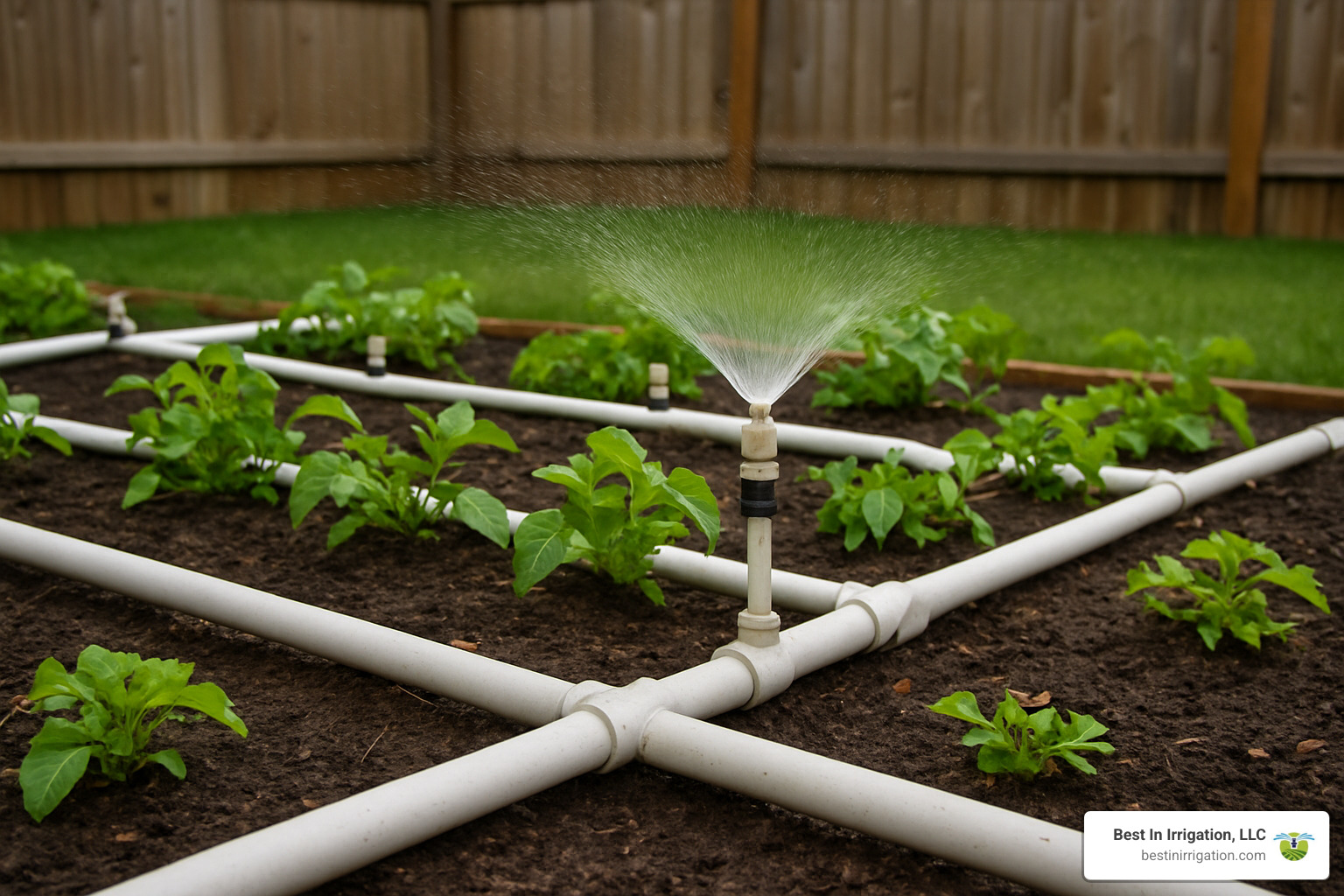
Sometimes the best diy lawn sprinkler system is the one that gets the job done without breaking the bank. If you’re looking at your lawn thinking “I just need something that works,” this PVC micro-spray system might be your perfect match.
Think of this system as the ultimate DIY project for the handy homeowner. You’re essentially building your own custom sprinkler network using parts from the plumbing aisle. The beauty lies in its simplicity – 3/4-inch PVC pipe forms the backbone, while micro-spray nozzles deliver gentle, targeted watering exactly where you need it.
What makes this system special is how perfectly it fits oddly-shaped yards and garden beds. Got a narrow strip along your driveway that never gets enough water? This system handles it. Have raised beds that need consistent moisture? Perfect application.
The modular design means you can start small and expand as your confidence (and garden) grows. Build one section, test it out, then add more as needed. No massive upfront investment required.
Installation is surprisingly straightforward. You’ll connect standard PVC fittings to create your water distribution network, then attach micro-spray nozzles at regular intervals. The half-circle pattern nozzles work best for most residential applications, giving you good coverage without waste.
One of our favorite features is the easy winter storage. If you choose not to cement the joints permanently, the entire system breaks down into manageable pieces for garage storage. Come spring, it reassembles in about an hour.
This system really shines in vegetable gardens and flower borders where gentle watering matters more than broad coverage. The micro-sprays won’t disturb delicate seedlings or wash mulch around like larger sprinklers can.
Here’s a pro tip that makes all the difference: when drilling holes for your nozzles, only go halfway through the pipe wall. This prevents cracking and keeps water pressure consistent across all your spray points. Trust us on this one – it’s the difference between a system that works great and one that frustrates you all season.
5. Poly Pipe Stake System – Quick Seasonal Setup
If you’re looking for the best diy lawn sprinkler system that disappears completely in winter, the poly pipe stake system is your answer. This brilliant solution gives you professional-quality irrigation without any permanent commitment to your landscape.
The beauty of this system lies in its complete flexibility. Using bendable polyethylene tubing that won’t crack during our harsh Massachusetts freeze-thaw cycles, you can create custom watering patterns that adapt to your changing yard needs. One homeowner told us: “I set it up in May and take it down in October – my lawn stays green all summer, and I never worry about frozen pipes.”
Here’s how it works: You connect 100-200 feet of half-inch polyethylene tubing directly to your outdoor spigot. Every 15-20 feet along the line, you install simple T-fittings that connect to sprinklers mounted on 2-3 foot stakes. The stakes push right into your lawn – no digging, no trenching, no permanent changes to your landscape.
The auto-drain capability sets this system apart from cheaper alternatives. When you turn off the water, the flexible tubing naturally drains itself, preventing the freeze damage that destroys rigid systems. This makes it perfect for homeowners who want to avoid the hassle and expense of professional winterization.
Portability is the real game-changer. Need to mow the lawn? Pull up a few stakes and move them aside. Planning a backyard party? Relocate the sprinklers in minutes. Want to try a different watering pattern? Simply reposition the stakes until you find what works best.
This system particularly appeals to renters and new homeowners who aren’t ready to commit to permanent irrigation. You can take it with you when you move, or store the entire system in your garage during winter months. Most people can roll up the complete system and store it in a space smaller than a large cooler.
The cold-weather friendliness makes this an ideal choice for Massachusetts homeowners. While rigid PVC systems can crack during winter, the flexible poly tubing actually becomes more pliable in cold weather, reducing the risk of damage from accidental impacts or ground shifting.
Setup and takedown each take less than an hour once you get the hang of it. Spring installation becomes an enjoyable ritual that marks the beginning of lawn care season, while fall removal gives you that satisfying feeling of being prepared for winter.
Smart Automation & Water Efficiency Upgrades
Your best diy lawn sprinkler system doesn’t have to stay basic forever. Today’s smart technology can transform even simple setups into intelligent watering networks that save serious money on water bills.
Modern automation adapts to your lawn’s actual needs. Instead of blindly watering on schedule, smart controllers monitor weather patterns and seasonal changes. Many homeowners see water usage drop by 30-50% while maintaining healthier lawns.
Wi-Fi controllers represent the biggest leap forward in DIY irrigation. These units connect to your home network and give complete smartphone control. Bluetooth timers offer a middle ground without Wi-Fi complexity.
Latest research on water-saving irrigation
The real magic happens with weather-based scheduling. Smart controllers automatically check forecasts and skip watering when rain is expected. Soil moisture sensors provide ultimate precision by measuring actual moisture levels and only triggering watering when needed.
More info about Best Automatic Sprinkler System
Choosing a Controller
Single-dial timers work perfectly for simple setups with one or two zones. Multi-zone controllers become essential once you have different areas with different watering needs. Smart controllers with Wi-Fi offer the most features and pay off through water savings.
Program for early morning watering between 5-7 AM to minimize evaporation. Use multiple short cycles on slopes instead of one long cycle to prevent runoff.
Sensors & Backflow Protection
Rain sensors represent the simplest upgrade that delivers immediate results. These mechanical devices automatically shut off sprinklers when they detect adequate rainfall.
Soil moisture sensors measure actual moisture levels in the root zone, only allowing watering when plants genuinely need it. Freeze sensors shut off water flow when temperatures drop below 35°F, preventing costly freeze damage.
Backflow prevention protects your home’s water supply. Simple dual-check valve assemblies handle most residential requirements without complexity.
Installation Steps & Common Mistakes to Avoid
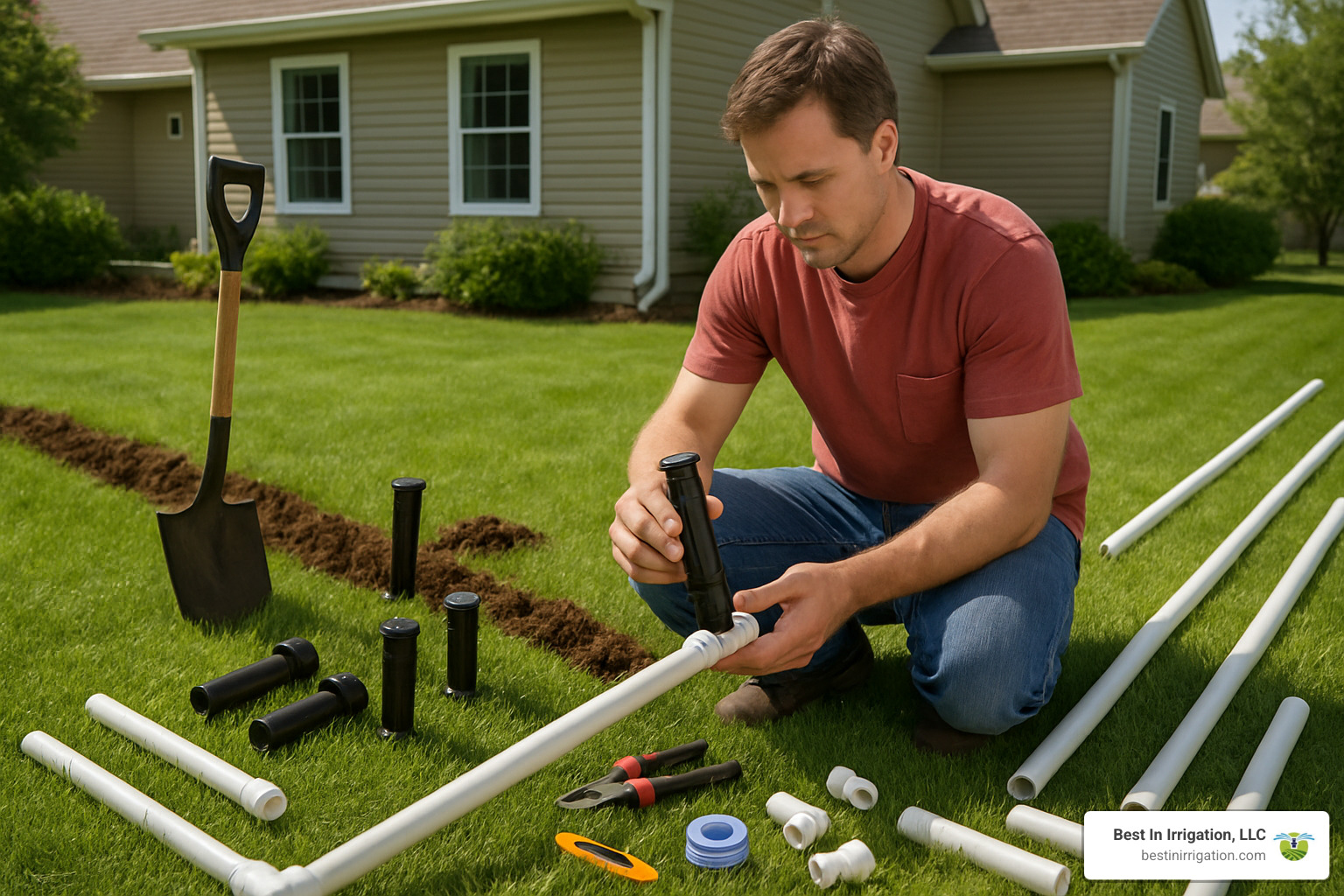
Proper installation ensures years of reliable operation and prevents costly mistakes. Following proven procedures saves time and prevents problems.
More info about How to Install a Lawn Sprinkler System
Pre-Installation Checklist:
– Call 811 (Dig Safe) at least 72 hours before any digging
– Check local codes for permit requirements
– Test water pressure and flow rate
– Create detailed layout plan with measurements
– Purchase all materials plus 10% extra
Step-by-Step Snapshot
Phase 1: Layout and Planning
1. Mark sprinkler locations with spray paint
2. Measure and mark pipe runs
3. Identify connection points to water supply
Phase 2: Installation
1. Cut PVC pipes to required lengths
2. Dry-fit entire system before gluing
3. Install main supply lines first
4. Add branch lines and sprinkler connections
5. Install timer and control valves
Phase 3: Testing and Adjustment
1. Flush all lines before installing sprinkler heads
2. Install heads and test coverage patterns
3. Adjust spray patterns for optimal overlap
4. Program timer schedules
Troubleshooting & Optimization
Common Problems and Solutions:
Dry Spots: Check for clogged nozzles, verify adequate water pressure, adjust spray patterns for proper overlap.
Excessive Pressure: Install pressure-reducing valves if pressure exceeds 75 PSI, use pressure-compensating nozzles.
Uneven Coverage: Level all sprinkler heads properly, replace worn nozzles, verify proper head spacing.
Maintaining & Winterizing
Massachusetts winters require proper system preparation to prevent freeze damage.
Fall Winterization:
– Above-Ground Systems: Disconnect and drain all hoses and timers, remove sprinkler heads and store indoors
– Semi-Underground Systems: Use compressed air to blow out water from buried lines, drain valve boxes
Spring Startup: Inspect all components for winter damage, clean and test sprinkler heads, check timer batteries.

Frequently Asked Questions about DIY Sprinklers
How much does a DIY lawn sprinkler system cost on average?
The beauty of DIY sprinkler systems lies in their affordability and flexibility. Budget-friendly options begin with simple above-ground systems starting around $70-150. Mid-range systems with multi-zone capability typically cost $200-500. Premium DIY systems with smart controllers and professional-grade components range from $500-1,200.
The best diy lawn sprinkler system for your situation depends on yard size, complexity, and desired features. DIY systems can be expanded gradually – start with basic coverage and add zones or smart features as your budget allows.
Do I need a permit or backflow inspection for a home sprinkler?
Most DIY sprinkler systems don’t require permits because they connect to existing outdoor faucets without major plumbing modifications. Permit-free installations typically include above-ground systems or those requiring only shallow trenching.
Backflow prevention is more important than permits. Simple dual-check valve assemblies protect your home’s water supply and satisfy most local requirements.
Before you dig, always call 811 (Dig Safe) at least 72 hours in advance, even for shallow installations.
What PSI and GPM are ideal for residential sprinkler heads?
Optimal pressure ranges for residential sprinkler heads fall between 30-50 PSI, with the sweet spot around 40-45 PSI. Flow rate requirements vary by sprinkler type – spray heads need the least water flow, rotary heads require more but cover larger areas, and impact sprinklers offer excellent durability.
Planning your system means never using more than 75% of your available flow rate across all zones. This ensures proper pressure at every sprinkler head and prevents weak coverage.
Conclusion
Creating the best diy lawn sprinkler system for your Massachusetts home is one of those satisfying projects that keeps paying dividends year after year. You’ll save thousands while building something that works perfectly for your specific needs.
The beauty of DIY irrigation lies in its flexibility. Whether you start with the Quick-Snap Kit for small yards or the Orbit WaterMaster multi-zone system, you’re never stuck with your initial setup. Start with reliable coverage, then add smart controllers and weather sensors as your budget grows.
At Best In Irrigation, LLC, our 9 years of New England irrigation experience has taught us that the best diy lawn sprinkler system isn’t necessarily the most expensive one. It’s the system that reliably waters your specific lawn, fits your maintenance style, and grows with your needs.
Massachusetts homeowners face unique challenges with variable weather and water conservation requirements. A DIY system gives you control to adapt quickly – longer cycles during hot August days, automatic shutoffs during spring rains, and easy winterization for harsh winters.
The water savings alone make DIY irrigation worthwhile. Most homeowners see water bills drop significantly while lawn health improves dramatically. Your DIY system delivers complete control over your lawn’s irrigation, substantial cost savings, and the satisfaction of building something that works exactly how you want it.
More info about garden irrigation solutions
Pick the system that matches your current needs and budget, follow our installation guidelines, and get ready to enjoy the best lawn in your neighborhood.
