


Why Understanding Sprinkler System Costs Matters for Massachusetts Homeowners
The average price to install a sprinkler system ranges from $1,800 to $5,200 for most residential properties, with typical Massachusetts homeowners spending $2,400 to $7,000 depending on yard size and system complexity.
Quick Cost Overview:
- Per square foot: $0.20 – $1.00
- Per zone: $450 – $1,000
- Quarter-acre yard: $2,500 – $5,500
- Half-acre yard: $3,500 – $7,000
- One-acre yard: $6,000 – $12,000
Manual watering is time-consuming and inefficient. An automatic in-ground sprinkler system solves these problems by delivering water precisely, running on a schedule, and even reducing water bills with smart technology.
However, installation costs vary widely based on yard size, soil conditions, system features, and complexity. Understanding what drives these costs helps you budget accurately and avoid surprises.
Key benefits that justify the investment:
- Time savings – No more dragging hoses or forgetting to water.
- Water conservation – Smart systems use 20-50% less water.
- Healthier lawns – Consistent watering promotes deep root growth.
- Property value – Can increase home value by 7-15%.
Knowing the real numbers behind sprinkler system installation puts you in control of your lawn care investment.
Average price to install sprinkler system further reading:
What is the Average Price to Install a Sprinkler System?
Nationally, homeowners invest between $1,800 and $5,200 for a complete in-ground automatic sprinkler system. Here in Massachusetts, typical installations run from $2,400 to $7,000, covering a fully functional system that keeps your lawn lush without you lifting a finger.
On a smaller scale, the cost per square foot for professional installation falls between $0.20 and $1.00. For larger properties, the cost per acre typically ranges from $6,000 to $10,000. As property size increases, the cost per square foot often drops because fixed expenses are spread across a larger area.
Professional installation is about designing a system that delivers water precisely where and when your lawn needs it, leading to healthier grass and lower water bills. You can explore more about our approach on our Lawn Sprinkler System Installation page.
Breaking Down the Average Price to Install a Sprinkler System by Component
Understanding where your money goes helps you see the value in a professional installation.

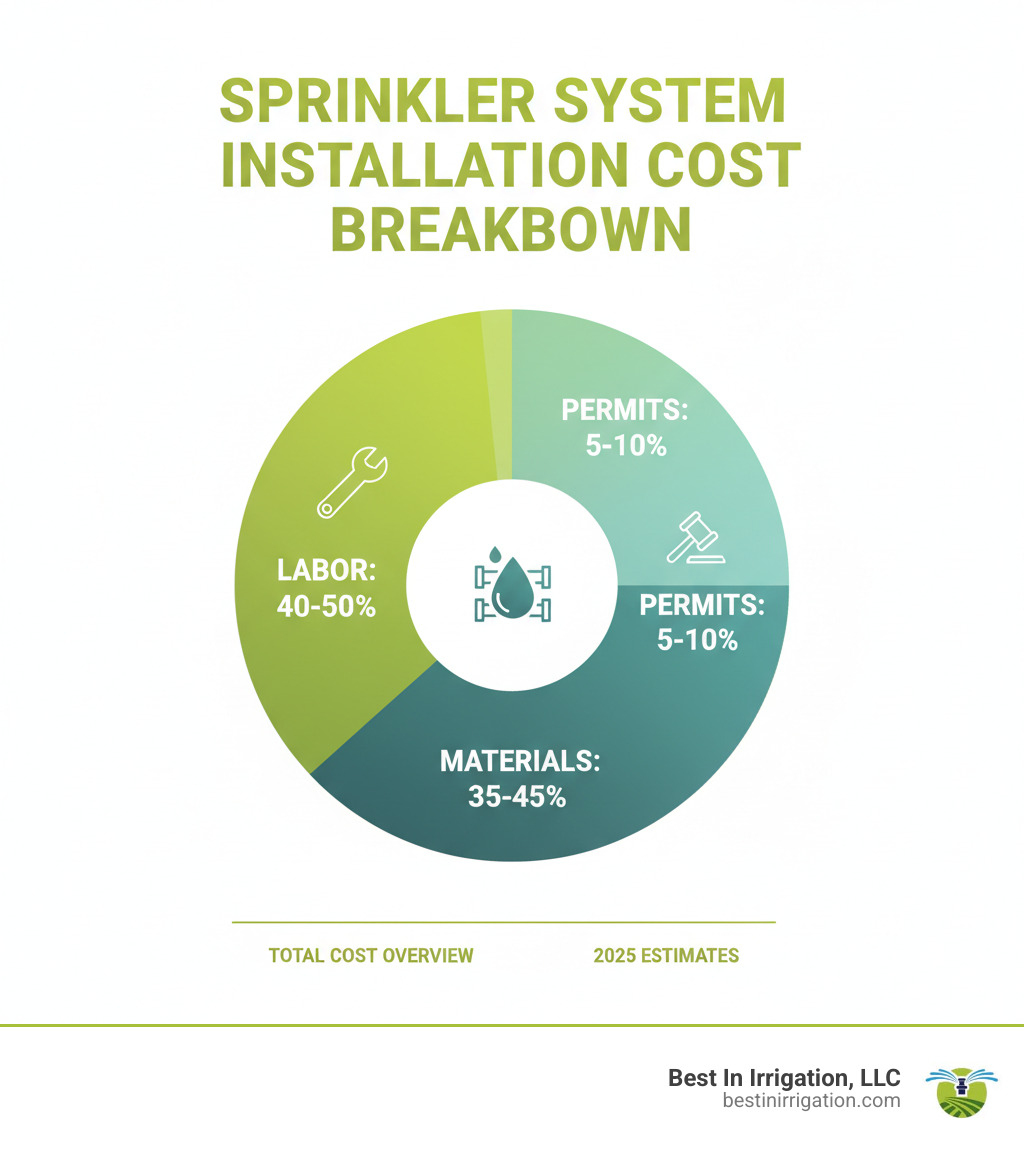
- Labor costs make up 40-50% of the total. Professional contractors charge between $50 and $100 per hour, and a typical residential job takes 8 to 16 hours. Complex yards with rocky soil or existing landscaping require more time.
- Material costs are the other major component. This includes pipes that form the underground network, valves that control water flow to different zones, and the controller—the brain of the operation. Basic controllers start around $40, while smart Wi-Fi models can run $300 to $500.
- A backflow preventer is a crucial safety device that prevents irrigation water from contaminating your home’s drinking water. Installation typically costs $250 to $550 and is required by most municipalities.
Cost Per Irrigation Zone Explained
A zone is a section of your landscape watered independently by its own valve. The average cost per zone is $450 to $1,000, with the first zone costing more as it includes the controller and main connection. Subsequent zones typically add $750 to $1,000 each.
The number of zones needed depends on several factors:
- Yard Size and Layout: Larger or irregularly shaped lots need more zones for complete coverage.
- Hydrozoning: This smart design approach groups plants with similar water needs. Thirsty lawns are zoned separately from drought-tolerant gardens.
- Sun vs. Shade: Sunny areas dry out faster and require a different watering schedule than shady spots, necessitating separate zones.
- Lawn vs. Garden Beds: These areas require different watering strategies and amounts, so they are placed in different zones.
Most quarter-acre residential yards in Massachusetts need 3 to 5 zones to ensure every plant gets what it needs without wasting water.
Sprinkler System Cost by Yard Size
Your yard’s size is the most direct factor influencing the total cost. Larger yards require more materials, zones, and labor.
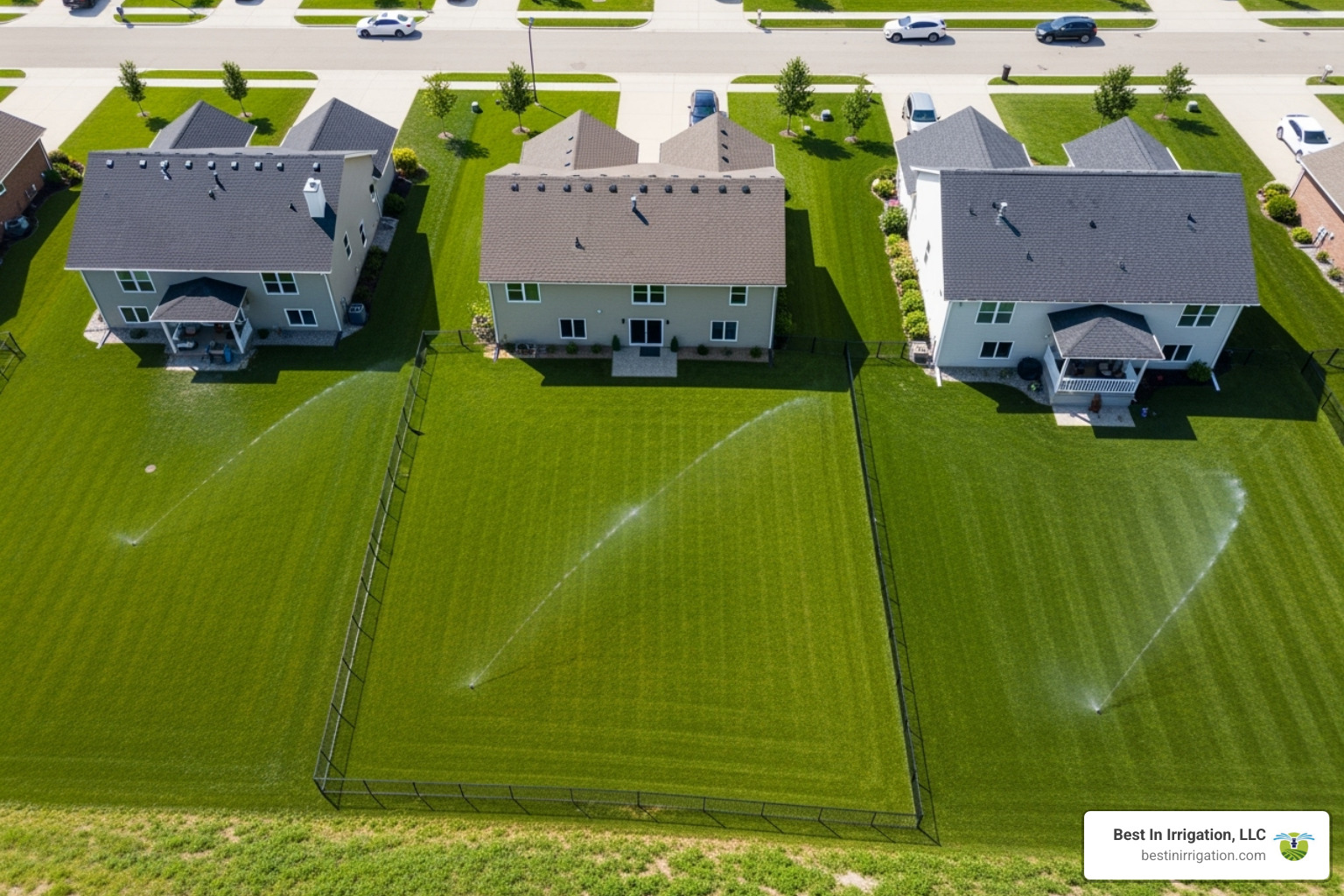
- For a 1/4-acre yard: Expect to pay between $2,500 and $5,500 for a system with 3 to 5 zones. This is the most common residential scenario in Massachusetts.
- For a 1/2-acre yard: The cost scales to between $4,100 and $7,800, usually requiring 5 to 8 zones.
- For a 1-acre yard: Installation typically ranges from $7,200 to $12,600 and may need 8 to 12 zones depending on landscape complexity.
As property size increases, the cost per square foot tends to decrease slightly, as fixed costs are spread over a larger area.
Want to dive deeper into the numbers? Check out our detailed guide on How Much Does a Lawn Sprinkler System Cost? for more yard-specific breakdowns.
Key Factors That Drive Your Installation Cost
The average price to install a sprinkler system is a starting point; your property’s unique characteristics and chosen features will determine the final cost. A flat, open lawn is simpler and less expensive to work with than a yard with slopes, trees, and patios.
This is why we provide custom quotes for every Irrigation System Installation. Your property deserves a system designed specifically for its needs.
How Yard and Landscape Features Affect the Average Price to Install a Sprinkler System
Your yard’s layout and features play a significant role in determining installation costs. Here are the key factors we assess:
- Yard Shape: Irregularly shaped properties with curves and corners require more strategic planning and materials to ensure complete water coverage.
- Slopes: Sloped terrain can cause water runoff and pooling. We use special pressure-compensating sprinkler heads and may recommend drainage solutions to ensure even watering.
- Existing Landscaping: We carefully work around mature trees, gardens, and shrubs, which can make trenching more complex and time-consuming.
- Tree Roots: Large root systems, common in Massachusetts, can obstruct pipe runs and require careful navigation with specialized equipment.
- Hardscaping: Patios, walkways, and driveways are obstacles we must route pipes around or under using techniques like directional boring to protect your existing structures.
- Soil Conditions: Massachusetts soil varies from sandy to clay to rocky. Rocky soil, in particular, requires more time and specialized equipment for trenching, which increases labor costs.
Choosing Your System: Cost Differences in Sprinkler Types
The type of system you choose impacts both your upfront investment and long-term savings.
- In-ground Systems: These are the most common residential systems, featuring pop-up heads that disappear after watering. They are durable, lasting 15-20 years or more, and provide a clean, uncluttered look.
- Drip Irrigation: This method delivers water directly to plant roots through a network of tubes. It’s highly efficient for garden beds and shrubs, using up to 50% less water than traditional sprinklers, though material costs can be higher.
- Smart Systems: These represent the cutting edge of irrigation. A smart controller connects to Wi-Fi and uses real-time weather data to adjust watering schedules, skipping cycles when rain is forecast. Rain and soil moisture sensors further improve efficiency, ensuring plants get water only when needed.
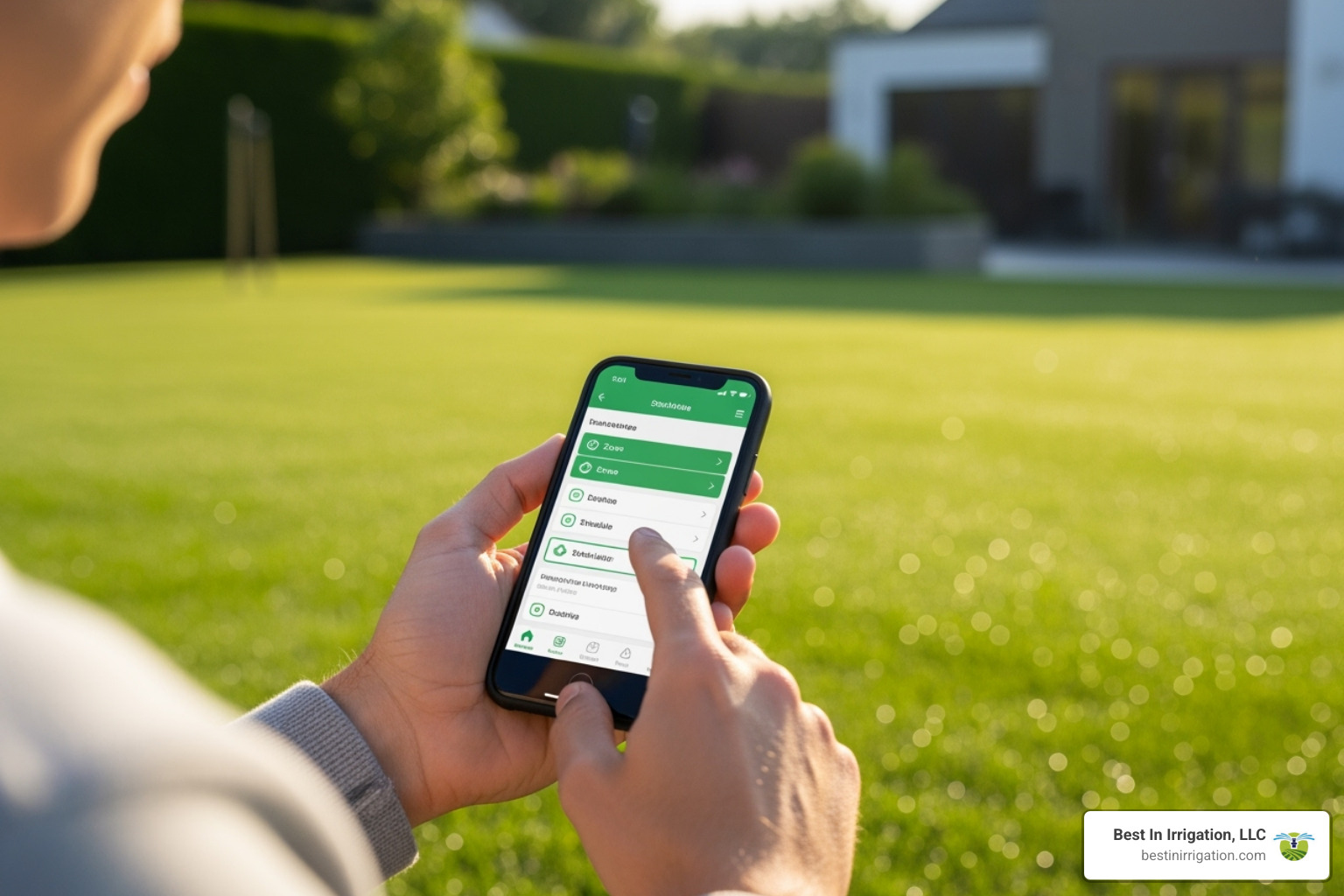
While smart features have a higher upfront cost, they often pay for themselves within a single season through water savings. The EPA WaterSense program offers excellent resources on these water-efficient technologies.
Hidden Fees and Additional Costs to Consider
We believe in transparency. Here are other costs that can factor into your total price:
- Permit Fees: Most municipalities require permits and backflow prevention to protect the public water supply. We handle the paperwork, but these fees are part of the total cost.
- Lawn Repair: Trenching can disturb your lawn. While we are careful, some reseeding may be necessary. If you’re planning new sod, it’s best to install the sprinkler system first. Learn more at Sod and Sprinkler Installation Cost.
- Water Pressure Issues: If your home’s water pressure is too low, a booster pump may be needed. If it’s too high, a pressure-reducing valve is necessary to protect the system. We test pressure during our initial assessment.
- Well Water: Systems using well water may require additional filtration and pressure regulation.
DIY vs. Professional Installation: A Cost-Benefit Analysis
When looking at the average price to install a sprinkler system, many homeowners consider a DIY approach. Before you start digging, it’s important to understand the full scope of the project.
| Factor | DIY Installation | Professional Installation |
|---|---|---|
| Upfront Cost | Lower for materials (DIY kits $130-$260 for 1,000-3,000 sq ft) | Higher (includes labor, design, specialized equipment) |
| Time Investment | Significant (8-16+ hours, plus research and troubleshooting) | Minimal for homeowner (typically 1-3 days for installation) |
| Required Skill | Advanced (plumbing, hydraulics, landscape design) | Expert (certified technicians, specialized tools) |
| Warranty | None (on labor, components may have manufacturer warranty) | Often includes labor and component warranties |
| Long-Term Reliability | Variable (high risk of issues if not done correctly) | High (proper design, quality components, expert installation) |
Installing an in-ground system requires knowledge of hydraulics, water pressure, zone design, and local codes. Our guide on How to Install a Lawn Sprinkler System outlines the steps, but executing them correctly is a complex task.
The True Cost of a DIY Sprinkler Project
While DIY material costs of $500 to $1,500 seem low, hidden expenses and risks add up. You’ll need to rent specialized tools like a trencher, and the time commitment is significant—often 16+ hours of hard labor, not including planning and trips to the hardware store.
Common DIY mistakes are costly. Incorrect pipe sizing, poor sprinkler head placement, and miscalculated water pressure lead to uneven coverage (dry spots and swamps), constant leaks, and damaged components. An improperly glued joint can waste hundreds of gallons of water, and accidentally cutting a utility line is a dangerous and expensive error. Most importantly, there is no warranty on your labor, so you are responsible for all future repairs.
Why Hiring a Pro Can Save You Money
Professional installation is often the more economical choice in the long run.
- Expert Design: We create a custom plan based on your property’s unique soil, sun exposure, and plant needs, using hydrozoning for maximum efficiency.
- Water Conservation: A professionally designed system can reduce water use by 20-50% compared to manual watering or a poor DIY setup, leading to significant savings on your water bill.
- Quality Parts: We use commercial-grade components designed to withstand New England weather and last 15-20+ years, unlike less durable parts in DIY kits.
- Warranty and Peace of Mind: Our installations include warranties on labor and materials. We are licensed and insured, protecting you from liability and guaranteeing our work.
By avoiding costly mistakes and ensuring long-term reliability, a professional installation is a smart investment. You can find experienced Irrigation System Installers who bring the right tools and expertise to every project.
Is a Sprinkler System a Good Investment?
Beyond the convenience, an automatic sprinkler system is an investment that increases your property’s value while simplifying your life. Instead of spending summer evenings with a hose, you can enjoy your outdoor space. A consistently green lawn, maintained by a professional system, boosts your home’s curb appeal and financial worth. Learn more about our Professional Irrigation Systems.
Calculating Your Return on Investment (ROI)
A sprinkler system provides a strong ROI through several key benefits:
- Increased Home Value: The 2023 Remodeling Impact Report: Outdoor Features from the National Association of Realtors shows homeowners recoup about 86% of the installation cost at resale. A well-irrigated landscape can increase overall property value by 7% to 15%.
- Lower Water Bills: A professionally installed smart system uses 20-50% less water than manual watering. By avoiding overwatering and using rain sensors, the system minimizes waste, and the savings add up quickly.
- A Healthier Lawn: Consistent, deep watering encourages strong root growth, making your lawn more resilient to pests, disease, and drought. This reduces long-term costs for chemical treatments and reseeding.
Ongoing Maintenance and Repair Costs
Like any home system, a sprinkler requires regular maintenance to perform optimally. These costs are predictable and protect your investment.
- Seasonal Maintenance: This is essential in Massachusetts. Spring start-up ($75-$160) involves reactivating the system and checking for damage. Fall winterization ($50-$150) involves blowing out the pipes to prevent freezing and burst pipes. Learn more about the Cost to Start Up Sprinkler System.
- Occasional Repairs: Over time, components may need replacement. Sprinkler heads ($65-$90 each) can be damaged, and valves ($125-$250) may need repair after 10-15 years. Pipe leak repairs typically cost $150-$350.
- Annual Backflow Testing: Many towns require this test ($50-$100) to ensure the safety of your drinking water.
With proper care, a quality system lasts up to 20 years. When you weigh the total cost against the increased property value, water savings, and time saved, the average price to install a sprinkler system is one of the smartest investments for your home.
Frequently Asked Questions about Sprinkler System Costs
Here are answers to common questions homeowners have about the average price to install a sprinkler system.
How many sprinkler zones do I need for my yard?
The number of zones depends on several technical and environmental factors:
- Water Pressure (PSI) and Flow Rate (GPM): Your home’s water capacity determines how many sprinkler heads can run at once. Low pressure or flow requires more, smaller zones.
- Yard Layout and Size: Larger or irregularly shaped yards need more zones for full coverage.
- Plant Types (Hydrozoning): We group plants with similar water needs (e.g., lawn, flower beds, shrubs) into separate zones to provide custom watering.
- Sun Exposure: Sunny and shady areas have different watering needs and are often zoned separately.
A typical quarter-acre property in Massachusetts may need 3 to 5 zones, but a professional site assessment is required for an accurate plan.
How long does it take to install a sprinkler system?
For a typical residential yard, a complete in-ground sprinkler system installation usually takes 1 to 3 days.
Factors that can affect the timeline include:
- Yard Size and Complexity: Larger properties with more zones or intricate landscaping can take longer, potentially 3 to 5 days for a one-acre lot.
- Soil Conditions: Rocky or heavily compacted soil, common in Massachusetts, can slow down the trenching process.
- Obstructions: Working around existing patios, mature trees, and underground utilities requires extra time and care.
We provide an estimated timeline with every quote.
Will a sprinkler system increase my water bill?
While you will pay for the water used, a modern, professionally installed system is designed to conserve water and can be more efficient than manual watering.
An initial increase on your bill is expected if you were previously under-watering your lawn. However, long-term savings are achieved through efficiency:
- Smart Controllers: These devices use weather data to automatically adjust schedules, reducing water usage by 20-30% by skipping unnecessary cycles.
- Rain Sensors: These simple sensors prevent the system from running during or after rainfall, saving water and money.
- Efficient Design: Professional systems deliver water precisely, minimizing runoff and evaporation. This prevents the waste common with forgetting to turn off a hose.
Many clients find that smart technology pays for itself in water savings. For more tips, check out Tips for Saving Water Using Your Irrigation System.
Get a Precise Quote for Your Sprinkler System
While national and local averages provide a helpful ballpark, the only way to know the true cost for your home is with a custom quote. The average price to install a sprinkler system doesn’t account for your property’s unique soil, slopes, sun exposure, and water pressure.
With 9 years of experience in Massachusetts, we understand the specific challenges and needs of New England landscapes. We design systems that conserve water while delivering a beautiful, healthy lawn, using cutting-edge technology and practical know-how.
Stop spending your weekends dragging a hose. Let’s turn your vision of a lush, green lawn into a reality.
Ready for an exact price? Get a professional quote for your irrigation system installation today. We’ll provide a detailed assessment custom to your landscape, budget, and goals.
