


Why Water Efficiency Matters for Your Landscape
Advanced irrigation techniques are methods that optimize water delivery to plants while minimizing waste. These approaches use technology, improved designs, and strategic planning to ensure your landscape gets precisely the water it needs—no more, no less.
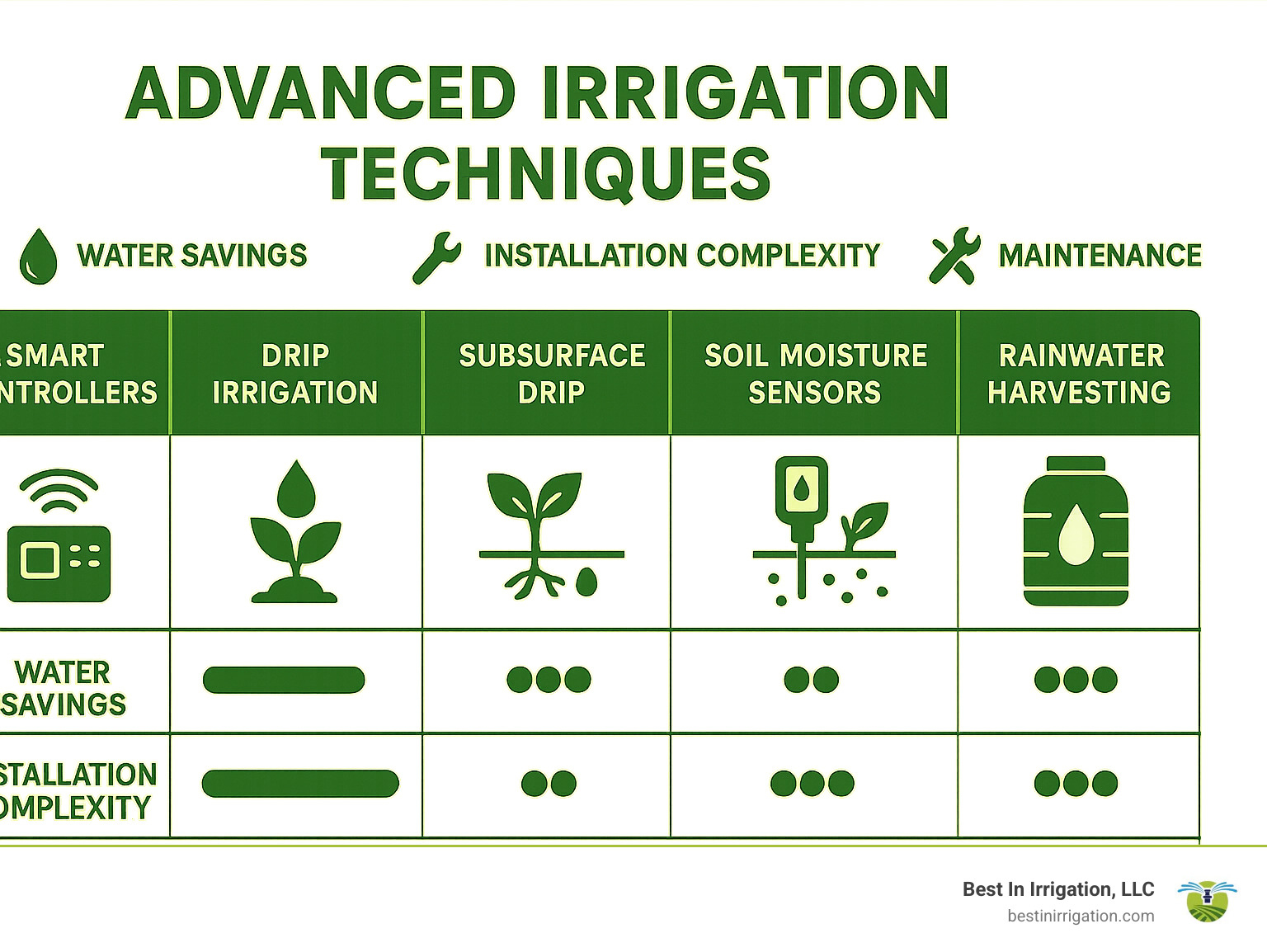
For Massachusetts homeowners looking to improve their irrigation systems, here are the most effective advanced techniques:
- Smart controllers – Adjust watering schedules based on weather data and soil conditions
- Drip irrigation – Delivers water directly to plant roots, reducing waste by up to 50%
- Subsurface drip irrigation (SDI) – Underground systems that virtually eliminate evaporation
- Soil moisture sensors – Monitor actual soil conditions to prevent overwatering
- Rainwater harvesting – Capture and reuse rainwater for irrigation needs
With global water demand projected to exceed supply by 40% by 2030, the need for smarter watering solutions has never been more urgent. Traditional sprinkler systems can lose significant amounts of water to evaporation, runoff, and wind drift. In contrast, advanced irrigation techniques deliver water precisely where and when plants need it, promoting healthier plant growth by maintaining optimal soil moisture levels.
For Massachusetts homeowners, implementing these techniques can mean the difference between watching your water bill soar during summer months and maintaining a lush landscape sustainably.
Key terms for Advanced irrigation techniques:
– Sprinkler system design
– irrigation supplies
– Best Irrigation Contractors
Understanding Advanced Irrigation Techniques
Ever wondered why your water bill skyrockets in summer? The traditional sprinkler that shoots water into the air on a timer might be the culprit. Advanced irrigation techniques are game-changers compared to these conventional methods, offering a smarter approach to keeping your yard lush without wasting precious water.
Think about this: agriculture gobbles up about 70% of global freshwater, but our home landscapes are thirsty too. The EPA tells us nearly 30% of household water goes straight to our yards, and here’s the kicker – up to half of that water never benefits your plants! It simply evaporates, runs off, or lands where it’s not needed.
Advanced irrigation techniques solve these problems by being smarter about water delivery. Instead of the “spray and pray” approach, these systems put water exactly where plants need it, in the right amounts, at the right times.
| Traditional Methods | Advanced Techniques | Water Savings | Additional Benefits |
|---|---|---|---|
| Manual sprinklers | Smart controller systems | 20-40% | Automated scheduling, weather adaptation |
| Hand watering | Drip irrigation | Up to 50% | Reduced weed growth, disease prevention |
| Oscillating sprinklers | Subsurface drip irrigation | 50-75% | Virtually no evaporation, deep root growth |
| Timer-based systems | Soil moisture sensor systems | 25-45% | Prevents over/under watering |
Benefits of Advanced Irrigation Techniques
When Massachusetts homeowners switch to advanced irrigation techniques, they’re often amazed by the change in both their landscape and their water bills.
Water Savings aren’t just good for the environment – they’re great for your wallet too. Smart systems can slash water usage by up to 30%, potentially saving thousands of gallons each year on a typical quarter-acre property.
Your plants will thank you too. Healthier Plants develop stronger root systems when water is delivered directly where they need it. Massachusetts gardens face unique challenges – from summer heat waves to unpredictable spring weather – and consistent moisture at the root zone helps plants weather these extremes.
Reduced Labor means you can reclaim your weekends. Modern systems handle the work for you, adjusting automatically to seasonal changes and weather forecasts. Rainstorm coming? Your smart controller already knows to skip tomorrow’s watering.
An Increased Property Value is another perk of efficient irrigation. As water conservation becomes more important, buyers are increasingly drawn to homes with thoughtfully designed, water-efficient landscapes.
Smart & Connected Watering Solutions
The integration of technology with irrigation has revolutionized how we water our landscapes. Smart irrigation controllers and connected systems represent the cutting edge of Advanced irrigation techniques, bringing precision and efficiency to residential watering.

Smart Controllers: The Brain of Modern Irrigation
Think of smart controllers as the thoughtful gardeners who never take a day off. Unlike those old-school timers that blindly follow the same schedule rain or shine, these clever devices make real-time decisions based on what your garden actually needs.
When dark clouds gather and rain is in the forecast, your smart controller knows to skip today’s watering. During a Massachusetts heatwave, it automatically increases run times to keep your plants thriving. As fall approaches and days shorten, it gradually reduces watering without you lifting a finger.
These systems tap into weather data from either built-in sensors or internet forecasts, calculate evapotranspiration (ET) rates, and can even connect with soil moisture sensors to know exactly when your garden is thirsty.
The result? Up to 30% less water used compared to conventional timers, making smart controllers one of the most effective Advanced Sprinkler Technologies available to Massachusetts homeowners today.
Soil Moisture Sensors: The Underground Eyes
Why guess when you can know for sure? Soil moisture sensors are like having tiny gardeners buried throughout your yard, constantly checking if your plants need a drink.
Instead of watering on a schedule (which often leads to overwatering), these sensors detect the actual moisture content where it matters most—at the root zone. Some advanced systems can even monitor moisture at different depths, ensuring water reaches deep roots while preventing wasteful runoff.
IoT and Mobile Integration
Modern irrigation systems now connect to the Internet of Things (IoT), putting control literally in the palm of your hand. With smartphone apps, you can adjust watering schedules while sitting on your couch or vacationing on the Cape. Receive real-time alerts if a sprinkler head breaks or unusual flow is detected.
Choosing Advanced Irrigation Techniques for Your Yard
Selecting the right smart irrigation components isn’t a one-size-fits-all proposition. Your property is unique, and your system should be too.
Start by identifying your primary system goals. Are you most concerned with cutting your water bill? Creating the perfect environment for your prized perennial garden? Or maybe you’re looking for a set-it-and-forget-it solution that requires minimal attention?
Consider the budget vs. ROI equation. While advanced systems require a higher initial investment than basic timers, they typically pay for themselves through water savings within 2-5 years.
Finally, be aware of local codes and regulations. Massachusetts municipalities have specific requirements regarding backflow prevention and sometimes restrictions during drought periods. At Best In Irrigation, LLC, we’re well-versed in all Irrigation Best Management Practices and local regulations.
Smart Drip & Subsurface Systems for Home Gardens
Among the most efficient advanced irrigation techniques available to Massachusetts homeowners are drip and subsurface irrigation systems. These water-wise solutions deliver moisture directly to plant roots, dramatically reducing waste while helping your garden thrive.
Surface Drip Irrigation
Picture this: tiny droplets of water delivered precisely where your plants need it most. That’s the beauty of surface drip irrigation—flexible tubing with emitters that release water slowly right at soil level.
My Massachusetts customers are often amazed when they see their water bills after installing drip systems. You can expect water savings of up to 50% compared to traditional sprinklers! The magic happens because water goes exactly where plants need it, not wasted on paths, driveways, or between rows.
There’s another bonus many homeowners don’t consider until they see it in action: reduced disease problems. By keeping foliage dry, drip systems minimize those frustrating fungal issues that often plague New England’s humid summers.
Surface drip works beautifully for vegetable gardens, perennial beds, container plantings, and newly established trees and shrubs. For a deeper dive into how these systems can transform your landscape, visit our guide on Drip Irrigation System Benefits.
Subsurface Drip Irrigation (SDI)
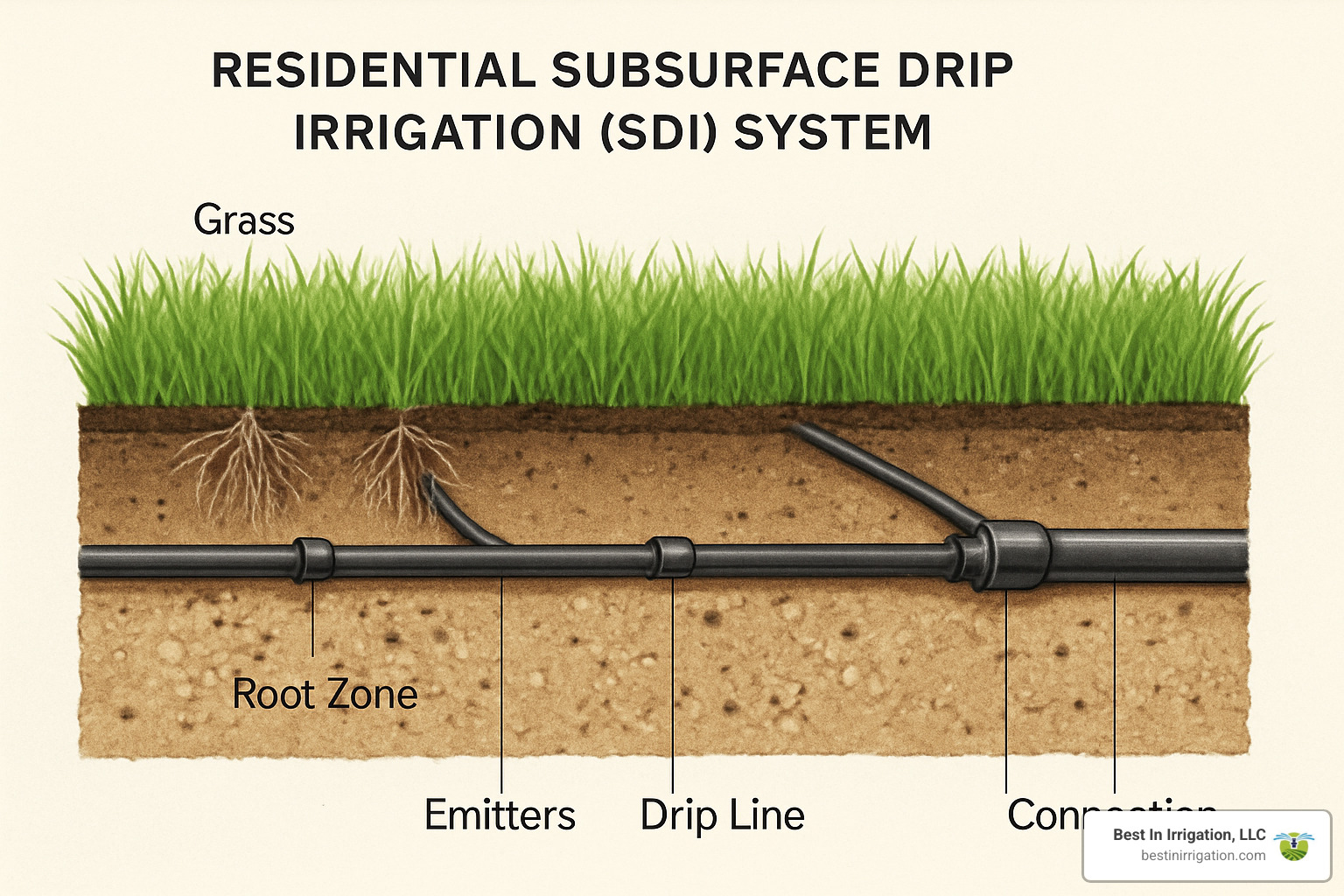
Taking efficiency to the next level, subsurface drip irrigation (SDI) tucks those drip lines safely below the soil surface. It’s like giving your plants a secret underground drinking fountain!
The advantages are impressive: near-zero evaporation since emitters are buried underground, and a lawn that stays lush without visible irrigation equipment disrupting your landscape design. With water efficiency rates up to 75% better than conventional sprinklers, SDI truly represents the gold standard in Water-Saving Irrigation Systems.
Micro-Spray and Specialized Emitters
Between traditional sprinklers and drip systems lies a world of versatile options. Micro-sprinklers deliver gentle, low-volume spray patterns perfect for small areas. Bubblers provide concentrated flow ideal for establishing trees and shrubs, while adjustable emitters let you customize flow rates for plants with different thirst levels.
Installing Residential SDI Lines
If you’re considering subsurface drip irrigation for your Massachusetts home, proper installation makes all the difference in system performance and longevity.
Depth matters significantly with SDI. For most residential lawns, we typically install lines 6-8 inches deep, while perennial beds do best with lines at 4-6 inches. Shrub areas benefit from deeper placement at 8-10 inches, allowing roots to access moisture without encouraging shallow growth.
Spacing between lines depends largely on your soil type. Most Massachusetts properties do well with lines spaced 12-18 inches apart, but sandy soils near the coast might need closer spacing (9-12 inches) while clay-heavy areas can often go wider (18-24 inches).
Pressure regulation is crucial for SDI success. These systems typically operate at lower pressures—usually 15-30 PSI for residential applications. We always install pressure regulators at zone valves and use pressure-compensating emitters to ensure water distributes evenly throughout your landscape.
One pro tip I share with all our SDI customers: install flush valves at the end of each zone and schedule quarterly flushing to remove sediment. Your system will thank you with years of trouble-free operation—typically 10-20 years when properly maintained.
Low-Tech Yet Effective Methods
Not all advanced irrigation techniques require fancy electronics or complex installations. If you’re a Massachusetts homeowner looking for budget-friendly, DIY-accessible approaches to water conservation, several low-tech methods can deliver impressive results.
Deep Pipe Irrigation
Sometimes the simplest ideas are the most brilliant. Deep pipe irrigation is exactly that—a straightforward technique that delivers water right where plants need it most.
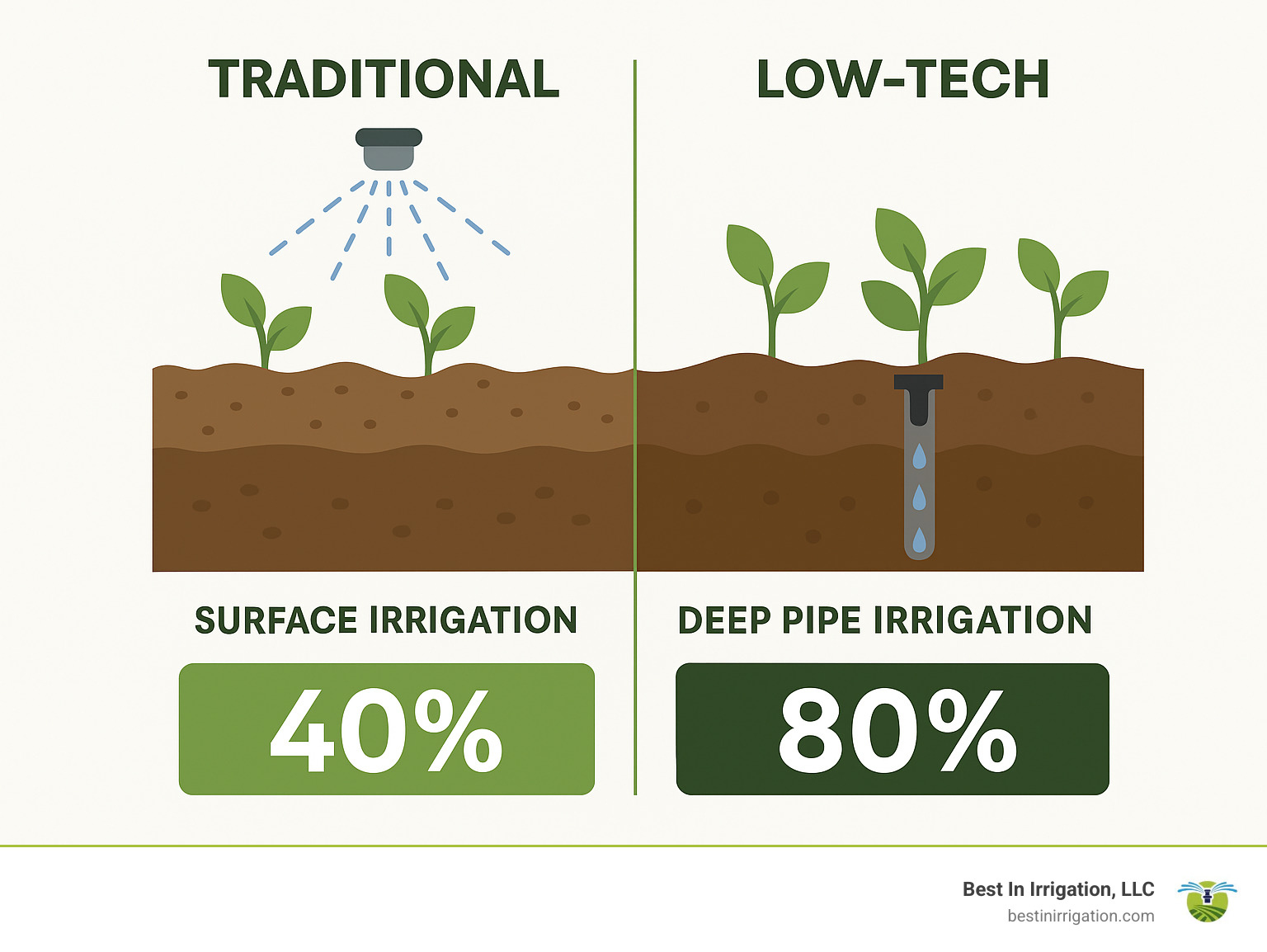
Picture this: vertical PVC pipes (about 1-2 inches in diameter and 12-20 inches long) with small holes drilled along one side, buried next to your plants with the holey side facing the roots. When you fill these pipes with water, it seeps directly to the root zone instead of evaporating at the surface.
You’ll save 50-60% of your water compared to surface watering, encourage deeper root growth, and naturally discourage weeds since the soil surface stays drier. It’s particularly wonderful for establishing new trees and shrubs in our sometimes challenging Massachusetts climate.
For a step-by-step guide, check out this comprehensive Deep Pipe Irrigation guide.
Pitcher/Olla Irrigation
Long before modern irrigation systems, ancient cultures were using unglazed clay pots called ollas (pronounced “oy-yahs”) to efficiently water their crops. This technique is experiencing a well-deserved revival among gardeners who appreciate its neat simplicity.
The concept is straightforward: bury porous clay pots with just their necks exposed, fill them with water, and let physics do the rest. Water gradually seeps through the clay walls, but only when the surrounding soil is dry enough to create a moisture gradient.
A single 6-12 liter olla can support 4-5 vegetable plants arranged in a circle around it. They’re perfect for container gardens, raised beds, or those challenging spots in your yard that seem perpetually thirsty.
DIY Rainwater Harvesting & Integration
Why let all that free, chemical-free rainwater go to waste? With a simple rainwater harvesting system, you can capture nature’s bounty for your garden’s benefit.

The basic components are straightforward: your roof serves as the collection surface, gutters and downspouts direct water to your storage containers (typically rain barrels), and a first-flush diverter removes the initial runoff that contains most of the debris.
Integrating your harvested rainwater with your existing irrigation is easier than you might think. You can connect rain barrels directly to drip irrigation lines, use gravity pressure where possible to avoid pumps, and install simple filters to prevent clogging.
With proper sizing based on your roof area and local precipitation data, you might be surprised at how much of your landscape’s water needs can be met with harvested rainwater.
At Best In Irrigation, LLC, we’ve seen how these simple, low-tech approaches can dramatically reduce water usage while maintaining beautiful landscapes. Sometimes the most advanced irrigation techniques aren’t about fancy gadgets—they’re about smart, thoughtful approaches to working with nature.
Climate-Ready Planning & System Selection
As Massachusetts weather becomes more unpredictable, designing your irrigation system with climate resilience in mind isn’t just smart—it’s essential. The days of “set it and forget it” watering are behind us, and advanced irrigation techniques that can adapt to changing conditions are the way forward.
Climate Considerations for Massachusetts
If you’ve lived in Massachusetts for any length of time, you’ve probably noticed our weather becoming more extreme. Those changes matter when planning your irrigation system:
Our summers now bring more intense heat waves that stress plants and increase water needs. Meanwhile, our rainfall patterns have shifted toward heavier downpours with longer dry spells in between—exactly the opposite of what plants prefer!
All these factors mean your grandmother’s watering schedule just won’t cut it anymore. Today’s systems need to be responsive, adaptable, and smart.
Drought-Resilient Design Principles
Plant zoning (sometimes called hydrozoning) is like organizing your kitchen—everything has its place based on how you use it. Group thirsty plants together in one irrigation zone, drought-tolerant natives in another. This simple step allows you to water each area exactly as needed without wasting a drop.
Your soil matters tremendously too. Think of soil improvement as building a water savings account. Adding organic matter helps sandy soil hold more moisture, while improving clay soil’s drainage. A good layer of mulch acts like a protective blanket, keeping soil temperatures moderate and reducing evaporation by up to 70%.
Plant selection might be your most powerful tool of all. Native plants that evolved in our New England conditions already know how to handle our weather extremes. They generally develop deeper root systems that can find moisture even during dry spells.

Tips for Installing Climate-Smart Sprinklers
While drip irrigation is often the most efficient choice, some landscape areas still need sprinklers. When that’s the case, these climate-smart tips can dramatically improve efficiency:
Choosing the right nozzles makes a huge difference. Modern high-efficiency nozzles deliver water in multiple rotating streams rather than a fine mist, reducing evaporation and wind drift. They apply water more slowly, giving your soil time to absorb moisture instead of creating runoff.
Pressure management might not sound exciting, but it’s critical for water conservation. Too much pressure creates mist and fog that blows away before reaching your plants. Too little means uneven coverage. We recommend pressure regulators for any system where municipal water pressure exceeds 60 PSI, and pressure-compensating heads for sloped areas.
Wind can steal your water before it ever reaches your plants. Programming your system to run in the early morning (4-7am) takes advantage of naturally calmer air and lower temperatures.
Smart scheduling completes your climate-ready approach. Instead of one long watering session, program multiple short cycles with “soak periods” in between. This cycle-and-soak approach allows water to penetrate deeply without runoff, encouraging deeper root growth and drought resilience.
For more hands-on advice about installation, our guide on Tips for Installing Sprinkler System walks you through the process step by step.
Frequently Asked Questions about Advanced Irrigation Techniques
What is precision irrigation for a home landscape?
When we talk about precision irrigation for your home landscape, we’re really talking about giving your plants exactly what they need—no more, no less. It’s like having a personal water butler for each plant in your yard!
Precision irrigation means applying water in just the right amounts, at the perfect time, and in the exact location where your plants need it. For Massachusetts homeowners, this smart approach typically includes:
Water delivered right to the root zone through drip lines, micro-sprays, or my personal favorite—subsurface irrigation systems that work their magic underground where no one can see them.
Smart controllers that act like weather-watching garden assistants, adjusting your watering schedule based on conditions outside. Raining today? Your system already knows to take the day off.
Different zones in your yard getting different amounts of water—because your sun-baked front lawn has very different needs than those shade-loving hostas by the fence.
The best part? Massachusetts homeowners who switch to precision methods typically see their water use drop by 30-50% compared to traditional sprinklers, while their gardens actually look better than before!
How do smart controllers decide when to water?
Weather-based controllers work like meteorologists for your garden. They access local weather data (either through their own sensors or by connecting to the internet) and calculate something called evapotranspiration or “ET”—a fancy term for how much water your plants lose through evaporation and transpiration.
On hot, windy days when plants lose more moisture, these systems automatically increase watering time. When it’s cool and cloudy, they cut back. And when rain is in the forecast? They’ll skip watering entirely—something we manually forget to do all too often with traditional timers!
Soil moisture sensor systems take a more direct approach by actually feeling how wet your soil is. Using sensors buried at root level, they only trigger irrigation when the soil dries to a certain point.
The most sophisticated controllers combine both approaches, creating a weather-prediction system that’s verified by actual soil conditions.
Can low-tech methods really save as much water as high-tech systems?
Absolutely! While smart controllers and sensor systems get all the attention, some of the simplest irrigation methods can be surprisingly water-efficient. Sometimes the old ways really are the best ways!
Deep pipe irrigation—where vertical pipes deliver water directly to root zones—can cut water usage by 50-60% compared to surface watering. Clay pot irrigation (using buried ollas) might look like something from an archaeology exhibit, but these unglazed pots can reduce water consumption by a remarkable 70%.
Many of our clients at Best In Irrigation, LLC find that a mixed approach works beautifully—using advanced irrigation techniques with smart controllers for main landscape areas, while incorporating simple low-tech solutions for vegetable gardens or special plantings.
Conclusion
Water isn’t just a resource—it’s the lifeblood of your landscape. Throughout this guide, we’ve seen how advanced irrigation techniques can transform the way you nurture your outdoor spaces, bringing together smart technology and thoughtful design to create something truly special.
The beauty of these approaches is that there’s something for everyone. Whether you’re tech-savvy and excited about smartphone-controlled systems that adjust to weather forecasts in real-time, or you prefer the neat simplicity of clay pot irrigation that’s been working for centuries, there’s an advanced solution that fits your lifestyle and landscape.
For Massachusetts homeowners, these benefits go far beyond just saving water. You’ll notice your plants developing stronger, deeper root systems that help them thrive even during those challenging summer dry spells. Your weekends will open up as automation handles the watering schedule that you once managed manually. And when those water bills arrive during peak summer months, you’ll appreciate the significant savings that efficient irrigation delivers.
The environmental impact is equally meaningful. By reducing water consumption and minimizing runoff, you’re helping protect our local watersheds and contributing to water conservation efforts that benefit the entire community. Plus, a well-designed irrigation system adds genuine value to your property—something more buyers are specifically looking for as environmental consciousness grows.
At Best In Irrigation, LLC, we’ve spent the last 9 years working with Massachusetts homeowners just like you. We understand the unique challenges of New England’s climate—from the sandy soils of Cape Cod to the clay-heavy ground in other regions, from spring downpours to summer dry spells. This local knowledge allows us to customize solutions that work specifically for your property’s conditions.
Ready to reimagine how you water? Whether you’re planning a complete system overhaul or looking to start with a simple rainwater harvesting setup, now is the perfect time to begin. If you’re ready to explore how these advanced irrigation techniques can work for your specific property, find local experts in Massachusetts who can help you create an irrigation approach that makes every drop count—and every drop work harder for your landscape.
