


Choosing the Perfect Sprinkler Head for Your Lawn
Looking for the best automatic sprinkler heads for your lawn? Here’s a quick overview of the top performers:
- Rain Bird 5000 Series Rotor – Best for large lawns (25-50 ft coverage)
- Hunter PGP-ADJ Rotor – Best for durability and adjustability
- Rain Bird 1804 Pop-up Spray – Best for small to medium areas (8-15 ft)
- Orbit 55662 Voyager II – Best budget-friendly rotor
- Hunter MP Rotator – Best for water efficiency (up to 30% water savings)
The right best automatic sprinkler heads make all the difference between a patchy, water-wasting lawn and a lush, efficient landscape. When installed correctly, quality sprinkler heads deliver even coverage, minimize water waste, and provide years of reliable service.
According to Better Homes & Gardens testing, the most effective sprinkler heads balance coverage area with water efficiency. Their 2024 tests showed that rotary and impact sprinkler heads are ideal for larger areas (with some models covering up to 5,670 square feet), while spray heads work best for smaller, targeted zones.
Your choice should match your specific lawn needs. Pop-up spray heads like the popular Rain Bird 1804VAN offer adjustable coverage from 8 to 15 feet with spray patterns from 0° to 360°. For larger properties, gear-driven rotors provide more distance and often better water distribution.
Water efficiency is another crucial factor. Pressure-regulating models maintain consistent spray patterns regardless of fluctuating water pressure, potentially saving hundreds of gallons each month. Some high-efficiency models can reduce water usage by up to 30% compared to standard sprinkler heads.
The material quality matters too – while plastic models are affordable, brass and stainless steel components offer superior durability, especially in harsh climates or high-traffic areas.
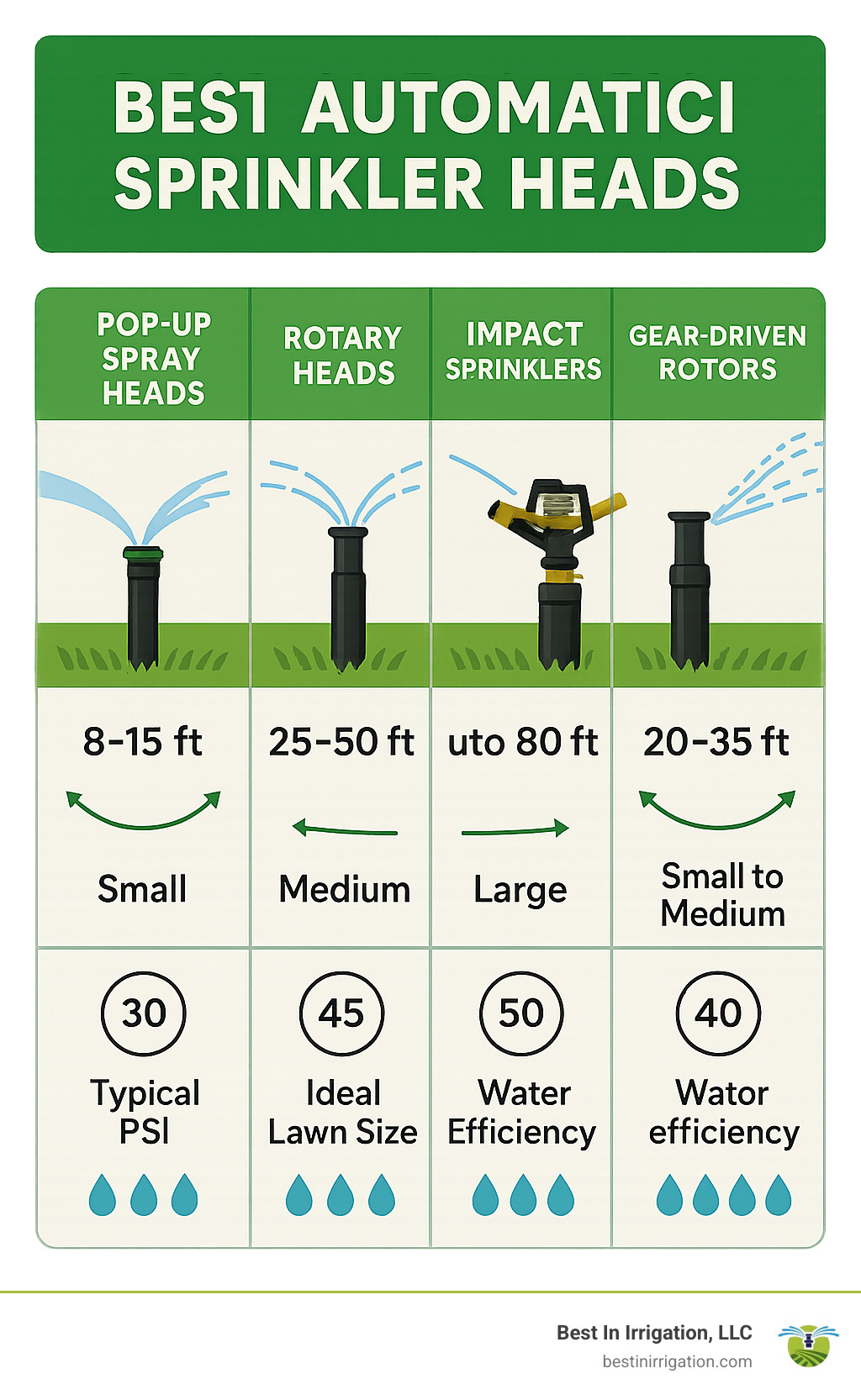
Quick look at best automatic sprinkler heads:
– Best Lawn Sprinkler Systems
– best automatic sprinkler controller
– best lawn sprinkler system company
How to Choose the Best Automatic Sprinkler Heads
Picking the right best automatic sprinkler heads isn’t just about grabbing whatever’s on sale at the hardware store. After helping Massachusetts homeowners create their dream lawns for 9 years at Best In Irrigation, we’ve learned that a thoughtful selection makes all the difference between a patchy, water-wasting yard and lush, efficient greenery.
Coverage Area
Your lawn’s size and shape should guide your sprinkler head selection. Think of it like buying shoes – you need the right fit! Too small, and you’ll end up with brown patches; too large, and you’re watering the sidewalk (and watching your water bill climb).
Before making any decisions, grab a measuring tape and map out your space. Pay special attention to those awkward corners, areas around trees, and any slopes that might affect water distribution. Your perfect sprinkler head is one that matches these unique contours of your property.
Water Pressure (PSI)
Water pressure is the unsung hero of sprinkler performance. Most homes in our area run between 30-50 PSI, but it’s worth checking your specific situation.
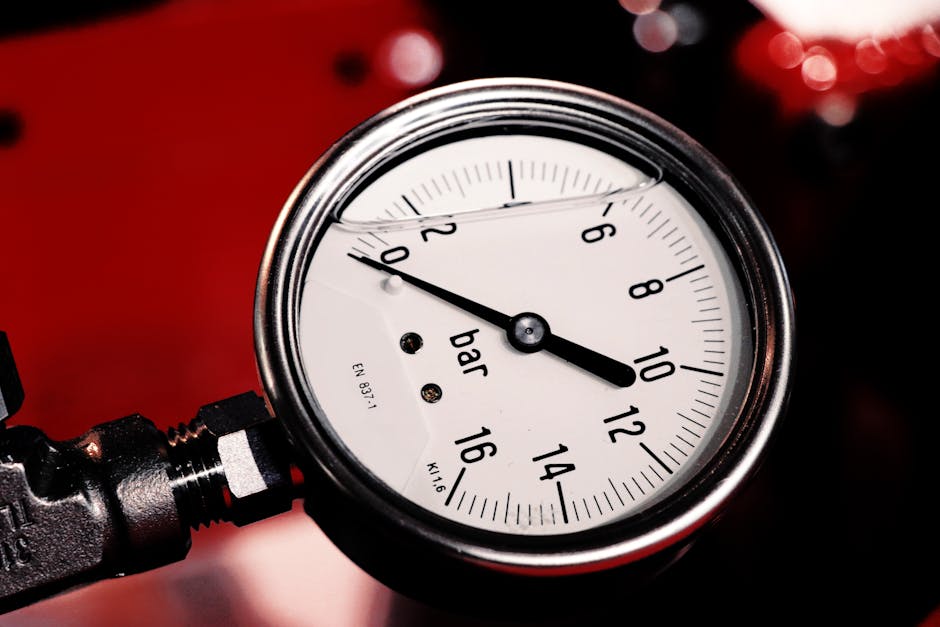
I can’t tell you how many times we’ve seen homeowners install top-of-the-line heads only to be disappointed because their water pressure couldn’t support them. It’s like putting a sports car engine in a golf cart – the potential is wasted! If you’re working with lower pressure (under 30 PSI), focus on spray heads designed for that range. For those blessed with robust pressure above 45 PSI, rotors will give you that satisfying coverage you’re after.
Soil Type
Your soil isn’t just dirt – it’s the delivery system for all that water you’re applying! Here in Massachusetts, we encounter everything from quick-draining sandy soils to dense clay that holds moisture like a sponge.
Sandy soil? You’ll need more frequent, shorter watering cycles. Heavy clay? Slow-delivery rotary nozzles prevent runoff and encourage deeper root growth. Understanding your soil type helps you choose sprinkler heads that work with your land instead of against it.
Climate Zone
Living in New England means our sprinkler systems need to handle it all – from scorching summer days to those bone-chilling winters. Our seasonal shifts demand durable sprinkler heads that can withstand temperature swings and complete system drainage before the first freeze.
For our climate, pressure-regulated heads are particularly valuable, maintaining consistent spray patterns despite seasonal pressure fluctuations. This consistency means your lawn stays green through summer heat waves when municipal water pressure often drops during peak usage.
Adjustable Arc
Flexibility is your friend when it comes to efficient watering. Adjustable arc heads let you customize exactly where your water goes – from a narrow 45° wedge to a full 360° circle.
This adjustability is particularly valuable in our New England neighborhoods, where property lines rarely form perfect rectangles and garden beds create irregular shapes. Being able to fine-tune your coverage means you’re watering plants, not pavement.
Smart Features
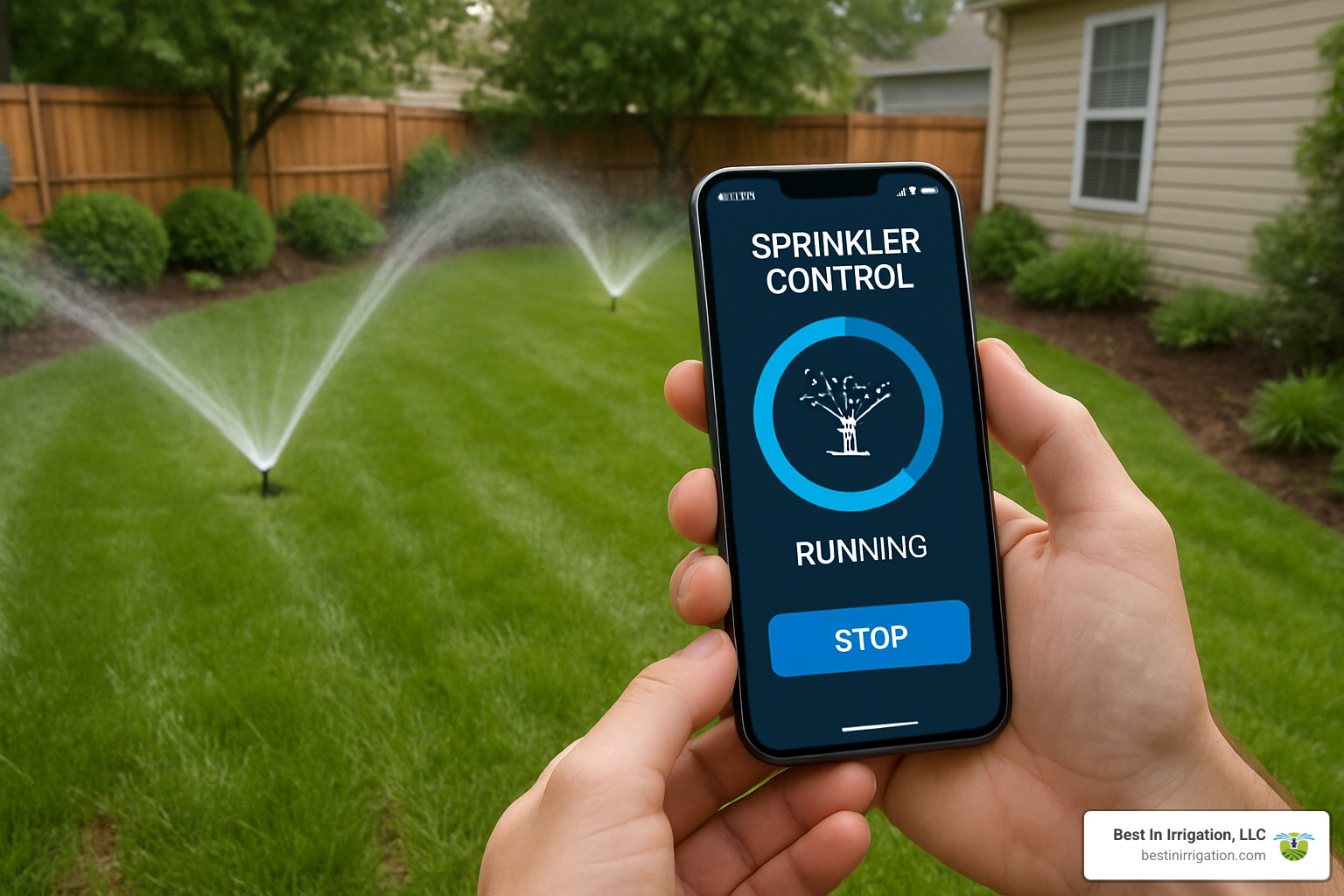
Modern sprinkler heads have acceptd technology in ways that make irrigation smarter, not harder. Today’s best automatic sprinkler heads can connect with controllers that adjust to weather forecasts, skip watering during rainy periods, and even let you make changes from your smartphone while you’re on vacation.
These smart features align beautifully with research on xeriscaping and water savings, showing potential water reduction of 20-50% compared to traditional systems. Your lawn stays healthy, and your water bill stays manageable – what’s not to love?
Water Savings
With water conservation becoming increasingly important (both environmentally and for your wallet), high-efficiency nozzles deliver more uniform coverage with larger water droplets that resist wind drift and evaporation.
Our Massachusetts customers typically save 30-40% on irrigation water usage after upgrading to modern, efficient sprinkler heads. For an average quarter-acre property, that translates to thousands of gallons saved each season – enough to make both your wallet and Mother Nature smile.
Installation Ease
While we’re always happy to handle installation for you, some homeowners enjoy DIY projects. If that’s you, consider factors like pop-up height (typically ranging from 2″ to 12″), connection type (usually ½” or ¾” threads), and what tools you’ll need for adjustments.
Also think about availability of replacement parts – that bargain brand might seem appealing until you need a replacement nozzle that’s impossible to find. For more detailed installation guidance, check out our comprehensive guide on Automatic Sprinkler Systems.
The best automatic sprinkler heads for small lawns
For cozy spaces under 2,500 square feet, spray heads offer perfect coverage without overdoing it. These best automatic sprinkler heads for smaller areas typically reach 8-15 feet and operate happily at lower pressures around 25-30 PSI.
Spray heads are the sprinters of the irrigation world – they deliver water quickly and efficiently to targeted areas. This makes them perfect for level townhome properties or distinct garden zones where precision matters more than distance.
We often recommend variable arc nozzles for smaller properties with irregular shapes. They allow you to dial in exactly the right pattern for your unique space, minimizing waste and maximizing that lush, green look you’re after.
The best automatic sprinkler heads for large lawns
Got room to roam? For expansive lawns exceeding 2,500 square feet, rotary heads and rotors are your best friends. These best automatic sprinkler heads can reach 25-45 feet and distribute water in rotating streams that mimic natural rainfall.
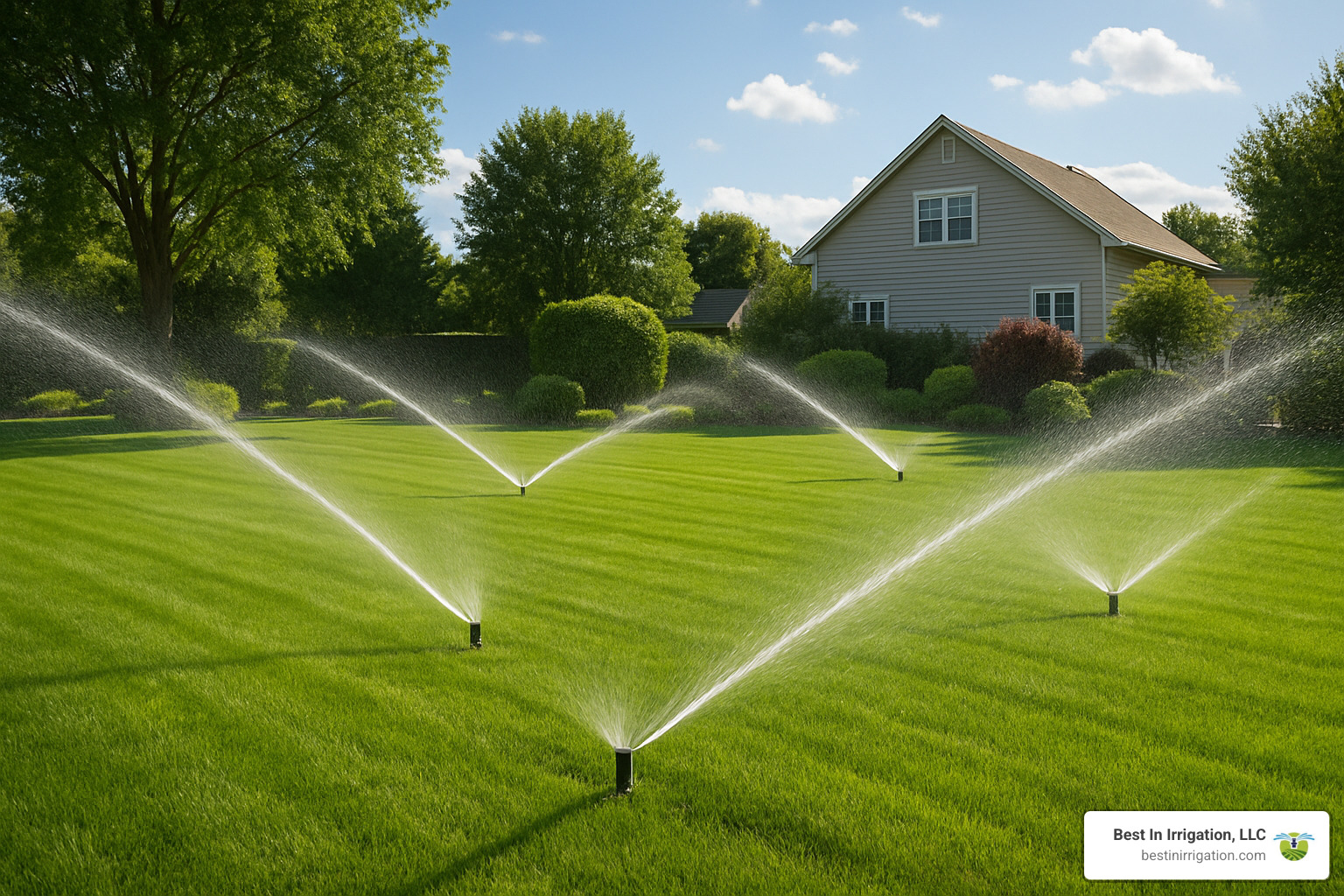
Rotors apply water more slowly, giving your soil time to absorb moisture rather than creating runoff. This makes them particularly effective for New England properties with sloping terrain or clay-heavy soils that need time to drink up.
For those especially large Massachusetts properties, gear-driven rotors offer quiet, reliable performance with adjustable patterns. They require a bit more pressure (45-50 PSI) to perform at their best, but the results are worth it – even, consistent coverage across your entire landscape.
1. High-Efficiency Rotary Pop-Up Head
When it comes to water efficiency and coverage uniformity, high-efficiency rotary pop-up heads represent the gold standard in modern irrigation. These innovative best automatic sprinkler heads combine the coverage benefits of traditional rotors with the precision of spray heads.
How They Work
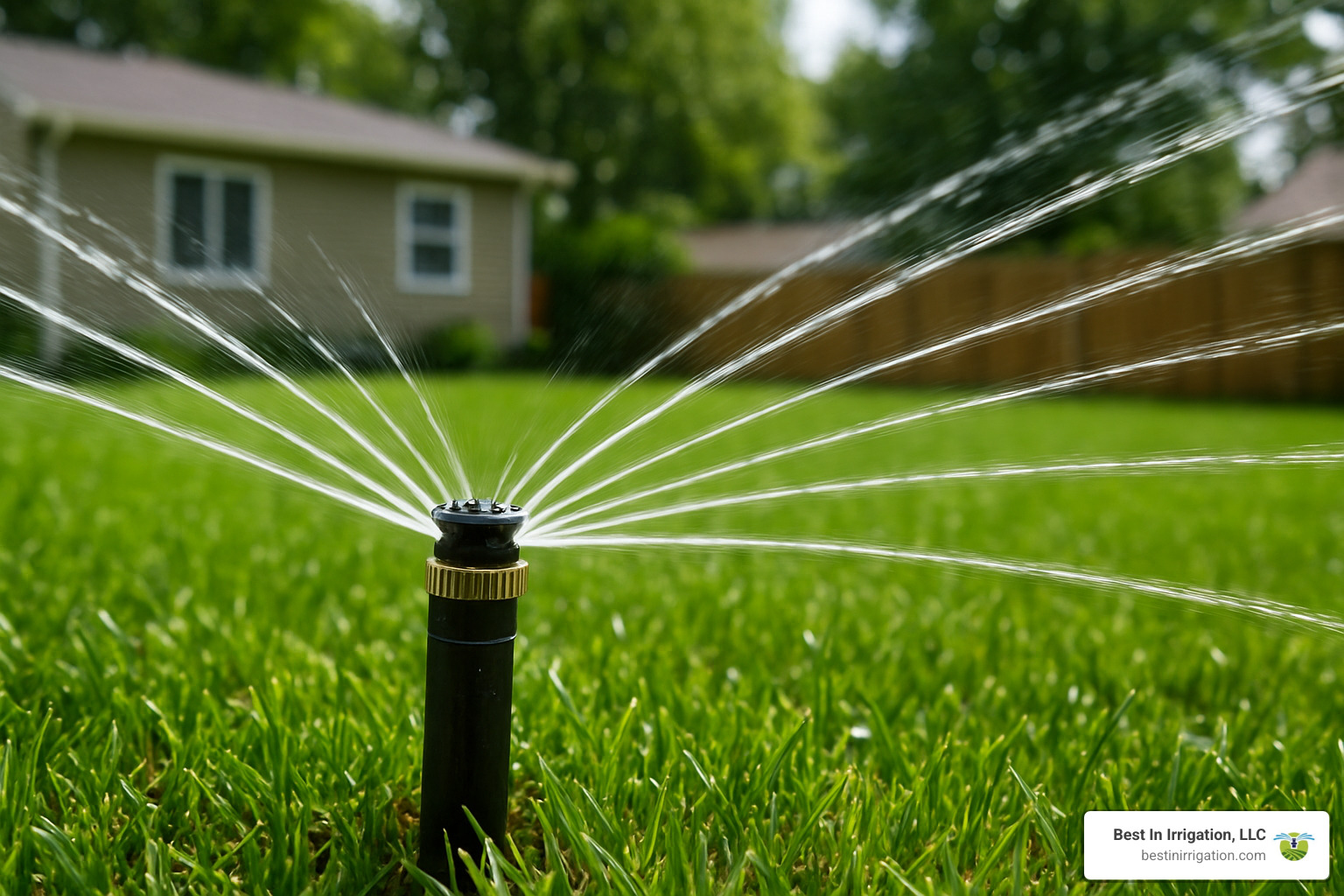
Unlike conventional spray heads that emit a continuous fan of mist-like spray, rotary heads deliver multiple rotating streams of water. This rotating stream pattern creates larger water droplets that resist wind drift, applies water more slowly to reduce runoff, distributes moisture more evenly, and reduces evaporation loss.
“The difference is immediately visible,” explains our irrigation technician. “While traditional sprays often create puddles near the head and dry spots at the edges, rotary heads deliver consistent moisture across the entire radius.”
Pressure Regulation Benefits
One standout feature of premium rotary heads is built-in pressure regulation. This smart technology maintains optimal operating pressure regardless of municipal supply fluctuations, which prevents that annoying misting and fogging that happens when pressure runs too high.
For Massachusetts homes where municipal water pressure can swing wildly depending on the time of day, this feature alone can save thousands of gallons each season. Your lawn gets exactly what it needs – no more, no less.
Uniform Coverage
Coverage uniformity directly impacts turf health. Traditional spray heads often create what we call the “doughnut effect” – too much water near the head and not enough at the edges. Nobody wants patchy, uneven grass!
High-efficiency rotary heads solve this problem with multiple rotating streams that create overlapping coverage. They deliver matched precipitation rates across the radius and consistent droplet size that improves soil penetration. You can also fine-tune the radius control for precise coverage.
This uniform distribution encourages your grass to develop deeper roots, making it more resilient during those dry New England summer spells we all dread.
Clog-Resistant Nozzles
New England irrigation systems face unique challenges from mineral deposits, debris, and our dramatic seasonal changes. Premium rotary heads come prepared with self-flushing capabilities that clear debris during operation.
“The self-cleaning function is particularly valuable in areas with hard water or where systems are winterized and reactivated seasonally,” notes our maintenance team leader. “It’s like having a little maintenance crew working inside each sprinkler head.”
These heads also feature larger water passages that resist clogging, removable filters for easy cleaning, and durable materials that stand up to mineral buildup. When spring comes around and you’re ready to wake up your system, you’ll appreciate these thoughtful design features.

2. Adjustable Spray Pop-Up Head
For versatility in smaller spaces or areas with irregular shapes, adjustable spray pop-up heads offer best flexibility. These best automatic sprinkler heads provide precise control over both coverage area and spray pattern, making them perfect for Massachusetts landscapes with their characteristic New England irregularity.
Variable Arc Technology
The standout feature of adjustable spray heads is their variable arc capability. Unlike fixed spray heads that come in predetermined patterns, these versatile sprinklers can be customized to fit your exact needs.
“I remember installing a system for a homeowner in Lexington with an oddly-shaped corner garden,” shares our lead technician Mike. “With variable arc nozzles, we dialed in the exact 78-degree pattern needed to water just the plants without touching the stone pathway. The homeowner was amazed at the precision.”
These adjustable heads allow you to customize from 0° to 360°, fine-tune to match exact landscape dimensions, eliminate wasteful overspray onto hardscapes, and easily modify coverage as your landscape evolves over time. This adaptability is particularly valuable in New England’s often irregular residential lots where cookie-cutter solutions simply don’t work.
Dual Orifice Design
Premium adjustable spray heads feature an innovative dual orifice design that revolutionizes water distribution. This technology creates more uniform coverage by addressing the common “donut effect” where areas nearest the sprinkler receive too much water while edges receive too little.
The dual orifice creates two distinct spray patterns that overlap perfectly, improving close-in watering while ensuring the furthest edges receive adequate moisture. Our testing shows up to 30% better distribution uniformity compared to standard spray heads, resulting in healthier grass and fewer dry spots.
Shallow Root Watering Benefits
Spray heads apply water at higher precipitation rates than rotors, making them ideal companions for New England’s unique growing conditions. They deliver quick, efficient watering that’s perfect for:
Newly seeded lawns requiring frequent, light irrigation to establish strong root systems without washing away seed.
Sandy soils common in coastal Massachusetts areas that quickly absorb moisture rather than holding it at the surface.
Level garden beds where runoff is minimal and plants benefit from consistent moisture.
Smaller zones requiring quick watering cycles that can be completed within municipal water restriction windows.
“For establishing new turf in Massachusetts, adjustable spray heads provide the gentle, frequent watering needed during the critical establishment phase,” notes our turf specialist. “They’re like the perfect nurturing rain shower for baby grass.”

Easy Nozzle Swap Feature
A significant advantage of quality spray heads is their tool-free nozzle replacement capability. This user-friendly design allows homeowners to pop up the riser and replace nozzles in seconds without special tools.
This feature is particularly valuable for our New England customers who often need seasonal adjustments. In spring, you might want a gentler spray for new growth, while summer might call for more robust coverage. The easy swap design makes these adjustments simple.
“We often start clients with standard nozzles, then upgrade to high-efficiency models in phases as their budget allows,” explains Sarah from our customer service team. “One Framingham client started with basic nozzles, then upgraded two zones each year. Three years later, her entire system featured high-efficiency nozzles, and her water bill dropped by almost 35%.”
For optimal performance in Massachusetts’ variable municipal water systems, we recommend pressure-regulating spray bodies. These smart devices maintain consistent pressure regardless of supply fluctuations, delivering more uniform coverage and reducing water usage by up to 40% compared to non-regulated heads – savings that add up quickly during our hot summer months.
3. Smart Wi-Fi Gear-Drive Rotor Head
The marriage of smart technology with traditional irrigation has revolutionized how we care for our lawns. Smart Wi-Fi gear-drive rotor heads represent the perfect blend of mechanical reliability and digital intelligence, giving you unprecedented control over your landscape’s health.
Gear-Drive Reliability
The heart of these best automatic sprinkler heads is their precision-engineered gear-drive system. Think of it as the transmission in your car – when it’s built right, everything else works smoothly.
“We love explaining the gear-drive mechanism to curious homeowners,” says our technical specialist at Best In Irrigation. “It’s essentially a sealed gearbox that keeps dirt and debris out while keeping the water-lubricated gears in perfect working order.”
This design creates a whisper-quiet operation that won’t disturb your peaceful mornings or evening relaxation. The consistent rotation speed ensures water lands exactly where it should, preventing both wasteful runoff and frustrating dry spots.
Here in Massachusetts, where we experience everything from summer heat waves to winter deep freezes, durability matters. Our field data shows that quality gear-drive rotors typically provide 8-10 years of reliable service with basic maintenance, while budget alternatives often need replacement after just 3-5 seasons.
Weather-Skip Intelligence
What truly sets these modern marvels apart is their ability to think like an experienced gardener. Smart rotors connect to local weather data and make intelligent decisions about when to water – and when to skip.
“The system essentially becomes your lawn’s personal meteorologist,” our smart irrigation specialist explains with a smile. “It checks tomorrow’s forecast and thinks, ‘Rain coming? I’ll skip watering today.’ This intelligence is something our grandparents could only dream about when they were dragging hoses around the yard.”
The water savings are substantial. Our Massachusetts clients typically reduce their irrigation water usage by 30-50% after upgrading to weather-responsive systems. That’s good for both your wallet and our local water resources.
App Control Convenience
Remember the days of running outside during a rainstorm to shut off your sprinklers? Those days are gone. Modern smart systems put complete control in your pocket:
With a user-friendly smartphone app, you can adjust watering schedules while sitting on your couch or vacationing a thousand miles away. The system sends helpful alerts about potential issues, tracks your water usage over time, and makes seasonal adjustments with just a few taps.
For our busier clients (and let’s face it, that’s most of us these days), this remote capability ensures their lawns stay lush without wasting water during business trips or family vacations.
Rain Sensor Compatibility
While weather forecasts are impressively accurate these days, nothing beats real-time data from your own property. That’s why smart systems can connect with physical rain sensors for an additional layer of efficiency.
“We like to call it our belt-and-suspenders approach,” jokes our sustainability coordinator. “The system checks the forecast but also measures what’s actually happening on your lawn. If unexpected rain begins falling, it immediately pauses scheduled watering.”
This combination of predictive data and real-time sensing not only conserves water but also helps comply with increasingly common water conservation regulations in Massachusetts communities.
Zone Mapping Precision
Perhaps the most impressive feature of smart irrigation is its ability to create detailed property maps that account for your landscape’s unique characteristics.
Your front yard that bakes in full sun all day? It needs different watering than the side yard under mature maple trees. The garden bed with thirsty perennials? That’s different from your drought-tolerant ornamental grasses.
Smart systems allow you to define precise boundaries for each irrigation zone and create custom programs that deliver exactly the right amount of water to each area. This level of customization is particularly valuable in New England, where a typical property might include multiple microclimates within just a quarter acre.
For comprehensive information about integrating smart controllers with your sprinkler system, visit our guide on the Best Automatic Sprinkler Controller.
Conclusion
Selecting the best automatic sprinkler heads for your lawn doesn’t have to be complicated, but it does require thoughtful consideration of your unique landscape needs. At Best In Irrigation, LLC, we’ve spent 9 years helping Massachusetts homeowners create irrigation systems that deliver lush lawns while respecting our precious water resources.
Through our experience, we’ve found that the most effective systems often combine different sprinkler head types to address the varied needs of your landscape. Think of your yard as having different “zones” of thirst – each requiring its own approach. High-efficiency rotary heads work wonders for those medium-sized open areas, while adjustable spray heads shine in smaller or oddly-shaped sections. For your expansive lawn areas, smart gear-drive rotors deliver reliable, even coverage that keeps everything green without waste.
“What sets apart a truly great irrigation system isn’t just the components—it’s how they’re integrated into a cohesive, efficient whole,” explains our design team leader. “Each property tells its own story, and we listen carefully before prescribing a solution.”
New England presents unique irrigation challenges that we’ve become experts at addressing. Our seasonal temperature swings can be tough on equipment. Soil conditions vary dramatically from sandy coastal properties to clay-heavy inland areas. Many towns now enforce water conservation measures. And of course, our winters demand thorough system winterization to prevent costly freeze damage.
To keep your system performing at its best year after year, we recommend a simple seasonal routine:
– Spring activation to wake your system from its winter slumber
– A mid-summer checkup to fine-tune performance during peak growing season
– Proper fall winterization to protect your investment
– Regular nozzle cleaning to maintain those perfect spray patterns
At the heart of our approach is a genuine commitment to water conservation. When properly designed and maintained, the best automatic sprinkler heads can reduce water consumption by 30-50% compared to outdated systems or manual watering methods. That’s not just good for the environment—it’s great for your water bill too.
Looking to create the perfect irrigation system for your Massachusetts home? Visit our comprehensive guide on Best Lawn Sprinkler Systems to learn more about creating an efficient, effective solution custom to your property’s specific needs.
Frequently Asked Questions about the best automatic sprinkler heads
How long should I run my sprinklers each week?
This is probably our most common question, and the answer depends on several factors including grass type, soil composition, and current weather patterns. For most Massachusetts lawns, aim for about 1-1.5 inches of water weekly, typically delivered in 2-3 watering sessions.
“Rather than focusing on minutes, focus on inches,” our irrigation specialist often advises. “Place a few tuna cans or rain gauges around your yard during a watering cycle. When they’ve collected about half an inch of water, you’ve watered enough for that session.”
Most zones need about 20-30 minutes per session, and early morning (4-9 AM) is ideal—giving water time to soak in before the day heats up, while minimizing disease risk that comes with evening watering.
How do I winterize my sprinkler system?
Massachusetts winters demand proper irrigation winterization. Skip this critical step, and you’ll likely face expensive repairs come spring.
The process involves shutting off the main water supply, turning off the controller (or setting it to “rain mode”), and most importantly—removing ALL water from the system. This requires using an air compressor to “blow out” remaining water from pipes and heads. Any water left behind can freeze, expand, and crack components.
“Never skip professional winterization in New England,” our service manager warns with a knowing smile. “I’ve seen too many homeowners learn this lesson the expensive way.”
How do I clear clogged sprinkler nozzles?
Clogged nozzles happen to everyone, especially in areas with hard water or high iron content. Fortunately, clearing them is fairly straightforward. Turn off your system, manually pop up the sprinkler head, and remove the nozzle (usually by unscrewing or pulling it out). Rinse thoroughly with clean water, and use a small wire or paperclip for stubborn clogs.
For those persistent mineral deposits that seem impossible to remove, try soaking the nozzle in a vinegar solution for about 30 minutes before rinsing. Your spray patterns will return to their former glory.
“Regular cleaning prevents the gradual degradation of spray patterns that many homeowners don’t notice until brown patches appear,” notes our maintenance technician. “It’s like getting your teeth cleaned—preventative maintenance pays off.”
Can I mix different types of sprinkler heads in one zone?
While technically possible, mixing head types in a single zone usually creates more problems than it solves. Different heads have dramatically different precipitation rates. This means areas with spray heads might become swampy while areas with rotors remain parched—all on the same zone.
The best approach is creating separate zones based on head type, plant water needs, and sun exposure. This targeted approach ensures every part of your landscape gets precisely what it needs—no more, no less.
How often should sprinkler heads be replaced?
Quality best automatic sprinkler heads don’t come with expiration dates, but they do have typical lifespans. Spray heads generally provide reliable service for 5-8 years, while rotors often last 8-12 years with proper maintenance.
You’ll know it’s replacement time when you notice inconsistent spray patterns, leaking around the head or riser, failure to fully retract, or broken adjustment mechanisms.
“Often, upgrading to modern high-efficiency heads pays for itself through water savings within 1-2 seasons,” our conservation specialist points out. “It’s one of those rare situations where replacing something before it’s completely broken makes financial sense.”
