


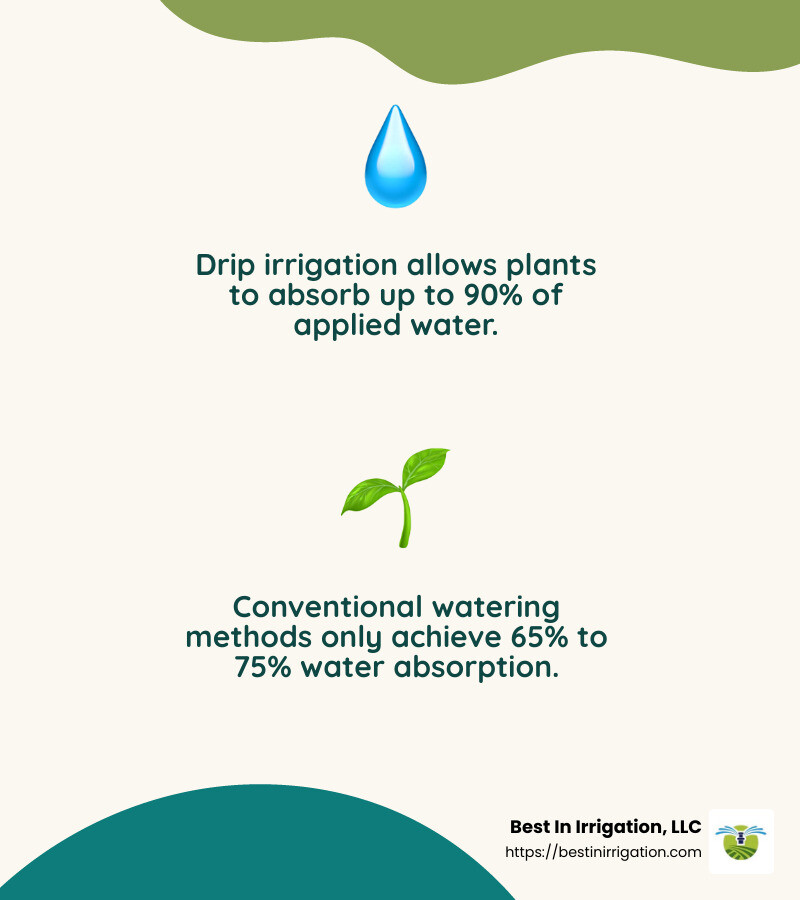
Drip irrigation installation offers a straightforward way to provide an efficient and eco-friendly watering solution for your garden. By using this method, you can ensure that your plants receive the right amount of moisture directly at their roots, which helps in water conservation, reduces water bills, and promotes better plant health. With drip irrigation, water usage efficiency can reach up to 90%, significantly outpacing traditional methods that only achieve 65% to 75% efficiency.
By targeting the plant roots, drip irrigation minimizes runoff and evaporation, leading to substantial water savings. This system also keeps plants consistently hydrated, allowing them to grow healthier and resist pests and diseases more effectively.
In this guide, we will walk you through the steps of installing a drip irrigation system, covering everything from planning the layout to maintaining optimal performance.
Glossary for Drip irrigation installation:
– irrigation contractors
– irrigation system
– irrigation system repair near me
Understanding Drip Irrigation Systems
Drip irrigation systems are a game-changer for gardeners. They provide a precise and efficient way to water plants by delivering water directly to the roots. This method ensures that plants get the moisture they need without wasting water. Let’s explore the components and benefits of these innovative systems.
Components of a Drip Irrigation System
A typical drip irrigation system is made up of several key components that work together to deliver water efficiently:
- Backflow Preventer: This is crucial for preventing contamination of your water supply. It ensures that water only flows in one direction—toward your plants.
- Emitters: These small devices release water slowly and steadily. Emitters can be placed at various intervals based on your plants’ needs. For instance, sandy soils might require emitters every 12 inches, while clay soils can space them out to 24 inches.
- Pressure Regulator: This component maintains consistent water pressure throughout the system, preventing damage to the emitters and ensuring even water distribution.
These components come together to create a system that is both versatile and efficient, adaptable to different garden layouts and plant types.
Benefits of Drip Irrigation
Drip irrigation offers several advantages that make it a preferred choice for gardeners:
- Cost-Efficiency: While the initial setup might require some investment, the savings on water bills and reduced plant loss quickly offset these costs. Traditional watering methods often lead to water wastage, but drip systems use water much more effectively.
- Improved Plant Health: By delivering water directly to the roots, plants receive consistent moisture, which reduces the risk of fungal diseases and weed growth. Healthy plants are more resilient to pests and environmental stresses.
- Time-Savings: Once installed, drip irrigation systems operate automatically with minimal oversight. This automation means less time spent dragging hoses around and more time enjoying your garden.
- Versatility: Drip irrigation systems can be custom to suit various landscapes, from small vegetable gardens to large orchards. They can also be easily adjusted as plant sizes and water needs change over time.
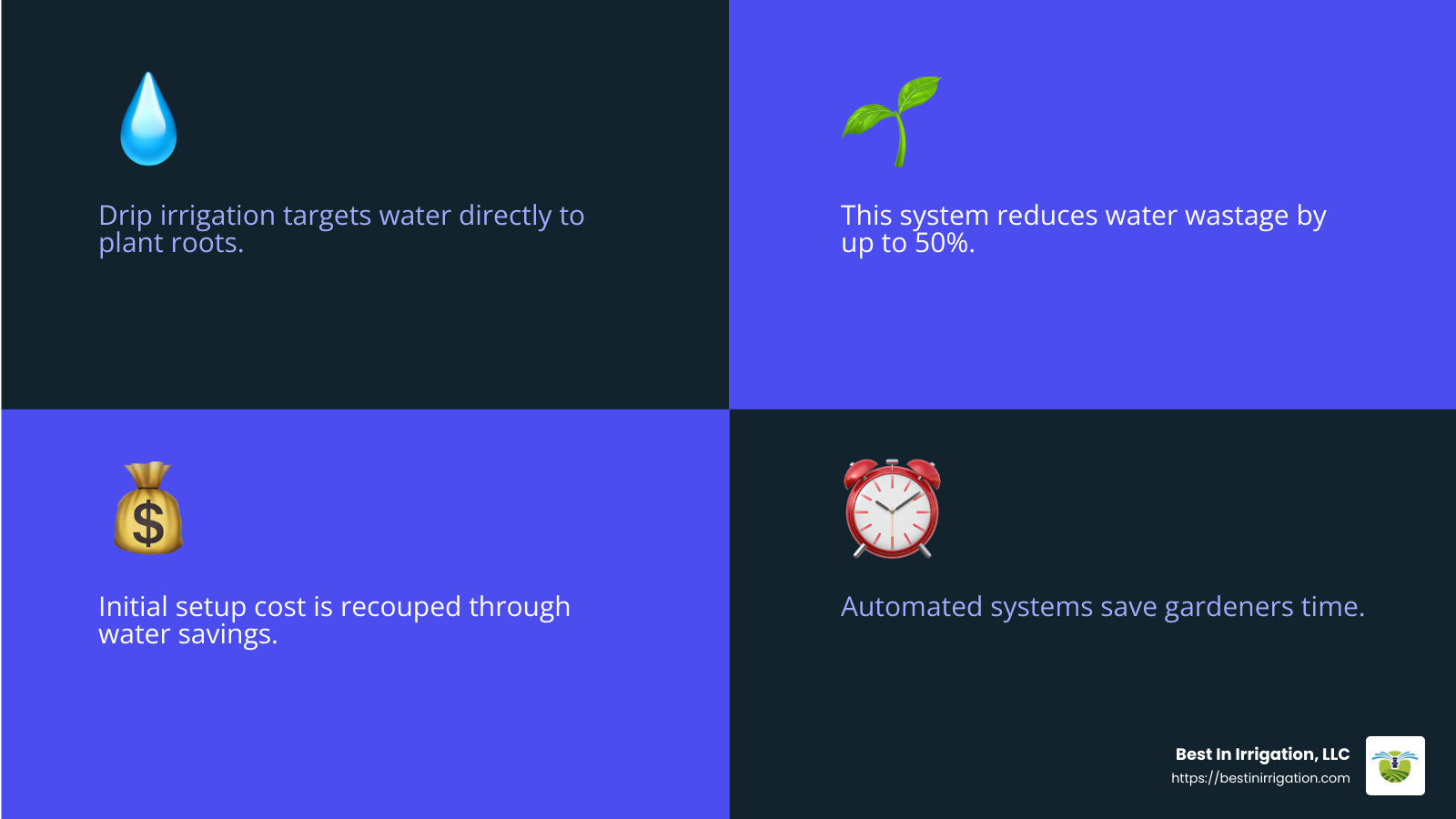
By understanding these components and benefits, you can see why drip irrigation installation is a smart choice for any gardener. The system’s ability to conserve water while promoting plant health makes it an invaluable tool for maintaining a thriving garden.
Next, we’ll explore how to plan your drip irrigation layout to maximize these benefits.
Planning Your Drip Irrigation Layout
Before diving into drip irrigation installation, it’s crucial to plan your layout carefully. This ensures that your system is efficient and meets the water needs of all your plants. Let’s break down the steps to map your garden and calculate water needs.
Mapping Your Garden
Start by sketching a simple layout of your garden. This will help you visualize where to place your irrigation components.
- Sketch Your Garden:
- Use a measuring tape to get accurate dimensions.
- Draw your garden to scale, including all plants, beds, and hardscaping.
- Group Plants:
- Identify plants with similar watering needs and group them together. For example, group succulents separately from vegetables.
- Locate Your Water Source:
- Mark the nearest water source on your sketch. This could be a main water line, rain barrel, or well.
- Plan the Main Line Route:
- Decide the path for the main tubing, ensuring it reaches all plant groups efficiently.
- Consider any obstacles like rocks or garden paths that might affect hose placement.
- Identify Future Expansions:
- If you plan to expand your garden, include space for additional tubing and emitters.
Calculating Water Needs
Understanding the water requirements of your plants is essential for designing an effective irrigation system.
- Research Plant Requirements:
- Note how much water each plant type needs. This varies based on species, size, and growth stage.
- Consider Soil Type:
- Sandy soil drains quickly, requiring more frequent watering with closely spaced emitters.
- Loam holds water well, needing moderate watering with emitters spaced further apart.
- Clay absorbs water slowly, so use emitters with low flow rates and wider spacing.
- Factor in Climate:
- Take into account local climate conditions. Hotter, dryer climates may require more frequent watering.
- Calculate Total Water Flow:
- Sum up the water needs for each plant group to determine the total flow rate required for your system.
- Choose emitters with appropriate flow rates to meet these needs.
By mapping your garden and calculating water needs, you’ll set the foundation for a successful drip irrigation system. This careful planning ensures that every plant receives the right amount of water, leading to a healthier and more vibrant garden.
Next, we’ll discuss the tools and materials needed for DIY installation.
Drip Irrigation Installation
Installing a drip irrigation system is a rewarding DIY project that can save you time, water, and money. With the right tools and materials, you can set up a system that keeps your garden lush and thriving. Let’s explore what you’ll need and how to connect to your water source.
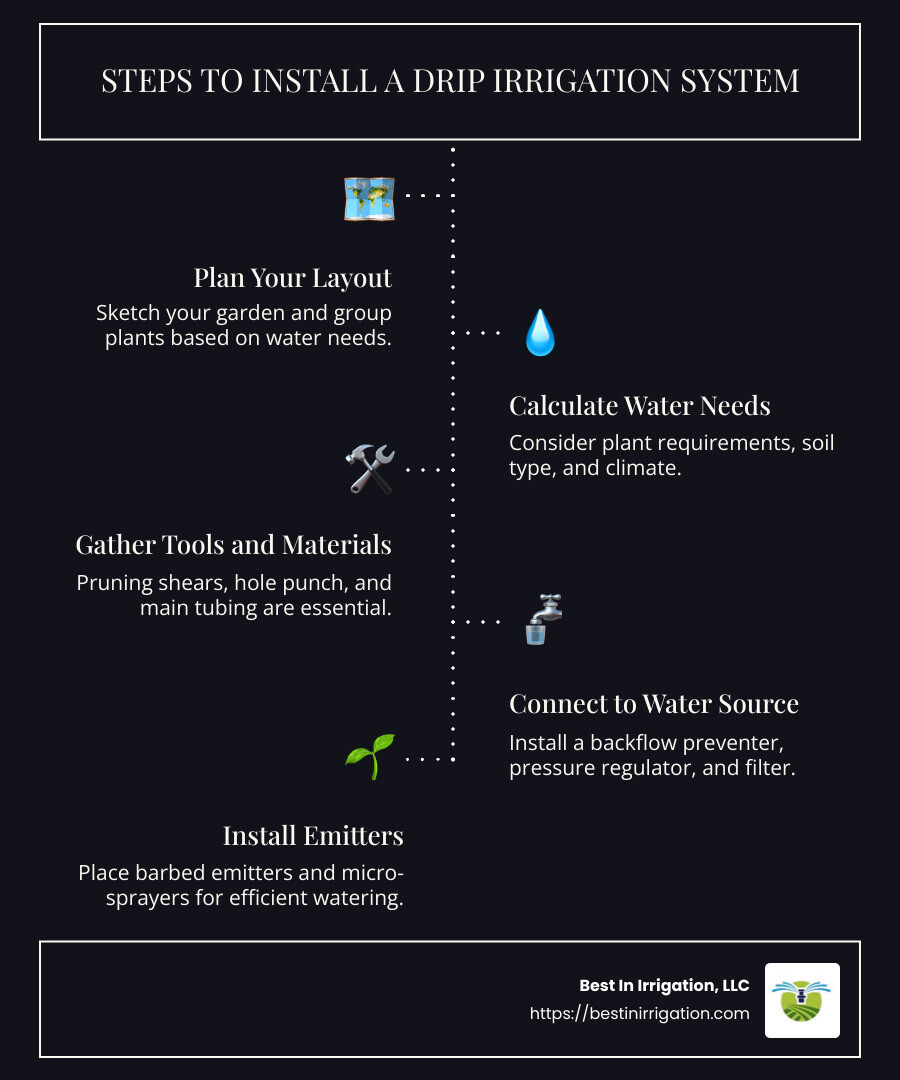
Gathering Tools and Materials
Before you start the installation, gather all necessary tools and materials. Having everything ready will make the process smoother and more efficient.
Essential Tools
- Pruning Shears: Handy for trimming plants and cutting tubing to size.
- Hole Punch: Used to create holes in the main tubing for inserting emitters.
- Measuring Tape: Ensures precise measurements for tubing layout.
- Shovel or Trowel: Useful for digging trenches or burying tubing.
- Hammer: For securing ground stakes.
Required Materials
- Main Tubing (½-inch and ¼-inch): Acts as the primary channel for water distribution. Choose tubing based on your garden’s size and layout.
- Backflow Preventer: Critical for preventing contaminated water from re-entering your clean water supply.
- Pressure Regulator: Ensures consistent water pressure throughout the system, protecting emitters from damage.
- Filter: Keeps debris out of your system, preventing clogs and ensuring smooth operation.
Connecting to Your Water Source
Once you have your tools and materials, the first step in installation is to connect your system to a water source. This involves setting up key components like the backflow preventer, pressure regulator, and filter.
Step-by-Step Connection
- Install the Backflow Preventer:
- Find your outdoor faucet or dedicated irrigation valve.
- Screw the backflow preventer onto the faucet securely to prevent leaks.
- Attach the Pressure Regulator:
- Connect the pressure regulator directly to the backflow preventer. This maintains a steady water pressure, essential for system efficiency.
- Add the Filter:
- Attach the filter to the pressure regulator. A clean filter ensures no debris clogs your system, keeping water flow smooth and reliable.
- Connect the Main Tubing:
- Use a hose swivel to join the filter’s threaded opening to the main tubing. This connection point is crucial for distributing water throughout your garden.
With these components in place, your system is ready for the next steps. Properly connecting to the water source is vital for an efficient drip irrigation installation. Now, let’s move on to laying out the main tubing.
Laying Out the Main Tubing
With your water source connection complete, it’s time to lay out the main tubing. This step is crucial for distributing water efficiently across your garden.
Using Connectors and Fittings
Positioning the Main Line:
Start by unrolling the ½-inch main tubing from the water source. Follow the path you’ve planned, ensuring it reaches all areas of your garden. It’s important to leave some slack in the tubing to allow for temperature-induced expansion and contraction.
Securing the Tubing:
Use ground stakes every few feet to keep the tubing in place. Properly secured tubing prevents movement and ensures consistent water delivery. Be cautious not to puncture the tubing when pressing stakes into the ground.
Incorporating Connectors and Fittings:
Connectors and fittings are essential for directing water flow and branching out to different areas of your garden.
- Elbow Connectors: Use these for 90-degree turns. They help steer corners without kinking the tubing, which could restrict water flow.
- Tee Connectors: Install tee connectors where you need to branch off the main line to reach different sections of your garden. This allows you to direct water to multiple areas efficiently.
- End Caps: Once you’ve laid out the tubing, close off any open ends with end caps. This prevents water from leaking out and ensures it flows only where needed.
By using the right connectors and fittings, you can customize your drip irrigation installation to fit your garden’s unique layout. Proper placement and secure connections are key to maximizing efficiency and plant health.
Next, we’ll explore how to install emitters and micro-sprayers to deliver water directly to your plants.
Installing Emitters and Micro-Sprayers
Now that your main tubing is in place, it’s time to focus on delivering water directly to your plants. This is where emitters and micro-sprayers come into play. They ensure that water reaches your plants efficiently and effectively.
Placing Emitters for Individual Plants
Choosing the Right Emitters:
Emitters are small devices that release water at a controlled rate. The first step is to select the right type of emitter for your plants. Barbed emitters are popular due to their ease of installation and secure fit.
Installation Steps:
- Hole Punch: Use a hole punch to make a small opening in the main tubing where you want to place an emitter. Make sure the hole is near the plant’s root zone for effective watering.
- Barbed Emitters: Insert the barbed end of the emitter into the hole. The barbs will hold it securely in place, preventing leaks.
- Flow Rates: Choose emitters with appropriate flow rates based on the water needs of your plants. This helps ensure each plant receives the right amount of water without over or under-watering.
Position emitters close to the base of each plant, but not directly against the stem, to prevent root rot and ensure water reaches the roots.
Setting Up Micro-Sprayers for Ground Cover
Using Micro-Sprayers:
Micro-sprayers are ideal for ground cover and flower beds. They provide broader water coverage, which is perfect for areas with dense planting.
Installation Steps:
- ¼-Inch Tubing: Connect ¼-inch tubing to the main line using a barbed fitting. This smaller tubing will carry water to the micro-sprayers.
- Stakes: Use stakes to position the tubing and sprayers. Stakes help keep everything in place and ensure the sprayers are directed correctly.
- Sprayers: Attach the micro-sprayers to the end of the ¼-inch tubing. Adjust the spray pattern to cover the desired area. This ensures even water distribution across your ground cover.
Position micro-sprayers halfway between the base of the plants and the edge of their canopy. This placement allows for optimal water coverage.
By carefully placing emitters and micro-sprayers, you can tailor your drip irrigation installation to meet the specific needs of your garden. This precision watering method promotes healthy plant growth and conserves water.
Next, we’ll address some frequently asked questions about drip irrigation installation to help you further understand this efficient watering system.
Frequently Asked Questions about Drip Irrigation Installation
What is the average cost for installing a drip irrigation system?
The cost of installing a drip irrigation system can vary significantly depending on the size and complexity of your garden. For a DIY approach, expect to spend anywhere from $15 to $480 for a kit, which is often more cost-effective than traditional watering methods. On the other hand, professional installation can range from $1.50 to $4 per square foot. Larger gardens with multiple zones will naturally incur higher costs.
Can you install drip irrigation yourself?
Absolutely, you can install a drip irrigation system yourself. Many homeowners find this to be a straightforward project. With a little planning and the right tools, such as pruning shears, a hole punch, and main tubing, you can set up your system in a day. Follow a simple step-by-step guide:
- Plan Your Layout: Sketch your garden, identify plant types, and determine water needs.
- Gather Tools and Materials: Make sure you have all necessary components like backflow preventers and emitters.
- Install Main Tubing: Connect to your water source and lay out the main tubing.
- Add Emitters and Sprayers: Place them strategically to ensure efficient water distribution.
This DIY approach not only saves money but also allows you to customize your system to fit your garden’s specific needs.
What is a major downside to drip irrigation?
While drip irrigation is highly efficient, there are a few downsides to consider. One common issue is the potential for tubing to become clogged with soil or debris, which can restrict water flow. Regular maintenance is necessary to keep the system running smoothly. Additionally, if plants are moved or replaced, you may need to adjust the tubing and emitters, which can be time-consuming. Lastly, the ends of the tubes can occasionally become detached, leading to water waste. Despite these challenges, the benefits of water conservation and improved plant health often outweigh the downsides for many gardeners.
By understanding the costs, installation process, and potential challenges, you can make an informed decision about whether a drip irrigation system is right for your garden. Up next, we’ll dig into the importance of regular maintenance to keep your system functioning efficiently.
Conclusion
Maintaining your drip irrigation system is essential to ensure it continues to conserve water and promote healthy plant growth. Regular maintenance involves checking for clogs, leaks, and ensuring all components are functioning correctly. By doing this, you can prevent water waste and ensure your garden receives the precise amount of moisture it needs.
At Best In Irrigation, LLC, we understand the importance of water conservation. Our systems are designed to deliver water directly to plant roots, minimizing evaporation and runoff. This not only benefits your garden but also contributes to environmental sustainability. Our expertise in the New England region ensures that we tailor each system to meet the specific needs of your landscape, whether residential or commercial.
Regular system checks are vital. Walk through your garden monthly to inspect tubing, emitters, and connections. Adjust emitter placement as plants grow and replace any damaged parts promptly. This proactive approach will keep your system running efficiently and extend its lifespan.
For those who prefer professional assistance, consider reaching out to us at Best In Irrigation, LLC. We offer expert maintenance services and can help you optimize your irrigation system for maximum water conservation and plant health.
By maintaining your drip irrigation system and choosing a reputable provider like Best In Irrigation, LLC, you ensure your garden thrives with minimal effort and water use. Let’s work together to create a sustainable and vibrant landscape.
