


New Sprinkler System Installation: 2025’s Top Easy Tips
New sprinkler system installation can greatly transform your home’s curb appeal, improve water conservation, and introduce the convenience of automatic sprinklers. If you’re considering a new sprinkler system, here’s what you need to know:
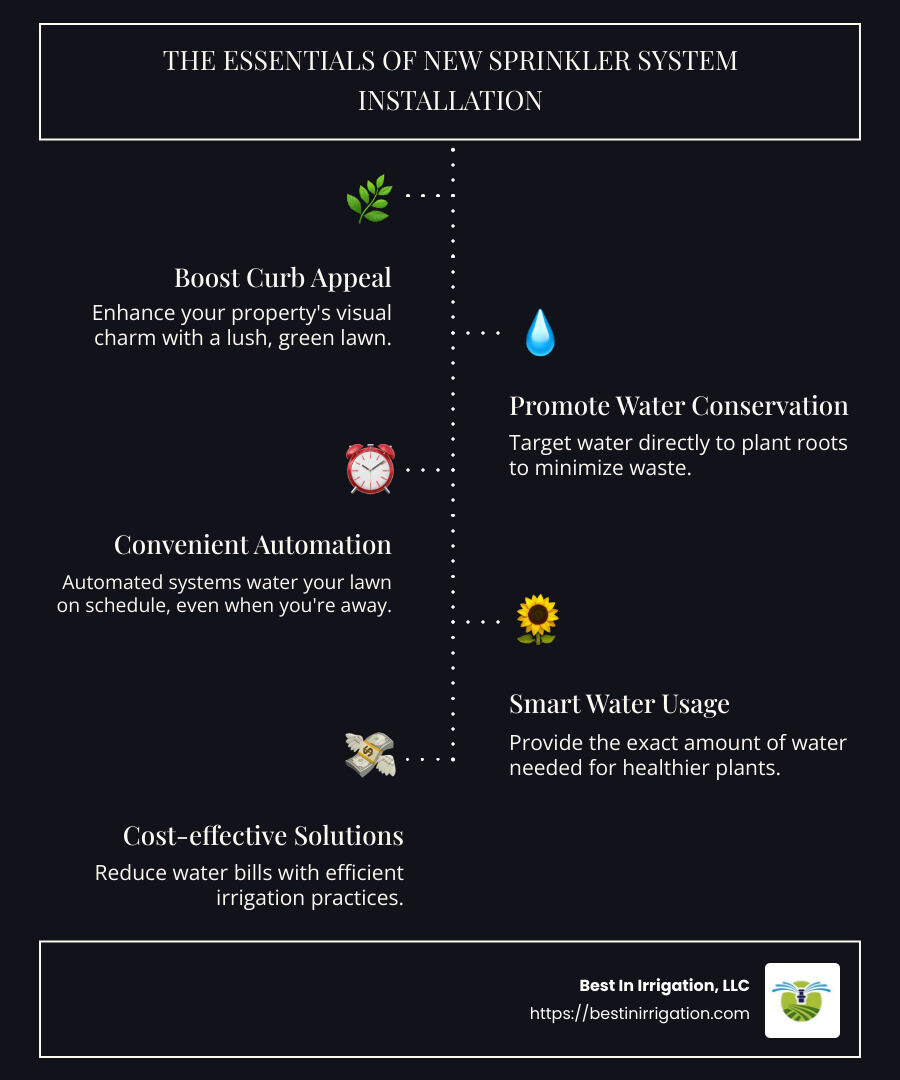
- Boosts Curb Appeal: A well-maintained lawn instantly lifts the visual charm of your property.
- Promotes Water Conservation: Modern systems target water directly to plant roots, minimizing waste.
- Offers Convenience: Automation ensures your lawn gets watered on schedule, even if you’re away.
For homeowners prioritizing both aesthetics and functionality, installing a new sprinkler system ensures lush greenery while being eco-friendly.
Sprinkler systems are not just about keeping your lawn green; they’re a blend of smart water usage and effortless beauty. With automatic controls, these systems provide the exact amount of water needed, when it’s needed, leading to healthier plants and reduced water bills. As you decide on options, consider if a DIY approach suits your needs or if professional installation is more your style.
With these essentials in mind, you’re ready to explore how a new sprinkler system can make your home the envy of the neighborhood.
Essential new sprinkler system installation terms:
– house sprinkler system installation
– irrigation system installation
– irrigation system
Planning Your New Sprinkler System Installation
DIY vs. Professional Installation
When it comes to new sprinkler system installation, deciding between a DIY approach and hiring a professional is crucial. Both have their pros and cons, and your choice depends on your budget, time, and comfort with DIY projects.
DIY Installation:
- Cost-Effective: Going the DIY route can save you money upfront. Kits for small in-ground systems are available, but remember, these require intensive labor and precision.
- Labor-Intensive: Installing a sprinkler system yourself involves digging trenches, laying pipes, and connecting to the water supply. Mistakes can lead to costly repairs, like water waste or an inoperable system.
- Skill Level: Even seasoned DIYers might find the process challenging. Without the right expertise, you risk inefficient water coverage and potential damage to your lawn.
Professional Installation:
- Efficiency and Expertise: Professionals bring the skill and experience needed for a seamless installation. They ensure optimal water coverage and system efficiency, reducing the risk of damage to your lawn or property.
- Long-Term Savings: While more expensive upfront, a professionally installed system can save on water bills and maintenance costs over time due to its precision and reliability.
Choosing between DIY and professional installation largely depends on your confidence in handling complex projects and your budget constraints.
Assessing Lawn Size and Water Needs
Before diving into a new sprinkler system installation, understanding your lawn’s size and water requirements is essential. This ensures your system is both efficient and effective.
Lawn Size:
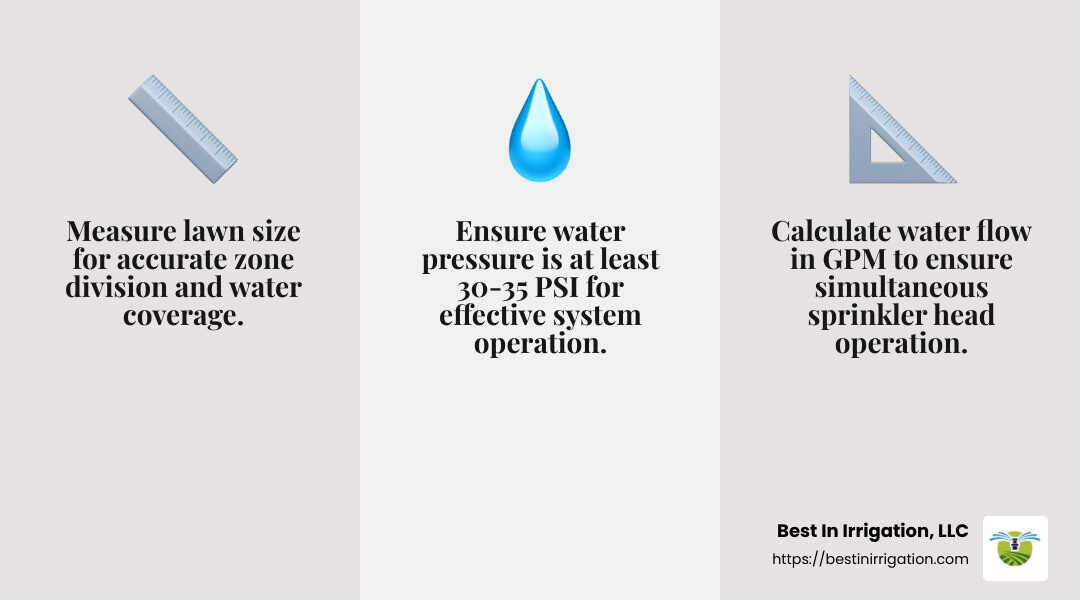
- Measure Your Lawn: Start by measuring the area you want to cover. This helps determine the number of sprinkler heads and zones you’ll need.
- Zone Division: Divide your lawn into zones based on plant types and sun exposure. Each zone will have its own watering needs.
Water Flow and Pressure:
- Water Flow (GPM): Calculate your water flow rate in gallons per minute (GPM) using a simple test with an outdoor spigot. This helps determine how many sprinkler heads can run simultaneously without losing pressure.
- Water Pressure (PSI): Measure your water pressure in pounds per square inch (PSI) using a pressure gauge. Most systems require at least 30 to 35 PSI for effective operation.
Understanding these factors is key to planning an efficient sprinkler system. It ensures that every corner of your yard gets the right amount of water without waste. With this knowledge, you’re well on your way to a successful installation.
Step-by-Step Guide to New Sprinkler System Installation
Trenching and Laying Pipes
The first step in your new sprinkler system installation is trenching. This involves digging trenches where your pipes will be laid. The depth of these trenches should be between 6 to 12 inches, depending on your area’s freeze cycles. This depth protects the pipes from damage and freezing.
Tools Needed:
- Trenching Machine: Renting a trenching machine can save you significant time and effort. Most rental dealers offer drop-off and pick-up services for a small fee.
- Shovel: For areas where precision is needed, like flower beds, a shovel is your best bet.
Pipe Choices:
- PVC Pipe: This rigid pipe is durable and commonly used for main lines. It requires adhesive connections.
- Flexible Piping (Polyethylene): Ideal for lateral lines, especially in cold climates. It’s flexible and requires fewer fittings, which can be a time-saver.
Ensure your trenches are level. Uneven trenches can lead to inefficient water flow, as gravity affects the distribution.
Connecting to Water Supply
Once your trenches are ready, it’s time to connect your sprinkler system to the water supply.
Main Water Line Connection:
- Turn Off Water: Always turn off the water at the meter before cutting into the main line.
- Backflow Prevention: Install a backflow preventer to ensure that contaminated water doesn’t flow back into your clean water supply. This is a crucial step and often required by local regulations.
- Valve Manifold: This is the heart of your system’s control. Connect the main line to the valve manifold, which will distribute water to different zones.
Zone Valves:
Each zone in your system requires a separate valve. These valves control the water flow to specific areas of your lawn, ensuring efficient watering.
Installing Sprinkler Heads and Drip Irrigation
With pipes and valves in place, you’re ready to install the components that actually water your lawn.
Sprinkler Heads:
- Pop-Up Sprinklers: These are ideal for lawns. They retract when not in use, protecting them from damage by lawn mowers or foot traffic.
- Installation: Attach each sprinkler head to a riser connected to your system’s pipes. Ensure that the spray pattern overlaps to prevent dry spots.
Drip Irrigation:
For flower beds and shrubs, consider drip irrigation. This system delivers water directly to the soil, reducing evaporation and runoff.
- Microfilter: Install a microfilter to prevent clogs in your drip lines. This simple addition can save you from future maintenance headaches.
- Layout: Roll out the tubing along the base of your plants, spacing it about 12 inches apart for even coverage.
With these steps completed, your new sprinkler system is ready to provide efficient and effective watering for your lawn. Next, let’s explore the cost considerations for new sprinkler systems.
Cost Considerations for New Sprinkler Systems
Average Costs and Cost Estimators
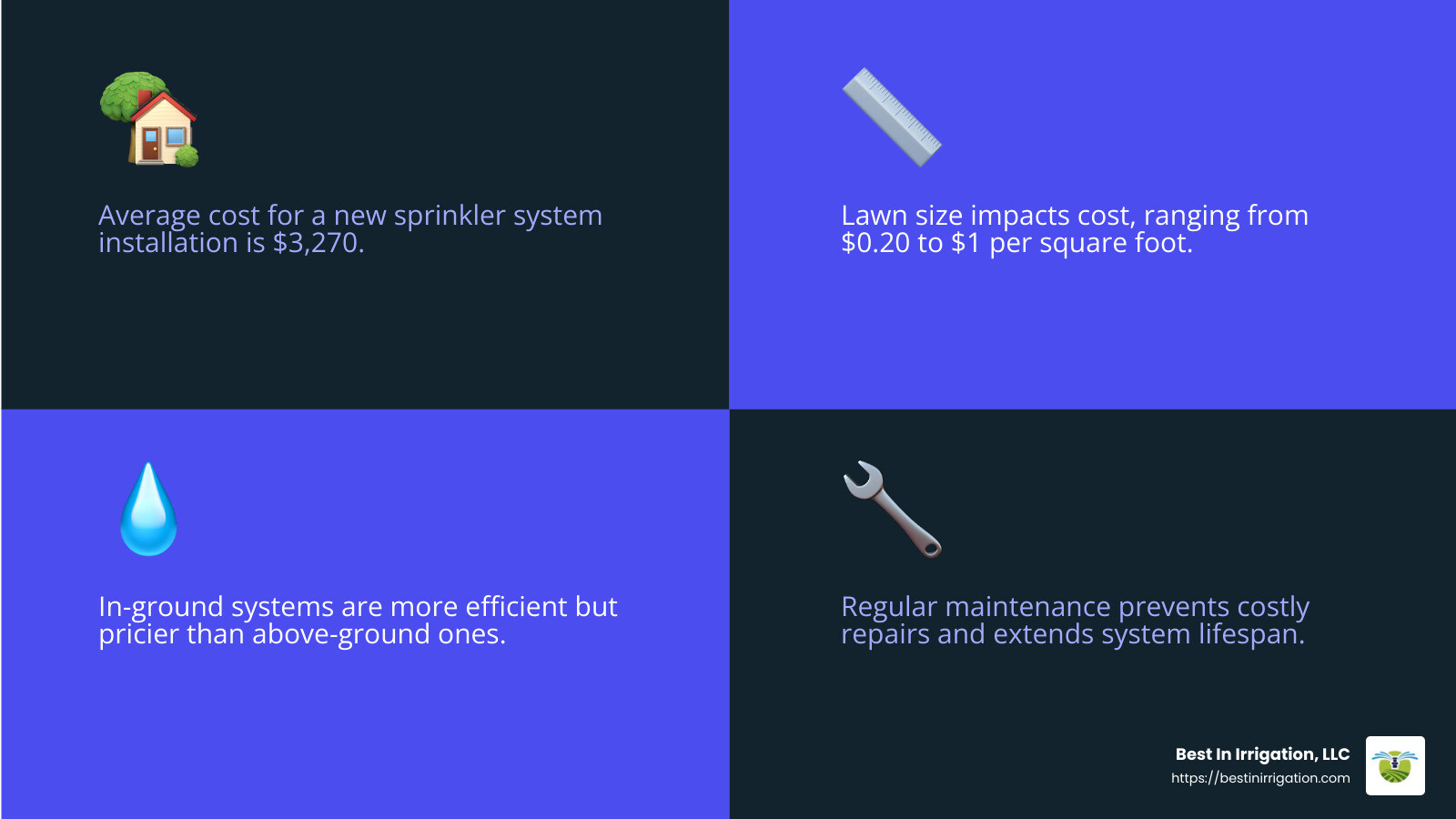
When planning a new sprinkler system installation, understanding the costs involved is crucial. On average, Americans spend about $3,270 on a sprinkler system, but costs can range from $2,200 to $4,600 for most projects. However, costs can soar up to $12,600 for larger or more complex installations.
Key Cost Factors:
- Lawn Size: The size of your lawn is a major determinant. Expect to pay between $0.20 and $1 per square foot. Smaller lawns tend to be on the higher end of this range, while larger lawns benefit from economies of scale.
- System Type: Above-ground systems are generally cheaper but less visually appealing. In-ground systems, while more expensive, are more efficient and aesthetically pleasing.
- Sprinkler Heads: Stationary heads are less costly but cover smaller areas. Rotary heads, although pricier, can cover larger spaces, making them ideal for expansive lawns.
Maintenance and Repair Costs
Maintaining your sprinkler system is key to ensuring its longevity and efficiency. Regular maintenance helps prevent costly repairs and keeps your system running smoothly.
Winterizing:
- Auto-Drain Valves: If your system has these, simply turn off the water supply and open the valves to drain excess water.
- Manual Drains: Use an air compressor with 50-100 PSI to clear water from the system, preventing freeze damage.
Inspections:
- Regular inspections can catch issues early. Look for signs of leaks, such as water pooling or uneven grass growth.
Common Repairs:
- Clogged Sprinkler Heads: These can affect water pressure and distribution. Cleaning or replacing them is usually straightforward.
- Leaks: Leaks waste water and increase bills. Replace leaking heads or repair pipes promptly to avoid further damage.
By understanding these cost factors and maintenance needs, you can budget effectively and ensure your sprinkler system remains in top condition. Next, we’ll address some frequently asked questions about sprinkler systems.
Frequently Asked Questions about Sprinkler Systems
How much does it cost to install a sprinkler system?
The cost of a new sprinkler system installation can vary widely based on several factors. On average, you might spend around $3,270. However, the price range typically falls between $2,200 and $4,600 for most standard projects. For more extensive or intricate systems, costs can escalate up to $12,600.
Factors Influencing Cost:
- Lawn Size: Larger lawns naturally require more materials and labor, increasing overall costs. The cost per square foot ranges from $0.20 to $1.
- System Complexity: The type of system (above-ground vs. in-ground) and the number of zones can also affect pricing.
Can I install a sprinkler system myself?
Installing a sprinkler system yourself is certainly possible, especially if you’re handy with DIY projects. However, it’s important to weigh the complexity and labor involved.
- Skill Level: Basic plumbing skills are necessary. You’ll need to connect pipes, install sprinkler heads, and ensure proper water flow.
- Tools Required: You’ll need access to tools like a trenching shovel, PVC cutters, and possibly a trenching machine for larger yards.
Time and Effort:
- Project Duration: For a small yard, expect to spend a weekend on the installation. Larger or more complex projects can take several days or even weeks, depending on your pace and experience.
How many hours does it take to install a sprinkler system?
The time required for a new sprinkler system installation can vary greatly, depending on the size of the job and the complexity of the system.
Installation Time:
- Small Yards: These can often be completed over a weekend, assuming no major complications arise.
- Larger Projects: For bigger lawns, installation can take multiple days. Factors like trenching, laying pipes, and adjusting sprinkler heads all add to the time needed.
By understanding these aspects, you can better prepare for the installation process, whether you choose to DIY or hire a professional. This knowledge helps ensure a smooth and efficient setup for your new sprinkler system.
Conclusion
When it comes to new sprinkler system installation, choosing the right partner is crucial for achieving both a beautiful lawn and effective water management. At Best In Irrigation, LLC, we specialize in providing innovative solutions custom to the unique needs of your landscape.
Our focus on water conservation is at the heart of every system we design. We use cutting-edge technology to minimize water waste while ensuring your lawn receives the right amount of hydration. This not only helps the environment but also saves you money in the long run.
Our commitment to excellence is backed by our 9 years of trusted expertise in the New England region. We understand the local climate and soil conditions, which allows us to create systems that are both efficient and reliable.
By choosing us, you are investing in a partner who is dedicated to enhancing your outdoor space with precision and care. From planning to installation, our team ensures a hassle-free experience, leaving you with a lush, healthy lawn that complements your home.
Ready to transform your landscape? Contact us today for a consultation and take the first step towards a greener, more sustainable future. Your lawn deserves the best, and with Best In Irrigation, LLC, you can trust it’s in good hands.
