


Installing Irrigation Systems: 5 Easy Steps for Success
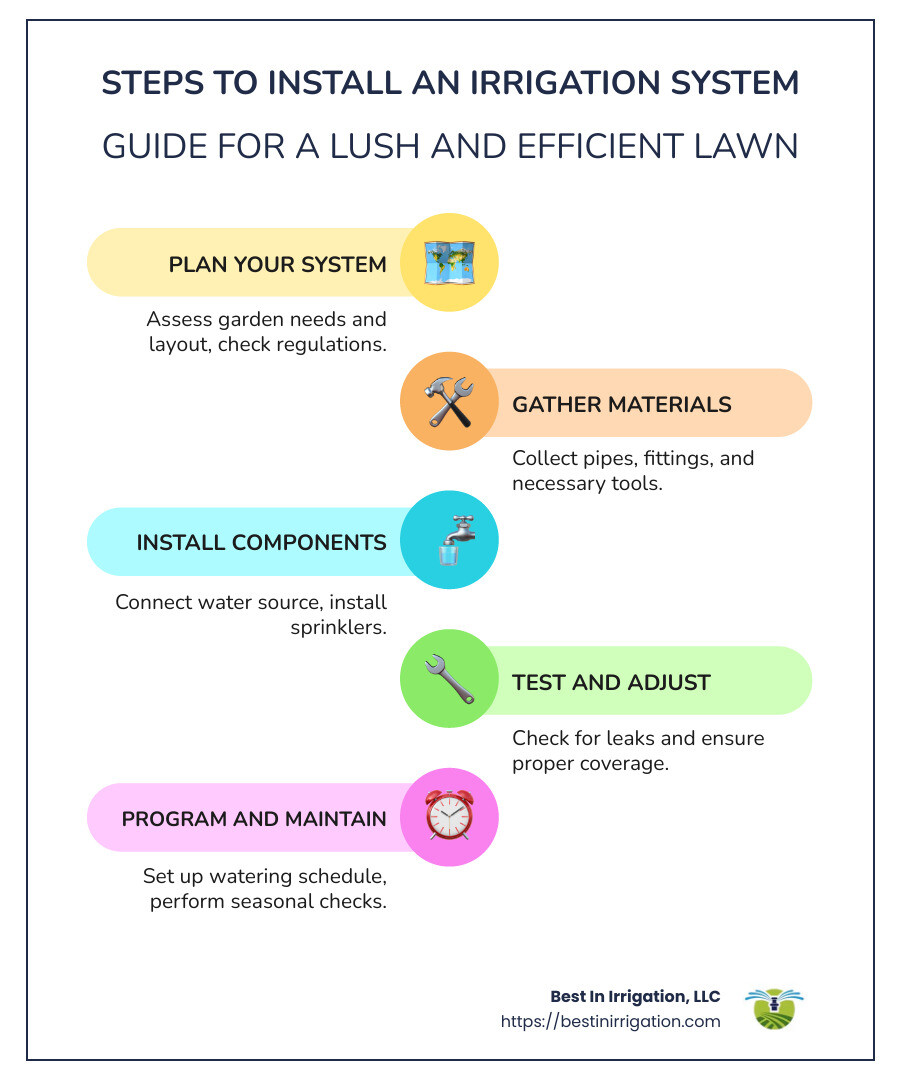
Installing irrigation systems is a smart move for any homeowner wanting a lush, vibrant lawn without the hassle and waste of manual watering. Here’s a quick snapshot of the steps you’ll take:
- Plan your system layout according to your garden’s needs.
- Gather necessary materials and tools, from pipes to pressure regulators.
- Install main components like the water connection and sprinklers.
- Test and adjust the system to prevent leaks and ensure even coverage.
- Program and maintain with seasonal checks to keep everything running smoothly.
A well-designed system not only beautifies your landscape but significantly conserves water, which means lower bills for you and a happier planet. Modern setups, like those installed by Best In Irrigation, LLC, use smart technology and precision placement to ensure water goes exactly where it’s needed.
Interested in learning more? Let’s explore each step and explore how Best In Irrigation, LLC can transform your yard into the envy of the neighborhood.
Step 1: Planning Your Irrigation System
Planning is the cornerstone of a successful irrigation system. A well-thought-out plan ensures efficient water use and a healthy garden. Let’s break it down into manageable parts.
Understanding Your Garden’s Needs
Begin by assessing your garden. Measure its dimensions and sketch a rough layout. Note key features like flower beds, lawns, and vegetable patches. This sketch helps visualize where irrigation components will be placed.
Different plants have different water needs. Group plants with similar watering requirements together. For example, succulents need less water compared to vegetables. This grouping simplifies the irrigation process.
Water Source and Pressure Check
Next, identify your water source. It could be a main water line, rain barrel, or well. Knowing your source helps in selecting the right components.
Check the water pressure using a pressure gauge. Attach the gauge to an outdoor faucet and ensure all other faucets are off. Most systems need at least 30 to 35 PSI to function well.
Designing Your System Layout
Now, draw a detailed plan of your system layout. Use your garden sketch to decide where pipes and emitters will go. Make sure all areas get even coverage without over-watering any section.
Plan for irrigation zones. Each zone can be controlled separately to meet different watering needs. This is especially useful if your garden has diverse plant types.
Researching Local Regulations
Before starting any installation, check local regulations. Consult your local water authority or homeowners’ association for any rules on irrigation systems. This step ensures compliance and prevents potential fines or modifications later. Some areas may also require specific components like backflow preventers.
By following these steps, you’re well on your way to a successful irrigation system. Next, we’ll look at gathering the materials and tools you’ll need to bring your plan to life.
Step 2: Gathering Materials and Tools
Starting on the journey of installing irrigation systems requires the right materials and tools. Let’s simplify the essentials you’ll need to make your project a success.
Essential Materials
Pipes and Tubing
- PVC (Polyvinyl Chloride): This rigid, white material is strong and durable, making it ideal for most climates. It’s commonly used for main lines due to its strength.
- Polyethylene: Flexible and great for areas with freeze cycles. It can bend around obstacles, reducing the need for additional fittings.
- Soaker Hose and Garden Hose: These are perfect for watering specific areas like flower beds. They provide a gentle, even distribution of water.
Fittings and Connectors
- Fittings: These include elbows for 90-degree turns, tees for branching, and end caps to close off pipe ends. They help customize the layout to fit your garden’s design.
- Connectors: Essential for joining pipe sections, ensuring a leak-proof system. Use straight connectors for linear connections and couplings for repairs.
Sprinkler Heads and Drip Emitters
- Sprinkler Heads: Ideal for lawns and larger areas, these spray water in set patterns.
- Drip Emitters: Perfect for individual plants and garden beds, delivering water directly to the root zone for efficiency.
Valves and Regulators
- Valves: Control water flow. Shut-off valves manage the entire system, while zone valves allow for independent control of different garden areas.
- Pressure Regulator: Ensures your system operates at the correct pressure, preventing damage and ensuring efficiency.
Filter
- A filter is crucial for keeping debris out and maintaining a smooth water flow. Regular cleaning is key to avoid blockages.
Tools Checklist
Having the right tools makes installation smoother and more efficient.
- Pipe Cutter: Essential for cutting pipes to the desired length. Ensure a clean cut for a proper fit.
- Trenching Tool: Whether you dig by hand or rent a trencher, this tool helps create the necessary trenches for laying pipes.
- Vibratory Plow: Handy for installing polyethylene pipes without digging up your entire lawn. It requires some expertise but saves time and effort.
- Duct Tape: Useful for temporary fixes and marking pipe sections during installation.
With these materials and tools at your disposal, you’re ready to move forward with confidence. Next, we’ll dive into installing the main components of your irrigation system.
Step 3: Installing the Main Components
Installing the main components of your irrigation system is where the magic happens. This step involves connecting to the water source, installing a shut-off valve, laying the main line, planning and installing lateral lines, and setting up sprinklers or drip emitters. Let’s break it down.
Connecting to the Water Source
Start by identifying your primary water source. This could be an outdoor tap, a connection to your home’s plumbing, or even a rainwater collection system. Install a backflow preventer at this point to stop contaminated water from flowing back into your clean water supply. Use thread seal tape on threaded joints to ensure a tight, leak-free connection.
Installing the Shut-Off Valve
Next, install a shut-off valve right after the backflow preventer. This allows you to control the entire irrigation system independently from the house’s main water supply. Make sure the valve matches the size of your main water line and is easily accessible for quick operation. This is crucial for maintenance and emergencies.
Laying the Main Line
The main line acts as the primary artery of your irrigation system. Use a trenching tool or shovel to dig a trench 6 to 12 inches deep to protect the pipes from damage and freezing. Lay the PVC or polyethylene pipe in the trench, ensuring it’s straight and free from kinks. Bury the pipe, leaving enough room for connections to lateral lines.
Planning and Installing Lateral Lines
From the main line, branch out with lateral lines using T-connectors. These lines reach specific areas of your garden that need watering. Map out these routes carefully for efficient water distribution. Cut the lateral lines to the required lengths and connect them securely using fittings to prevent leaks.
Setting Up Sprinklers or Drip Emitters
Finally, install sprinkler heads or drip emitters along the lateral lines. For sprinklers, consider the radius and arc to achieve complete coverage. Drip emitters should be placed close to the base of each plant to target the root zone directly. This ensures water is used efficiently and reduces waste.
By following these steps, you’ll have the main components of your irrigation system ready to go. Next, we’ll explore how to test and adjust the system to ensure everything is working perfectly.
Step 4: Testing and Adjusting the System
Once your irrigation system is installed, it’s crucial to ensure everything works as it should. Testing and adjusting the system will help prevent water waste and ensure every plant in your garden gets the hydration it needs.
Testing for Leaks
Leaks can lead to uneven watering and waste precious resources. Start by turning on the water and checking all connections, pipes, and sprinkler heads for any signs of leakage. Look for wet spots or pooling water in areas where it shouldn’t be. If you notice lower water pressure or water seeping from the ground around your sprinkler heads, you might have a leak.
To fix leaks:
– Tighten any loose fittings.
– Replace damaged pipes or sprinkler heads.
– Use sealant tape on threaded joints to ensure a snug fit.
Adjusting Sprinkler and Drip Systems
Proper adjustment of your sprinklers and drip systems is essential for optimal coverage and efficiency. Here’s how to ensure your system is perfectly aligned:
Sprinkler System Adjustments
– Alignment: Ensure each sprinkler head is correctly aligned to avoid spraying on pavements or buildings.
– Spray Pattern: Adjust the spray pattern to cover the intended areas fully. Twist or turn the sprinkler heads to widen or narrow the watering range.
– Coverage Testing: Run the system and observe the spray patterns. Adjust the distance and arc to ensure all areas receive adequate water.
Drip System Adjustments
– Emitter Position: Position drip emitters near the base of plants, but not directly against the stem, to avoid root rot.
– Flow Rate: Check each emitter for proper flow rate. Replace or clean clogged emitters to maintain consistent water delivery.
– Coverage Check: Ensure the emitters are providing uniform coverage across the planting area.
By carefully testing and adjusting your irrigation system, you’ll ensure efficient water use and promote healthy plant growth. This step is vital for maintaining a lush garden throughout the growing season. Next, we’ll dig into programming and maintaining your irrigation system for long-term success.
Step 5: Programming and Maintaining Your Irrigation System
Once your irrigation system is installed and adjusted, it’s time to set up the irrigation controller and establish a maintenance routine. This ensures your system runs smoothly and efficiently, providing optimal water to your garden.
Programming the Irrigation Controller
An irrigation controller, often called a “timer,” automates your watering schedule. This is crucial for conserving water and maintaining healthy plants.
- Setting a Watering Schedule: Program your controller to water during cooler times of the day, like early morning or late evening, to reduce evaporation. Adjust the schedule based on your plants’ needs and local climate.
- Smart Controllers: Consider upgrading to a smart controller. These devices adjust the watering schedule automatically based on weather conditions, ensuring your garden gets the right amount of water without waste.
Regular Maintenance
Regular maintenance is key to keeping your irrigation system in top condition.
- Seasonal Inspections: Check your system at the start and end of each growing season. Look for leaks, blockages, or any wear and tear.
- Cleaning Filters: Clogged filters can restrict water flow. Clean them regularly to ensure smooth operation. For drip systems, flush the lines periodically to remove debris.
- Adjusting for Growth: As plants grow, adjust sprinkler heads and drip emitters to maintain optimal coverage and water delivery.
Winterization
In colder regions, winterizing your irrigation system prevents freeze damage.
- Draining Pipes: Turn off the water supply and drain all pipes. Use compressed air to blow out any remaining water if necessary.
- Insulating Components: Cover above-ground components, like valves and backflow preventers, with insulation to protect them from freezing temperatures.
By programming your irrigation controller and performing regular maintenance, you’ll ensure your system operates efficiently year-round. This not only conserves water but also keeps your garden thriving. Next, we’ll address some frequently asked questions about installing irrigation systems.
Frequently Asked Questions about Installing Irrigation Systems
Can I install an irrigation system myself?
Yes, you can install an irrigation system yourself, but it requires a bit of planning and effort. DIY installation is possible if you have the time and are comfortable with some basic plumbing and landscaping tasks.
- Time and Effort: Installing an irrigation system is labor-intensive. For a small yard, it might take a weekend. Larger yards could take several days.
- Yard Size: Your yard’s size and complexity will affect the difficulty level. Simple, open areas are easier than those with many obstacles like trees and flower beds.
If you’re not confident in your skills or simply don’t have the time, hiring a professional might be a better option.
How deep do you bury irrigation pipes?
When burying irrigation pipes, the recommended depth is between 8 to 12 inches. This depth helps protect the pipes from damage and freezing.
- Safety: Burying pipes at this depth keeps them safe from lawn equipment like rototillers and mowers.
- Rototiller Depth: Most rototillers reach a depth of about 8 inches, so installing pipes deeper than this helps avoid accidental damage.
Always check local guidelines, as some areas may have specific requirements for pipe depth due to climate or soil conditions.
Is it worth installing an irrigation system?
Absolutely! Installing an irrigation system offers several advantages:
- Efficient Watering: Automated systems provide consistent watering, ensuring your plants receive the right amount of water without waste.
- Cost Savings: While the initial cost may be high, efficient watering can reduce water bills over time. Properly maintained systems also minimize the need for costly plant replacements.
- Water Conservation: Automated systems help conserve water by delivering precise amounts only when needed. This is especially important in areas with water restrictions.
Investing in an irrigation system can improve your garden’s health, save you time, and reduce water usage.
In the next section, we’ll summarize the benefits of choosing the right service for your irrigation system installation.
Conclusion
Installing irrigation systems is a smart move for anyone looking to maintain a healthy, lush garden while conserving water. By automating your watering routine, you ensure that each plant gets just the right amount of moisture, reducing waste and promoting plant health.
Benefits Recap:
- Efficient Watering: Automated systems provide consistent watering, helping your garden thrive with minimal effort.
- Cost Savings: While the upfront investment may seem high, the long-term savings on water bills and plant replacements make it worthwhile.
- Water Conservation: By targeting water delivery precisely, these systems help conserve one of our most precious resources.
Choosing the right partner for your irrigation needs is crucial. At Best In Irrigation, LLC, we specialize in designing and installing systems custom to your landscape. With our focus on cutting-edge technology and water conservation, you can trust us to deliver efficient and reliable solutions.
Whether you’re a DIY enthusiast or prefer professional installation, our team is here to support you every step of the way. Transform your garden with our innovative irrigation systems and enjoy a greener, healthier outdoor space. Contact us today for a consultation and see how we can help you achieve your landscaping goals.
